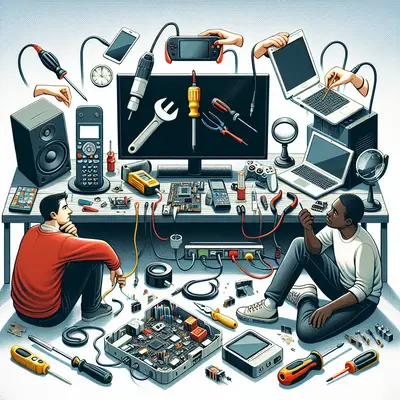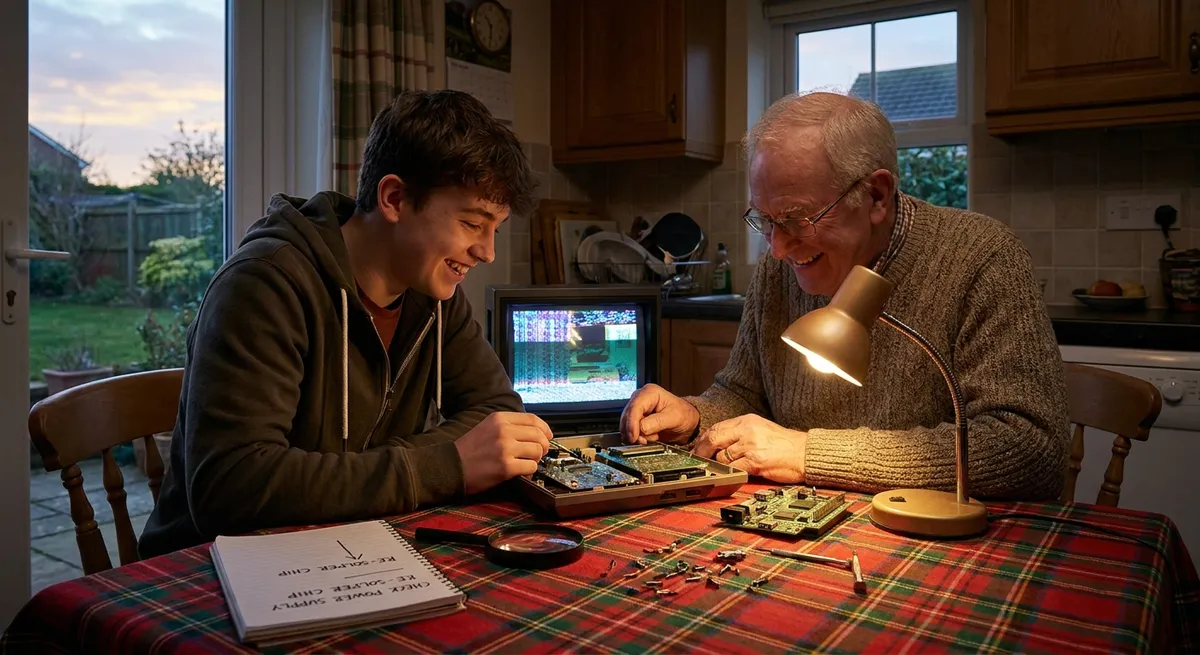
When electronics stop working the way they should, it rarely happens at a “good” time. Before you assume something is broken beyond repair, there are practical checks and fixes you can do at home that solve a surprising number of issues. This guide walks you through five common electronics problems with clear, step‑by‑step solutions you can try safely—no advanced tools or experience needed.
1. Laptop Won’t Turn On (No Lights, No Fans, No Display)
When a laptop appears completely dead, it’s often a power, battery, or static issue— not a destroyed motherboard. Work through these steps in order.
Step‑by‑step solution
Check the outlet and adapter
- Plug a different device (like a phone charger) into the same outlet to confirm it has power. - Inspect the laptop charger for frayed cables, bent connectors, or burn marks. - If your adapter has a power brick light, confirm it’s on. No light usually means a bad adapter or no power.
Remove all external devices
- Unplug USB drives, external hard drives, printers, dongles, and HDMI cables. - Faulty peripherals can prevent proper startup or cause power issues.
Perform a power reset (discharge static)
- Disconnect the charger from the laptop. - If the battery is removable, remove it. - Press and hold the power button for a full 15–30 seconds. This discharges residual power that can lock up the system. - Reinstall the battery (if removable) and reconnect the charger. - Try turning the laptop on again.
Try a different charger (if available)
- Use a compatible adapter with the same voltage and equal or higher amperage. - If the laptop powers on with a different charger, your original adapter is the problem.
Check for signs of life
- Look for any lights (power, charging, keyboard backlight), fan noise, or screen flicker. - If you see lights but no display, try connecting an external monitor or TV via HDMI to rule out a screen issue.
Test with and without battery (if removable)
- Remove the battery and connect only the charger. Try powering on. - If it works without the battery but not with it, the battery may be faulty.
When to stop and get help
- No lights, beeps, or fan noise after all the above steps. - You smell burning or see physical damage. - At this point, further DIY attempts (like opening the laptop) can void warranties. Contact the manufacturer or a professional repair shop.
2. TV Has Sound but No Picture
If your TV plays sound but the screen is black (or very dim), the issue is usually with the input, brightness settings, or backlight—not always a dead TV.
Step‑by‑step solution
Check the basics
- Shine a flashlight at the screen while it’s on and playing something. - If you see a very faint image, the backlight may be the problem. - Ensure the TV’s power light is on and it’s not in standby.
Confirm the correct input
- Press the Input/Source button on the remote or TV. - Cycle through HDMI1, HDMI2, AV, etc., slowly. Pause a few seconds on each. - Verify your streaming stick, cable box, or console is powered on and connected firmly.
Adjust brightness and picture mode
- Use the remote to open the TV’s Menu or Settings. - Go to Picture or Display settings. - Increase brightness and backlight levels. - Disable “Eco,” “Energy Saving,” or similar modes that can dim the screen aggressively.
Test with a different source and cable
- Try a different HDMI cable and a different device (like a laptop, DVD player, or game console). - If one input works and another doesn’t, you may have a bad port or cable—not a bad TV.
Do a soft reset
- Turn off the TV and unplug it from the wall. - Hold the TV’s power button (on the frame, not the remote) for 10–15 seconds if accessible. - Wait 60 seconds, then plug it back in and power on.
Check backlight and damage signs
- If you get a very faint image with a flashlight, the backlight or power board may be failing. - If the screen is cracked or shows ink‑like blotches, that’s panel damage, not a settings issue.
When to call a pro
- Persistent black screen with sound even after trying other inputs and cables. - Faint image visible only with a flashlight. - These conditions often require internal component or panel replacement—best left to a TV repair technician.
3. Phone Won’t Charge Reliably (Loose Port or Intermittent Charging)
A common cause of “dead” phones is simply a dirty or worn charging port. Before assuming the battery is gone, tackle the simple checks first.
Step‑by‑step solution
Inspect cables and adapters
- Try a known‑good cable and wall adapter that works on another device. - Avoid very cheap, unbranded third‑party chargers, especially for fast charging. - Check for bent connectors, exposed wires, or kinks in the cable.
Clean the charging port carefully
- Power off your phone. - Use a wooden or plastic toothpick (never metal) to gently dislodge lint and dust from the port. - Work slowly and lightly along the bottom edge of the port—this is where debris packs in. - Use a can of compressed air with short bursts to blow out loosened debris.
Check cable fit and orientation
- Plug in the cable and gently wiggle it. It should feel snug, not loose. - For USB‑C and Lightning ports, try flipping the connector (if applicable). - If the phone only charges in one precise angle, the port may be mechanically worn.
Check charging settings and battery health (if your OS supports it)
- On iOS: Settings → Battery → Battery Health & Charging to see maximum capacity. - On many Android phones: Settings → Battery → Battery Health (location varies by brand). - Features like “Optimized Charging” can slow or pause charging near 80–90% to protect the battery.
Try a different power source
- Plug directly into a wall outlet instead of a power strip, USB hub, or laptop. - Test both slow charging (standard 5W/10W) and your fast charger if available.
Software reset (if charging is detected but erratic)
- Restart the phone. Sometimes the charging controller or system services glitch. - Check for system updates: an outdated OS can cause power management bugs.
When to seek repair
- No charging icon appears with multiple known‑good chargers and outlets. - The port feels very loose, or the cable falls out easily. - Phone gets unusually hot while charging or battery drains extremely fast. - These conditions suggest port damage or battery failure that requires professional replacement.
4. Wi‑Fi Is Connected but Internet Is Slow or Constantly Dropping
If your devices show a strong Wi‑Fi signal but pages load slowly or disconnect, the problem may be interference, router settings, or overcrowded channels—not just “bad internet.”
Step‑by‑step solution
Power‑cycle your modem and router
- Unplug the power cables from both modem and router. - Wait 30–60 seconds. - Plug the modem back in first and wait until its lights stabilize. - Then plug in the router and wait 2–3 minutes. - Test again on your phone or laptop.
Test speed and isolate the issue
- On a device connected via Wi‑Fi, run a speed test (e.g., Speedtest.net). - If possible, connect a laptop directly to the router/modem with an Ethernet cable and retest. - Good speed on wired but poor on Wi‑Fi = wireless issue (placement, interference, settings). - Poor speed on both = likely an ISP or modem problem.
Optimize router placement
- Place the router in a central, elevated location—away from thick walls, floors, and metal. - Avoid placing it near microwaves, cordless phones, baby monitors, or large appliances. - Keep it off the floor and out from behind TVs or inside cabinets.
Switch Wi‑Fi band or channel
- Log into your router’s admin page (address is usually on a sticker: often 192.168.0.1 or 192.168.1.1). - If you have both 2.4 GHz and 5 GHz, try connecting to 5 GHz for faster speeds (shorter range) or 2.4 GHz for better distance. - Change the channel from “Auto” to a less congested one (apps like Wi‑Fi analyzer tools can help you see congestion).
Reduce device overload
- Disconnect or power off devices you’re not using (old phones, tablets, smart TVs, IoT gadgets). - Pause large downloads or game updates on consoles when others need bandwidth.
Update router firmware
- On the router admin page, look for Firmware Update or Software Update. - Follow the manufacturer’s instructions to update. - Outdated firmware can cause instability, security issues, and speed drops.
When to contact your ISP or replace hardware
- Speed tests consistently show much lower speeds than your plan promises, on both wired and wireless. - Internet drops multiple times a day even with good internal Wi‑Fi settings. - Your router is more than 5–7 years old—modern routers handle interference and multiple devices much better.
5. Game Console Overheating or Shutting Down Mid‑Game
If your console gets hot, ramps up its fans, or powers off during games, it’s usually a cooling or ventilation issue. Ignoring this can shorten the console’s lifespan.
Step‑by‑step solution
Improve airflow around the console
- Move the console out of enclosed cabinets or tight shelves. - Keep at least 4–6 inches (10–15 cm) of space around all sides and especially behind it. - Don’t stack other electronics directly on top of the console.
Clean dust from vents (externally)
- Power off and unplug the console. - Use a can of compressed air to blow dust out of the vents using short bursts, holding the can upright. - Aim from different angles to dislodge buildup without forcing moisture inside. - Wipe the exterior with a dry microfiber cloth.
Check fan noise patterns
- After cleaning and improving airflow, power on the console and play a game for 10–15 minutes. - It’s normal for fans to get louder under load, but they shouldn’t sound like a jet engine constantly. - If fans stay maxed out at all times, internal dust buildup may be heavy.
Avoid blocking intake and exhaust
- Confirm you’re not placing the console on thick carpet or soft surfaces that block cooling vents. - If the console can be used vertically or horizontally, follow the manufacturer’s recommended orientation and ensure vents are unobstructed.
Limit heat from other devices
- Don’t place the console right next to a hot AV receiver or PC exhaust. - If everything is in a media cabinet, consider leaving the doors open while gaming.
Software and power settings check
- Ensure the console firmware/system software is up to date. - Disable over-aggressive performance/overclock settings if using a PC‑style console setup. - Check any power‑saving or rest mode options that might affect fan behavior.
When to get it serviced
- Console still shuts down mid‑game after cleaning and improving ventilation. - You hear grinding or rattling sounds from inside (possible fan failure). - In most cases, opening the console fully can void warranties—use official repair programs or reputable repair shops.
Conclusion
Most “dead,” “broken,” or “slow” electronics are suffering from simpler problems: power issues, dust, bad cables, misconfigured settings, or overheating. By following structured, step‑by‑step checks—starting from the outside and moving in—you can safely rule out common causes and fix many issues yourself. When a problem persists after these practical steps, you’ll also be better prepared to explain the symptoms to a repair technician or support team, saving time, money, and frustration.
Sources
- Apple Support – If your Mac doesn’t turn on – Official troubleshooting for non‑starting Macs, including power and reset steps
- Microsoft – Troubleshoot black screen or blank screen errors – Guidance that overlaps with no‑display issues on laptops and PCs
- Federal Communications Commission (FCC) – Interference to Home Electronics – Explains how interference can affect Wi‑Fi and other electronic devices
- Google Fiber – How to improve your Wi‑Fi signal – Practical placement and interference tips to stabilize wireless connections
- PlayStation Support – PS5 is too hot or overheating – Official recommendations on ventilation and cleaning for overheating consoles
Key Takeaway
The most important thing to remember from this article is that this information can change how you think about Electronics.