Small problems around the house can quietly drain your time, money, and patience—often for things you can fix yourself in under an hour. Before you book a service call or replace an appliance, run through these five practical, step‑by‑step solutions. They’re designed for real homes, real schedules, and real budgets.
1. Sink Draining Slowly? Clear the Clog Without Taking Pipes Apart
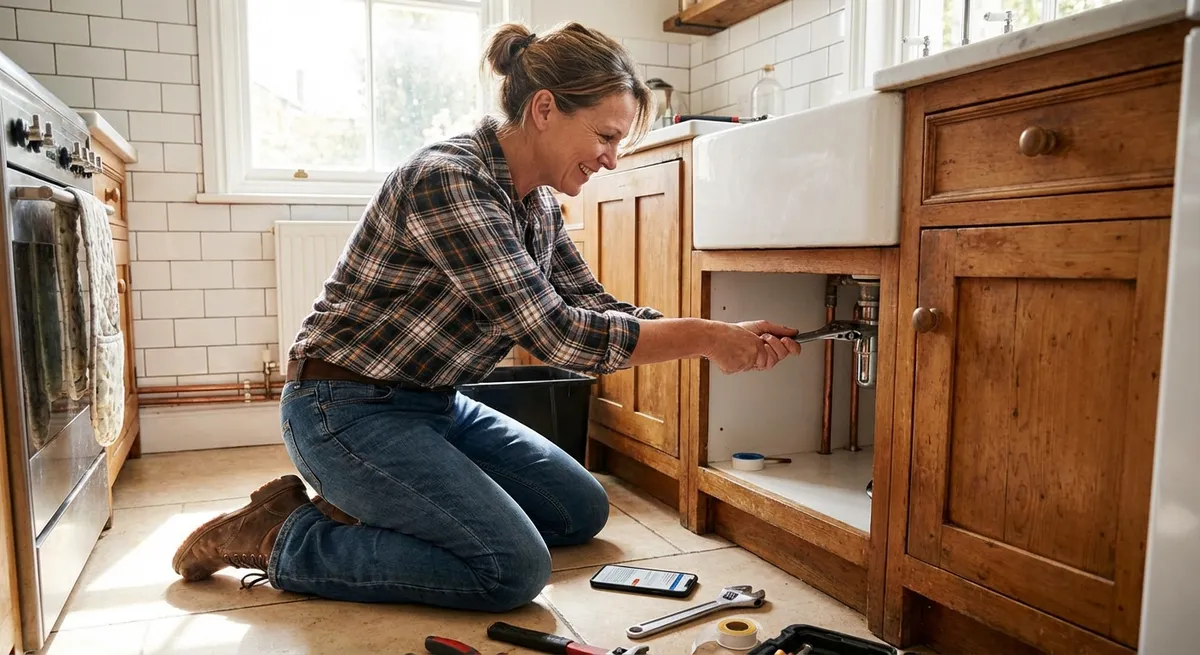
A slow sink is usually caused by buildup in the trap or just below the drain—not a “broken” plumbing system. You can often clear it without dismantling anything.
Step‑by‑step:
Remove visible debris
- Put on rubber gloves. - Pull out any hair, food, or debris you can see at the drain opening using your fingers or a bent wire/old toothbrush. - Run hot water for 30 seconds to see if this alone helped.
Use boiling water strategically (for metal pipes only)
- Boil a full kettle or large pot of water. - Slowly pour about one-third down the drain. - Wait 30 seconds, pour another third, wait again, then pour the last third. - Avoid boiling water with PVC plastic pipes; use very hot tap water instead.
Try a baking soda and vinegar flush
- Pour about ½ cup of baking soda into the drain. - Follow with 1 cup of white vinegar. - Cover the drain with a plug or cloth to keep the reaction in the pipe. - Wait 10–15 minutes, then flush with hot water for 30–60 seconds.
Use a sink plunger properly
- Block overflow holes with a wet cloth (bathroom sinks) so air doesn’t escape. - Fill the sink with just enough water to cover the plunger cup. - Plunge firmly in up‑and‑down motions for 20–30 seconds. - Lift the plunger; if water rushes out, you likely cleared the clog. Repeat if needed.
Know when to stop
- Call a plumber if: - Multiple drains backup at once - Water backs up into other fixtures (e.g., flush toilet, tub fills) - There’s a sewage smell—this can indicate a main line issue
Pro tip: Avoid chemical drain cleaners as a first option. They can damage older pipes and are dangerous if later mixed with other cleaners.
2. Door Won’t Close Right? Fix Misalignment and Squeaks in Minutes
A sticking, squeaking, or sagging door is usually a hardware or hinge problem—not a “crooked wall” or major structural issue. Most fixes are quick and only need a screwdriver.
Step‑by‑step for a squeaky door:
Identify the noisy hinge
- Slowly open and close the door. - Listen and watch which hinge moves when the squeak happens.
Lubricate the hinge
- Use a silicone spray, WD‑40, or a light household oil. - Put a cloth under the hinge to catch drips. - Spray or apply a small amount directly on the hinge pin and moving parts. - Open and close the door 10–15 times to work in the lubricant. - Wipe off any excess.
Step‑by‑step for a door that won’t latch or rubs:
Check hinge screws first
- With the door open, tighten all hinge screws on the door and the frame. - If a screw just spins, remove it and replace with a longer wood screw (2–3 inches) to grab deeper framing wood. - Test the door again—often this alone fixes sagging.
Adjust the strike plate (where the latch clicks)
- Close the door slowly and see where the latch hits the strike plate. - If it’s hitting too high or too low: - Loosen strike plate screws slightly. - Shift the plate up or down a millimeter or two. - Retighten and test.
Plane a rubbing edge (only if needed)
- Mark the spot where the door rubs the frame with a pencil. - Remove the door from its hinges (tap hinge pins out with a nail and hammer). - Use a hand plane or medium‑grit sandpaper to shave down just the marked area. - Sand smooth, reinstall the door, and test.
Pro tip: If an interior door suddenly rubs after humidity changes (rainy season, summer), wait a few days. Sometimes the wood naturally shrinks back, and you avoid unnecessary sanding.
3. Outlet or Switch Not Working? Restore Power Safely
A dead outlet or switch doesn’t always mean “call an electrician immediately.” Often, it’s a tripped breaker or GFCI that you can safely reset—if you follow basic precautions.
Important safety rule:
If you see burn marks, smell burning, or feel heat from the outlet or switch, stop and call a licensed electrician.
Step‑by‑step:
Test with a simple device
- Plug in a lamp or phone charger you know works into the suspect outlet. - If it doesn’t power on, confirm by testing that device in another working outlet.
Check for a tripped breaker
- Go to your electrical panel. - Look for any breaker that is between ON and OFF or clearly labeled “tripped.” - Flip the tripped breaker fully to OFF, then firmly back to ON. - Test the outlet or switch again.
Look for a GFCI (reset button outlet)
- In kitchens, bathrooms, garages, basements, and outdoor areas, find any outlet with TEST and RESET buttons. - Press RESET firmly. - If it immediately trips again, unplug all devices on that circuit and try once more. - Test the previously dead outlet or switch—it may be downstream of that GFCI.
Inspect the device you’re using
- Try a different charger, adapter, or extension cord. - A failed power brick can make you assume the outlet is the problem.
Know when to call a pro
- The breaker keeps tripping immediately with nothing plugged in. - Multiple rooms lose power with no obvious breaker issue. - You feel any warmth or buzzing from outlets or switches.
Pro tip: Label your breaker panel clearly while everything is working. Future troubleshooting becomes faster and less stressful.
4. Fridge Not Cooling Well? Stabilize It Before Food Spoils
A “warm” refrigerator doesn’t always mean it’s dying. Poor cooling is frequently caused by airflow issues, dirty coils, or simple setting problems that you can fix yourself.
Step‑by‑step:
Check temperature settings first
- Set fridge to around 37–40°F (3–4°C). - Set freezer to about 0°F (‑18°C). - Avoid “max cold” settings; they can cause icing and airflow problems.
Inspect door seals (gaskets)
- Close the door on a sheet of paper or a dollar bill. - Try to pull it out—if it slides out easily, the seal may be weak in that area. - Clean seals with warm, soapy water and a soft cloth to remove grease and crumbs. - Check that nothing inside is blocking the door from closing fully.
Clear vents and improve airflow inside
- Look for cold air vents at the back or sides—do not block them with food. - Avoid overpacking; cold air must circulate freely. - Keep tall containers away from vents and center them instead.
Clean the condenser coils
- Unplug the fridge (or turn off the circuit breaker). - Pull the fridge away from the wall carefully. - Locate coils on the back or underneath the front kick plate. - Use a coil brush or vacuum with a brush attachment to remove dust and pet hair. - Plug the fridge back in and slide it back, leaving a bit of space from the wall.
Give it time to recover
- After adjustments or after the door was left open, it can take 12–24 hours to stabilize. - Avoid opening the door frequently during this time.
Pro tip: If the freezer is cold but the fridge is warm, you often have an airflow or fan problem, not a total failure. That’s a good sign—and a reason to try cleaning vents and coils before calling for service.
5. Wall Anchors Pulled Out? Re‑Hang Heavy Items So They Stay Put
Shelves, curtain rods, and TV brackets often fail because they’re attached to drywall only, without the right anchors. You can repair torn‑out holes and re‑mount the item securely.
Step‑by‑step for repairing a pulled‑out drywall anchor:
Remove loose material
- Take out any remaining screw or anchor. - Scrape away loose drywall paper and crumbling gypsum with a putty knife.
Patch the hole
- For small holes (smaller than a nickel): - Fill with pre‑mixed spackle or lightweight joint compound using a putty knife. - Smooth it flush with the wall. - For larger holes: - Use a self‑adhesive wall repair patch or mesh tape over the hole. - Apply joint compound over the patch, feathering the edges.
Let it dry and sand
- Allow the compound to fully dry (follow product instructions). - Lightly sand the area smooth with fine‑grit sandpaper. - Wipe away dust with a dry cloth.
Choose the right anchor for the job
- For light items (small pictures): plastic expansion anchors are usually fine. - For medium loads (towel bars, curtain rods): use screw‑in drywall anchors or toggle anchors. - For heavy items (shelves, TVs): whenever possible, screw directly into a stud using a stud finder.
Re‑install correctly
- Pre‑drill a small pilot hole if recommended for the anchor type. - Install the anchor flush with the wall. - Drive the screw in, but don’t overtighten—stop when it’s snug.
Pro tip: If you’re hanging anything that could hurt someone if it falls (TVs, big shelves, large mirrors), prioritize finding a stud rather than relying only on drywall anchors.
Conclusion
Most “house problems” start small and get expensive only when they’re ignored or misdiagnosed. By learning a handful of practical fixes—clearing drains, tuning doors, checking power, stabilizing your fridge, and properly anchoring to walls—you can solve a surprising amount yourself. Start with these five solutions before you spend money on a service call or replacement. You’ll build confidence, protect your home, and keep more cash in your pocket for the projects that truly require a pro.
Sources
- [U.S. Environmental Protection Agency – WaterSense: Fixing Leaks at Home](https://www.epa.gov/watersense/fix-leak-week) - General guidance on common household water issues and simple fixes
- [U.S. Department of Energy – Refrigerator and Freezer Energy Tips](https://www.energy.gov/energysaver/refrigerator-freezer-energy-savings) - Explains how temperature settings, coils, and airflow affect fridge performance
- [Consumer Product Safety Commission – Electrical Outlet and Wiring Safety](https://www.cpsc.gov/safety-education/safety-guides/home/electrical) - Safety fundamentals for working around outlets, breakers, and wiring
- [Cornell Cooperative Extension – Home Repair and Maintenance Basics](https://monroe.cce.cornell.edu/community/home-repair-and-maintenance) - Educational overview of common home maintenance tasks and when to call a professional
- [Lowe’s – How to Fix a Slow Draining Sink](https://www.lowes.com/n/how-to/fix-a-slow-draining-sink) - Step‑by‑step reference for unclogging sinks and basic drain maintenance
Key Takeaway
The most important thing to remember from this article is that this information can change how you think about Household Repairs.