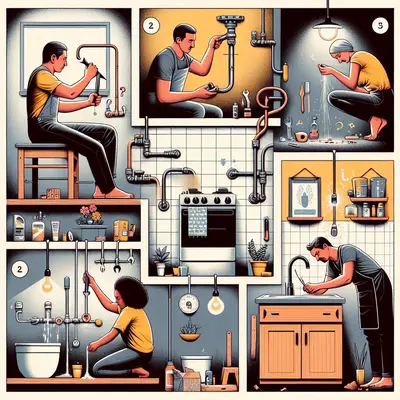
Keeping a home running smoothly doesn’t always require a pro or a big budget. With a few basic tools, a calm approach, and clear steps, you can handle a surprising number of problems yourself—and avoid waiting days for help to show up.
This guide walks you through five common household issues with straightforward, practical instructions. Each fix is designed so you can start—and finish—today.
1. Silencing a Dripping Faucet
A dripping faucet wastes water, adds to your bill, and is annoying to listen to. In most cases, the cause is a worn internal part that’s simple to replace.
What you’ll need:
Adjustable wrench, flathead and Phillips screwdriver, replacement cartridge or washers/O-rings (check faucet brand/model), towel, small container.
Step-by-step:
Shut off the water supply
Look under the sink for the hot and cold shutoff valves and turn them clockwise until they stop. If you can’t find them, turn off the main water supply for your home.
Plug the drain
Use a sink stopper or a rag in the drain. This prevents small screws or parts from disappearing.
Remove the handle
- Pry off the decorative cap (if present) with a flathead screwdriver. - Unscrew the handle screw and lift the handle off. - Keep all screws in a small container so you don’t lose them.
Identify the faucet type
Look for a cartridge, ball, ceramic disc, or compression setup. The brand and style will guide you to the right replacement parts. Take a photo before disassembly to help with reassembly.
Remove internal parts
Use your wrench and screwdriver to remove the retaining nut or clip. Gently pull out the cartridge or stem. Inspect rubber washers and O-rings—if they’re cracked, flattened, or brittle, they’re likely the cause of the drip.
Take parts to the store
Bring the old parts to a hardware store to match the exact size and style. Guessing leads to return trips and more dripping.
Install new parts
- Reassemble in the reverse order of disassembly. - Make sure O-rings are seated properly and any rubber parts are not twisted. - Tighten nuts firmly but avoid over-tightening—this can damage the faucet body.
Turn water back on and test
Slowly turn the shutoff valves counterclockwise. Open the faucet fully to check for leaks. If it still drips after a minute or two, recheck that parts are seated correctly.
2. Getting a Toilet to Flush Properly Again
A toilet that won’t flush fully or runs constantly is usually fixable inside the tank without calling a plumber.
What you’ll need:
Adjustable wrench (maybe), new flapper (or fill valve kit if needed), towel.
Step-by-step:
Remove the tank lid and inspect
Gently lift the lid and set it somewhere safe. Flush once and watch how things move. Focus on the flapper, chain, and fill valve.
Fix a weak or incomplete flush
- Check the chain: it should have just a little slack when the flapper is down. - If it’s too loose, the flapper won’t lift enough; if it’s too tight, the flapper can’t seal. Adjust the clip so there’s about ½ inch of slack.
Replace a worn flapper (common cause of running toilets)
- Turn off the shutoff valve behind or beside the toilet (clockwise). - Flush to empty most of the water from the tank. - Unhook the chain from the flush lever. - Remove the flapper from the overflow tube ears (usually it just slips off). - Install the new flapper, hooking it to the same ears and clipping the chain to the lever with some slack.
Check water level in the tank
- The water line should be about 1 inch below the top of the overflow tube. - Adjust the float: - For a float cup: squeeze the metal clip and slide the float up or down the rod. - For a ball float: turn the adjustment screw on top of the fill valve slightly, or gently bend the float arm down (to lower level) or up (to raise level).
Turn water back on and test
Open the shutoff valve, let the tank fill, then flush. Confirm: - Strong flush. - Flapper closes fully. - No constant trickling sound once the tank refills.
If it still misbehaves
At this point, replacing the entire fill valve assembly is often the next step. Most modern kits include clear instructions and only require basic tools.
3. Re-Hanging a Loose Cabinet Door
Cabinet doors that sag, scrape, or won’t close properly are often the result of loose or misaligned hinges. Fixing them is mostly about careful adjustments rather than heavy carpentry.
What you’ll need:
Phillips screwdriver, toothpicks or wooden matchsticks, wood glue (optional), drill with small bit (optional).
Step-by-step:
Identify where the door is catching or sagging
Open and close the door slowly. Note whether it’s rubbing at the top, bottom, or side, or if it doesn’t sit flush with neighboring doors.
Tighten existing hinge screws
- With the door closed, use your screwdriver to snug all hinge screws on both the door and cabinet frame. - Don’t overtighten—just firm enough to eliminate wobble.
Fix stripped screw holes (very common)
If a screw keeps turning but won’t tighten: - Remove the screw. - Push in one or more wooden toothpicks or matchsticks coated lightly with wood glue into the hole. - Break them off flush with the surface. - Reinsert the screw into the “refilled” hole and tighten. The new wood gives the screw something solid to bite into.
Adjust European-style (concealed) hinges
Most modern kitchen cabinets use these, with small adjustment screws on the hinge: - Side-to-side screw: moves door left or right. - Depth screw: pulls door in or out. - Height is usually adjusted by loosening the mounting screws and sliding the hinge slightly up or down. Make tiny adjustments, then close the door and check alignment each time.
Align doors with each other
When working with multiple doors, pick one “reference” door that hangs correctly. Adjust neighboring doors to line up gaps, top edges, and faces with that one.
Final check
Open and close the doors several times. Look for even gaps and smooth operation. If it still feels off, re-check for any stripped screws or hinges that shifted when tightening.
4. Clearing a Slow Sink Drain Without Harsh Chemicals
A slow bathroom or kitchen sink is usually caused by hair, soap scum, or grease buildup. You can often restore flow without pouring strong chemicals down your pipes.
What you’ll need:
Bucket or bowl, old toothbrush, pliers (optional), plastic drain snake or zip-it tool, rubber gloves.
Step-by-step:
Remove visible debris from the drain
- Take out any drain stopper, basket, or strainer. - Use a plastic drain snake to pull out hair, food bits, or gunk. - Dispose of debris in the trash, not back down the drain.
Clean the stopper assembly (bathroom sinks)
Many bathroom sinks have a pop-up stopper connected under the sink: - Place a bucket under the drain. - Locate the horizontal pivot rod that connects to the back of the drain pipe. - Unscrew the pivot rod nut by hand or with pliers. - Pull the rod out; the stopper can now be removed from above. - Clean the stopper thoroughly with an old toothbrush. - Reinsert the stopper, then slide the rod back into the same hole and tighten the nut.
Flush with hot (not boiling) water
Run very hot tap water for several minutes to help melt soap and grease clogs. Avoid pouring boiling water into porcelain sinks, as sudden temperature change can crack them.
Try a manual plunger (optional)
- Block the overflow hole with a wet cloth. - Fill the sink with a few inches of water. - Use a small plunger over the drain and pump firmly. - Release and see if the water drains faster.
Avoid overusing chemical drain cleaners
Commercial drain cleaners can damage older pipes and finishes and are hazardous if misused. If you do use them, carefully follow the label instructions and never mix different products.
If multiple drains are slow
The issue may be deeper in your plumbing or main line. That’s the point to consider a professional, especially if toilets and tubs are affected too.
5. Resetting a Dead Outlet or Tripped Breaker
When an outlet or several outlets suddenly stop working, it’s often a simple electrical protection doing its job. Restoring power safely is usually straightforward.
What you’ll need:
Flashlight (if needed), small appliance or lamp for testing.
Step-by-step:
Test the outlet
- Plug a lamp or small device into the outlet you think is dead. - Confirm it works in a known good outlet to rule out a bad device.
Check for GFCI outlets nearby
Kitchens, bathrooms, garages, and outdoor areas often use GFCI (Ground-Fault Circuit Interrupter) outlets with “Test” and “Reset” buttons. - Look for these in the same room or even adjacent rooms on the same wall. - If the “Reset” button is popped out, press it firmly until it clicks.
Inspect the electrical panel
- Locate your main breaker or fuse box. - Look for a breaker that’s in the middle or “tripped” position, or slightly out of line with the others. - Turn the breaker all the way OFF, then back ON to reset.
Avoid repeatedly tripping the circuit
If the breaker trips again immediately: - Unplug devices on that circuit. - Try resetting once more. - If it still trips, stop. You may have a short or overloaded circuit that needs an electrician.
Check for loose plugs or damaged cords
A loose plug or frayed cord can cause intermittent power or tripping. Replace damaged cords and avoid using outlets that feel hot or have scorch marks—call a pro.
Know when not to DIY electrical
If you smell burning, see sparks, hear buzzing from the panel, or have frequent breaker trips with no clear cause, stop troubleshooting and contact a licensed electrician. Safety comes first.
Conclusion
Most everyday home problems don’t require special skills—just a methodical approach and a willingness to get a little hands-on. By shutting off water or power when needed, working step-by-step, and knowing your limits, you can fix a dripping faucet, restore a toilet’s flush, re-hang a stubborn cabinet door, clear a slow drain, and revive dead outlets.
Tackle one issue at a time, keep the basic tools on hand, and document what you do with quick photos. Over time, you’ll build the confidence (and habits) that make your home easier and cheaper to maintain—and you’ll call for backup only when it’s truly necessary.
Sources
- [U.S. Environmental Protection Agency – Fix a Leak](https://www.epa.gov/watersense/fix-leak-week) - Explains how small leaks, like dripping faucets, waste water and why fixing them matters
- [Family Handyman – How to Fix a Leaking Faucet](https://www.familyhandyman.com/project/how-to-fix-a-leaking-faucet/) - Step-by-step faucet repair guidance with diagrams for different faucet types
- [U.S. Department of Energy – Electrical Safety](https://www.energy.gov/ceser/activities/energy-security/emergency-preparedness/electrical-safety) - General electrical safety practices relevant when working around outlets and breaker panels
- [University of Georgia Extension – Toilet Repair Basics](https://extension.uga.edu/publications/detail.html?number=C1094&title=Toilet%20Repair) - Practical overview of common toilet issues and homeowner-level fixes
- [International Association of Certified Home Inspectors – Bathroom Sink Drains](https://www.nachi.org/bathroom-sink-drains.htm) - Explains how bathroom sink drains and stoppers work and common clog points
Key Takeaway
The most important thing to remember from this article is that this information can change how you think about Household Repairs.