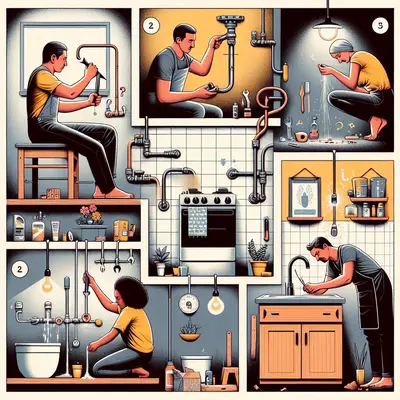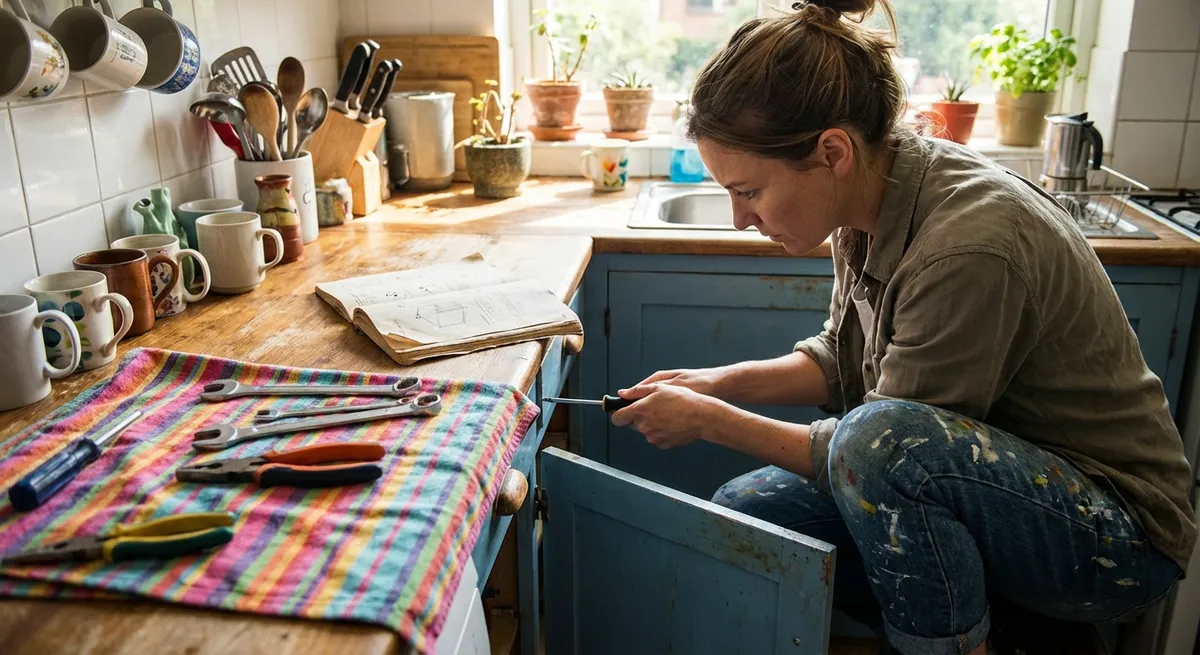
Most “small” problems at home never stay small. A dripping faucet becomes a swollen cabinet. A wobbly chair turns into a broken one right before guests arrive. The good news: many of these annoyances are fast, cheap, and realistic to fix yourself—no special skills, no contractor, just a clear set of steps and a bit of patience.
Below are five practical, step‑by‑step repairs you can safely tackle today to make your home quieter, safer, and less stressful.
Silence That Dripping Faucet
A constant drip wastes water and money—and it’s usually caused by a worn rubber washer or cartridge you can replace yourself.
What you’ll need
- Adjustable wrench or basin wrench
- Screwdriver (Phillips and flathead)
- Replacement washer or cartridge (match your faucet brand/model)
- Plumber’s tape (Teflon tape)
- Rag or small towel
Step‑by‑step
Shut off the water
Look under the sink for two shutoff valves (hot and cold). Turn both clockwise until they stop. Open the faucet to confirm the water is off.
Plug the drain
Use the sink stopper or a rag so small screws don’t disappear down the drain.
Remove the faucet handle
- Find the small cap or screw cover on the handle and pry it off carefully. - Unscrew the handle and lift it off to expose the stem or cartridge.
Identify and remove the internal parts
- For compression faucets (you turn them multiple times to open/close), there’s usually a stem with a rubber washer at the bottom. - For cartridge faucets (lever-style that move up/down or left/right), you’ll remove a clip or nut that holds the cartridge in. Use your wrench to loosen the nut and pull out the stem or cartridge.
Inspect and replace the washer or cartridge
- For stems: replace the rubber washer at the end (keep the old one to match size at the store). - For cartridges: replace the entire cartridge with the same brand and model. Wrap any threaded sections lightly with plumber’s tape.
Reassemble the faucet
Insert the new part, tighten the nut (snug, not over‑tight), reinstall the handle, and replace the screw cover.
Turn water back on and test
Slowly open the shutoff valves, then run the faucet. Check for leaks around the base and under the sink.
When to call a pro: If the shutoff valves won’t turn, you see corroded pipes, or the faucet body itself is cracked.
Fix a Running Toilet That Won’t Stop Refilling
A running toilet can waste hundreds of gallons of water a day. Most of the time, the problem is in the tank, not the bowl—and you can fix it without touching the plumbing in the wall.
What you’ll need
- Replacement flapper (universal size fits most toilets)
- Optional: fill valve replacement kit (if current valve is very old or noisy)
- Scissors (if the flapper chain needs trimming)
- Towel
Step‑by‑step
Remove the tank lid and set it aside safely
Place it on a flat surface away from edges—it’s heavy and can crack easily.
Identify the main parts
Inside the tank you’ll see: - The flapper: rubber piece covering the flush valve at the bottom - The fill valve: tall valve on one side with a float - The overflow tube: vertical tube in the middle
Test the flapper
Push down on the flapper firmly. - If the running stops, the flapper isn’t sealing and probably needs replacing. - Also check if the chain is too tight (holding the flapper slightly open).
Adjust or replace the flapper
- Shut off the water at the valve behind the toilet (turn clockwise). - Flush to empty most of the water from the tank. - Unhook the old flapper from the pins on the sides of the overflow tube and disconnect the chain. - Attach the new flapper and connect the chain so there’s a little slack, but not so much that the handle can’t lift it properly.
Adjust the water level
If water is flowing into the overflow tube, the float is set too high. - On newer valves, turn the adjustment screw or slide the clip on the rod to lower the float. - Aim for the water line marked in the tank, or about 1 inch below the top of the overflow tube.
Turn water back on and test
Let the tank fill. - Listen: the water should stop completely. - Watch: no trickle should go into the overflow tube. - Do a couple of flushes to ensure the chain doesn’t tangle or hold the flapper open.
When to call a pro: If water is leaking around the base of the toilet or you see cracks in the tank or bowl.
Secure a Wobbly Chair or Table
Loose furniture isn’t just annoying—it’s a tipping hazard. Often, all you need is some glue and a few minutes of clamping time.
What you’ll need
- Wood glue (interior, PVA glue)
- Clamps or strong straps (ratchet straps work in a pinch)
- Screwdriver and/or Allen wrench
- Damp cloth
- Sandpaper (optional, fine grit)
Step‑by‑step
Flip and inspect
Turn the chair or table upside down on a soft surface. Wiggle each leg and joint to pinpoint where the movement comes from.
Tighten fasteners first
- Tighten any visible screws or bolts. - If an Allen key was included originally, use it; don’t force the wrong tool. Sometimes tightening alone is enough.
Disassemble loose joints gently
If it’s still wobbly: - Carefully pull apart the loose joint—rock it back and forth; don’t yank. - If it won’t budge, do not force it—focus on what you can open without damage.
Clean the joint
- Scrape or sand off old, flaky glue. - Wipe away dust with a damp cloth and let it dry a couple of minutes; glue sticks better to clean, dry wood.
Apply wood glue properly
- Run a thin, even bead of glue along the tenon or dowel (the part that goes into the hole) and lightly inside the socket. - Insert the pieces together and twist slightly to spread the glue.
Clamp and align
- Use clamps or straps to pull the joint tight. - Make sure legs are straight and the furniture sits level. - Wipe off any squeezed-out glue with a damp cloth.
Let it cure
- Follow the glue label—typically clamp for at least 30 minutes, and don’t sit or put weight on it for 24 hours.
When to call a pro or replace: If the wood is cracked through a major load-bearing joint, or antique furniture has significant damage you don’t want to risk worsening.
Clear a Slow Bathroom Sink Without Harsh Chemicals
A sink that takes forever to drain is usually clogged with hair and soap scum close to the top of the drain. You often don’t need chemical cleaners or a plumber—just a simple manual clean.
What you’ll need
- Bucket or small container
- Old toothbrush
- Plastic drain snake or zip strip (cheap at hardware stores)
- Adjustable wrench or channel-lock pliers
- Rubber gloves
- Towel
Step‑by‑step
Prepare the area
Place a towel under the sink and put your bucket nearby. This keeps any drips contained.
Remove the sink stopper
- Many bathroom sinks have a pop-up stopper controlled by a rod behind the faucet. - Under the sink, find the horizontal rod entering the drainpipe. - Unscrew the small retaining nut, slide the rod out, then lift the stopper out from above.
Clean the stopper
- Remove hair and gunk from the stopper with a paper towel or toothbrush. - Rinse it in a bucket or plastic container, not directly in the sink you’re trying to unclog.
Snake the drain
- Insert the plastic drain snake into the drain opening. - Push until you feel resistance, then pull it back out slowly to catch hair and debris. - Repeat a few times until you’re not pulling up much material.
Flush with hot water
Run hot (not boiling) water down the drain for a minute to help push away remaining residue.
Reassemble the stopper
- Insert the stopper into the drain with the hole on the bottom facing the back. - From below, slide the rod back into the hole on the stopper and tighten the retaining nut by hand, then snug with pliers (don’t over‑tighten). - Test the up/down action of the stopper.
Test the drain
Fill the sink halfway, then release. It should drain smoothly without swirling or backing up.
When to call a pro: If multiple drains in your home are slow at once, or if you see standing water that won’t move even after clearing the trap area.
Stop a Drafty Window from Wrecking Your Energy Bill
Drafty windows make rooms uncomfortable and push heating and cooling costs up. While full replacement is ideal for very old units, you can significantly improve comfort with a few simple sealing steps.
What you’ll need
- Weatherstripping (self‑adhesive foam or rubber)
- Caulk (interior, paintable; silicone or latex depending on surface)
- Caulk gun (if using standard tubes)
- Utility knife or scissors
- Candle or incense stick (for draft detection)
- Paper towels or rag
Step‑by‑step
Find the drafts
On a windy day or with your HVAC running: - Slowly move a lit candle or incense stick around the edge of the window frame. - Watch the flame or smoke; sudden movement indicates a draft point. - Note gaps around the sash (moving part) and frame (fixed part).
Clean and dry the frame
- Wipe the inside window frame with a damp cloth to remove dust and grease where you’ll apply weatherstripping or caulk. - Let it dry completely.
Apply weatherstripping to moving parts
- Open the window. - Measure the sides and top where the sash meets the frame. - Cut strips of weatherstripping to length. - Peel the backing and press firmly into place, creating a tight but not overly compressed seal when the window closes.
Caulk stationary gaps
- Look for cracks where the inside trim meets the wall or the window frame. - Cut the tip of the caulk tube at a 45° angle for a small bead. - Pull the caulk gun along the gap steadily, then smooth with a wet finger or a caulk tool. - Wipe excess with a damp rag.
Check operation and seal
- Close and lock the window. Locking often improves the seal. - Re-test with the candle/incense to see if the draft is reduced or gone. - Make sure the window still opens and closes without sticking.
Consider temporary film for very drafty windows
If the window is still cold and leaky, add interior window insulation film: - Apply the double‑sided tape around the frame, attach the clear film, then shrink it tight with a hairdryer according to package instructions.
When to call a pro: If the glass is cracked, the frame is rotten, or there’s condensation between double‑pane glass, which indicates seal failure.
Conclusion
You don’t need a truck full of tools or years of experience to solve the problems that quietly drain your wallet and patience. By tackling a dripping faucet, a running toilet, wobbly furniture, a slow drain, and drafty windows, you make your home more comfortable, safer, and cheaper to run—often in under an hour per project.
Start with the issue that annoys you most. Gather the few tools required, follow each step calmly, and treat every small success as a skill you now own. The more you fix, the less you’ll fear the next problem that shows up.
Sources
- [U.S. Environmental Protection Agency – Fix a Leak](https://www.epa.gov/watersense/fix-leak-week) – Details on how small leaks (toilets, faucets) waste water and basic guidance on finding and fixing them
- [Family Handyman – How to Fix a Leaky Faucet](https://www.familyhandyman.com/project/how-to-fix-a-leaky-faucet/) – Step‑by‑step instructions and diagrams for different faucet types
- [The Spruce – How to Fix a Running Toilet](https://www.thespruce.com/how-to-fix-a-running-toilet-2718737) – Clear overview of common toilet tank problems and DIY fixes
- [Energy.gov – Air Sealing Your Home](https://www.energy.gov/energysaver/air-sealing-your-home) – Government guidance on locating and sealing drafts around windows and doors
- [Home Depot – How to Unclog a Bathroom Sink](https://www.homedepot.com/c/ah/how-to-unclog-a-bathroom-sink/9ba683603be9fa5395fab907f4c428e) – Visual walkthrough of clearing sink clogs with basic hand tools
Key Takeaway
The most important thing to remember from this article is that this information can change how you think about Household Repairs.