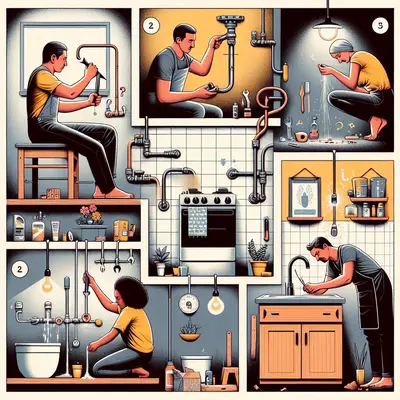
Most “call a pro” problems around the house are actually “you can handle this in 20 minutes” jobs. With a few basic tools and a clear plan, you can solve a lot of annoying issues safely and cheaply. This guide walks you through five practical fixes—step by step—so you can stop putting up with small problems that never seem to go away.
1. A Dripping Faucet That Won’t Quit
A dripping faucet wastes water and quietly adds to your bill. In most cases, the culprit is a worn-out washer or cartridge inside the handle.
What you’ll need
- Adjustable wrench
- Screwdriver (Phillips and flathead)
- Replacement washer or cartridge (match your faucet model)
- Towel and small container (to hold tiny parts)
Step-by-step
Turn off the water supply
Look under the sink for two small shutoff valves (hot and cold). Turn them clockwise until they stop. Open the faucet to confirm the water is off.
Plug the sink drain
Use the sink stopper or a rag. This prevents screws or small parts from disappearing down the drain.
Remove the faucet handle
- Look for a decorative cap on the handle (often marked hot/cold). Pry it off gently with a flathead screwdriver. - Unscrew the handle screw underneath. - Pull the handle straight up to remove it. If it’s stuck, wiggle gently—don’t force it.
Access the cartridge or washer
- Under the handle, you’ll see a nut or retaining clip. - Use the adjustable wrench to loosen the nut, or remove the clip with pliers. - Lift out the cartridge or stem assembly.
Identify and replace the worn part
- For compression faucets, check the rubber washer at the end of the stem; if it’s cracked or flattened, replace it with an identical size. - For cartridge faucets, replace the whole cartridge with a matching one (bring the old one to the hardware store if unsure).
Reassemble the faucet
- Insert the new cartridge or stem. - Tighten the retaining nut/clip (firm, but don’t over-tighten). - Reinstall the handle and decorative cap.
Turn water back on and test
Slowly open the shutoff valves under the sink. Turn on the faucet and check for leaks. If it still drips, gently tighten the handle screw and test again.
2. A Toilet That Runs Forever After Flushing
That constant “hiss” or refill noise usually means something is off inside the tank. Fixing it saves water and avoids higher utility bills.
What you’ll need
- Adjustable wrench or pliers
- Replacement flapper or fill valve (if needed)
- Towel
Step-by-step
Take off the tank lid
Set it somewhere safe—porcelain breaks easily.
Do a quick diagnosis
Flush the toilet and watch what happens: - If water keeps trickling into the bowl, the flapper may not be sealing. - If the water level rises to the overflow tube and keeps going, the fill valve is set too high or failing.
Adjust the float first (common quick fix)
- If you have a float arm with a ball: Bend the metal arm slightly downward so the ball sits lower, stopping water sooner. - If you have a vertical float on the fill valve: Look for a clip or screw and slide the float down or turn the screw to lower it.
Check the flapper
- Turn off the water at the shutoff valve behind the toilet (clockwise). - Flush to empty most of the tank. - Inspect the rubber flapper at the bottom: if it’s warped, slimy, cracked, or stiff, replace it.
Replace the flapper if needed
- Unhook the chain from the toilet handle. - Remove the flapper from the overflow tube (usually simple side hooks). - Install the new flapper in the same position and hook the chain back up, leaving a little slack so it can close fully.
Replace the fill valve (if adjustment didn’t help)
- Turn off water, flush to empty tank. - Disconnect the water supply line under the tank with a wrench. - Inside the tank, unscrew the large nut holding the fill valve in place. - Remove the old valve, insert the new one, and tighten the nut firmly. - Reattach the water line and adjust the float to set water level about 1 inch below the top of the overflow tube.
Turn water back on and test
Let the tank fill, then flush. The tank should refill and stop quietly within 30–60 seconds. No more constant running.
3. A Door That Won’t Close Smoothly (Drags, Sticks, or Won’t Latch)
Sticking doors are usually caused by loose hinges or minor misalignment—not something that needs a carpenter.
What you’ll need
- Screwdriver
- Wood toothpicks or wooden golf tee
- Wood glue (optional but helpful)
- Utility knife or sandpaper
- Pencil
Step-by-step
Identify the symptom
- Does the door rub at the top or side? - Does the latch not line up with the strike plate? - Is there a visible gap near the hinges?
Tighten hinge screws first
Open the door and tighten all visible screws on the hinges (door side and frame side). Often, this alone fixes sagging.
Fix stripped screw holes
If a hinge screw just spins and won’t tighten: - Remove the screw completely. - Push 2–3 wood toothpicks dipped in wood glue into the hole. - Snap them flush with the surface. - Reinsert the screw and tighten—now it will grab onto solid material.
Check for rubbing spots
Close the door slowly and look where it contacts the frame. Lightly mark tight spots with a pencil.
Sand or scrape minor high spots
- For paint or small wood rubs, sand the tight area or gently scrape excess paint with a utility knife. - Test frequently; remove as little material as possible.
Adjust the strike plate if the latch won’t catch
- If the latch hits too high or low, loosen the screws on the metal strike plate and move it slightly in the needed direction. Tighten screws and test. - If it needs more movement, remove the plate, carefully chisel or scrape the recess a bit, then reinstall the plate slightly shifted.
Final test
Open and close the door several times. It should latch smoothly without rubbing or needing to be slammed.
4. A Wall Crack That Keeps Getting Bigger
Superficial cracks in drywall or plaster look worse than they are. Stabilizing them correctly prevents repeat repairs and makes painting easier.
What you’ll need
- Utility knife
- Putty knife (2–4 inch)
- Joint compound (pre-mixed)
- Fiberglass mesh tape or paper tape
- Sanding sponge or fine sandpaper
- Damp cloth
Step-by-step
Prepare the crack
Use a utility knife to gently widen the crack into a slight V-shape. This feels counterintuitive, but it gives the repair material something to grip.
Clean the area
Wipe away dust with a dry brush or cloth, then lightly wipe with a damp cloth. Let it dry before continuing.
Apply mesh or paper tape
- For hairline cracks: You can skip the tape and use compound alone, but tape is more durable. - For larger or recurring cracks: Place fiberglass mesh tape directly over the crack, pressing it lightly to stick.
First coat of joint compound
- Using the putty knife, spread a thin layer of compound over the tape or crack, extending a few inches beyond the edges. - Feather the edges so it blends with the surrounding wall. - Let it dry completely (usually 12–24 hours, depending on product instructions).
Sand lightly and apply second coat
- Lightly sand with a sanding sponge to smooth high spots. - Wipe dust with a damp cloth. - Apply a second, wider coat of compound, feathering edges even further out so the repair disappears into the wall.
Final sanding and inspection
Once dry, sand lightly until the surface feels smooth and even. Shine a light across the wall at an angle to spot imperfections; touch up if needed.
Prime before painting
Joint compound is porous and will absorb paint differently than the wall. Apply a primer over the repair first, then paint to match. This prevents visible “patch spots.”
5. An Outlet That Feels Loose When You Plug Something In
If plugs sag or wiggle in a wall outlet, the device itself is probably loose in the box. This is more than an annoyance—it can be a safety issue if left unaddressed.
Important safety note
If you’re not comfortable working around electricity, stop and call a licensed electrician. Always work with power off and test before touching wires.
What you’ll need
- Flathead and Phillips screwdrivers
- Non-contact voltage tester (strongly recommended)
- Outlet shims or small washers (plastic preferred)
- Flashlight
Step-by-step
Turn off power to the outlet
Go to your breaker panel and switch off the circuit controlling that outlet. If unsure, turn off the main breaker (lights will go out, so have a flashlight nearby).
Verify the power is off
- Use a non-contact voltage tester at the outlet slots. The tester should NOT light up or beep. - If you don’t have a tester, at least plug in a lamp or device to confirm there’s no power—but a tester is much safer.
Remove the cover plate
Unscrew the center screw and take off the decorative cover plate.
Check outlet mounting screws
You’ll see the electrical device (receptacle) attached to the box with one or two screws (top and bottom). If they’re loose, gently tighten them and see if that pulls the outlet flush with the wall.
Use outlet shims if needed
If the outlet still sits recessed or moves: - Loosen the mounting screws slightly. - Insert outlet shims (or small plastic washers) between the outlet ears and the electrical box. - Tighten the screws so the outlet is firmly held, sitting flush and not rocking.
Reinstall cover plate
Replace the cover plate and tighten the screw just enough so the plate sits flat—over-tightening can crack it.
Restore power and test
Turn the breaker back on. Plug in a device and confirm the outlet feels solid and doesn’t move.
Conclusion
Most “everyday” household problems—dripping faucets, running toilets, sticking doors, cracked walls, and loose outlets—are less about special skills and more about knowing the right sequence of steps. With a few basic tools and a calm, methodical approach, you can knock out these repairs safely and confidently.
Tackle one issue at a time, keep safety first (especially with electricity and water), and document what you did. Over time, you’ll build your own repair playbook—and your home will run smoother with fewer surprise bills.
Sources
- U.S. Environmental Protection Agency – Fix a Leak - Data on water waste from leaks like dripping faucets and running toilets, plus basic guidance on finding and fixing them
- The Family Handyman – How to Fix a Leaky Faucet - Detailed faucet repair walkthroughs with photos for different faucet types
- Energy.gov – Home Electrical Safety - Guidance on safe practices around electrical systems and components in the home
- Lowe’s – How to Fix Common Toilet Problems - Step-by-step instructions and diagrams for repairing running toilets and other tank issues
- USG (United States Gypsum) – Repairing Drywall Cracks - Manufacturer guidelines on proper drywall crack repair methods and materials
Key Takeaway
The most important thing to remember from this article is that this information can change how you think about Household Repairs.