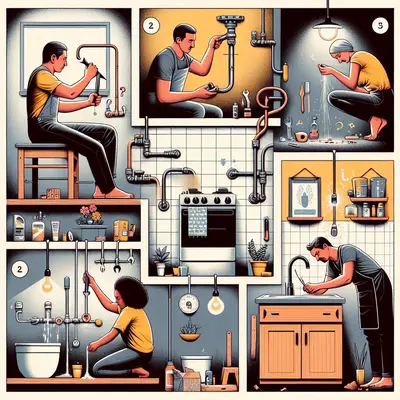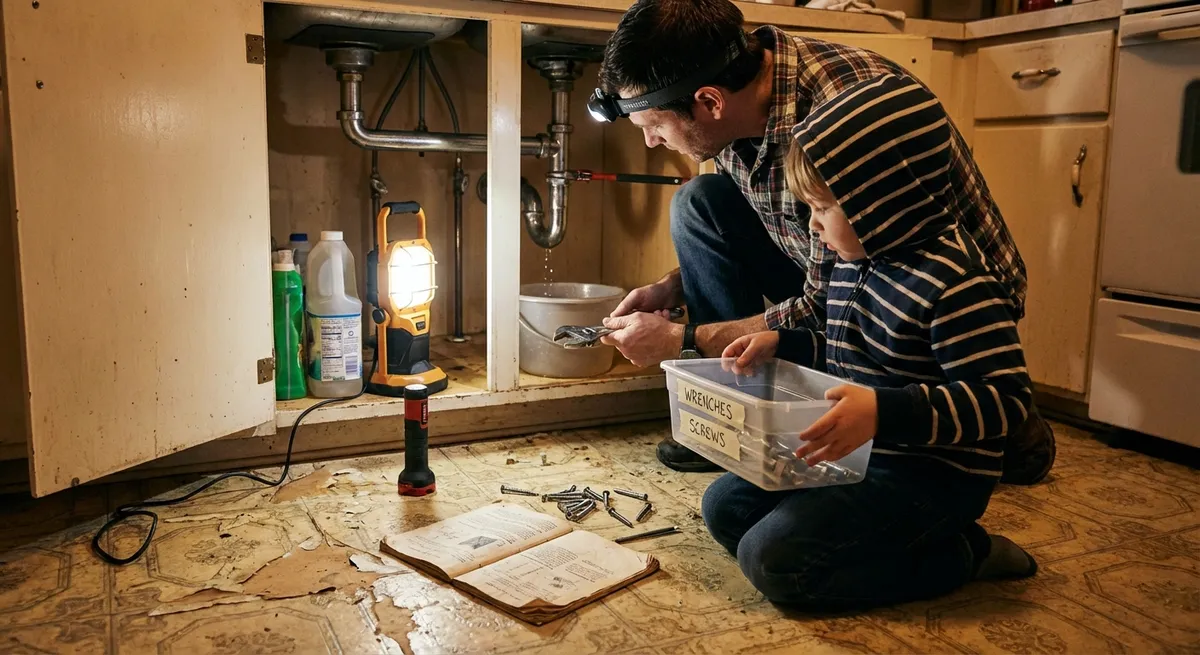
Minor issues at home turn into big repair bills when they’re ignored. A dripping faucet, a door that won’t latch, or a constantly running toilet might feel like background noise, but each one costs you money and comfort every single day. This guide walks you through five common household problems with clear, step‑by‑step fixes you can handle with basic tools—no contractor, no panic, and no endless YouTube rabbit holes.
Stop a Dripping Faucet and Save Your Water Bill
A slow drip wastes gallons of water over time and can stain sinks or tubs. Most faucet leaks come from worn internal parts you can replace in under an hour.
What You’ll Need
- Adjustable wrench or basin wrench
- Screwdriver (Phillips and flathead)
- Replacement cartridge or washers/O-rings (matched to your faucet model)
- Plumber’s grease
- Towel and small container to hold parts
Step‑by‑Step Fix
Shut off the water supply
- Look under the sink for two valves (hot and cold). Turn them clockwise until they stop. - Open the faucet to confirm the water is off and to relieve pressure.
Plug the drain
- Use a drain plug or a rag so you don’t lose small screws or parts down the sink.
Identify your faucet type
- Common types: cartridge, compression, ball, or ceramic disc. - Search the brand/model (often on the faucet body) online to confirm and find parts.
Remove the handle
- Pop off any decorative cap to reveal the screw. - Unscrew and gently pull off the handle. - Keep all parts in a small container in order of removal.
Disassemble the valve
- Use a wrench to remove the retaining nut or collar holding the cartridge or stem. - Carefully pull the cartridge/stem straight out—do not twist aggressively.
Inspect and replace worn parts
- Look for cracked, flattened, or brittle rubber washers or O‑rings. - Compare old parts with new ones to ensure a match. - Apply a thin layer of plumber’s grease to O‑rings before installing.
Reassemble in reverse order
- Reinsert the cartridge or stem, secure with the nut, and reinstall the handle. - Don’t overtighten—snug is usually enough to avoid stripping threads.
Turn the water back on slowly
- Open the shutoff valves gradually while the faucet is slightly open. - Check for leaks at the faucet and under the sink.
When to stop and call a pro:
- Corroded or seized parts that won’t come loose
- Unclear faucet model and no compatible replacement parts found
- Leaks from inside the wall or under the cabinet that you can’t trace
Fix a Toilet That Keeps Running (Without Replacing the Whole Thing)
A constantly running toilet wastes a surprising amount of water, often from a simple internal issue in the tank. You’ll mostly be working with three components: the flapper, fill valve, and float.
What You’ll Need
- Replacement flapper (universal or brand-specific)
- Possibly a fill valve replacement kit
- Adjustable wrench
- Towel or sponge
Step‑by‑Step Fix
Remove the tank lid and observe
- Flush the toilet while watching what happens inside the tank. - Note if water continues to flow into the bowl or overflows into the overflow tube.
Check the flapper first (most common culprit)
- Gently push down on the flapper after the tank fills; if the running stops, the flapper isn’t sealing. - Inspect for warping, deterioration, or buildup on the sealing surface.
Replace the flapper
- Turn off the water supply at the valve behind or beside the toilet. - Flush to empty most of the water from the tank. - Unhook the old flapper from the overflow tube and detach the chain from the flush handle. - Install the new flapper according to its instructions and hook the chain.
Adjust the chain length
- The chain should have slight slack when the flapper is closed—too tight and it won’t seal, too loose and it won’t lift fully. - Test by flushing; adjust until it moves smoothly.
Set the water level correctly
- The water should stop about 1 inch below the top of the overflow tube. - If it’s too high, adjust the float: - For a float cup: squeeze the clip on the side and slide the float down the rod. - For a float ball: gently bend the arm down to lower the water level.
Replace the fill valve if needed
- If the valve won’t shut off or is noisy and old, replacing is often easier than repairing. - Follow the kit instructions, which typically involve: - Shutting off water, draining the tank - Disconnecting the water supply line - Removing the old valve and installing the new one with the gasket and locknut - Reconnecting the water line and adjusting height and water level
Turn the water back on and test
- Check for leaks at the base of the tank and supply line. - Flush several times and confirm the toilet stops running each time.
Call a pro if:
- You see cracks in the tank or bowl
- The shutoff valve is corroded or won’t turn
- Water is leaking onto the floor or ceiling below
Rein in a Door That Won’t Close, Latch, or Is Sagging
Doors that rub, stick, or don’t latch usually need alignment—not replacement. Gravity, loose screws, and seasonal humidity are the main causes.
What You’ll Need
- Screwdriver (matching your hinge screws)
- Longer wood screws (2–3 in.)
- Utility knife or hand plane (optional)
- Wood filler or toothpicks and wood glue (for stripped holes)
- Pencil
Step‑by‑Step Fix
Identify where it’s binding or misaligned
- Close the door slowly and see where it rubs: top, latch side, or bottom. - Check if the latch lines up with the strike plate on the frame.
Tighten hinge screws first
- Open the door and tighten all hinge screws on both the door and the frame. - Focus on the top hinge—this typically bears the most weight. - If a screw just spins, the hole is likely stripped.
Repair stripped hinge screw holes
- Remove the loose screw. - Fill the hole with wood glue and insert wooden toothpicks or a wood dowel. - Let it dry, trim flush, then drive a new screw back in. - For a stronger fix, use a longer screw that bites into the framing behind the jamb.
Pull a sagging door back into place
- On the top hinge, replace one or two short screws with 2–3 in. wood screws into the framing. - Tighten gradually, testing the door as you go; this can slightly pull the door upward and inward.
Adjust the strike plate if the latch doesn’t catch
- Close the door and note whether the latch hits above or below the strike plate opening. - For small adjustments, loosen the strike plate screws and shift slightly; retighten and test. - For bigger moves, remove the plate, mark the new position with a pencil, chisel or carve the mortise slightly, then reinstall.
Shave a tight spot if alignment fixes aren’t enough
- Lightly mark where the door rubs using a pencil or by closing a strip of paper in the gap. - Remove the door from its hinges and shave only the marked area with a hand plane or sandpaper. - Seal or paint the exposed wood edge to prevent moisture absorption.
Call a pro if:
- The frame itself is out of square from foundation movement
- You notice cracks in walls or doors suddenly misaligning throughout the house
Silence a Noisy or Wobbly Ceiling Fan
A rattling or wobbling fan is annoying and potentially unsafe. Most issues come from loose connections, dust buildup, or imbalance—often fixable in under 30 minutes.
What You’ll Need
- Step ladder
- Screwdriver
- Mild cleaner and microfiber cloth
- Fan balancing kit (often included with the fan or sold separately)
Step‑by‑Step Fix
Turn off power and verify
- Switch the fan off at the wall. For extra safety, turn off the circuit breaker. - Confirm the fan won’t turn on before climbing the ladder.
Tighten the mounting bracket and canopy
- Remove or lower the decorative canopy where the fan meets the ceiling. - Check that the mounting bracket is firmly attached to an electrical box rated for ceiling fans. - Tighten all visible screws and bolts.
Secure the downrod and fan body
- If your fan uses a downrod, ensure the ball at the top is seated properly in the bracket. - Tighten screws that connect the downrod to the fan motor housing.
Tighten blade arms and blades
- Check each blade arm where it connects to the motor and to the blade. - Tighten all screws evenly; loose ones often cause wobble.
Clean the blades thoroughly
- Dust and dirt add uneven weight and can unbalance the fan. - Wipe each blade from center to tip; support the blade with your hand to avoid bending.
Check for warped or damaged blades
- Stand back and visually compare blade heights. - If one blade droops or appears twisted, it may need replacement.
Balance the fan if it still wobbles
- Use a fan balancing kit: - Attach the clip to a blade about halfway from the center and run the fan. - Move the clip from blade to blade to find where wobble is reduced the most. - Once found, attach the provided weight to the top of that blade at the clip location and remove the clip.
Call a pro if:
- The electrical box in the ceiling is loose or not rated for a fan
- You see exposed wiring or signs of heat damage
Clear a Slow Bathroom Drain Without Harsh Chemicals
Slow drains are typically due to hair, soap scum, and debris near the surface—not deep in the pipes. Mechanical cleaning is safer for your plumbing than repeated chemical use.
What You’ll Need
- Rubber gloves
- Bucket or bowl
- Flashlight
- Zip‑it style drain cleaner or small plastic drain snake
- Old toothbrush
- Plunger (optional, for sinks/tubs)
Step‑by‑Step Fix
Remove the drain stopper or cover
- For sinks with a pop‑up stopper: - Look under the sink for the pivot rod connected to the drain. - Unscrew the retaining nut, pull out the rod, and then lift the stopper from the sink. - For tubs or shower drains, remove visible screws and lift off the cover.
Physically remove debris
- Shine a flashlight into the drain. - Insert the plastic drain cleaner or snake; twist and pull up slowly. - Remove hair and gunk by hand (with gloves) into a bucket.
Clean the stopper and surrounding parts
- Scrub hair and buildup off the stopper with an old toothbrush and warm soapy water. - Check that the stopper mechanism moves freely.
Flush with hot (not boiling) water
- Run hot water for a minute or two to wash away loosened residue. - Boiling water can stress some pipes; very hot tap water is usually enough.
Reassemble the stopper mechanism
- For sink pop‑ups, reinsert the stopper, then slide the pivot rod back into position and tighten the retaining nut by hand, then snug with a wrench. - Test up/down motion and adjust if needed.
Use a plunger if it’s still slow
- Block overflow openings with a damp cloth. - Add enough water to cover the plunger cup, then plunge with firm, steady pushes for 15–20 seconds. - Run water again to test flow.
Skip frequent harsh chemical cleaners
- Occasional use is usually fine, but constant chemical treatments can damage older pipes and fixtures. - For maintenance, use a drain hair catcher to prevent clogs from forming.
Call a pro if:
- Drains back up in multiple fixtures at once (possible main line issue)
- You notice sewage smell or water backing up from lower drains when others are in use
Conclusion
Most “small” problems at home grow into expensive repairs when they’re left alone. A dripping faucet, running toilet, misaligned door, noisy fan, or slow drain are all issues you can often handle yourself with a little patience and a few common tools. Start with safety—turn off water or power where needed—work methodically, and stop if you run into anything structural or electrical that feels beyond your comfort level. The more of these simple repairs you tackle now, the more control you’ll have over your home, your comfort, and your repair budget.
Sources
- [U.S. Environmental Protection Agency – Fix a Leak](https://www.epa.gov/watersense/fix-leak-week) - Details on how leaks waste water and guidance on common household leak repairs
- [Energy.gov – Ceiling Fans and Energy Savings](https://www.energy.gov/energysaver/ceiling-fans) - Explains proper ceiling fan use and safety considerations for installation and operation
- [Family Handyman – How to Fix a Leaky Faucet](https://www.familyhandyman.com/project/how-to-fix-a-leaky-faucet/) - Step‑by‑step faucet repair techniques with photos and part identification
- [Lowe’s – How to Fix a Running Toilet](https://www.lowes.com/n/how-to/fix-a-running-toilet) - Visual guide to diagnosing and replacing common toilet tank components
- [This Old House – How to Fix a Sticking Door](https://www.thisoldhouse.com/doors/21016790/how-to-fix-a-sticking-door) - Practical methods for diagnosing and correcting misaligned or sticking doors
Key Takeaway
The most important thing to remember from this article is that this information can change how you think about Household Repairs.