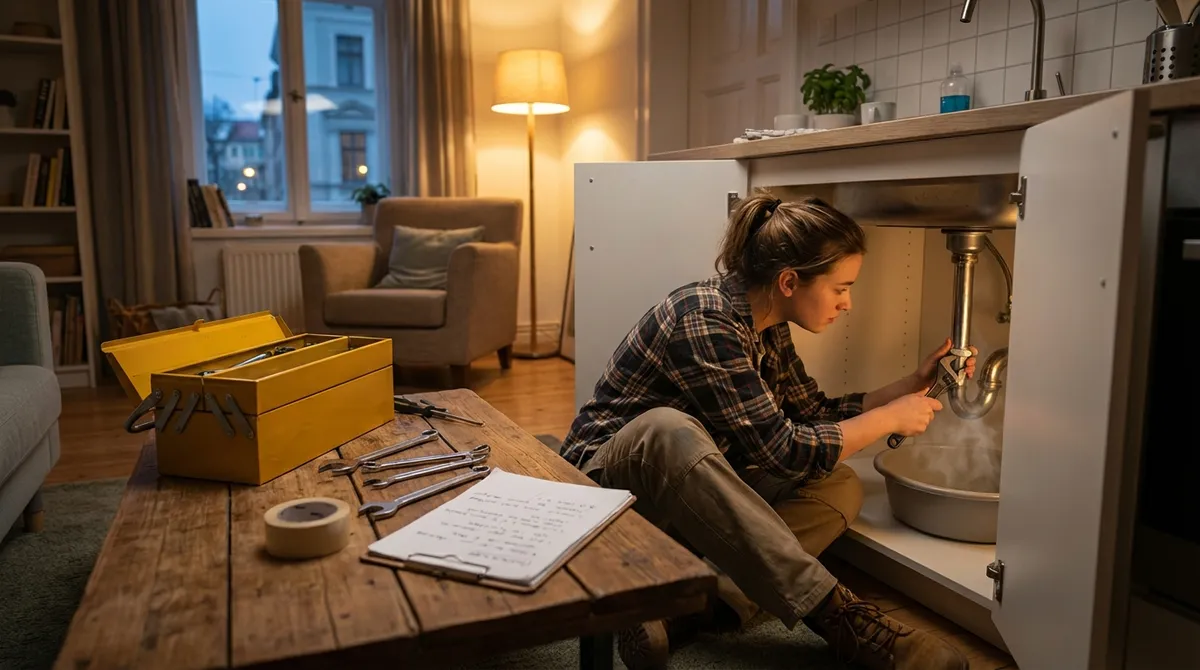
Minor problems around the house or with your stuff don’t always need a pro—or a full weekend—to fix. With a few simple steps and basic tools, you can solve many everyday issues in under an hour and keep things working instead of replacing them.
Below are five practical, step‑by‑step fixes you can try today.
1. Silence a Squeaky Door Hinge
A squeaky door isn’t just annoying—it usually means friction that can wear the hinge over time.
Step-by-step:
Identify the squeaky hinge
Open and close the door slowly to find which hinge is making the noise.
Support the door (optional but safer)
If the door is heavy, slide a wedge, book, or folded towel under it to relieve pressure on the hinges.
Clean the hinge area
Wipe around the hinge with a dry cloth or paper towel to remove dust and old grime. This helps the lubricant work better.
Apply a household lubricant
- Use silicone spray, multipurpose oil (like WD‑40), or even petroleum jelly in a pinch. - Spray or dab a small amount directly onto the hinge pins and moving parts. Avoid overspraying onto the door or wall.
Work the door back and forth
Open and close the door 10–15 times to help the lubricant move into the hinge. Wipe away any drips.
Reapply if needed
If it still squeaks, add a tiny bit more lubricant and repeat. Don’t flood the hinge—the goal is a thin, even coat.
Prevent future squeaks
Repeat this quick maintenance once or twice a year, especially in humid climates where metal can rust.
2. Stop a Wobbly Chair or Table
A shaky chair or table is more than a nuisance—it can damage joints and fasteners over time.
Step-by-step:
Flip or tilt the furniture safely
Place it on a flat surface. For chairs, lay them on their side; for tables, have someone help you tilt or flip it.
Tighten all screws and bolts
Use the appropriate screwdriver or Allen key to tighten any visible fasteners. Work your way around the entire piece, not just the wobbly side.
Check for loose joints
Gently wiggle legs and braces. If you see a joint that moves, it likely needs extra support.
Use wood glue for loose wooden joints
- Carefully pull the loose joint apart slightly (if possible). - Brush or squeeze a small amount of wood glue into the joint. - Press the pieces together and wipe away excess glue with a damp cloth.
Clamp or secure while it dries
Use clamps, rope, or even heavy books to hold the joint tight. Follow the glue’s dry time—usually a few hours.
Level uneven legs
If the wobble is from one shorter leg: - Test by placing the furniture on a different flat surface. - Add adhesive furniture pads or felt to the shorter leg until it’s stable.
Test and adjust
Set the piece upright and test again. Repeat small adjustments with pads or tightening if needed.
3. Revive a Slow or Unresponsive Phone
Before you assume your phone is “dying,” a few quick fixes can clear digital clutter and improve performance.
Step-by-step:
Restart your phone
Power it off completely, wait 30 seconds, then turn it back on. This clears temporary files and stuck processes.
Update the operating system and apps
- Go to Settings > Software Update (names vary by device). - Update any apps with pending updates in your app store. Updates often include bug fixes and performance improvements.
Clear out storage
- In Settings, check Storage to see what’s using space. - Delete unused apps, old videos, and large message attachments. - Move photos and videos to cloud storage or a computer.
Clear cache (Android) or offload apps (iOS)
- On Android: clear app cache for problem apps in Settings > Apps. - On iPhone: use Offload Unused Apps in Settings > General > iPhone Storage.
Disable or remove unused background apps
- Turn off background refresh for apps you rarely open. - Uninstall apps you don’t truly need, especially “cleaner” or “booster” apps that can actually slow things down.
Check for overheating
If the phone feels very hot, remove the case, let it cool, and avoid charging or using heavy apps simultaneously.
Backup and reset (last resort)
If it’s still painfully slow, back up your data and consider a factory reset following your phone maker’s official instructions.
4. Fix a Running Toilet That Won’t Stop Filling
A running toilet wastes a lot of water but is usually easy to fix without tools.
Step-by-step:
Remove the tank lid carefully
Set it on a towel away from the edge of the sink or tub to avoid chips or cracks.
Identify the main parts
Inside the tank you’ll see: - The flapper (rubber piece covering the drain at the bottom) - The chain attached to the flush handle - The fill valve (tall part on one side) and a float that rises with water
Check the flapper
- Flush the toilet and watch: does the flapper close and seal properly? - If it stays slightly open or looks warped, that’s likely your issue.
Adjust the chain
- If the chain is too tight, it can hold the flapper open. - Leave a little slack so the flapper can close completely, but not so much that it tangles underneath.
Clean or reseat the flapper
- Turn off the water supply valve behind the toilet and flush to empty the tank. - Wipe the rubber flapper and the seat it rests on with a cloth to remove buildup. - Turn the water back on and test. If the flapper is cracked or stiff, replace it with a matching model from a hardware store.
Adjust the water level
- The water should stop about an inch below the top of the overflow tube. - Adjust the float height following the instructions on the fill valve (usually turning a screw or sliding a clip).
Listen and test
Let the tank refill and listen for a minute. If you don’t hear running water, put the lid back on—you’re done.
5. Restore a Stripped Screw So You Can Remove It
A stripped screw head can stall an entire project. You can often still remove it with simple tricks.
Step-by-step:
Try a different screwdriver first
- Use a screwdriver that fits the head more snugly (often a size up). - Press down firmly while turning slowly to avoid further damage.
Add grip with a rubber band
- Place a wide rubber band flat over the screw head. - Press the screwdriver into the rubber band and turn gently. The rubber can help fill the damaged grooves and improve grip.
Use pliers if the head is exposed
If some of the screw head sticks out, grip it with locking pliers or needle‑nose pliers and twist slowly counterclockwise.
Create a new groove in soft materials
For wood and soft metals: - Use a small metal file or hacksaw blade to cut a straight groove across the head. - Use a flathead screwdriver in the new groove to turn the screw.
Tap the screwdriver in gently
- Place the correct screwdriver into the damaged head. - Lightly tap the handle with a hammer to seat it more deeply, then try turning.
Only escalate if needed
If none of these work, a dedicated screw extractor bit is your next step—but these quick methods solve many common cases.
Conclusion
Quick fixes like these keep your home, furniture, and devices working longer—and save you money and stress. You don’t need a workshop or advanced skills to handle most minor problems, just a methodical approach and a few basic tools. The next time something squeaks, wobbles, runs, or slows down, try one of these steps before you reach for your wallet.
Sources
- [U.S. Department of Energy – Home Weatherization & Maintenance Tips](https://www.energy.gov/energysaver/weatherize) - General guidance on basic home maintenance and efficiency that aligns with quick, low‑cost fixes
- [Family Handyman – How to Fix a Running Toilet](https://www.familyhandyman.com/project/how-to-fix-a-running-toilet/) - Detailed visuals and explanations on common running toilet causes and repairs
- [This Old House – How to Fix a Squeaky Door](https://www.thisoldhouse.com/doors/21017621/how-to-fix-a-squeaky-door) - Practical walkthrough of hinge lubrication and door noise troubleshooting
- [Consumer Reports – How to Make Your Smartphone Last Longer](https://www.consumerreports.org/electronics-computers/phones-cell-phones/how-to-make-your-smartphone-last-longer-a1171116328/) - Expert advice on improving smartphone performance and lifespan
- [Lowe’s – How to Repair Furniture Joints](https://www.lowes.com/n/how-to/repair-furniture-joints) - Step-by-step instructions for tightening and gluing loose furniture joints
Key Takeaway
The most important thing to remember from this article is that this information can change how you think about Quick Fixes.