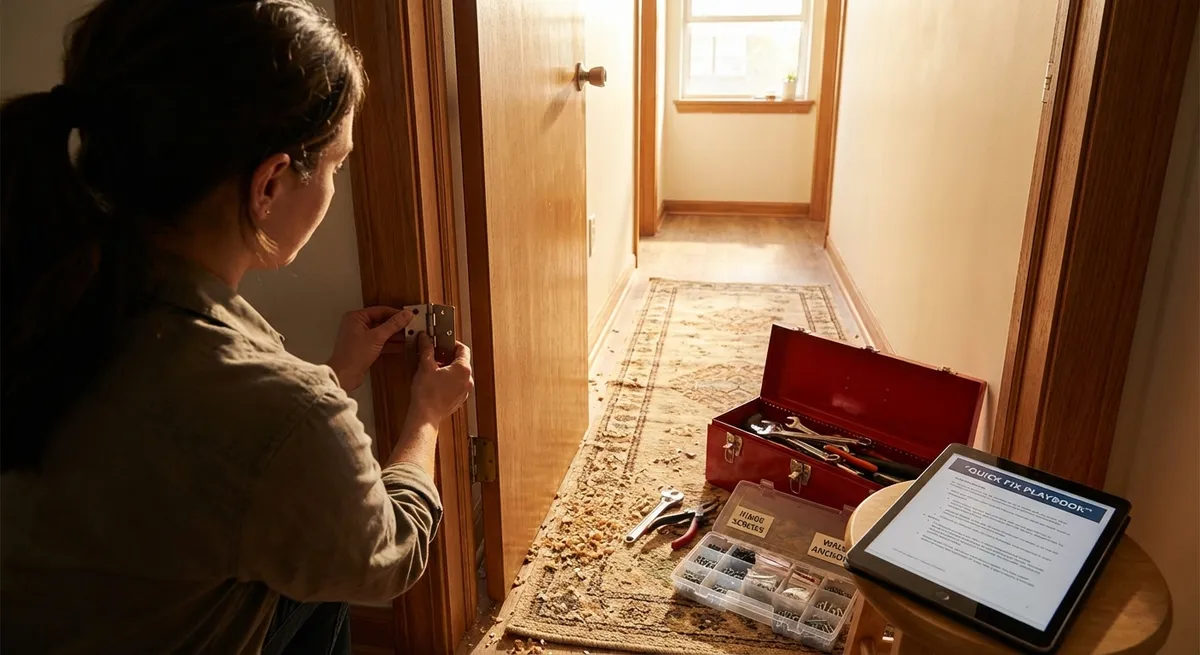
Most everyday problems don’t need a full‑blown service call or a weekend project. With a few smart shortcuts and the right steps, you can solve a lot of “uh‑oh” moments in under 30 minutes—often with things you already have at home.
This guide walks you through five practical, step‑by‑step quick fixes for common household issues. Each one is designed so you can follow along even if you don’t consider yourself “handy.”
1. Quiet a Squeaky Door Hinge in Minutes
A squeaky door is annoying, but it’s usually one of the easiest problems to fix.
What You’ll Need
- Paper towel or rag
- Old toothbrush or small brush (optional)
- Lubricant (choose one):
- Silicone spray or dry lubricant (best)
- Petroleum jelly
- In a pinch: a drop of cooking oil (short‑term solution only)
Step‑By‑Step
Open and close the door to locate the squeak
- Listen carefully to determine which hinge is making the noise. - Most squeaks come from the top hinge, but check them all.
Wipe down the hinge
- Use a dry paper towel or rag to remove dust, dirt, or old grease. - If there’s a lot of buildup, scrub gently with an old toothbrush and wipe clean.
Apply a small amount of lubricant
- Silicone spray: Spray a tiny amount directly on the hinge pin and joint. Use the straw nozzle to avoid overspray. - Petroleum jelly: Rub a thin layer onto the hinge and pin with your finger or a cotton swab. - Cooking oil (temporary): Apply a drop or two with a paper towel to avoid drips.
Work the door back and forth
- Open and close the door 10–15 times so the lubricant spreads inside the hinge. - Wipe away any drips or excess with a clean rag.
Check the result and re‑apply if needed
- If there’s still a squeak, add a bit more lubricant specifically to the noisy hinge and repeat. - If the squeak continues after a second attempt, the hinge pins may be bent or badly worn—note it for later replacement.
2. Stop a Running Toilet Without Calling a Plumber
A constantly running toilet wastes water and money, but most causes are simple and fixable with no tools.
What You’ll Need
- Towel (to catch drips)
- Optional: Needle‑nose pliers or scissors (if the chain needs adjusting)
Step‑By‑Step
Remove the tank lid and set it aside carefully
- Place it on a towel or soft surface so it doesn’t crack or chip. - Look inside the tank—you’ll see the flapper (rubber seal), a chain, and the fill valve/float.
Check the flapper
- Gently push down on the rubber flapper at the bottom of the tank. - If the running sound stops, the flapper isn’t sealing properly.
Adjust the chain
- If the chain is too tight, the flapper can’t close all the way. - There should be a little slack—about 1/2 inch—when the flapper is closed. - Shorten or lengthen the chain using the clip, or move where it hooks to the flush lever. - Avoid leaving so much slack that the chain can get trapped under the flapper.
Check the water level and float
- The water should stop filling about 1 inch below the top of the overflow tube. - If it’s too high and water spills into the tube, the toilet keeps running. - On newer fill valves, turn the adjustment screw or slide the float down the rod to lower the water level.
Test the flush
- Flush the toilet and watch the tank refill. - Confirm: - The flapper closes fully after the flush. - The water stops at the correct level. - No water is trickling into the bowl.
When to replace parts
- If the flapper is warped, cracked, or slimy and misshapen, replace it (they’re inexpensive and universal options are widely available). - Turn off the shutoff valve behind the toilet before swapping parts.
3. Revive a Slow or Non‑Charging Phone Cable
Before assuming your phone or battery is dying, rule out the simplest culprit: a dirty or failing charging cable or port.
What You’ll Need
- Flashlight
- Wooden or plastic toothpick
- Soft brush (clean, dry toothbrush or small paintbrush)
- Optional: A known‑good charging cable and adapter
Step‑By‑Step
Inspect the cable for damage
- Look for kinks, exposed wires, or melted plastic near the ends. - Gently wiggle the cable at both connectors while it’s plugged in—if charging cuts in and out, the cable is likely failing.
Test with a different adapter or outlet
- Plug your existing cable into a different wall adapter or USB port. - Try a different outlet if possible. - If it charges normally, the original adapter or outlet may be the problem.
Check and clean the phone’s charging port
- Turn the phone off. - Use a flashlight to look inside the port—lint and dust commonly build up. - Gently insert a wooden or plastic toothpick and scrape out debris with light pressure. - Brush the port opening with a soft, dry brush to remove remaining dust. - Avoid metal tools; they can damage contacts or cause a short.
Clean the cable ends
- Wipe the connectors with a dry, lint‑free cloth. - If you see visible grime, slightly dampen the cloth with isopropyl alcohol and clean the metal contacts, then let them dry fully.
Compare with a known‑good cable
- Borrow or use another cable you know works. - If the second cable charges fine, replace the original one. - If neither cable works after cleaning the port, the issue may be the phone’s charging hardware—time for a professional diagnosis.
4. Fix a Loose Cabinet Door That Won’t Close Right
Kitchen and bathroom cabinet doors get a lot of use. When they start sagging, rubbing, or not closing properly, hinge adjustments can often restore smooth operation quickly.
What You’ll Need
- Phillips screwdriver
- Optional: Toothpicks and wood glue (for stripped screw holes)
Step‑By‑Step
Identify what’s wrong with the door
- Is it rubbing against another door? - Is there a gap at the top or bottom? - Does it not “catch” the magnet or latch anymore? - Noting the symptom helps you know which hinge screws to adjust.
Tighten all visible screws first
- Open the cabinet door. - Tighten the screws on the hinge plate attached to the cabinet frame and those on the door itself. - Don’t overtighten—snug and firm is enough.
Adjust the hinges (for European‑style concealed hinges)
Most common cabinet hinges have two main adjustment screws: - One screw moves the door left/right. - Another moves it in/out or up/down slightly.
- Turn the screw a quarter‑turn at a time, then close the door and check the alignment.
- Adjust the top and bottom hinges as needed until the door lines up and closes cleanly.
Fix stripped screw holes if screws won’t tighten
- Remove the loose screw. - Dip 2–3 wooden toothpicks in wood glue, insert them in the hole, and break them off flush. - Let the glue set for at least 15–20 minutes. - Reinsert the screw and tighten; the toothpicks give the screw new wood to bite into.
Check the latch or magnet
- If the door still doesn’t stay closed, inspect the magnetic catch or mechanical latch. - Tighten its screws or move it slightly so it meets the door plate squarely when closed.
5. Clear a Slow Sink Drain Without Harsh Chemicals
A slow bathroom or kitchen sink is often caused by hair, soap scum, or grease buildup. You can usually clear it quickly with simple tools and a bit of patience.
What You’ll Need
- Rubber gloves
- Bucket or bowl
- Old rag or paper towels
- Small plastic drain snake or zip‑it tool (very helpful)
- Optional: Baking soda and white vinegar
Step‑By‑Step
Remove the stopper (bathroom sink)
- Lift out the stopper if it’s removable. - If it’s fixed, look under the sink: - Place a bucket under the drain. - Loosen the nut that holds the stopper rod in place. - Slide out the rod and pull the stopper straight up from the sink.
Physically remove debris
- Wear gloves. - Use your fingers or a small drain snake to pull out hair and gunk just below the drain opening. - Wipe the debris onto paper towels and throw it away—don’t rinse it back down.
Flush with hot tap water
- Run hot (not boiling) tap water for 1–2 minutes. - This helps move loosened buildup further down the pipe.
Optional: Use a baking soda and vinegar flush
- Pour about 1/2 cup of baking soda into the drain. - Follow with 1/2–1 cup of white vinegar. - Let it foam for 10–15 minutes. - Rinse with hot water for several minutes. - This doesn’t replace physical cleaning but helps with mild buildup and odors.
Check the P‑trap if the drain is still slow
- Place a bucket under the curved pipe (P‑trap) under the sink. - Loosen the slip nuts by hand or with adjustable pliers. - Remove the P‑trap and empty its contents into the bucket. - Clean inside with a bottle brush or rag, then reinstall and tighten the nuts snugly.
Reassemble and test
- Reinstall the stopper and stopper rod if you removed them. - Run water and confirm it drains normally. - Check under the sink for any drips from the connections you loosened—tighten slightly if needed.
Conclusion
Quick fixes don’t have to be guesswork. When you break a problem into simple steps—inspect, adjust, test—you can solve a surprising number of everyday issues without special skills or tools.
Use this playbook as your go‑to starting point:
- Quiet the small annoyances (squeaks and misaligned doors).
- Stop the hidden money drains (running toilets and slow sinks).
- Restore essentials you rely on daily (phone charging).
When something breaks, pause before you panic or pay for a service call. A focused, 10–20 minute fix might be all it needs.
Sources
- [U.S. Environmental Protection Agency – Fixing Leaks](https://www.epa.gov/watersense/fix-leak-week) – Explains how household leaks (including toilets) waste water and outlines basic fixes.
- [Family Handyman – How to Fix a Leaking or Running Toilet](https://www.familyhandyman.com/project/how-to-fix-a-leaking-toilet/) – Step‑by‑step visuals and explanations for common toilet repairs.
- [This Old House – How to Adjust Cabinet Hinges](https://www.thisoldhouse.com/cabinets/21015116/how-to-adjust-cabinet-hinges) – Detailed guidance on adjusting European‑style cabinet hinges.
- [CNET – How to Clean Your Phone’s Charging Port](https://www.cnet.com/tech/mobile/how-to-clean-your-phones-charging-port-without-breaking-it/) – Safe methods for cleaning smartphone charging ports.
- [Consumer Product Safety Commission – Using Household Chemicals Safely](https://www.cpsc.gov/safety-education/safety-guides/home/use-and-storage-of-household-chemicals) – Safety considerations when using (or avoiding) chemical drain cleaners and other products.
Key Takeaway
The most important thing to remember from this article is that this information can change how you think about Quick Fixes.