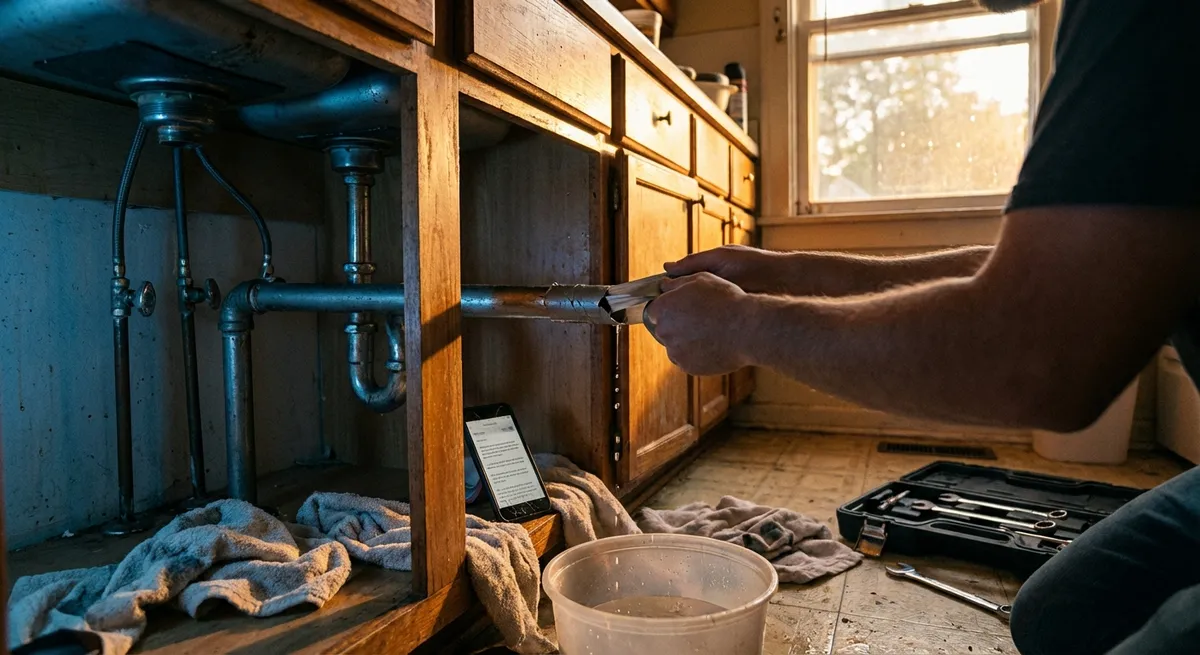
Everyday life breaks in small but annoying ways: a door that won’t stop squeaking, a phone that dies too quickly, a drain that gurgles, a wobbly chair, a zipper that jams when you’re heading out the door. You don’t always need a full weekend project or a professional callout—often you just need a fast, reliable way to stabilize the problem so you can get on with your day.
This guide walks you through five practical quick fixes. Each solution is designed to be safe, fast, and doable with basic tools or common household items. You’ll also see where a temporary stabilizing fix ends and when it’s time to plan a proper repair.
1. Quiet a Squeaky Door Hinge in Minutes
A squeaky door usually means metal parts are rubbing without enough lubrication. Fixing it is simple and takes less time than finding your headphones to block the noise.
What you need (any one of these works):
- Petroleum jelly, silicone spray, or white lithium grease
- OR a few drops of cooking oil (as a short-term solution)
- Paper towel or rag
Steps:
- Open and close the door a few times to locate exactly which hinge is squeaking.
- Wipe the hinge area with a dry paper towel to remove dust and old grime. This helps the lubricant work better.
- Apply a small amount of lubricant directly to the top of the hinge pin and along the moving joint.
- If using spray, use short bursts and avoid overspray on the door surface.
- If using petroleum jelly or oil, use a fingertip or cotton swab to dab it on.
- Open and close the door repeatedly (10–15 times) to work the lubricant into the hinge.
- Wipe away any excess so it doesn’t drip or stain nearby surfaces.
- Listen again. If it’s still squeaking, apply a bit more and repeat the motion.
When to plan a longer repair:
2. Give a Dying Phone Battery a Quick Boost (Without New Parts)
When your phone battery drains too quickly, you may not be able to replace the battery right away—but you can slow the drain with a few fast changes.
What you need:
Just your phone and its settings menu.
Steps (works on most smartphones):
- Turn on Battery Saver / Low Power Mode.
- On iPhone: Settings → Battery → Low Power Mode.
- On Android: Settings → Battery → Battery Saver (names vary by brand).
- Reduce screen brightness.
- Pull down the quick settings menu and slide the brightness down to the lowest comfortable level.
Turn off power-hungry features you don’t need right now:
- Wi‑Fi, Bluetooth, GPS/location, and mobile hotspot. - Use Airplane Mode if you’re in an area with poor signal and don’t need calls for a bit.
Close or restrict background apps:
- In settings, look for “Background App Refresh,” “Background Data,” or “Battery Usage.” - Limit apps that are constantly refreshing (social media, maps, email).
Disable push email temporarily:
- Change from “Push” to “Fetch manually” so your phone isn’t constantly checking for mail. 6. Use dark mode (especially on OLED screens) to slightly reduce power use.
When to plan a longer repair:
3. Clear a Slow Bathroom Sink Drain Safely (No Harsh Chemicals)
A slow drain is often caused by hair, soap scum, and toothpaste buildup. Instead of dumping harsh chemicals that can damage pipes over time, you can try a quick mechanical and mild cleaning approach first.
What you need:
- Rubber gloves
- A cup or small container
- Baking soda (about ½ cup)
- White vinegar (about 1 cup)
- Kettle or pot to heat water
- Optional: a plastic drain snake or straightened wire hanger with a small hook bent at the end
Steps:
- Remove any visible stopper components.
- Lift out the sink stopper if it’s removable.
- If it’s fixed, just work around it.
- Manually remove hair and debris.
- Use a plastic drain snake or your improvised hook to gently pull out hair and gunk from just inside the drain.
- Wear gloves and discard debris in the trash, not back down the drain.
- Pour about ½ cup of baking soda into the drain. Push it down gently with a spoon handle if needed.
- Slowly pour 1 cup of white vinegar into the drain. It will fizz—this helps break up softer buildup.
- Wait 10–15 minutes to let the reaction do its work.
- Carefully pour a kettle of hot (not boiling) water down the drain to flush it.
- Run the tap for 30–60 seconds to see if the drain is flowing normally again.
When to plan a longer repair or call a pro:
4. Stabilize a Wobbly Chair or Table Without a Workshop
A wobbly chair or table usually has one of two problems: uneven legs or loose joints. You can stabilize it quickly and safely with simple tools.
What you need (use what you have):
- Screwdriver or hex/Allen key (depending on hardware)
- Wood glue (optional but helpful)
- Felt pads, folded cardboard, or a thin coaster
- Damp cloth
Steps to tighten loose joints:
- Flip the chair or table carefully onto a soft surface (rug or blanket) to avoid scratches.
- Check all screws, bolts, and brackets at each leg and joint.
- Tighten each fastener snugly, but don’t overtighten to the point of stripping the screw.
If a joint is obviously loose and you have wood glue:
- Wipe away dust with a damp cloth and let dry. - Apply a small amount of wood glue into the joint, press together firmly, and retighten hardware. - Clamp or place weight on it and let it cure per the glue instructions (usually several hours).
Steps to fix uneven legs quickly:
- Set the furniture upright on a hard, level floor (tile, hardwood, or concrete).
- Press on each corner to identify which leg isn’t touching evenly.
- Add a temporary shim (small folded cardboard, a furniture felt pad, or a thin coaster) under the shorter leg until it sits stable.
- Secure the shim with tape or strong glue if you want a cleaner, more durable fix.
When to plan a longer repair or replacement:
- If the wood is cracked or splitting near the joint, glue and screws may only be temporary.
- Visible rot or major structural damage means it’s time to consider repair by a professional or retiring the piece.
5. Unstick a Jammed Zipper Without Breaking It
A stuck zipper can ruin your schedule fast, especially on jackets, bags, or everyday workwear. Often, the problem is friction, misalignment, or a small obstruction.
What you need (one or more of these):
- Graphite pencil
- Bar of soap, candle wax, or lip balm
- Tweezers (optional)
Steps:
- Stop forcing the zipper. Pulling hard can break the slider or teeth permanently.
- Check for obvious fabric snags.
- Look closely where it’s stuck.
- If fabric is caught, gently pull it away using your fingers or tweezers while slowly easing the zipper back.
If no fabric is caught, lubricate the teeth:
- Rub a graphite pencil tip along both sides of the zipper teeth where it’s sticking. - Alternatively, rub a small amount of bar soap, candle wax, or lip balm gently along the teeth. 4. Gently move the slider up and down a few millimeters at a time over the stuck section. Don’t yank; use small, controlled movements. 5. Continue adding a little more lubricant if it’s still resistant, then try moving the slider again. 6. Once it moves freely, run the slider along the entire length to distribute the lubricant.
When to plan a longer repair or replacement:
Conclusion
Quick fixes aren’t about cutting corners—they’re about stabilizing everyday problems so you can keep moving while planning proper repairs when needed. A squeaky hinge, weak phone battery, slow drain, wobbly chair, or jammed zipper doesn’t have to derail your day. With a few basic steps and items you probably already have, you can quiet, stabilize, or free up the problem in minutes.
Use these fast solutions as “first aid” for your stuff: apply them early, safely, and thoughtfully. When you notice the same issue returning, that’s your signal to move from quick fix to full repair or replacement—and Repair Now can help you plan that next step.
Sources
- [U.S. Consumer Product Safety Commission – Home Maintenance Safety Tips](https://www.cpsc.gov/Safety-Education/Safety-Guides/home) - Guidance on safe practices when doing minor repairs and maintenance at home
- [University of Kentucky College of Agriculture – Household Drain Care](https://www.uky.edu/Ag/ukturf/drainage.pdf) - Discusses drainage issues and safer approaches to dealing with clogs and slow drains
- [Apple Support – iPhone Battery and Performance](https://support.apple.com/en-us/HT208387) - Official information on how to manage and extend battery performance on iPhones
- [Google Android Help – Improve Battery Life](https://support.google.com/android/answer/7664692) - Step-by-step tips from Google on reducing power use and configuring battery-saving settings
- [National Association of Home Builders – Furniture and Wood Product Care](https://www.nahb.org/other/consumer-resources/home-maintenance) - General guidance on caring for furniture and wood items to keep them safe and functional
Key Takeaway
The most important thing to remember from this article is that this information can change how you think about Quick Fixes.