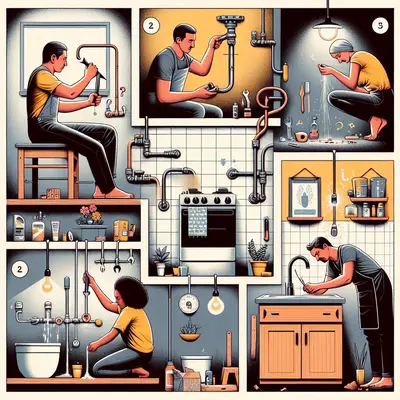
Household problems rarely show up at a “good” time. A dripping faucet, a running toilet, or a door that won’t close right can quietly waste money and create daily frustration. The good news: many of these issues are completely fixable with basic tools and a clear plan. This guide walks you through five practical, step-by-step solutions you can tackle safely without special skills or expensive equipment.
Stop a Dripping Faucet (Without Replacing the Whole Thing)
A dripping faucet can waste gallons of water a day and slowly increase your utility bill. Most drips come from worn internal parts, not from the faucet body itself. Fixing it is usually about replacing a few small components.
What you’ll need: Adjustable wrench, screwdriver, replacement cartridge or washers/O-rings (matched to your faucet model), plumber’s tape (Teflon tape), small towel.
Step-by-step:
Turn off the water supply
Look under the sink for two shutoff valves (hot and cold). Turn them clockwise until they stop. Open the faucet to confirm the water is off and to relieve pressure in the line.
Plug the drain
Use the sink stopper or a rag so small screws or parts don’t fall down the drain.
Disassemble the handle
- Pry off any decorative cap with a small flat screwdriver. - Remove the screw underneath. - Lift off the handle to expose the cartridge or stem.
Identify your faucet type
- Cartridge faucet: Has a single movable cartridge. - Compression faucet: Has separate hot and cold handles and uses rubber washers. Check the brand/model if possible (often printed on the faucet), then bring the old cartridge/washer to a hardware store to get an exact match.
Remove the cartridge or stem
Use an adjustable wrench to loosen the retaining nut. Gently pull out the cartridge or stem. Note the orientation so you can reinstall it the same way.
Replace worn parts
- For cartridge faucets, install a new cartridge that matches the old one. - For compression faucets, replace the rubber washer and O-ring on the stem. Wrap threads with plumber’s tape if recommended by the manufacturer.
Reassemble and test
Put everything back in reverse order. Turn the shutoff valves back on slowly, then open the faucet and check for leaks. If it still drips, carefully tighten the retaining nut a bit more—without over-tightening.
Quiet a Running Toilet and Cut Water Waste
A toilet that keeps running after you flush is more than annoying—it can waste hundreds of gallons of water per day. The usual culprits: a worn flapper, an improperly set float, or a faulty fill valve.
What you’ll need: Replacement flapper or fill valve (if needed), adjustable wrench, towel.
Step-by-step:
Remove the tank lid and observe
Flush the toilet with the tank lid off. Watch how the water flows, how the flapper moves, and how the float rises and falls.
Check the flapper first
- If the flapper doesn’t seal fully or looks warped, cracked, or slimy, it’s likely the main problem. - Turn off the water supply at the valve behind or below the toilet. Flush once to empty most of the water from the tank.
Replace the flapper
- Unhook the chain from the flush handle. - Detach the flapper from the overflow tube “ears.” - Install the new flapper in the same position and attach the chain with a small amount of slack (the flapper should close fully when at rest).
Adjust the float level
- If water is flowing into the overflow tube, the water level is too high. - On a float cup fill valve, use the adjustment screw or clip to lower the float. - On an older ball float, gently bend the float arm downward so it shuts off sooner.
Test the toilet
Turn the water back on, let the tank fill, and listen. The toilet should stop running once it reaches the marked water line inside the tank. If it still runs, the fill valve may be worn.
Replace the fill valve (if needed)
- Turn off the water and drain the tank again. - Disconnect the water supply line from the bottom of the tank. - Remove the old fill valve and install a new one following the manufacturer’s instructions. - Reconnect the water line, adjust the height, and test.
Fix a Door That Won’t Close or Keeps Swinging Open
A misaligned door can stick, rub, or refuse to stay shut. Often the door frame hasn’t moved—the hinges have. Over time, screws loosen and the door sags.
What you’ll need: Screwdriver (or drill/driver), longer wood screws (2.5"–3"), wooden toothpicks or wood glue (optional), hammer.
Step-by-step:
Inspect the gaps around the door
Close the door slowly and watch where it sticks or rubs. - Wider gap at the top on the latch side usually means the top hinge is loose. - Rubbing at the bottom latch side can mean the bottom hinge has loosened.
Tighten all hinge screws
Open the door fully. Use a screwdriver to snug every screw on both the door side and frame side of each hinge. Avoid overtightening stripped screws.
Repair stripped screw holes
If a screw spins without tightening: - Remove it, insert wooden toothpicks coated with wood glue in the hole, and snap off flush. - Reinsert the screw; the toothpicks give it new wood to bite into. For a stronger fix, use slightly longer screws that reach deeper into the framing.
Use longer screws to pull the door back into alignment
- On the top hinge, replace one or two screws on the frame side with 2.5–3" wood screws. - Drive them in until snug; they’ll pull the door toward the hinge side and lift the latch side slightly. Check the door swing after each screw so you don’t over-correct.
Adjust the strike plate (if the latch doesn’t catch)
- Color the latch with a marker, close the door, and see where it hits the strike plate. - If it’s slightly off, you can file the strike opening larger using a metal file. - For bigger misalignments, remove the strike plate and reposition it slightly, filling the old screw holes with wood filler or toothpicks before reinstalling.
Test repeatedly
Open and close the door several times. It should latch cleanly, stay closed without swinging open, and not rub against the floor or frame.
Clear a Slow Drain Without Harsh Chemicals
Slow drains in sinks or tubs are usually caused by hair, soap scum, and cooking grease. Chemical drain openers can be harsh on pipes and dangerous if mishandled. Mechanical methods are typically safer and surprisingly effective.
What you’ll need: Plunger (cup-type for sinks, flange-type for toilets), drain snake or plastic hair clog tool, bucket, rubber gloves.
Step-by-step:
Remove visible obstructions
- For bathroom sinks and tubs, remove the stopper or drain cover. - Use a plastic hair-removal tool or a bent wire hanger to pull out hair and gunk. - Wear gloves and have a bucket or trash bag ready.
Try plunging the drain
- For sinks: Block any overflow hole with a damp cloth. - Add enough water to cover the plunger cup. - Place the plunger over the drain and push down firmly, then pull up sharply without lifting the cup edge off the surface. Repeat 15–20 times.
Use a drain snake if plunging isn’t enough
- Insert the snake into the drain and feed it in while turning the handle. - When you feel resistance, gently work through the clog, then pull out the snake to remove debris. - Repeat until the snake moves freely and comes out relatively clean.
Flush with hot water
Run hot (not boiling) water for several minutes to clear remaining residue. In kitchen sinks, the hot water helps melt and clear grease buildup.
Prevent future clogs
- Use mesh drain screens in bathroom sinks and tubs. - In the kitchen, avoid pouring grease and oil down the drain—collect in a container and toss in the trash once solid. - Periodically flush drains with hot water and a small amount of mild dish soap.
Seal a Drafty Window to Lower Energy Bills
Drafty windows make your home uncomfortable and force your heating or cooling system to work harder. Sealing gaps is a cost‑effective way to improve comfort and reduce energy waste.
What you’ll need: Weatherstripping (adhesive foam, V-strip, or similar), clear caulk or caulk gun and sealant, utility knife, cleaning cloth.
Step-by-step:
Find the drafts
On a windy day, hold your hand around the edges of the window to feel for air movement. You can also use a lit incense stick or a thin strip of tissue—the smoke or tissue will move where air is leaking (take care around curtains and avoid open flames near anything flammable).
Clean the surfaces
Wipe window sashes and frames with a damp cloth to remove dust and grime where you’ll be applying weatherstripping or caulk. Let dry completely so adhesives bond well.
Install weatherstripping on moving parts
- Use foam tape or V-strip where the window sashes slide or meet the frame. - Measure and cut pieces to fit, then press them firmly along the contact edges. - Ensure the window can still open and close without too much resistance.
Caulk stationary gaps
- For gaps between the window frame and the wall, run a continuous bead of caulk along the seam. - Smooth the bead with a wet finger or caulk tool for a clean finish. - Do not caulk areas that need to move (like where the sash meets the frame)—stick to stationary joints.
Check and adjust locks and latches
Window locks should pull the sash tightly against the frame. If they’re loose or misaligned, adjust or replace them so the window closes fully, improving the seal.
Evaluate the result
After everything cures (following the caulk’s instructions), repeat the draft test. You should notice a clear reduction in airflow and a more comfortable temperature near the window.
Conclusion
Most everyday home issues don’t require a professional right away—they require a clear plan, a few basic tools, and a willingness to troubleshoot. By learning how to stop a dripping faucet, quiet a running toilet, realign a stubborn door, clear a slow drain, and seal drafty windows, you not only reduce stress and utility costs but also gain long-term confidence in handling future repairs.
When you hit a problem involving gas lines, major electrical work, structural damage, or anything you’re unsure about, stop and call a licensed pro. For the rest, use guides like this as your step-by-step roadmap to keep your home running smoothly and your repair costs under control.
Sources
- [U.S. Environmental Protection Agency – Fix a Leak](https://www.epa.gov/watersense/fix-leak-week) - Explains how household leaks waste water and offers basic guidance on identifying and fixing common plumbing leaks
- [The Family Handyman – How to Fix a Leaking Faucet](https://www.familyhandyman.com/project/how-to-repair-a-compression-faucet/) - Detailed repair instructions and illustrations for different faucet types
- [Energy.gov – Air Sealing Your Home](https://www.energy.gov/energysaver/weatherize/air-sealing-your-home) - U.S. Department of Energy guide on sealing drafts around windows, doors, and other openings
- [Massachusetts Water Resources Authority – Toilets and Leaks](https://www.mwra.com/comsupport/leaks/toilets.htm) - Practical information on diagnosing and fixing leaking and running toilets
- [University of Nebraska–Lincoln Extension – Clogged Drains](https://extensionpublications.unl.edu/assets/html/g1864/build/g1864.htm) - Educational resource on clearing and preventing clogged household drains without relying on harsh chemicals
Key Takeaway
The most important thing to remember from this article is that this information can change how you think about Household Repairs.