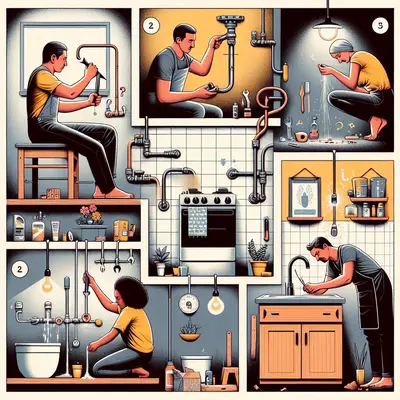
Small problems around the house have a habit of turning into big, expensive issues when you ignore them. The good news: many of the most common household headaches are absolutely fixable with basic tools, a little patience, and a clear plan. This guide walks you through five practical, step-by-step solutions you can do yourself—no contractor, no guesswork, just straightforward fixes.
1. Stop a Dripping Faucet (and Stop Wasting Money)
A dripping faucet doesn’t just drive you crazy; it can waste gallons of water a day and show up on your bill.
What you’ll need
- Adjustable wrench
- Flathead and Phillips screwdriver
- Replacement washer or cartridge (match to your faucet brand/model)
- Old towel or rag
- Plumber’s grease (optional but helpful)
Step-by-step
Turn off the water supply
Look under the sink and close the hot and cold shutoff valves by turning them clockwise. If you don’t see them, shut off the main water supply to the house.
Plug the drain
Use the sink stopper or a rag so you don’t lose tiny screws or parts down the drain.
Disassemble the faucet handle
- Pop off any decorative cap with a flathead screwdriver. - Unscrew the handle and gently pull it off. - Take a photo at each step so you remember how it goes back together.
Access the valve or cartridge
Under the handle, you’ll see a nut or retaining clip. Use your adjustable wrench or pliers to remove it. Then pull out the stem or cartridge. Some may need a gentle twist to release.
Inspect and replace worn parts
- For compression faucets, replace the rubber washer and O-ring at the end of the stem. - For cartridge, ball, or ceramic disk faucets, swap in a new cartridge or seal kit that matches your model. Apply a thin layer of plumber’s grease to new O-rings and seals if you have it.
Reassemble in reverse order
Put everything back exactly as it came out, using your photos as a guide. Don’t overtighten metal parts—you want snug, not “cranked down.”
Turn the water back on and test
Slowly open the shutoff valves. Turn the faucet on, then off. If there’s still a drip, tighten the packing nut slightly or confirm you installed the right cartridge/washer.
2. Quiet a Squeaky Door Hinge for Good
That squeaky door is more than an annoyance—it’s a sign of friction and wear that’s easy to fix.
What you’ll need
- Lubricant (silicone spray, lithium grease, or petroleum jelly)
- Rag or paper towels
- Hammer and small nail/screwdriver (optional, if removing hinge pin)
Step-by-step
Decide your approach
If the squeak is light, you can often fix it without removing the hinge pin. For stubborn squeaks, you’ll get a better result by pulling the pin.
Try lubricating in place first
- Open and close the door a few times to locate the noisy hinge. - Spray or apply a small amount of lubricant directly where the hinge pin meets the hinge. - Open and close the door repeatedly to work it in. Wipe away drips so they don’t stain the door or trim.
If it still squeaks, remove the hinge pin
- Place a rag under the hinge to catch any debris. - With the door closed, insert a small nail or narrow screwdriver under the bottom of the hinge pin and gently tap upward with a hammer. - Pull the pin out the rest of the way by hand.
Clean and lubricate the pin
- Wipe off old grime or rust with a rag. - Apply a thin coat of lubricant or petroleum jelly along the full length of the pin.
Reinstall the pin
- Align the hinge knuckles and drop the pin back in from the top. - Tap gently with the hammer until it sits flush. - Open and close the door several times to distribute the lubricant.
Check alignment
If the door still sticks, check that the screws in the hinge plates are tight. Slightly tightening loose screws can help realign the door and reduce strain on the hinge.
3. Unclog a Slow or Blocked Sink Drain Safely
Before you reach for harsh chemicals, try these mechanical methods that are safer for your pipes and the environment.
What you’ll need
- Rubber plunger (cup-style for sinks)
- Bucket
- Old toothbrush or small brush
- Adjustable wrench or channel-lock pliers
- Wire coat hanger or plastic drain snake
- Rubber gloves
Step-by-step
Clear and prepare the area
Remove everything from under and around the sink. Put on gloves. Place a bucket under the P-trap (the U-shaped pipe) in case you need to open it.
Try hot water first (for slow drains)
Run hot tap water for 1–2 minutes. This can dissolve light grease or soap buildup. If water stands in the sink, turn it off and move on.
Use a plunger properly
- If it’s a bathroom sink, block the overflow hole with a wet rag. - Fill the sink with enough water to cover the plunger cup. - Position the plunger over the drain and plunge firmly up and down for 20–30 seconds without breaking the seal. - Lift the plunger and see if water drains. Repeat a few times.
Clean the stopper (common bathroom issue)
- Remove the stopper from the sink (some pull straight up; others require loosening a nut under the sink). - Clean off hair and gunk with an old toothbrush. - Rinse thoroughly, then reinstall and test drainage.
Open and clean the P-trap if needed
- Place the bucket under the P-trap. - Use your wrench or pliers to loosen the slip nuts on both ends of the trap. - Remove the trap and empty its contents into the bucket. - Clean the inside of the trap with a brush, then rinse it. - Reinstall, hand-tightening the nuts, then give them a final gentle snug with the wrench.
Use a drain snake for deeper clogs
- Feed the snake or straightened wire hanger gently into the drain until you feel resistance. - Twist and push lightly to break up or hook the clog. - Pull it back out, cleaning off debris as you go. - Run hot water to flush the line.
Check for leaks
After reassembling any pipes, run water and inspect the P-trap and connections. Tighten any damp joints slightly until they stay dry.
4. Reset a Tripped Breaker and Restore Power Safely
If part of your home suddenly loses power, a tripped breaker is often the cause—and it’s one of the simplest electrical issues to address.
What you’ll need
- Flashlight (if it’s dark)
- Dry hands and shoes (for safety)
Step-by-step
Confirm the symptoms
- Lights out in one area but not the entire house? - Several outlets in one room not working? This pattern usually points to a tripped breaker, not a full outage.
Check for an outage first
Look outside to see if neighbors’ homes have power. If the whole area is dark, contact your utility company instead of your breaker panel.
Find your electrical panel
Typically located in a basement, garage, utility room, or hallway closet. Use a flashlight if the area is dim.
Identify the tripped breaker
- Open the panel door. - Look for a breaker that is in the middle position or slightly out of line with the others. Some breakers show a red or orange indicator when tripped.
Reset correctly
- With one hand (and dry skin), push the tripped breaker firmly to the OFF position. - Then push it back to the ON position until it clicks. - If it immediately trips again, do not keep resetting—you may have a serious fault.
Reduce load on that circuit
If the breaker stays on, unplug some high-power devices (heaters, microwaves, hair dryers, space heaters) that share that circuit to avoid another trip.
Know when to call a professional
- Breaker won’t stay reset. - You notice burning smells, scorched outlets, or buzzing sounds. In these cases, contact a licensed electrician and avoid using that circuit until inspected.
5. Patch a Small Wall Hole or Dent for a Clean Finish
Whether it’s from a door handle, a moving mishap, or a wall anchor, small holes make a room look tired. Patching them is straightforward and costs far less than repainting a whole room without prep.
What you’ll need
- Spackling paste or pre-mixed joint compound
- Putty knife (2"–4")
- Sanding sponge or fine-grit sandpaper (120–220 grit)
- Damp sponge or cloth
- Matching paint and small brush or roller
Step-by-step
Prepare the damaged area
- Use the putty knife to scrape off loose paint, drywall crumbs, or flaking material. - Lightly brush or vacuum away dust. For holes larger than a nail but smaller than a coin, use a slightly thicker layer of compound.
Apply spackle or joint compound
- Scoop a small amount onto the putty knife. - Press it into the hole or dent, filling it completely. - Smooth the surface by dragging the knife across at a slight angle, feathering the edges into the surrounding wall.
Let it dry fully
Follow the drying time on the product label (often a few hours). Thick applications may need longer. Don’t rush this step or you’ll get cracks or depressions.
Sand smooth
- Once dry, lightly sand the patch until it’s flush with the wall and the edges blend. - Run your fingers over the area; it should feel level and smooth. - Wipe away dust with a damp sponge or cloth.
Apply a second coat if needed
If you see a dip or pinhole after sanding, apply another thin coat of compound, feather the edges again, let dry, and sand lightly.
Prime (if necessary) and paint
- If the patch is larger than a nail hole or the wall color is deep, use a small amount of primer first to prevent flashing (a noticeable difference in sheen). - Once dry, apply matching paint in thin layers, feathering outward so the repair blends into the existing finish.
Inspect in different light
Look at the wall in natural and artificial light. If you see ridges or unevenness, a light sand and another thin paint pass can perfect the finish.
Conclusion
Most everyday household problems don’t require advanced skills or expensive help—just a methodical approach and basic tools. By learning how to tackle a dripping faucet, squeaky hinge, clogged drain, tripped breaker, and damaged wall, you’re not just fixing isolated issues; you’re building confidence to handle future repairs.
The key is simple: work safely, take your time, and know when a job is within your comfort zone. For everything else, these same troubleshooting habits—observe, diagnose, act step-by-step—will help you talk to pros more confidently and avoid unnecessary costs.
Sources
- U.S. Environmental Protection Agency – Fix a Leak – Details on how faucet leaks waste water and why timely repairs matter
- The Family Handyman – How to Fix a Leaky Faucet – Step-by-step reference with photos for common faucet types
- U.S. Department of Energy – Electricity 101 – Basic information on home electrical systems and circuits
- Occupational Safety and Health Administration (OSHA) – Electrical Safety – Key safety guidelines when working around residential electrical panels
- Lowe’s – How to Patch and Repair Drywall – Visual guide to patching holes and dents in interior walls
Key Takeaway
The most important thing to remember from this article is that this information can change how you think about Household Repairs.