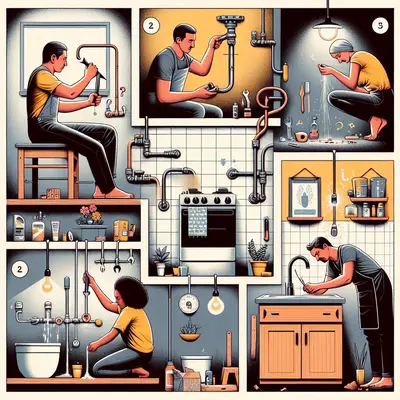
Most home problems don’t need an emergency call to a contractor. With a clear plan, basic tools, and a little patience, you can solve many everyday issues yourself—and avoid small annoyances turning into big repairs. This guide walks through five practical fixes with simple, repeatable steps you can follow today.
Stop a Dripping Faucet: Simple Cartridge Replacement
A dripping faucet wastes water and money, but it’s usually a worn cartridge or washer—not a major plumbing failure. Fixing it is mostly about turning off water and reassembling parts in the right order.
What you’ll need
- Adjustable wrench or basin wrench
- Screwdrivers (Phillips and flathead)
- Replacement cartridge or faucet stem (match your brand/model)
- Plumber’s grease (optional but helpful)
- Small towel and bowl (to catch any drips)
Step‑by‑step
Shut off the water supply
- Look under the sink for two shutoff valves (hot and cold). - Turn them clockwise until fully closed. - Open the faucet to relieve pressure and make sure water is off.
Plug the drain
- Use the sink stopper or a rag. Small screws and parts love falling into open drains.
Remove the faucet handle
- Look for a decorative cap or small cover—pop it off with a flathead screwdriver if needed. - Unscrew the handle using the correct screwdriver. - Gently pull the handle off. Wiggle if it’s stuck, but don’t force it hard enough to crack it.
Take out the cartridge or stem
- You’ll usually see a nut or retaining clip holding it in place. - Use an adjustable wrench to loosen the nut or pliers to remove the clip. - Pull the cartridge straight up. Note its orientation—take a quick photo for reference.
Match and replace the part
- Take the old cartridge to a hardware store or check the faucet brand/model online to order the right one. - Apply a light coat of plumber’s grease to the new cartridge O‑rings. - Insert the new cartridge in the same direction as the old one and secure it with the nut or clip.
Reassemble and test
- Reinstall the handle and any caps. - Open the shutoff valves slowly. - Turn the faucet on and off, checking for leaks and listening for drips.
When to call a pro: If the valve won’t shut off, pipes feel loose in the wall, or the faucet body is cracked.
Quiet a Running Toilet: Fix the Fill and Flapper
A toilet that never stops running usually has one of three issues: flapper not sealing, water level set too high, or a worn fill valve. All are DIY‑friendly.
What you’ll need
- Replacement flapper (universal ones fit many toilets)
- Adjustable wrench or pliers
- Towel or sponge
- Bucket (optional)
Step‑by‑step
Remove the tank lid and observe
- Flush once and watch what happens. - Does water keep flowing into the overflow tube? Is the flapper not closing fully?
Check the flapper first
- Gently press down on the flapper. If the running sound stops, the flapper is your main problem. - Turn off the water valve behind the toilet (clockwise) and flush to empty most of the tank.
Replace the flapper
- Unhook the chain from the flush lever. - Remove the flapper from the overflow tube arms. - Install the new flapper in the same position. - Adjust chain length so there’s a little slack (about one link) when the flapper is closed—not tight, not dragging.
Set the correct water level
- Turn water back on and let the tank fill. - The water should sit below the top of the overflow tube (often marked on the inside). - For float‑cup valves: turn the adjustment screw or move the clip on the rod to lower the float. - For ballcock floats: carefully bend the float arm slightly down so the valve shuts off sooner.
Replace the fill valve if needed
- If water keeps flowing and adjustments don’t help, the fill valve is likely worn. - Turn off water, flush to empty tank, sponge out remaining water. - Disconnect the water supply line under the tank. - Unscrew the locknut holding the fill valve and remove the old one. - Install the new valve following the instructions in the package, reconnect the supply line, and adjust the float.
Final test
- Flush a few times and listen. - The toilet should fill, then stop quietly without continuous trickling.
When to call a pro: If the tank is cracked, bolts are badly rusted and leaking, or you see water damage in the floor around the base.
Restore Power to a Dead Outlet: Safe Troubleshooting Steps
A dead outlet doesn’t always mean bad wiring; often it’s a tripped GFCI or breaker. Safety comes first—if anything looks burned or smells like melted plastic, stop and call an electrician.
What you’ll need
- Plug‑in outlet tester or small lamp/phone charger
- Flashlight
- Access to your electrical panel
Step‑by‑step
Test the outlet with a known‑working device
- Plug in a lamp, charger, or tester you know works. - If nothing happens, move to the next outlet on the same wall and test there too.
Look for a GFCI outlet upstream
- Kitchens, bathrooms, garages, basements, and outdoor circuits often use GFCI outlets. - Search nearby walls for an outlet with “Test” and “Reset” buttons. - Press “Reset” firmly. Test the dead outlet again.
Check your breaker panel
- Find your main electrical panel. Open the door and look for any breaker slightly out of line or sitting between ON and OFF. - Flip suspect breakers fully to OFF, then back to ON. - Test the outlet again.
Inspect the outlet (without removing it)
- Look for discoloration, burn marks, or a melted smell. - If you see damage, do not keep using the outlet.
Decide your next step
- If the outlet starts working after resetting a GFCI or breaker, monitor it. Frequent trips may indicate an overloaded circuit or faulty device. - If it’s still dead, the issue may be a loose connection or damaged wiring behind the outlet—don’t open the box unless you’re comfortable and know how to shut off power correctly.
When to call a pro: If breakers trip repeatedly, you see burn marks, smell burning, or multiple outlets die at the same time without a clear cause.
Smooth a Stuck Interior Door: Alignment and Hardware Fixes
A door that sticks, scrapes, or won’t latch usually needs minor alignment—not replacement. Often, gravity, humidity, or loose screws are to blame.
What you’ll need
- Screwdriver
- Wood toothpicks or matchsticks (for stripped screw holes)
- Utility knife or hand plane/sandpaper
- Pencil
Step‑by‑step
Identify where it’s sticking
- Close the door slowly and watch where it rubs the frame. - Lightly mark tight spots on the edge of the door or frame with a pencil.
Tighten hinge screws
- Open the door fully. - Tighten all hinge screws on both the door and the frame. - If a screw just spins, the hole is stripped.
Fix stripped screw holes
- Remove the loose screw. - Fill the hole with wood toothpicks or matchsticks coated in wood glue (or at least packed tightly). - Break them off flush with the surface, let dry if using glue. - Reinsert the screw so it bites into “new” wood.
Adjust the door position
- If the top corner on the handle side hits the frame, try slightly tightening the top hinge screws and loosening the bottom hinge screws on the frame side. - Tiny shifts often solve the problem without cutting anything.
Trim minor high spots (if needed)
- For small rubs, lightly sand the door edge at the pencil marks. - For bigger rubs, carefully use a hand plane or sharp utility knife to shave a thin layer from the door edge—go slowly and test often.
Check the latch alignment
- If the door closes but doesn’t latch, the strike plate may be too high/low. - Mark where the latch hits the plate with pencil or painter’s tape. - Loosen screws and move the strike plate slightly, or file the opening a bit larger.
When to call a pro: If the frame is visibly out of square, the wall is cracked, or the door is swollen from water damage.
Seal a Drafty Window: Fast Weatherization That Works
Drafts make rooms uncomfortable and drive up energy bills. You can often solve this with basic sealing and without replacing windows.
What you’ll need
- Caulk (exterior‑grade for outside, paintable latex for inside)
- Caulk gun
- Weatherstripping (foam tape or rubber for sashes)
- Utility knife or scraper
- Cleaning cloth or brush
Step‑by‑step
Find the draft
- On a windy day, hold your hand, a lit incense stick, or a strip of tissue around the window edges. - Drafts usually show up where the sash meets the frame, at the bottom rail, or around the trim.
Seal gaps around interior trim
- Clean the area where the trim meets the wall with a dry cloth. - Run a small, steady bead of paintable latex caulk along gaps. - Smooth with a damp finger or a caulk tool. Wipe excess with a damp cloth.
Add weatherstripping to moving parts
- Clean the sash edges and frame where they meet. - Apply adhesive foam or rubber weatherstripping along the sides and bottom where the window closes. - Close the window and make sure it still latches and moves without too much resistance.
Check and seal the exterior (if accessible and safe)
- Inspect where the window frame meets the siding or exterior trim. - Scrape out loose or cracked caulk. - Apply new exterior‑grade caulk in a smooth bead. Avoid blocking weep holes in vinyl windows.
Consider temporary solutions for very leaky windows
- Use clear plastic window insulation film kits in winter for older, drafty windows. - Apply according to instructions and tighten with a hair dryer for a nearly invisible seal.
Retest for drafts
- Repeat the tissue or incense test around the window. - Adjust or add more weatherstripping where you still feel air movement.
When to call a pro: If the frame is rotted, glass is cracked, or condensation appears between double‑pane glass.
Conclusion
Most household repairs are less about “being handy” and more about following a clear process: diagnose the problem, gather the right tools, work methodically, and know when to stop and get help. Fixing a dripping faucet, a running toilet, a dead outlet, a stuck door, or a drafty window are all realistic DIY wins that save money and build confidence.
Start with the problem that bothers you most, follow the steps slowly, and take photos as you go so you can reassemble everything correctly. Each successful repair makes the next one easier—and turns your home from a source of stress into something you feel in control of.
Sources
- [U.S. Environmental Protection Agency – Fixing Leaks at Home](https://www.epa.gov/watersense/fix-leak-week) - Explains how much water is wasted by common leaks like faucets and toilets, and why fixing them matters
- [Family Handyman – How to Fix a Leaking Faucet](https://www.familyhandyman.com/project/how-to-repair-a-compression-faucet/) - Offers detailed diagrams and additional repair tips for different faucet types
- [U.S. Department of Energy – Air Sealing Your Home](https://www.energy.gov/energysaver/weatherize/air-sealing-your-home) - Covers the impact of drafts and best practices for sealing windows and doors
- [Energy Star – Window Air Leakage](https://www.energystar.gov/products/building_products/residential_windows_doors_and_skylights/key_product_criteria) - Provides guidance on window performance, air leakage, and efficiency considerations
- [NFPA (National Fire Protection Association) – Electrical Safety in the Home](https://www.nfpa.org/education-and-research/home-fire-safety/electrical) - Outlines basic electrical safety principles and when to involve a licensed electrician
Key Takeaway
The most important thing to remember from this article is that this information can change how you think about Household Repairs.