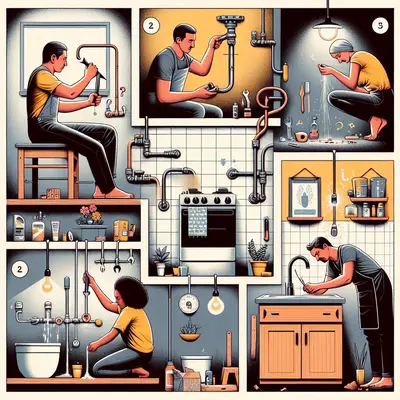
Most household issues don’t need a contractor, a full weekend, or a big budget. What they do need is a clear plan and a few basic tools. This guide walks you through five common problems—each with simple, step‑by‑step instructions so you can get things working again without the stress.
Fix 1: Stop a Dripping Faucet (Without Replacing the Whole Thing)
A dripping faucet wastes water and quietly adds to your bill. In many cases, the fix is just a worn‑out washer or cartridge.
What you’ll need
- Adjustable wrench or basin wrench
- Screwdriver (Phillips and flathead)
- Replacement cartridge or rubber washers/O‑rings (match to your faucet brand/model)
- Plumber’s grease (optional but helpful)
- Rag or small towel
Step‑by‑step
Shut off the water supply
Look under the sink for shutoff valves. Turn them clockwise until they stop. Test the faucet to confirm water is off.
Plug the drain
Use the sink stopper or a rag so small screws or parts can’t fall down the drain.
Remove the handle
- Pry off any decorative cap with a flathead screwdriver. - Unscrew the handle screw and lift off the handle. - Keep screws in a small container so you don’t lose them.
Access the cartridge or stem
You’ll see a retaining nut or clip. - Use your wrench to loosen the nut. - Gently pull out the cartridge (for modern faucets) or stem (for older compression faucets).
Inspect and replace worn parts
- Look for cracked rubber, mineral buildup, or worn O‑rings. - Replace with identical parts (take the old piece to the hardware store if needed). - Apply a thin layer of plumber’s grease to O‑rings and moving parts.
Reassemble the faucet
- Insert the new cartridge or stem in the same orientation. - Tighten the retaining nut snugly, but don’t overtighten. - Reattach the handle and decorative cap.
Turn water back on slowly
Open shutoff valves gradually. Turn on the faucet and check for leaks. If it still drips, recheck orientation of the cartridge and confirm you used the correct replacement part.
Fix 2: Quiet a Running Toilet That Won’t Stop Filling
A toilet that won’t stop running wastes a surprising amount of water. The typical culprits: a tired flapper, misaligned float, or faulty fill valve.
What you’ll need
- Replacement flapper (universal or brand‑specific)
- Adjustable wrench (if you need to swap the fill valve)
- Towel or sponge
- Optional: new fill valve kit if the existing one looks corroded or cracked
Step‑by‑step
Take off the tank lid and observe
Flush the toilet and watch what happens inside. - Is water trickling into the bowl from the overflow tube? - Is the flapper not sealing? - Is the fill valve running continuously?
Turn off the water supply
Turn the valve behind the toilet clockwise. Flush once to lower the water level in the tank.
Check and adjust the float
- If the water level is above the overflow tube, lower the float. - For a float arm, gently bend it downward so the fill stops earlier. - For a vertical float on the fill valve, adjust the screw or clip to lower it.
Inspect and replace the flapper
- Disconnect the chain from the flush handle. - Unhook the flapper from the pegs on the overflow tube. - Clean the valve seat (where the flapper seals) with a rag. - Install the new flapper and reconnect the chain with a bit of slack (but not so loose it tangles).
Test the seal
Turn water back on. Let the tank fill. - If water still leaks into the bowl, press down lightly on the flapper. - If the running stops, your flapper isn’t sealing—check for debris or replace with a better‑fitting model.
Replace the fill valve (if needed)
If adjusting the float doesn’t help and the valve is old or corroded: - Turn water off, flush, and sponge out remaining water in the tank. - Disconnect the supply line under the tank. - Unscrew the old fill valve nut from under the tank and pull the valve out. - Install the new fill valve following its instructions (height adjustment is critical). - Reconnect the supply line, turn water on, and set the water level to the “full” mark in the tank.
Fix 3: Restore Power to a Dead Outlet Safely
When an outlet stops working, it’s often a simple electrical issue you can safely troubleshoot without opening walls.
What you’ll need
- Plug‑in device for testing (lamp or phone charger)
- Non‑contact voltage tester (recommended)
- Flathead screwdriver
- Access to your home’s breaker panel
Step‑by‑step
Test the outlet with multiple devices
Confirm it’s not just a bad lamp or charger. Try at least two different devices.
Check nearby GFCI outlets
Kitchens, bathrooms, garages, and outdoor areas often have GFCI (test/reset) outlets that protect multiple outlets on the same circuit. - Press the Reset button firmly. - Retest the dead outlet.
Inspect the breaker panel
- Look for a tripped breaker (often halfway between on and off). - Firmly switch it all the way to “Off,” then back to “On.” - If it trips again immediately, stop and call a licensed electrician—there may be a dangerous fault.
Test for power safely
Use a non‑contact voltage tester at the outlet. - If there is no power and no breaker/GFCI issue, keep the breaker off to proceed.
Remove the outlet cover and inspect
- With the breaker OFF, unscrew the faceplate and gently pull the outlet out (without touching bare wires). - Look for loose wires, burn marks, or melted plastic. - If you see any charring or smell burning, do not attempt further repair—call an electrician.
Tighten loose connections (if visible and safe)
- Ensure hot (usually black), neutral (white), and ground (bare/green) wires are firmly under their terminal screws. - Avoid push‑in backstab connections if possible; move them to the screw terminals for a more secure hold.
Reassemble and restore power
- Carefully push the outlet back into the box, screw it in, and replace the faceplate. - Turn the breaker back on. - Test again with a lamp or charger.
If outlets frequently die on the same circuit, you may be overloading it—spread high‑demand devices across different circuits or consult an electrician.
Fix 4: Repair a Small Drywall Hole So It Blends In
Dings from doorknobs, moving furniture, or wall mounts don’t require a contractor. You can get a smooth finish with some patience and the right materials.
What you’ll need
- Spackle or joint compound
- Putty knife (2–4 inch)
- Sanding sponge or fine‑grit sandpaper (120–220 grit)
- Small drywall patch or mesh tape (for holes bigger than a nickel)
- Primer and matching paint
- Damp cloth
Step‑by‑step
Prep the area
- Lightly scrape any loose drywall or paint around the hole. - Wipe with a damp cloth to remove dust. Let dry.
For small nail/screw holes
- Apply a small amount of spackle with the putty knife, pressing it into the hole. - Scrape off excess so it’s flush with the wall. - Let dry completely (follow product instructions).
For medium holes (up to about 2–3 inches)
- Place a self‑adhesive mesh patch over the hole. - Spread joint compound over the patch, feathering the edges 1–2 inches beyond. - Let dry, then add a second, thinner coat to smooth out any ridges.
Sand smooth
- Once fully dry, sand lightly until the surface feels even with the surrounding wall. - Wipe off dust with a damp cloth.
Prime the patched area
Patch spots often show through paint if not primed. - Apply primer over the repaired area and slightly beyond the edges. - Let dry completely.
Paint and blend
- Use leftover wall paint or get a color match at a paint store. - Feather your brush or roller strokes outwards so the edge blends. - A second thin coat usually gives the best match.
Fix 5: Clear a Slow Sink Drain Without Harsh Chemicals
A slow drain is usually caused by buildup—not a broken pipe. In many cases, you can clear it mechanically and avoid damage from strong chemical drain cleaners.
What you’ll need
- Plunger (dedicated for sinks, not toilets)
- Bucket or bowl
- Old toothbrush or small brush
- Drain snake or plastic drain “zip” tool
- Adjustable wrench (for P‑trap access)
- Rubber gloves
Step‑by‑step
Remove and clean the stopper (bathroom sink)
- Pull the stopper up. If it won’t come out, look under the sink. - Loosen the nut on the drain pipe that holds the stopper rod. - Slide the rod out, then pull the stopper up from the sink. - Clean off hair and gunk with gloves and an old toothbrush.
Try plunging first
- Fill the sink with a few inches of water. - Block any overflow openings with a damp cloth. - Place the plunger over the drain and plunge firmly 10–15 times. - Lift the plunger and see if water drains faster.
Use a drain snake or plastic zip tool
- Insert it into the drain and push gently while twisting. - Pull it back out to remove hair and debris. - Repeat a few times until you stop pulling up buildup.
Clean the P‑trap (under‑sink U‑shaped pipe)
- Place a bucket under the trap. - Loosen the slip nuts on each side of the trap. - Remove the trap and dump its contents into the bucket. - Clean inside with a brush, then reassemble, hand‑tightening the nuts.
Flush with hot water
- Run hot (not boiling) tap water for several minutes to flush away remaining buildup. - Avoid frequent use of harsh chemical drain cleaners; they can damage pipes and are hazardous if they splash.
If multiple drains in your home are slow at once, the issue may be in a larger branch of your plumbing system—at that point, it’s worth calling a professional.
Conclusion
Most everyday home problems boil down to worn parts, loose connections, or minor buildup—not major failures. With basic tools and clear steps, you can stop leaks, silence running toilets, revive outlets, erase wall damage, and clear sluggish drains on your own. Start with one repair, follow each step carefully, and you’ll build the confidence to tackle the next issue instead of living with it—or paying premium rates for something you can handle yourself.
Sources
- [U.S. Environmental Protection Agency – WaterSense: Fixing Leaks at Home](https://www.epa.gov/watersense/fix-leak-week) - Data on water waste from leaks and basic guidance on fixing common plumbing issues
- [Kohler Support – How to Repair a Dripping Faucet](https://support.kohler.com/hc/en-us/articles/360001769714-How-to-repair-a-dripping-faucet) - Manufacturer instructions on faucet cartridges and leak repairs
- [Energy.gov – Electrical Safety in the Home](https://www.energy.gov/ceser/electrical-safety-home) - Safety best practices for working around household electrical systems
- [University of Georgia Extension – Home Plumbing Systems](https://extension.uga.edu/publications/detail.html?number=C1041) - Educational overview of residential plumbing and maintenance tips
- [Mayo Clinic – Household Chemical Safety](https://www.mayoclinic.org/healthy-lifestyle/adult-health/in-depth/household-chemicals/art-20046662) - Guidance on safe use and risks of common household chemicals, relevant to drain cleaners and cleaners
Key Takeaway
The most important thing to remember from this article is that this information can change how you think about Household Repairs.