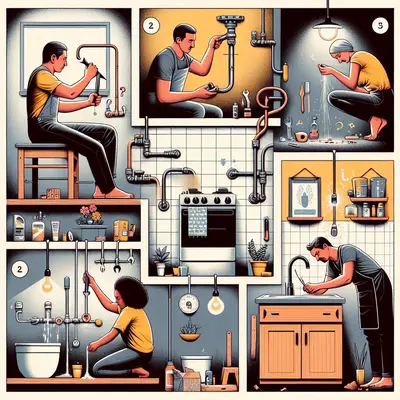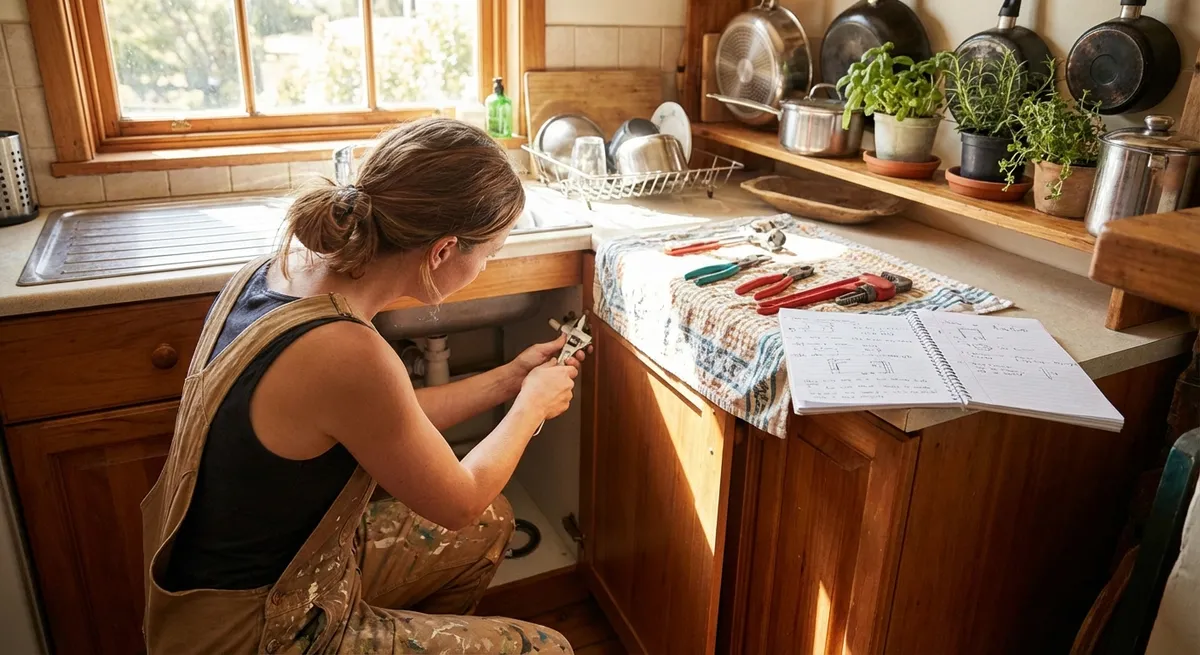
Household problems tend to show up at the worst possible time—right before guests arrive, late at night, or when you’re already stressed. The good news: you can solve many of the most common issues quickly with simple tools and a clear plan. This guide walks you through five practical, step‑by‑step repairs you can handle yourself, without needing a full toolbox or advanced skills.
Stop a Running Toilet and Save on Your Water Bill
A constantly running toilet wastes water and money, but it’s usually fixable in under 20 minutes.
What you’ll need:
Rubber gloves, an adjustable wrench (optional), replacement flapper or fill valve (if needed).
Steps:
Remove the tank lid and observe
Flush once and watch what happens inside the tank. Identify the main parts: the flapper at the bottom, the fill valve on the side, and the float that rises with the water.
Check the flapper first
If water is slowly trickling into the bowl, the rubber flapper might not be sealing properly. Gently press it down with your hand. If the running sound stops, you’ve found the problem.
Adjust or clean the flapper
Make sure the chain connecting the flapper to the handle isn’t too tight or tangled; there should be a little slack. If there’s mineral buildup, wipe the flapper and the valve seat with a cloth. Test again.
Replace the flapper if it’s worn
Turn off the water supply valve behind the toilet (clockwise), flush to empty the tank, and remove the old flapper by detaching it from the side pegs or ring. Take it to the hardware store to match the size and style, then snap the new one in place. Reattach the chain with slight slack.
Adjust the water level and float
If water keeps flowing into the overflow tube in the center, the water level is set too high. On older toilets, lower the float arm slightly with a gentle bend. On newer models, turn the adjustment screw or slide the float down. The water line should sit about 1 inch below the top of the overflow tube.
Test and fine‑tune
Turn the water back on, let the tank fill, and flush a few times. If you don’t hear continuous running after the tank refills, you’re done. If it still runs, the fill valve itself may be faulty and need replacement (most come with simple instructions and only require basic tools).
Fix a Dripping Faucet Without Calling a Plumber
A dripping faucet is annoying and wastes water, but the cause is usually a worn internal part that’s easy to replace.
What you’ll need:
Adjustable wrench, screwdriver, replacement cartridge or O‑rings/washers (matched to your faucet type), plumber’s grease (optional).
Steps:
Turn off the water supply
Look under the sink for the shut‑off valves and turn both hot and cold sides clockwise until they stop. Open the faucet to release any remaining pressure.
Identify your faucet type
Common types include cartridge, ball, disc, and compression. Look up your brand and model (often printed on the faucet body) online to identify the internal parts and order the proper repair kit if needed.
Remove the handle
Pop off any decorative cap, then remove the screw underneath with a screwdriver. Gently pull the handle off. If it’s stuck, wiggle it side to side rather than forcing it straight up.
Take out the internal mechanism
For cartridge faucets, remove the retaining nut with a wrench and pull out the cartridge. For compression faucets, remove the stem. Lay parts out in order so you can reassemble them easily.
Inspect and replace worn parts
Look for cracked rubber washers, flattened O‑rings, or mineral buildup. Replace these components with matching parts from a repair kit. Lightly coat O‑rings with plumber’s grease to help them seal and last longer.
Reassemble and tighten carefully
Put everything back in reverse order. Don’t overtighten nuts or screws—that can damage threads or crack components. Just make them snug.
Turn the water back on slowly
Open the shut‑off valves gradually while watching for leaks. Turn on the faucet and test hot and cold. If the drip has stopped and no water is seeping from the base, the repair worked.
Quiet a Squeaky Door Without Replacing the Hinges
Squeaky doors are more than just annoying—they can also signal friction that wears parts down over time. Lubrication is usually all it takes.
What you’ll need:
Household lubricant (silicone spray, white lithium grease, or petroleum jelly), paper towels or rags, flathead screwdriver or utility knife (optional).
Steps:
Locate the source of the squeak
Slowly open and close the door while listening closely. The noise almost always comes from a hinge pin rubbing against the hinge body.
Try lubricating in place first
With the door closed, spray or apply a small amount of lubricant directly on the hinge pin and into the joint. Open and close the door several times to work it in. Wipe off any drips.
Remove the hinge pin if the squeak persists
Place the tip of a flathead screwdriver under the head of the pin and gently tap the handle with your other hand or a light hammer until the pin starts to rise. Pull it out by hand.
Clean the pin and hinge barrel
Wipe away any rust, dirt, or old paint from the pin with a rag. If there’s heavy buildup, lightly scrape it with a utility knife or fine sandpaper, taking care not to scratch surrounding surfaces.
Apply lubricant generously
Coat the pin with your lubricant of choice, then add a small amount inside the hinge barrel (the hollow part the pin slides into). Don’t overdo it—excess will drip out later.
Reinsert and test
Slide the pin back into the hinge and tap it down gently until fully seated. Open and close the door several times. Repeat the same process for other hinges if needed.
Clean up and check alignment
Wipe away extra lubricant to prevent dust from sticking. If the door still rubs or sticks, tighten or loosen hinge screws slightly to re‑align the door within the frame.
Revive a Dead Outlet Safely
If one outlet suddenly stops working, it doesn’t always mean you have a major electrical problem. Often the issue is a tripped safety device or a loose connection in a nearby outlet.
Safety note: If you see burn marks, smell burning, or hear buzzing, stop and call a licensed electrician.
What you’ll need:
Non‑contact voltage tester (recommended), flathead and Phillips screwdrivers.
Steps:
Test with another device
Plug in something you know works (like a lamp or phone charger) to confirm the outlet is truly dead. Try both top and bottom receptacles.
Check nearby GFCI outlets
Kitchens, bathrooms, garages, and exterior areas often use GFCI (ground‑fault circuit interrupter) outlets with “Test” and “Reset” buttons. If a GFCI has tripped, it can cut power to outlets downstream.
Reset the GFCI
Press the “Reset” button firmly until it clicks. Then test the dead outlet again. If it now works, you’ve solved the problem. If the GFCI trips again quickly, unplug devices and test with only one item to rule out a faulty appliance.
Inspect your breaker panel
Find your home’s electrical panel and look for a breaker that’s slightly out of line or in the middle position. Flip it fully to OFF, then firmly back to ON. Return to the outlet and test again.
Use a non‑contact tester before opening anything
If the outlet is still dead but you plan to remove the cover, use a non‑contact voltage tester at the outlet face to confirm no live power. If you’re not confident reading these tools, stop and call a pro.
Check for loose connections (only if comfortable and panel is off)
Turn the outlet’s circuit breaker OFF. Remove the outlet cover and mounting screws. Gently pull the outlet forward. Look for loose wires or backstab connections (wires pushed into holes on the back). Secure wires under the screw terminals instead, tightening them firmly.
Reassemble and test
Carefully tuck wires back into the box, remount the outlet, and reinstall the cover. Turn the breaker back ON and test again with a device. If it still doesn’t work, or you see any damaged wiring, it’s time for a licensed electrician.
Patch a Small Wall Hole for a Paint-Ready Finish
From doorknob dings to misplaced wall anchors, small holes can make a room look worn. Patching them properly gives you a smooth, paint‑ready surface.
What you’ll need:
Spackle or lightweight joint compound, putty knife, fine‑grit sandpaper (120–220), damp sponge or cloth, primer and matching paint.
Steps:
Clean the damaged area
Wipe away dust and loose drywall with a damp cloth. For small nail or screw holes, remove any protruding bits of paint or drywall paper around the edges.
Apply a first layer of spackle
Scoop a small amount of spackle onto your putty knife. Press it firmly into the hole, then scrape across the surface at a slight angle to remove excess. The goal is to fill the hole completely, not pile material on top.
Feather the edges
Run the putty knife over the area with light pressure to smooth the patch and blend the edges into the surrounding wall. You want a slight, barely raised spot that can be sanded flat later.
Let it dry fully
Follow the drying time on the product label (usually 1–24 hours, depending on depth and product). Rushing this step leads to cracks or uneven sanding.
Sand for a smooth finish
Lightly sand the patched area with fine‑grit sandpaper until it’s flush with the wall. Run your fingers over it to feel for ridges. If you sand too much and expose the hole again, apply a thin second coat, let dry, and sand again.
Wipe away dust
Use a damp sponge or cloth to remove sanding dust. This step is critical—dusty surfaces cause paint to peel or look uneven.
Prime and paint to match
Apply a small amount of primer to the patched area to prevent “flashing” (a shiny or dull patch where the repair shows through). Once dry, paint over it with your wall color, feathering the edges. For best blending, use the same type of paint (matte, eggshell, etc.) and, ideally, the same brand and color.
Conclusion
Most everyday home problems don’t require a full toolkit or an emergency service call—just a clear process and a few basic supplies. By learning how to stop a running toilet, fix a dripping faucet, quiet a squeaky door, troubleshoot a dead outlet safely, and patch small wall holes, you build real confidence and control over your space. Start with the repair that’s bothering you most today, follow the steps carefully, and you’ll quickly see how manageable these “big” problems actually are.
Sources
- [U.S. Environmental Protection Agency – Fix a Leak](https://www.epa.gov/watersense/fix-leak-week) - Explains how household leaks (including toilets and faucets) waste water and provides basic guidance on detecting and fixing them
- [Family Handyman – How to Fix a Toilet](https://www.familyhandyman.com/project/how-to-fix-a-toilet/) - Step‑by‑step instructions with diagrams for common toilet repairs like flapper and fill‑valve replacement
- [This Old House – How to Repair a Dripping Faucet](https://www.thisoldhouse.com/plumbing/21015115/how-to-fix-a-leaky-faucet) - Detailed walk‑through of different faucet types and how to replace cartridges, washers, and O‑rings
- [U.S. Consumer Product Safety Commission – Home Electrical Safety](https://www.cpsc.gov/Safety-Education/Safety-Guides/Electrical) - Official safety guidance for working around outlets, breakers, and home electrical systems
- [Lowe’s – How to Patch and Repair Drywall](https://www.lowes.com/n/how-to/patch-repair-drywall) - Visual and written instructions for filling small wall holes and preparing them for paint
Key Takeaway
The most important thing to remember from this article is that this information can change how you think about Household Repairs.