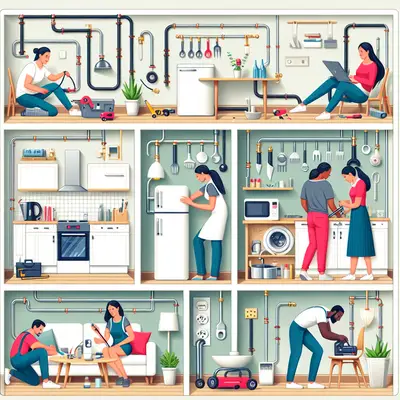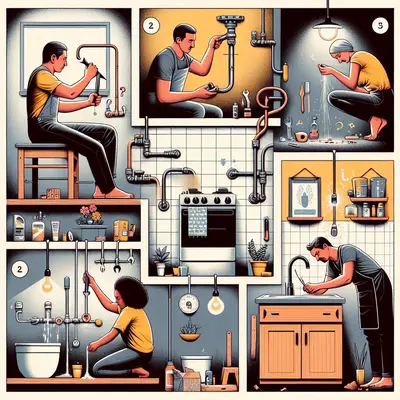
If you own or rent a home, a few basic repair skills can save you time, money, and stress. You don’t need a workshop full of tools or expert-level knowledge—just clear instructions and a calm, practical approach. This guide walks you through five extremely common household problems with simple, step‑by‑step solutions you can handle today.
Fix 1: A Dripping Faucet That Won’t Stop Wasting Water
A slow drip can waste gallons of water a day and drive up your bill. The good news: most drips come from worn internal parts you can replace in under an hour.
What you’ll need
- Adjustable wrench or pliers (with smooth jaws or a cloth to protect finishes)
- Screwdriver (Phillips or flathead, depending on your faucet)
- Replacement parts: usually a cartridge, O‑ring, or washer specific to your faucet brand/model
- Towel and small container (to catch small parts)
Step‑by‑step
Shut off the water
- Look under the sink for the hot and cold shutoff valves. - Turn both clockwise until they stop. - Turn the faucet on to confirm water is fully off.
Plug the drain
- Use a sink stopper or a rag so small screws or parts don’t fall into the drain.
Remove the handle
- Pop off any decorative cap to reveal the handle screw. - Unscrew it and gently pull the handle off. - Keep screws and parts together in your small container.
Access the cartridge or valve parts
- Depending on your faucet, remove any trim pieces and retaining nuts using your wrench. - Carefully pull out the cartridge, stem, or internal assembly, noting the orientation. Take a photo for reference.
Replace worn parts
- Inspect O‑rings, rubber washers, and cartridge surfaces for cracks or flattening. - Take the old parts (or your photo) to a hardware store and match them exactly. - Install the new parts in the same orientation as the originals.
Reassemble the faucet
- Reinstall the cartridge or stem, tighten the retaining nut (snug, not over‑tight), and put the handle back on. - Remove the drain plug and open the shutoff valves.
Test for leaks
- Turn the faucet on slowly, then off. - Check under the sink and around the handle for drips. Tighten slightly if needed, but don’t force anything.
Fix 2: A Running Toilet That Won’t Stop After Flushing
A toilet that runs constantly is usually a simple tank mechanism issue, not a plumbing emergency. Most fixes don’t require tools and use inexpensive parts.
What you’ll need
- Adjustable wrench (optional)
- Replacement flapper or fill valve kit (if needed)
- Towel to catch drips
Step‑by‑step
Remove the tank lid and observe
- Carefully lift the tank lid and set it aside on a towel. - Flush the toilet and watch what happens in the tank: - Does water keep flowing into the overflow tube? - Does the flapper fail to seal the opening?
Check the flapper first (most common issue)
- Gently press the flapper down after the tank fills. - If the running stops, the flapper likely isn’t sealing properly. - Inspect it for warping, cracking, or buildup.
Adjust or replace the flapper
- Make sure the chain has a little slack but isn’t tangled or too tight. - If the rubber looks worn, shut off the water at the valve near the wall, flush to empty most of the tank, and unhook the old flapper. - Hook the new flapper onto the pegs on the overflow tube and clip the chain to the flush arm. Adjust chain length so the flapper can fully close.
Check the water level and float
- The water level should sit about an inch below the top of the overflow tube. - If the float is too high, the tank overfills, sending water down the overflow constantly. - Adjust the float: - On older ball floats, bend the float arm slightly downward. - On modern fill valves with a sliding cup, squeeze the clip and slide the float down a bit.
If water still runs, consider replacing the fill valve
- Shut off the water and flush to empty the tank. - Use a wrench to loosen the nut under the tank that holds the fill valve in place. - Remove the old valve, insert the new one per the manufacturer’s instructions, tighten the nut, and reconnect the refill tube. - Turn water back on, let the tank fill, and fine‑tune the water level.
Final check
- Flush several times and listen. - The toilet should fill, stop, and stay quiet without hissing or trickling.
Fix 3: A Door That Won’t Latch or Keeps Swinging Open
A stubborn door is usually a result of hinge issues, misalignment, or seasonal movement of the frame. Many of these problems can be fixed without replacing the door or frame.
What you’ll need
- Screwdriver
- Wood toothpicks or small wood shims
- Wood glue (optional but helpful)
- Utility knife or chisel (for minor strike plate adjustments)
- Pencil
Step‑by‑step
Identify the problem
- Close the door slowly and watch where it sticks or fails to latch. - Does the latch not meet the strike plate? - Is the door rubbing at the top or side? - Does it swing open on its own from a partially open position?
Tighten hinge screws
- Open the door fully and inspect all hinge screws. - Tighten loose screws in both the door and the frame. - If a screw spins without tightening, the hole is stripped.
Fix stripped hinge screw holes
- Remove the loose screw. - Push 2–3 wood toothpicks dabbed in wood glue into the hole. Break them off flush. - Reinsert the screw and tighten. The added wood gives the screw something to bite into.
Adjust door alignment with hinge screws
- If the door rubs at the top on the latch side, tighten the top hinge screws, especially the ones going into the frame. - You can also slightly loosen screws on one side of a hinge and tighten the opposite side to shift the door a millimeter or two.
Align the latch with the strike plate
- Close the door until the latch just touches the strike plate. Mark where the latch hits using a pencil. - If the latch hits too high or low, you may adjust the strike plate: - Loosen its screws slightly and nudge it up or down to match the latch. - Retighten and test. - For small adjustments, you can gently file the strike plate opening or carefully chisel a bit of wood from the mortise.
Stop a door from swinging open on its own
- Slightly bend one of the hinge pins: - Pop the hinge pin out with a screwdriver and light taps. - Place the pin on a hard surface and give it a gentle tap in the center to create a slight curve. - Reinsert the pin—the added friction helps keep the door in place.
Test and fine‑tune
- Open and close the door several times. - Make small adjustments rather than big moves. You’re looking for a clean close and a latch that clicks easily.
Fix 4: A Wall Anchor Repair for Loose Towel Bars or Shelves
Towel bars, toilet paper holders, and light shelves often loosen because they were anchored into drywall improperly. Reinforcing the mounting points gives you a long‑lasting fix.
What you’ll need
- Drill with appropriate bits
- Drywall anchors (toggle bolts, self‑drilling, or expansion anchors—depending on weight)
- Screwdriver
- Level (for straight mounting)
- Pencil
Step‑by‑step
Remove the loose fixture
- Unscrew the bracket or mounting plate from the wall. - Note whether screws were in studs or just drywall.
Inspect the damage
- If screws pulled out of drywall and the holes are large or crumbled, simple re‑screwing won’t last. - Decide whether to reuse the same location or move slightly up/down to a fresh area.
Choose the right anchors
- Light items (toilet paper holder, small towel ring): plastic expansion or self‑drilling anchors often work. - Heavier items (towel bars that will support weight, small shelves): consider metal toggle bolts or specialty heavy‑duty anchors. - If you can hit a stud with at least one screw, that’s ideal—use a stud finder if available.
Prepare the holes
- For damaged holes: - Enlarge slightly with a drill to create a clean opening for your new anchor. - For new locations: - Mark level screw positions with a pencil using the bracket as a template. - Drill pilot holes as directed by the anchor packaging.
Install the anchors
- Push or gently tap plastic anchors flush with the wall, or screw in self‑drilling anchors until snug. - For toggle bolts, insert the folded toggle through the hole, then pull back gently so it rests against the inside of the drywall.
Reattach the fixture
- Align the bracket with your anchors. - Insert screws and tighten until snug—don’t overtighten or you’ll damage the drywall or anchors. - Double‑check with a level where it matters (e.g., towel bar, shelf).
Test the strength
- Apply light pressure first, then gradually more force similar to real use. - If it feels solid, you’ve upgraded a weak point your wall used to have.
Fix 5: A Weak or “Dead” Electrical Outlet (Non‑GFCI)
Note: Only perform basic outlet checks if you’re comfortable and always respect electrical safety. If anything seems questionable, or if outlets are warm, burnt, or buzzing, stop and call a licensed electrician.
What you’ll need
- Outlet tester or plug‑in lamp/phone charger
- Flathead and Phillips screwdriver
- Flashlight
- Voltage tester (for safer confirmation, if you have one)
Step‑by‑step
Test the outlet properly
- Plug in a device you know works (like a lamp). - If nothing happens, try both the top and bottom sockets. - Confirm the device works in a different outlet to rule out the device itself.
Check the breaker panel
- Go to your electrical panel and look for any tripped breakers (often halfway between ON and OFF). - Reset by flipping fully OFF, then back to ON. - Retest the outlet.
Look for a tripped GFCI upstream
- Even if your “dead” outlet isn’t GFCI, it might be protected by one elsewhere. - Check bathrooms, kitchen, garage, basement for GFCI outlets with “TEST/RESET” buttons. - Press RESET firmly, then recheck your problem outlet.
Shut off power to the outlet (if you proceed further)
- Switch off the breaker controlling that outlet (labelled by room, if marked). - Plug in a lamp and confirm there’s no power by turning the breaker off and on—when off, the lamp should not light. - Use a non‑contact voltage tester if you have one to confirm no voltage at the outlet.
Inspect the outlet (visual only if you’re unsure)
- Remove the outlet cover plate with a screwdriver. - Look for: - Burn marks or discoloration - Loose wires hanging free - Cracked outlet body - If you see burning, charring, or melted plastic, stop and call an electrician.
Tighten loose terminal screws (if comfortable)
- If wires are clearly attached but terminal screws are visibly loose, you can gently snug them with a screwdriver—one at a time. - Do NOT move wires between terminals or modify the wiring arrangement unless you know what you’re doing. - Avoid using the “backstab” holes on outlets; side‑screw connections are more reliable.
Reassemble and retest
- Reinstall the cover plate, restore power at the breaker, and test with a lamp or outlet tester. - If the outlet still doesn’t work or trips the breaker, call a professional—there may be an upstream wiring issue.
Conclusion
Basic home repairs don’t have to be intimidating. With a few essential tools and straightforward steps, you can stop leaks, silence running toilets, fix stubborn doors, reinforce loose fixtures, and troubleshoot simple outlet issues—without waiting for a pro or paying for a service call.
Start with the simplest repair you’re comfortable with and build from there. As you handle small problems promptly, you’ll not only prevent bigger, more expensive damage but also gain practical skills that pay off every time something goes wrong at home.
Sources
- [U.S. Environmental Protection Agency – Fix a Leak](https://www.epa.gov/watersense/fix-leak-week) – Data and guidance on common household leaks and water savings
- [The Family Handyman – How to Fix a Leaky Faucet](https://www.familyhandyman.com/project/how-to-repair-a-compression-faucet/) – Detailed faucet repair walkthroughs with photos
- [Kohler – How a Toilet Works & Basic Adjustments](https://support.kohler.com/hc/en-us/articles/360001888654-How-a-Toilet-Works) – Manufacturer diagrams and explanations of tank mechanisms
- [University of Missouri Extension – Repairing Drywall](https://extension.missouri.edu/publications/gh1253) – Techniques for dealing with damaged drywall and wall anchors
- [U.S. Consumer Product Safety Commission – Home Electrical Safety Checklist](https://www.cpsc.gov/s3fs-public/5131.pdf) – Safety guidelines for working around household electrical systems
Key Takeaway
The most important thing to remember from this article is that this information can change how you think about Household Repairs.