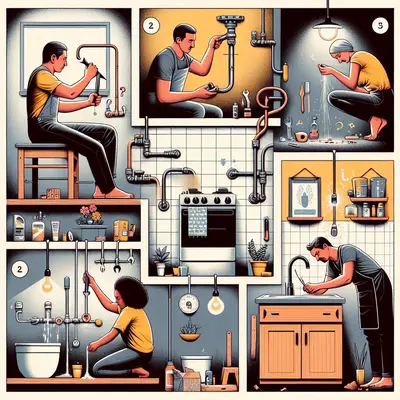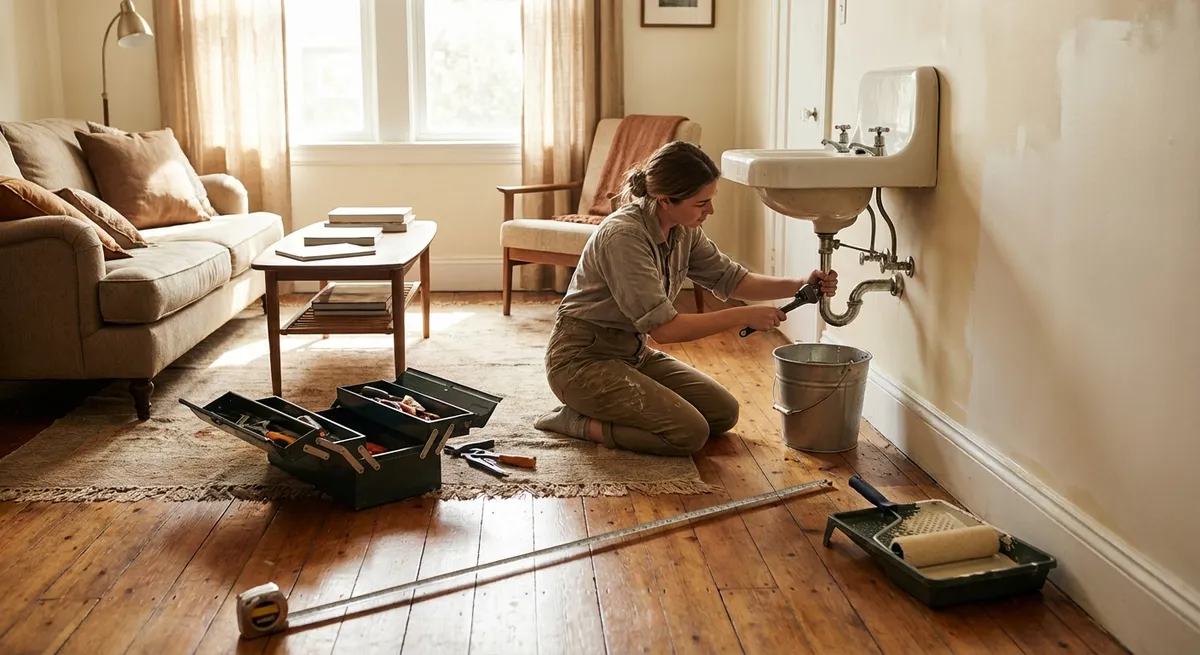
Household problems rarely wait for a convenient moment. A dripping faucet, a door that won’t close right, or a mysteriously silent outlet can derail your day fast. The good news: you can solve many of these issues yourself with basic tools, a clear plan, and 20–30 minutes per fix. This guide walks you through five practical household repairs step by step, focusing on safety, speed, and results you can trust.
Stop a Dripping Kitchen or Bathroom Faucet
A dripping faucet wastes water and quietly increases your bill. In most cases, the cause is a worn-out cartridge or washer inside the faucet. You don’t need plumbing experience—just a bit of patience.
Tools & materials
- Adjustable wrench or basin wrench
- Phillips and flathead screwdrivers
- Replacement cartridge or washers (match your faucet brand/model)
- Plumber’s tape (Teflon tape)
- Small towel or rag
Step-by-step
Shut off the water supply
Look under the sink for two shut-off valves (hot and cold). Turn both clockwise until they stop. Open the faucet to confirm water is off and to relieve pressure.
Plug the drain
Use a sink stopper or a rag. Small screws and parts can easily fall down the drain—blocking it now will save you headaches.
Remove the handle
- Look for a small cap or decorative cover hiding a screw (often with an “H” or “C”). - Pry it off gently with a flathead screwdriver. - Remove the screw and lift the handle off.
Access the cartridge or stem
Under the handle you’ll usually see a bonnet nut or retaining clip. - Use your wrench to loosen the nut. - Gently pull out the cartridge or stem, noting its orientation (take a photo for reference).
Inspect and replace parts
- Check O-rings, washers, and seals for cracks, wear, or flattening. - Replace with identical parts. If you’re unsure, take the old part to a hardware store and match it.
Reassemble the faucet
- Insert the new cartridge or stem in the same orientation. - Tighten the bonnet nut snugly (don’t overtighten—you can crack parts). - Reinstall the handle and screw, then the decorative cap.
Turn water back on and test
- Slowly open both shut-off valves. - Turn the faucet on and off a few times. - Check for leaks at the base and under the sink.
If the drip persists after replacing internal parts, the faucet body itself may be worn. In that case, replacing the entire faucet assembly is usually more time‑ and cost-effective.
Fix a Running Toilet That Won’t Stop Refilling
A constantly running toilet wastes a surprising amount of water and can signal a worn or misadjusted internal part. Most fixes require no special tools and can be done without disconnecting the toilet.
Tools & materials
- Adjustable wrench (optional)
- Replacement flapper or fill valve (if needed)
- Towel or sponge
Step-by-step
Remove the tank lid and inspect
Lift the lid carefully and set it on a flat, safe surface. Look inside while the toilet is running. You’ll see: - Fill valve (usually on the left) - Float (cup or ball) - Flapper at the bottom connected to the flush handle by a chain
Check the water level
- The water should stop about 1 inch below the top of the overflow tube. - If it’s overflowing into the tube, the fill level is set too high.
Adjust the float
- Float cup style: Find the adjustment screw or sliding clip on the fill valve. Turn the screw clockwise or slide the clip down to lower the water level. - Float ball style: Gently bend the float arm downward to reduce the fill level.
Test the flapper
- Push down lightly on the flapper when the tank is full and the toilet is running. - If the running stops, the flapper is likely worn, warped, or not sealing properly.
Replace the flapper if needed
- Turn off the water supply at the valve behind the toilet. - Flush to empty most of the water from the tank. - Unhook the chain from the flush handle lever. - Detach the flapper from its side mounts and remove it. - Install the new flapper on the same mounts and reconnect the chain, leaving a bit of slack (but not so much that it sags).
Check the chain length
- If the chain is too tight, the flapper can’t seal; if too loose, the handle won’t lift it properly. - Aim for about 1/4–1/2 inch of slack when the flapper is closed.
Turn water back on and test
- Reopen the shut-off valve. - Let the tank refill and listen. - Flush several times to confirm the toilet no longer runs continuously.
If adjustments and a new flapper don’t solve the issue, the fill valve itself may need replacement—a straightforward swap following the instructions on the replacement kit.
Quiet a Squeaky Interior Door
A squeaky door is harmless but annoying—and usually easy to fix. The problem is nearly always friction in the hinges.
Tools & materials
- Hammer
- Small nail, punch, or screwdriver (to tap hinge pin)
- Paper towel or rag
- Lubricant: silicone spray, white lithium grease, or petroleum jelly
Step-by-step
Identify the squeaky hinge
Open and close the door slowly to pinpoint where the sound is coming from. Often it’s the top hinge, but any hinge can be the culprit.
Support the door (for safety)
If you’re removing more than one hinge pin at a time, place a wedge, book, or doorstop under the door to keep it in place. For most doors, you can work one hinge at a time without fully supporting it.
Remove the hinge pin
- Close the door. - From the bottom of the hinge, place a nail, punch, or small screwdriver against the pin. - Gently tap upward with a hammer until the pin starts to move. - Pull the pin out completely by hand or with pliers.
Clean the hinge pin
- Wipe off old grease, rust, or dirt with a rag. - If there’s corrosion, lightly scrub with fine steel wool or a scouring pad.
Apply lubricant
- Coat the pin lightly with your chosen lubricant. - If using spray, spray onto a paper towel and wipe it on the pin rather than spraying directly (less mess).
Reinstall the pin and work it in
- Insert the lubricated pin back into the hinge from the top. - Tap gently with a hammer until it’s fully seated. - Open and close the door several times to distribute the lubricant.
Repeat for other hinges if needed
If the squeak persists, repeat the process on the remaining hinges. Usually, treating all hinges once will keep the door quiet for months or longer.
Avoid vegetable oils (they can gum up and attract dust). Stick to lubricants designed for metal hardware for long‑lasting results.
Reset a Dead Electrical Outlet Safely
When an outlet suddenly stops working, it doesn’t always mean you need an electrician. GFCI trips, tripped breakers, or a loose plug are often to blame. Work slowly and prioritize safety.
Safety first
- If you see scorch marks, smell burning, or feel heat from the outlet, stop and call a qualified electrician immediately.
- Never work on outlets with wet hands or in standing water.
- Plug-in device to test (lamp or phone charger)
- Flashlight (if lights are out)
Tools & materials
Step-by-step
Test the outlet with a known working device
- Plug in a lamp or phone charger you know works. - Try both receptacles (top and bottom). - If both are dead, move to step 2.
Check nearby GFCI outlets
- In kitchens, bathrooms, garages, basements, and outdoor areas, look for outlets with “TEST” and “RESET” buttons. - Even if the dead outlet isn’t a GFCI, it may be protected by one upstream.
Reset the GFCI
- Press the “RESET” button firmly. - You may hear or feel a click. - Plug your device back into the dead outlet and test again. - If it works now, the issue was a tripped GFCI.
Check the circuit breaker panel
- Find your home’s main electrical panel (basement, garage, utility room). - Look for a breaker that’s in the middle position or slightly off compared to others. - Firmly switch it OFF, then back ON to reset.
Retest the outlet
- Go back to the outlet and plug in your test device. - If it works, you’ve restored power. - If not, test other nearby outlets on the same wall or room.
Watch for repeating trips
- If the same outlet or breaker keeps tripping, unplug all devices from that circuit. - Plug them back in one at a time to see if a specific device is causing overload. - If trips occur with minimal load, call an electrician—this may indicate wiring or breaker issues.
If you’re ever unsure about what you’re seeing in the panel or at an outlet, stop and consult a licensed professional. Electrical safety is not a place to “guess and hope.”
Seal a Drafty Window to Save Energy
Drafty windows make your home less comfortable and can drive up heating and cooling costs. A quick sealing job doesn’t require window replacement—just simple materials and a few careful steps.
Tools & materials
- Utility knife or putty knife
- Caulk gun
- Exterior- or interior-grade caulk (depending on where you’re sealing)
- Weatherstripping (foam, rubber, or V-strip)
- Mild cleaner and rag
- Painter’s tape (optional, for neater lines)
Step-by-step
Find the draft
- On a cool or windy day, run your hand slowly around the window frame. - Feel for cold air, especially where the frame meets the wall or where sashes meet each other. - You can also hold a lit incense stick or very light tissue near gaps and watch for movement.
Clean the area
- Wipe down surfaces to remove dust, dirt, and loose paint where you’ll apply caulk or weatherstripping. - Let the area dry completely—caulk won’t adhere to damp surfaces.
Apply caulk around the frame (for gaps at wall/frame)
- Cut the caulk tube tip at a 45-degree angle with a small opening. - Load the tube into the caulk gun. - Run a steady bead of caulk along gaps where the window frame meets the wall, siding, or trim. - Use a damp finger or a caulk finishing tool to smooth the bead. - Wipe away excess with a damp rag.
Install weatherstripping (for gaps where windows meet)
- Open the window and clean the sash and meeting rails. - Measure and cut weatherstripping to length. - Peel adhesive backing (if self-adhesive) and press firmly into place along: - The bottom of the lower sash - The top of the upper sash (if applicable) - Vertical sides where sashes slide (depending on product instructions)
Check operation
- Close and lock the window to compress the weatherstripping. - Ensure the window still opens and closes smoothly; if it binds, trim or adjust the weatherstripping.
Retest for drafts
- After the caulk dries (check label for cure time), repeat the hand or tissue test around the window. - Add additional caulk or weatherstripping where you still feel air movement.
Properly sealed windows improve comfort, reduce energy waste, and can make a noticeable difference in your monthly utility bills—especially in extreme temperatures.
Conclusion
Most everyday household issues don’t require a professional callout or a full weekend to fix. With a short checklist, a few basic tools, and clear steps, you can stop leaks, silence squeaks, restore power, and seal out drafts in under an hour. Start with the problem that’s bothering you most, follow each step carefully, and keep safety at the top of your mind—especially around plumbing and electrical systems. As you build experience with small repairs, you’ll be able to handle more complex issues with confidence and keep your home running smoothly without waiting for help.
Sources
- EPA – Fix a Leak Week: Household Leaks - Explains the impact of common household leaks and basic approaches to finding and fixing them
- U.S. Department of Energy – Air Sealing Your Home - Guidance on identifying and sealing drafts around windows, doors, and other openings
- U.S. Department of Energy – Saving on Water Heating - Background on water-related energy use and why fixing plumbing issues matters
- ESFI – Ground Fault Circuit Interrupters (GFCIs) - Safety information on GFCI outlets and how they protect against electrical shock
- Consumer Product Safety Commission – Home Electrical Safety Checklist - Practical safety recommendations for handling common electrical issues in the home
Key Takeaway
The most important thing to remember from this article is that this information can change how you think about Household Repairs.