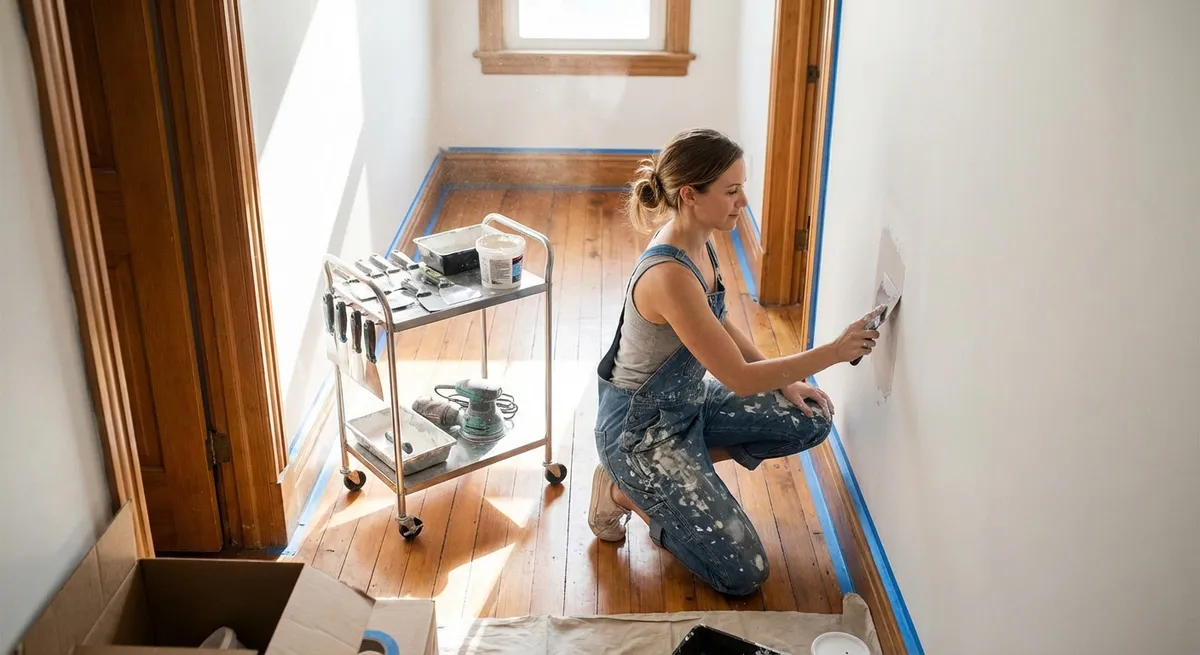
When something breaks at home, you usually have two options: wait (and pay) for a pro, or roll up your sleeves and handle it yourself. This guide is your shortcut to the second option. Below are five practical, step-by-step fixes for common problems that creep into almost every home. No special tools, no advanced skills—just clear instructions you can follow today.
1. Quiet a Running Toilet That Won’t Stop Refilling
A constantly running toilet wastes water and money, but it’s usually fixable in minutes.
Step-by-step fix
Remove the tank lid and observe
Flush once and watch what happens inside the tank. Focus on: - The flapper (rubber piece at the bottom) - The fill valve (tall assembly) - The float (controls water level)
Check the flapper seal
If water keeps trickling into the bowl, the flapper might not be sealing. - Turn off water at the shutoff valve (behind/under the toilet). - Drain by flushing once. - Feel the flapper—if it’s warped, cracked, or stiff, replace it.
Replace the flapper (simple swap)
- Unhook the flapper from the overflow tube and chain. - Take it to a hardware store to match the size. - Install the new flapper: clip it to the overflow tube, attach the chain to the flush handle arm. - Make sure the chain has a little slack but not so much it tangles.
Adjust the water level
If water is flowing into the overflow tube, your tank is overfilling. - For float-cup valves: turn the adjustment screw or slide the clip down the rod. - For ball floats: gently bend the arm downward so the valve closes earlier. - Aim for the water level about 1 inch below the top of the overflow tube.
Turn water back on and test
- Turn the shutoff valve slowly counterclockwise. - Let the tank fill and listen. - Flush several times. The toilet should refill, then go silent.
When to call a pro: If water is leaking from the base of the toilet or the tank has cracks, this is beyond a quick DIY.
2. Restore a Slow or Clogged Sink Without Harsh Chemicals
Most slow drains are caused by hair, soap scum, or grease near the top of the pipe—not deep underground. You can usually clear them without chemical drain cleaners.
Step-by-step fix
Boil water (if it’s a kitchen sink)
- Boil a full kettle or large pot of water. - Carefully pour it down the drain in two or three stages, pausing 10–15 seconds between pours. - This alone can melt grease build-up.
Use a plunger correctly
- For sinks with an overflow hole, plug the overflow with a wet cloth to improve pressure. - Add a bit of water so the plunger cup is covered. - Plunge with a firm, straight up-and-down motion for 20–30 seconds. - Test the drain. Repeat 2–3 times if needed.
Pull hair and gunk with a drain snake or zip tool (bathroom sinks)
- Remove the drain stopper (often by twisting or unscrewing). - Insert a plastic drain cleaning tool, twist and pull out hair and debris. - Rinse the tool and repeat until it comes out mostly clean. - Clean the stopper before reinstalling.
Clean the P-trap (under-sink U-shaped pipe)
- Place a bucket under the trap. - Unscrew the slip nuts on each side by hand or with pliers. - Remove the trap, dump debris into the bucket, and rinse it out. - Check the straight pipe leading into the wall with a small brush or flexible tool. - Reassemble the trap and hand-tighten the nuts (do not overtighten).
Flush with hot water and baking soda/vinegar (optional)
- Pour ½ cup baking soda down the drain. - Add ½–1 cup vinegar. - Let it fizz for 10–15 minutes, then flush with hot water.
When to call a pro: If multiple drains back up at once, or dirty water rises in other fixtures when you run water, you may have a main line issue.
3. Fix a Door That Won’t Latch or Keeps Swinging Open
Doors that don’t latch or swing shut on their own are usually a problem of alignment—not a bad lock.
Step-by-step fix
Identify the symptom
- The latch hits the strike plate but doesn’t go in. - You have to lift/push the door to latch it. - The door swings open or shut by itself.
Tighten the hinge screws first
- Use a screwdriver to snug all hinge screws on the door and frame. - Focus on the top hinge—loose screws here cause sagging. - If a screw just spins and doesn’t tighten, remove it.
Fix loose screw holes with toothpicks or dowels
- For stripped holes: - Dip wooden toothpicks or a wood matchstick in wood glue. - Stuff them into the hole, snap off flush, and let dry. - Reinsert the screw; it should now bite firmly. - For a more solid fix, use short wood dowels instead of toothpicks.
Check latch and strike alignment
- Close the door slowly and watch where the latch contacts the strike plate. - If the latch hits too high or low: - Loosen the strike plate screws. - Shift the plate slightly up/down. - Retighten and test. - For a bigger adjustment, file the opening of the strike plate slightly where the latch hits.
Stop doors that swing open or shut
- Slightly bend a hinge pin: - Remove one hinge pin by tapping it up with a screwdriver or nail set. - Gently bend it in the middle with a hammer on a hard surface. - Reinsert the pin—the extra friction should stop the swinging. - If that’s not enough, repeat with a second hinge pin.
When to call a pro: If the entire door frame is out of square due to structural movement, shimming or reframing may be needed.
4. Revive a Dead Outlet (Without Getting Shocked)
A “dead” outlet often isn’t broken—it’s tripped, switched off, or part of a GFCI circuit. You can safely check a lot before calling an electrician.
Safety first
- If you ever see scorch marks, smell burning, or hear buzzing from an outlet: stop and call a professional immediately.
Step-by-step fix
Test with a known working device
- Plug a lamp or phone charger you know works into the outlet. - If it doesn’t power on, leave it plugged in for testing as you work.
Check other outlets and lights nearby
- If multiple outlets in one area aren’t working, you may have a tripped breaker or GFCI.
Look for GFCI outlets to reset
- GFCIs have “TEST” and “RESET” buttons (often in kitchens, bathrooms, garages, basements). - Press the RESET button firmly until it clicks. - Test your dead outlet again; sometimes one GFCI controls several outlets.
Reset the breaker at the panel
- Find your electrical panel (basement, garage, hallway). - Look for a breaker that’s in the middle position or slightly off from the others. - Flip it fully OFF, then back ON. - Test your outlet again.
Check for wall switch control
- Some outlets are controlled by a wall switch. - Try flipping nearby switches and see if the outlet comes back to life.
Test another device, then stop if still dead
- Confirm with at least two devices. - If the outlet is still dead and there’s no GFCI/breaker issue, it’s likely a wiring or outlet failure and should be handled by an electrician.
When to call a pro immediately:
- You see sparks, burn marks, or melted plastic.
- The breaker keeps tripping right after you reset it.
- The outlet is loose and moves when you plug in devices.
5. Seal a Drafty Window to Cut Energy Waste
Drafty windows make rooms uncomfortable and drive up energy bills, but most small air leaks are easy to control with basic materials.
Step-by-step fix
Find the draft
- On a cool or windy day, hold the back of your hand or a lit incense stick near the window edges. - Check around: - Where the sash meets the frame - Along the bottom rail - Around trim and corners - Moving air or a flickering smoke trail means a leak.
Clean the surfaces
- Wipe down window frames and sills with a damp cloth to remove dust and grease. - Let everything dry fully; tape and caulk stick poorly to dirty or wet surfaces.
Use weatherstripping for movable parts
- For sliding or double-hung windows: - Apply adhesive-backed foam weatherstripping along the sides and top/bottom where the sash meets the frame. - Close and open the window to confirm it still moves but compresses the foam slightly.
Seal cracks with caulk (for fixed gaps)
- Use paintable latex caulk for interior trim gaps. - Run a thin bead along gaps between the window trim and wall. - Smooth with a wet finger or caulk tool. - Wipe off excess and let it cure as directed on the tube.
Add a temporary window film kit for winter
- These clear plastic kits create an extra air barrier. - Apply the double-sided tape around the window frame. - Stick the plastic sheet in place, stretching it smooth. - Use a hair dryer to gently shrink and tighten the film until it’s nearly invisible.
When to consider a bigger upgrade: If glass is cracked, frames are rotted, or condensation regularly forms between double panes, you’re looking at repair or replacement, not just sealing.
Conclusion
You don’t need a full toolbox or contractor-level skills to solve many of the problems that show up in a typical home. By understanding what’s actually going wrong—whether it’s a worn flapper in a toilet, a loose hinge screw, or a simple draft—you can often fix the issue in under an hour with inexpensive materials.
Use these five solutions as a starting point. As you get comfortable, you’ll find that each successful repair makes the next one easier, cheaper, and less intimidating. The more you can confidently handle yourself, the less you’ll spend on service calls—and the more control you’ll have over your home.
Sources
- [U.S. Environmental Protection Agency – Fixing Leaks That Waste Water](https://www.epa.gov/watersense/fix-leak-week) - Guidance on common household leaks, including toilets, and their impact on water use
- [Energy.gov – Air Sealing Your Home](https://www.energy.gov/energysaver/air-sealing-your-home) - Official U.S. Department of Energy advice on identifying and sealing air leaks around windows and doors
- [Consumer Product Safety Commission – Ground-Fault Circuit Interrupters](https://www.cpsc.gov/safety-education/safety-guides/home/ground-fault-circuit-interrupters) - Explains how GFCI outlets work and why they trip, with safety best practices
- [Family Handyman – How to Fix a Leaking or Running Toilet](https://www.familyhandyman.com/project/how-to-fix-a-leaking-or-running-toilet/) - Step-by-step visuals and tips for diagnosing and repairing running toilets
- [Lowe’s – How to Clear a Clogged Drain](https://www.lowes.com/n/how-to/clear-a-clogged-drain) - Practical guide to unclogging household drains using basic tools and methods
Key Takeaway
The most important thing to remember from this article is that this information can change how you think about DIY Solutions.