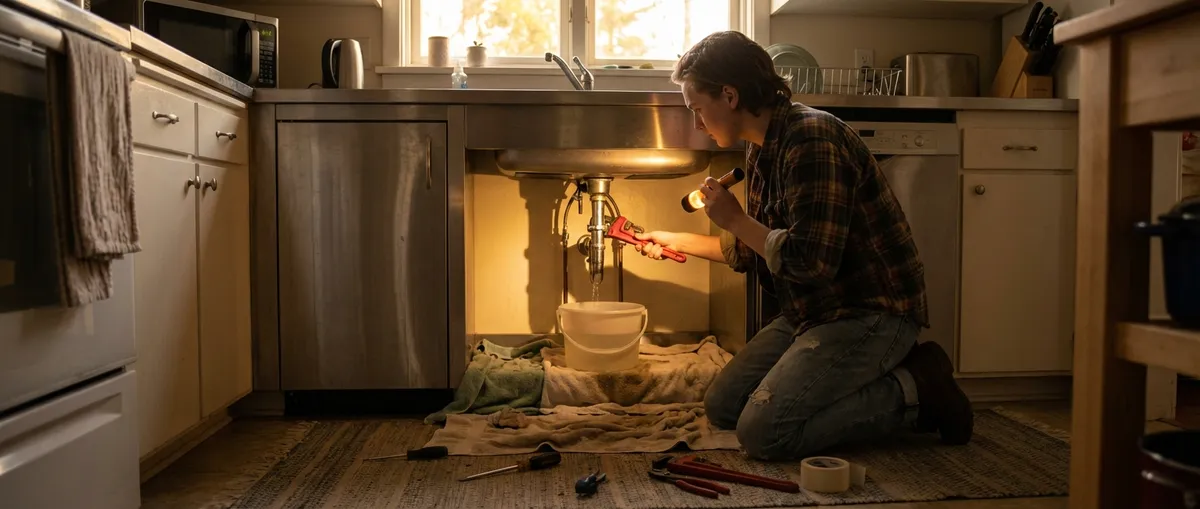
Unexpected problems at home don’t always need immediate professional help. Often, you just need a safe, temporary fix that stops the damage, buys you time, and keeps costs under control.
This guide walks you step‑by‑step through five common household issues you can stabilize yourself: water leaks, clogged drains, running toilets, drafty windows/doors, and wobbly furniture. Each section focuses on what you can safely do now, and when you should stop and call a professional.
1. Controlling a Sudden Water Leak (Pipe, Hose, or Under the Sink)
A small leak can turn into serious water damage if you don’t act quickly. Your goal is not to “fully repair” the pipe – it’s to stop or slow the water until a proper fix is possible.
Step‑by‑step: Immediate leak control
Cut the water supply
- Find the nearest shut‑off valve: - Under the sink: look for small oval or lever valves on the wall. - Toilet: valve on the wall behind/under the tank. - Washing machine: valves on the wall behind the machine. - Turn clockwise until it stops. - If you can’t find a local valve, use the main shut‑off: - Usually near where the water line enters the house, in a basement, utility room, garage, or outside wall. - Turn the lever or wheel clockwise to shut off.
Protect the area
- Move electronics, rugs, cardboard boxes, and anything that absorbs water. - Place towels or old blankets around the leak. - Put a bucket or container under drips.
Dry and inspect the leak point
- Once water is off, dry the pipe or hose with a towel. - Look for: - A pin‑hole in a pipe. - A loose connection (threads, nut, or clamp). - A cracked hose (washers, dishwasher lines, etc.).
Temporary pipe or hose patch (short‑term fix)
- For a small crack or pin‑hole in a metal or plastic pipe: - Wrap the area tightly with rubber (cut from an old bike tube, rubber glove, or gasket). - Secure with hose clamps, strong zip ties, or heavy‑duty tape. - For extra security, add a layer of waterproof tape over the rubber. - For a flexible hose leak (like a washing machine line): - If the hose is split or bulging, replace the hose as soon as possible. - As a short‑term measure only: - Dry the area, wrap tightly with rubber, and secure with clamps. - Keep the appliance off until you can replace the hose.
Check for hidden moisture
- Feel nearby walls, baseboards, and flooring. - If anything feels spongy, swollen, or very wet, keep the area ventilated: - Run a fan. - Open windows if weather allows. - Use a dehumidifier if you have one.
When to call a pro
- The pipe is cracked, corroded, or badly bent.
- The leak is behind a wall or ceiling.
- The main shut‑off valve won’t turn or leaks itself.
- Water has spread to multiple rooms or through ceilings.
2. Clearing a Slow or Clogged Sink Without Damaging Pipes
You don’t need harsh chemicals (which can damage pipes and are dangerous to handle) to tackle most clogs. Use mechanical methods first.
Step‑by‑step: Fixing a slow or clogged sink
Remove standing water (if possible)
- Scoop water into a bucket or bowl. - Leave enough water to cover the plunger cup if you’ll use one.
Clean the stopper or strainer
- Bathroom sink: - Pull out the stopper. If it doesn’t lift out: - Look under the sink. - Loosen the small nut holding the stopper rod. - Slide out the rod and remove the stopper. - Clean off hair, soap scum, and debris. - Kitchen sink: - Remove the strainer basket. - Clear food scraps or trapped debris.
Try plunging
- Use a cup plunger (flat bottom) for sinks. - Block overflow hole with a wet cloth (bathroom sink) to increase pressure. - Fill with enough water to cover the plunger cup. - Place plunger over the drain, press down to create a seal. - Push and pull firmly 10–20 times. - Lift the plunger and see if water drains faster.
Use a drain snake or zip tool
- Insert a plastic drain cleaning tool or small hand snake into the drain. - Push down gently, then pull back to remove hair or debris. - Repeat until the tool comes up mostly clean. - Run hot water for 1–2 minutes to flush.
Clean the P‑trap (if comfortable)
- Place a bucket under the curved pipe (P‑trap) under the sink. - Unscrew the slip nuts by hand (or gently with pliers). - Remove the trap and clear out gunk and debris. - Reassemble and hand‑tighten, then run water while checking for drips.
When to avoid DIY and call a pro
- Multiple fixtures in your home are clogged at the same time (possible main line issue).
- You notice sewage smell or dirty water backing up from lower drains.
- Metal or plastic pipes feel brittle, cracked, or heavily corroded.
3. Stopping a Running Toilet That Wastes Water
A running toilet can waste hundreds of gallons of water a day, increasing your bill and wasting resources. Most fixes are inside the tank and require no tools.
Step‑by‑step: Stopping the constant running sound
Turn off the water (if needed)
- Find the valve on the wall behind the toilet. - Turn clockwise until snug. - You can leave it on if you’re just adjusting parts and nothing is flooding.
Remove the tank lid and observe
- Flush once while the lid is off. - Watch what happens: - Does water keep flowing into the bowl? - Does the water level rise to the overflow tube and then keep trickling?
Check the flapper (rubber piece at bottom of tank)
- Gently press the flapper down with your finger. - If the running sound stops: - The flapper is likely worn or not sealing. - Fixes: - Ensure the chain isn’t too tight; there should be a little slack. - If the flapper looks warped, slimy, or degraded: - Turn water off, flush to empty tank, replace flapper with a matching one from a hardware store (they’re inexpensive and usually snap on).
Adjust the water level
- Look for a fill line mark inside the tank. - If the water level is above this: - Float cup style: - Find the screw on the fill valve arm and turn slightly to lower the float. - Float ball style: - Gently bend the float arm downward so the ball sits lower. - Aim for the water level about 1 inch below the top of the overflow tube.
Check the fill tube
- There’s usually a small flexible tube from the fill valve to the overflow pipe. - Ensure the tube is: - Pointed into the overflow tube, not sticking out or spraying. - Not pushed too far down where it siphons water.
Test
- Turn water on if you turned it off. - Let the tank fill. - Listen for 30–60 seconds. The running sound should stop once full.
When to call a pro
- Cracks in the tank or bowl.
- The shut‑off valve won’t turn or leaks.
- You’ve replaced the flapper and adjusted the float, but water still runs endlessly.
4. Reducing Drafts Around Windows and Doors (Fast Energy Saver)
Cold air sneaking in around windows and doors wastes energy and makes rooms uncomfortable. You can often improve comfort in under an hour with basic supplies.
Step‑by‑step: Quick draft reduction
Locate the drafts
- On a cool or windy day: - Hold the back of your hand near window edges, door frames, and sills. - Feel for cold air movement. - Alternatively, use a lit incense stick or candle (carefully): - Move it slowly around frames. - If the smoke flickers or blows, you’ve found a leak.
Seal window gaps temporarily
- For gaps between the frame and wall: - Use removable caulk, silicone weatherstripping, or foam tape. - Clean the area, then press or apply along cracks and edges. - For drafts between sash and frame: - Apply self‑adhesive foam weatherstrip along the sides and top where the window closes. - For older, very drafty windows: - Add a clear plastic window insulation kit: - Apply tape to the frame. - Attach the plastic sheet. - Use a hair dryer to shrink it tight and clear.
Improve door seals
- Check if you can see light around the perimeter when the door is closed. - Install or replace adhesive foam weatherstripping around the sides and top. - For gaps under the door: - Add a door sweep (screwed to the bottom of the door) or - Use a draft stopper (fabric tube or weighted roll) as a quick fix.
Check locks and latches
- A loose latch can prevent the door or window from closing tightly. - Tighten loose screws with a screwdriver. - If a strike plate is misaligned, loosen screws, shift slightly, and retighten so the door closes firmly.
Verify improvement
- Repeat the hand or incense test after sealing. - You should feel less airflow and notice more consistent room temperature over the next day.
When to consider a bigger upgrade
- Condensation or ice buildup inside window panes.
- Visible rot, mold, or soft wood around frames.
- Single‑pane windows in very cold climates where comfort is still poor after sealing.
5. Stabilizing Wobbly Chairs, Tables, or Shelving
Unstable furniture is not just annoying – it can be dangerous, especially around kids and pets. You can often stabilize items quickly with basic adjustments.
Step‑by‑step: Fixing loose or wobbly furniture
Identify where the wobble comes from
- Set the item on a flat floor (not a rug). - Gently rock it and observe: - One leg shorter? - Joints flexing or creaking? - Top of the piece twisting or shifting?
Tighten all accessible fasteners
- Use the right tool: screwdriver, Allen (hex) key, or small wrench. - Tighten screws and bolts at: - Leg joints. - Cross‑braces. - Corner brackets or metal plates. - If a screw keeps spinning and won’t tighten: - Remove it. - Insert a few toothpicks coated in wood glue into the hole. - Break them flush, then reinstall the screw once the glue sets.
Shim uneven legs
- For a slightly short leg: - Use self‑adhesive felt pads, furniture glides, or rubber shims under the leg. - Stack thin pads until the wobble stops. - For outdoor or utility furniture: - Use a small piece of cardboard, wood, or plastic as a shim, then secure with tape or adhesive.
Reinforce weak joints
- For wooden chairs or tables with loose joints: - Gently pull the joint apart if it easily separates. - Clean old glue or debris. - Apply wood glue to the joint surfaces. - Reassemble and clamp if you can, or use straps/bungee cords to hold it tight while it dries. - Let the glue cure as directed before using.
Secure tall furniture to the wall
- For bookcases, dressers, or cabinets: - Use anti‑tip brackets or straps. - Locate wall studs (with a stud finder if possible). - Secure one end to the stud, the other to the furniture. - This doesn’t fix a minor wobble in legs, but it prevents tipping, which is critical for safety.
When to replace or get help
- Structural cracks in load‑bearing parts (e.g., split table legs).
- Antique or high‑value pieces you don’t want to risk damaging – consult a furniture repair specialist.
Conclusion
You don’t need to be an expert to handle the first wave of a home problem. By focusing on stabilizing leaks, freeing drains, quieting toilets, sealing drafts, and securing furniture, you can prevent small issues from turning into major repairs.
Use these steps to:
- Stop damage early.
- Stay safe and in control.
- Decide confidently when it’s time to call a professional.
Bookmark or share this guide so it’s easy to find the next time something goes wrong at home — and you want to act, not panic.
Sources
- [U.S. Environmental Protection Agency – Fix a Leak](https://www.epa.gov/watersense/fix-leak-week) – Information on the impact of leaks and basic steps to address them
- [U.S. Department of Energy – Air Sealing Your Home](https://www.energy.gov/energysaver/weatherize/air-sealing-your-home) – Guidance on finding and sealing drafts around windows and doors
- [Massachusetts Water Resources Authority – Fixing Leaks at Home](https://www.mwra.com/comsupport/waterconservation-homeleaks.htm) – Practical tips for identifying and stopping household water leaks
- [City of Portland (OR) – How to Fix a Running Toilet](https://www.portland.gov/water/water-efficiency-resources/how-fix-running-toilet) – Step‑by‑step instructions for diagnosing and repairing running toilets
- [Consumer Product Safety Commission – Anchor It!](https://www.anchorit.gov/) – Safety guidelines and instructions for securing furniture to prevent tip‑over accidents
Key Takeaway
The most important thing to remember from this article is that this information can change how you think about DIY Solutions.