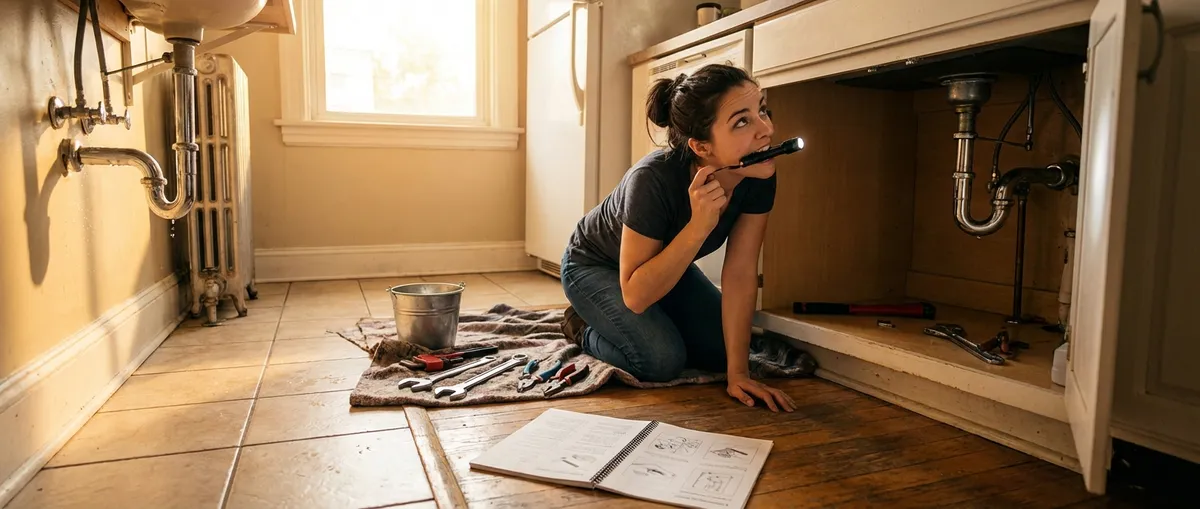
When something breaks at home, you usually have two options: ignore it until it gets worse or pay someone to fix it. There’s a third option that often gets overlooked—fix it yourself with a clear, safe, step‑by‑step plan. This guide walks you through five practical DIY fixes for everyday problems, with instructions you can follow even if you don’t consider yourself “handy.”
Stop a Running Toilet and Cut Your Water Bill
A constantly running toilet wastes water and quietly raises your utility bill. The good news: most fixes are inside the tank and require no special tools.
What you’ll need
- Adjustable wrench (optional)
- Replacement flapper (if needed)
- Towel or rag
- Latex or nitrile gloves (optional but helpful)
Step-by-step
Turn off the water supply
Look behind the toilet for a small shutoff valve near the floor. Turn it clockwise until it stops. Flush once to empty most of the water from the tank.
Remove the tank lid and inspect the parts
Lift the lid carefully and set it somewhere safe. Inside you’ll see the flapper (rubber piece at the bottom), the chain, and the fill valve/float.
Check the flapper seal
Gently press down on the flapper. If the water stops running, the flapper is likely worn or not sealing properly. Look for cracks, warping, or buildup around the rim where it sits.
Adjust or replace the chain
If the chain is too tight, the flapper can’t fully close. If it’s too slack, it might get caught under the flapper. Adjust it so there’s a little slack, but the flapper can fully sit in place.
Replace the flapper if damaged
Turn the water back off if you turned it on to test. Unhook the flapper from the overflow tube and detach the chain. Attach the new flapper to the same spots and reconnect the chain at a similar length.
Check the water level
Turn the water back on and let the tank fill. Most tanks have a water line mark inside. Adjust the float or fill valve so the water stops at that line. Too much water can cause overflow into the overflow tube, leading to constant running.
Final test
Flush a few times and listen. The toilet should refill and then go quiet. If it’s still running, double-check the flapper and water level.
Quiet That Squeaky Door Without Calling a Handyman
Squeaky hinges are annoying but easy to silence. You don’t need to remove the door or buy expensive tools—just a lubricant and a few careful steps.
What you’ll need
- Multi-purpose lubricant (like WD-40) or silicone spray
- Paper towels or rag
- Small flathead screwdriver (optional)
Step-by-step
Identify the squeaky hinge
Open and close the door slowly to pinpoint which hinge is making noise. Often it’s all of them, but one may be worst.
Protect the surrounding area
Place a rag or paper towel under the hinge to catch drips and protect the floor or carpet.
Apply a small amount of lubricant
Spray or drip a little lubricant at the top of the hinge pin and along the joint where the two hinge plates meet. Less is more—you can always add more if needed.
Work the door back and forth
Open and close the door several times to work the lubricant into the hinge. Wipe away any excess that squeezes out.
For persistent squeaks: lift the hinge pin
If the squeak remains, use a small flathead screwdriver and gently tap under the hinge pin head to lift it slightly. Pull it out, wipe it clean, add a thin coat of lubricant, then reinsert it and tap it back down.
Final check
Open and close the door again. If it’s still squeaking, repeat for the other hinges. Most doors quiet down after one or two rounds.
Fix a Stripped Screw So You Can Actually Finish the Job
A stripped screw (where the head is worn smooth) can bring any project to a dead stop. Instead of giving up, use simple tricks to regain grip and remove it safely.
What you’ll need
- Rubber band (wide, flat type works best)
- Manual screwdriver (ideally matching the screw type)
- Pliers (for screws that stick out)
- Drill and screw extractor bit (optional for stubborn screws)
Step-by-step
Try the rubber band trick first
Place a wide rubber band flat over the screw head. Press the screwdriver firmly into the screw through the rubber band and slowly turn counterclockwise. The rubber adds extra grip on the worn metal.
Switch to a manual screwdriver
If you’ve been using a power drill, stop. A hand screwdriver gives more control and reduces the chance of further damage. Apply steady, firm pressure while turning.
Use pliers if the head is exposed
If the screw sticks out enough, grip the head with locking pliers and gently twist counterclockwise. Work slowly to avoid snapping it.
Cut a new groove (for flathead removal)
If the head is badly stripped and flat, you can carefully use a rotary tool or small metal file to cut a straight slot across the top. Then use a flathead screwdriver to remove it.
Use a screw extractor for severe cases
If nothing else works and you have a drill: - Drill a small pilot hole into the center of the screw (follow the extractor kit instructions). - Insert the extractor bit, then turn counterclockwise. The bit bites into the metal and backs the screw out.
Prevent future stripping
When installing new screws, use the correct bit size, keep firm pressure, and don’t overtighten—stop when the screw feels snug and flush.
Unclog a Slow Sink Without Harsh Chemicals
A slow-draining sink is usually caused by soap scum, hair, or grease buildup. You can often fix it yourself with a simple combination of hot water, household items, and a bit of disassembly.
What you’ll need
- Bucket or bowl
- Old toothbrush or small cleaning brush
- Baking soda and white vinegar (optional but helpful)
- Plunger (sink-size)
- Adjustable wrench (for P-trap removal)
- Rubber gloves
Step-by-step
Start with boiling water
Bring a kettle or pot of water to a boil. Carefully pour it down the drain in stages, waiting a few seconds between pours. This can dissolve soap and grease buildup.
Try a baking soda and vinegar flush
Pour about half a cup of baking soda into the drain, followed by one cup of white vinegar. Let it fizz for 10–15 minutes, then flush with hot tap water. This won’t clear major clogs but can help with minor ones.
Use a plunger (for stubborn slow drains)
- Block the overflow hole with a damp cloth for better suction. - Fill the sink with enough water to cover the plunger cup. - Place the plunger over the drain and plunge up and down firmly for 15–30 seconds. - Lift the plunger and see if the water drains faster.
Clean the P-trap under the sink
If it’s still slow: - Place a bucket under the P-trap (the U-shaped pipe under the sink). - Loosen the slip nuts at both ends with your hand or an adjustable wrench. - Remove the trap and dump the contents into the bucket. - Use an old toothbrush to scrub inside the trap and remove buildup.
Reassemble and test
Reattach the P-trap, hand-tighten the nuts, then turn on the water and check for leaks. Run water for at least 30 seconds to confirm the drain is flowing properly.
Prevent future clogs
Use a drain screen to catch hair and debris, avoid pouring grease down the drain, and periodically flush with hot water to reduce buildup.
Revive a Dead Outlet Safely (Without Guesswork)
When an outlet suddenly stops working, it doesn’t always mean you need an electrician. Sometimes it’s a tripped breaker, a GFCI reset, or a loose plug you can fix safely.
Important safety note
If you see scorch marks, smell burning, or feel heat from the outlet, stop and call a professional immediately. Do not attempt DIY repairs in those cases.
What you’ll need
- Small lamp or phone charger (for testing)
- Access to your home’s electrical panel
- Non-contact voltage tester (recommended but optional)
Step-by-step
Test with a known working device
Plug in something you know works (like a lamp or charger). If it doesn’t turn on, confirm the device works in another outlet. This rules out a bad device.
Check nearby GFCI outlets
Kitchens, bathrooms, garages, and outdoor areas often use GFCI outlets (with “Test” and “Reset” buttons). If the dead outlet is nearby, it might be protected by one: - Press the Reset button firmly. - Test your dead outlet again.
Inspect your breaker panel
Go to your electrical panel (breaker box). Look for any breaker that is in the middle position or slightly out of line with the others. - Turn the suspect breaker fully to the OFF position. - Then switch it firmly back to ON. - Test the outlet again.
Look for loose plugs or worn outlets
If a plug falls out easily or feels loose, the outlet may be worn and need replacing. Outlet replacement is possible as a DIY task but involves working with wiring—if you’re not confident, this is the point to call a licensed electrician.
Use a non-contact voltage tester (optional)
For an extra safety check, you can use a non-contact voltage tester: - Turn the tester on. - Hold it near the outlet slots. - If it beeps or lights up, power is present. If not, the issue is likely in the circuit, not just the outlet.
Know when to stop
If the outlet is still dead after GFCI checks and breaker resets, or if breakers keep tripping, there may be a deeper wiring issue. At this stage, a professional electrician is the safest path.
Conclusion
DIY fixes don’t have to be complicated, and you don’t need a full workshop to handle common problems. By following clear, step‑by‑step instructions, you can stop wasting money on simple service calls, prevent small issues from turning into big ones, and get your home back to working order faster. The key is knowing where to start, working safely, and recognizing when a job has crossed the line from “weekend project” to “call a pro.”
Share this guide with someone who’s tired of staring at that running toilet or slow drain—sometimes all they need is a straightforward plan to finally get it done.
Sources
- [U.S. Environmental Protection Agency – Fix a Leak](https://www.epa.gov/watersense/fix-leak-week) - Details on how running toilets and small leaks waste water and cost you money
- [The Family Handyman – How to Fix a Running Toilet](https://www.familyhandyman.com/project/how-to-fix-a-running-toilet/) - Step-by-step instructions and diagrams for common toilet tank repairs
- [Mayo Clinic – Household Chemicals: Safety Tips](https://www.mayoclinic.org/healthy-lifestyle/adult-health/in-depth/household-chemicals/art-20046488) - Guidance on safe use and handling of chemical products, relevant to drain cleaning choices
- [Occupational Safety and Health Administration (OSHA) – Electrical Safety](https://www.osha.gov/electrical-safety) - Core principles and precautions for working safely around household electrical systems
- [U.S. Department of Energy – Reducing Water Heating Bills](https://www.energy.gov/energysaver/reducing-water-heating-bills) - Explains how hot water use and leaks affect energy and water costs
Key Takeaway
The most important thing to remember from this article is that this information can change how you think about DIY Solutions.