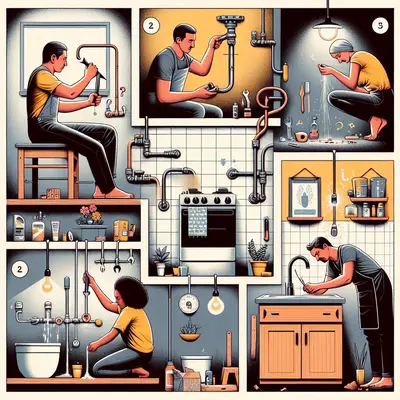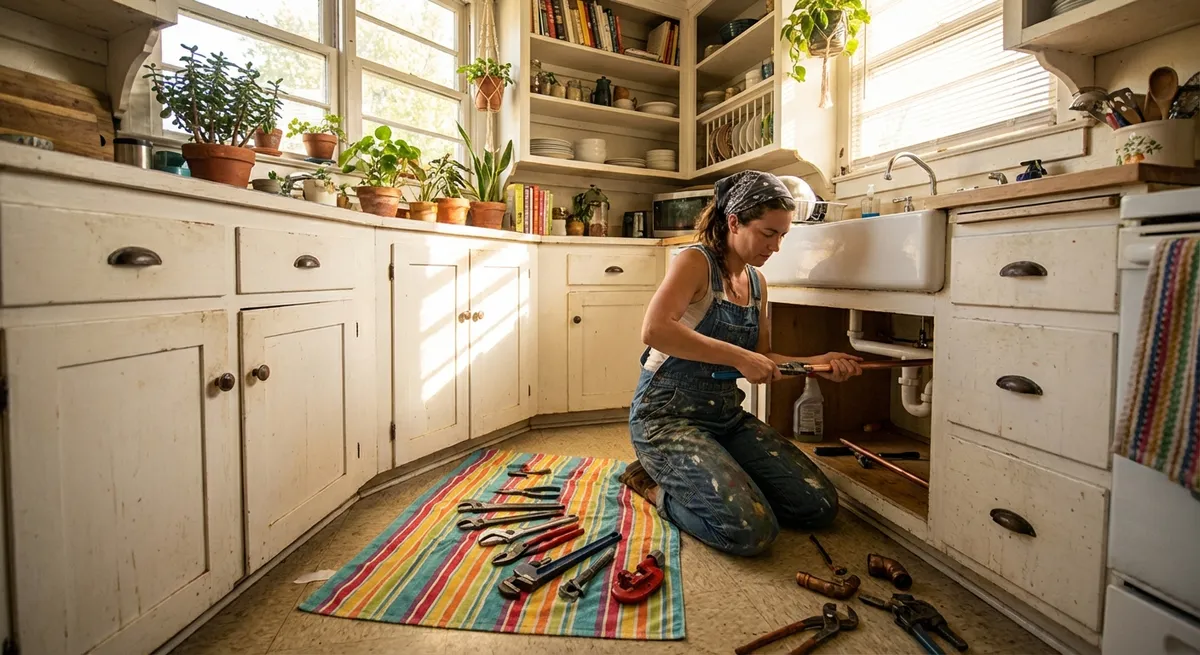
Most home problems don’t need an emergency call to a contractor—they need a calm plan, the right basic tools, and clear instructions. This guide walks you through five common household repairs with straightforward, step‑by‑step directions. You’ll understand what’s going wrong, how to fix it safely, and when it’s time to stop and call a pro.
1. Silencing a Dripping Faucet
A dripping faucet wastes water, raises your bill, and is annoying to listen to. In most cases, the problem is a worn-out washer, cartridge, or O‑ring—not the whole faucet.
Tools & Materials
- Adjustable wrench
- Phillips and flathead screwdrivers
- Replacement cartridge or washer/O‑ring kit (match brand/model)
- Plumber’s grease
- Towel or small container (to catch small parts)
Step‑by‑Step
Shut off the water supply
Look under the sink for the shutoff valves. Turn both hot and cold valves clockwise until they stop. Open the faucet to release pressure and confirm water is off.
Plug the drain
Use the sink stopper or a rag so small screws or parts don’t disappear down the drain.
Remove the handle
- Pry off the decorative cap with a flathead screwdriver if there is one. - Remove the screw underneath. - Pull the handle straight up or off at an angle, depending on the design.
Identify your faucet type
Most modern faucets are cartridge style; older ones might be compression (with separate hot/cold knobs). Take a clear photo before disassembling further—this helps at the hardware store and during reassembly.
Access and remove the cartridge or stem
- Use your wrench to loosen the retaining nut or clip. - Carefully pull out the cartridge or stem straight up. - Inspect rubber seals, O‑rings, and washers for cracks, flattening, or wear.
Match and replace parts
- Take the cartridge or stem to a hardware store and buy an exact match. - For compression faucets, replace the rubber washer and the O‑ring. - Lightly coat new O‑rings and seals with plumber’s grease.
Reassemble the faucet
- Insert the new or refurbished cartridge/stem in the same orientation as the original. - Tighten the retaining nut snugly (don’t overtighten—this can crack parts). - Reinstall the handle and decorative cap.
Turn water back on and test
Slowly turn on the shutoff valves under the sink. Open the faucet and let water run for a few seconds, then close it. Check for drips at the spout and around the base.
Stop and call a pro if:
- The shutoff valves under the sink won’t close or start leaking.
- The faucet body itself is cracked or corroded.
- You can’t match the internal parts or the cartridge is seized.
2. Resetting a Tripped Breaker or Dead Outlet Safely
When a circuit trips, it’s usually protecting you from an overload or short. Resetting is simple—if you do it methodically and check what caused it.
Tools & Materials
- Flashlight
- Small lamp or phone charger (for testing outlets)
- Non-contact voltage tester (recommended)
Step‑by‑Step
Identify the problem area
- If lights go out in one room, or some outlets don’t work, note exactly which ones. - Unplug major appliances from the affected area (space heaters, microwaves, hair dryers, etc.).
Go to the electrical panel
- Usually in a basement, garage, utility room, or closet. - Open the panel door and look for a breaker that is in the middle position or slightly off compared with the others.
Find the tripped breaker
- Many breakers show an orange or red indicator when tripped. - Labels (e.g., “Kitchen,” “Living Room”) may help but aren’t always accurate—use them as a guide, not absolute truth.
Reset the breaker correctly
- Push the tripped breaker fully to the OFF position first. - Then push it firmly back to ON. You should feel a distinct click.
Test the circuit
- Return to the room and plug in your small lamp or charger. - If everything works, plug appliances back in one at a time, especially high‑demand devices like heaters and toasters.
Reduce load on the circuit
- Avoid running multiple high‑wattage devices on the same outlet strip or circuit. - Move some devices to outlets on different circuits if possible.
Check for GFCI outlets (especially in kitchens, bathrooms, garages)
- Look for outlets with TEST and RESET buttons. - If the outlet is dead, press RESET firmly until it clicks. - Test the downstream outlets again.
Stop and call an electrician if:
- The same breaker trips repeatedly, even with fewer devices.
- You smell burning or see scorch marks near outlets or the panel.
- The breaker won’t reset or feels hot to the touch.
- Lights flicker across multiple rooms or the whole house.
3. Unclogging a Slow or Backed‑Up Sink Without Chemicals
Chemical drain cleaners can damage pipes and create hazardous fumes. In most cases, a clog near a sink can be cleared with basic tools and a bit of patience.
Tools & Materials
- Plunger (cup style for sinks)
- Bucket or bowl
- Channel‑lock pliers
- Old toothbrush or small brush
- Drain snake or plastic drain cleaning tool
- Rubber gloves and rags
Step‑by‑Step
Clear the area and remove standing water
- Take everything out from under the sink. - Bail out excess standing water in the sink with a cup into a bucket if it’s nearly full.
Try plunging first
- Plug any nearby overflow opening with a wet rag (especially in bathroom sinks). - Fill the sink with enough water to cover the plunger cup. - Place the plunger over the drain and plunge up and down firmly for 20–30 seconds. - Remove the plunger and see if the water drains. Repeat a few times.
Clean the stopper and upper drain
- In bathroom sinks, loosen the pivot rod nut under the sink to remove the stopper. - Clean hair and gunk from the stopper and visible drain with an old toothbrush. - Reinstall the stopper mechanism.
Use a drain snake or plastic clog remover
- Insert the tool into the drain and push it gently down, twisting slightly. - Pull the tool out to remove hair and debris. - Repeat until it comes out mostly clean and water starts to flow better.
Disassemble and clean the P‑trap if needed
- Place a bucket under the curved pipe section (P‑trap). - Loosen the slip nuts at both ends with your hands or pliers. - Remove the P‑trap and empty it into the bucket. - Clean inside with a brush and run water through it. - Reassemble, ensuring the washers are seated correctly and nuts are snug.
Test for leaks
- Run water through the sink for 2–3 minutes. - Check all joints under the sink with a dry hand or paper towel—tighten connections gently if you find moisture.
Stop and call a plumber if:
- Multiple drains in the house are slow or backing up at once.
- You hear gurgling from other fixtures when using water.
- Water backs up from a floor drain or lowest‑level fixtures—this can signal a main line issue.
4. Fixing a Running Toilet That Won’t Stop Filling
A toilet that runs constantly can waste hundreds of gallons of water per day. The most common culprits are a worn flapper, an improperly adjusted float, or a faulty fill valve.
Tools & Materials
- Adjustable wrench or pliers
- Replacement flapper (match style/brand if possible)
- Towel or sponge
- Optional: full toilet repair kit if parts are very old
Step‑by‑Step
Remove the tank lid and observe
- Gently lift off the lid and set it somewhere safe. - Flush the toilet and watch what happens inside the tank.
Check the flapper first
- The flapper is the rubber piece at the bottom of the tank attached to the chain. - After a flush, it should close fully and seal. - If it’s warped, cracked, or not sealing, water will continue to trickle into the bowl.
Adjust or replace the flapper
- Turn off the water supply valve behind or under the toilet (clockwise). - Flush to empty most of the tank. - Unhook the old flapper from the overflow tube and chain. - Install the new flapper and adjust the chain so there’s just a little slack when the flapper is closed—too tight or too loose can both cause problems. - Turn water back on and test.
Adjust the water level and float
- The water should stop about 1 inch below the top of the overflow tube. - For float cup valves, turn the adjustment screw on top or pinch the clip and slide the float up or down. - For older float ball types, gently bend the float arm downward to lower the water level.
Inspect the fill valve
- If water is spraying or hissing constantly from the fill valve area, it may be failing. - Some modern fill valves can be cleaned by twisting off the top cap (follow manufacturer instructions). - If cleaning doesn’t help, consider replacing the entire fill valve assembly.
Final testing
- Flush several times, letting the tank refill each time. - Listen closely—once the tank fills, it should go quiet. No constant trickling or hissing.
Stop and call a plumber if:
- The shutoff valve is seized or leaking.
- Water is seeping around the base of the toilet.
- You see cracks in the tank or bowl.
5. Patching a Small Hole in Drywall Like a Pro
Small holes from door handles, nails, or accidents don’t require replacing entire wall sections. A clean patch and a bit of sanding can make damage nearly invisible.
Tools & Materials
- Spackle or pre‑mixed joint compound
- Putty knife (2–4 inch)
- Sanding sponge or fine‑grit sandpaper (120–220 grit)
- Self‑adhesive mesh patch (for holes larger than a nail hole)
- Damp cloth
- Primer and matching paint
Step‑by‑Step
Assess the damage
- Nail or screw holes: small, shallow. - Medium holes (up to about 2–3 inches): may need a mesh patch. - Larger than a fist or with structural damage? Plan for a cut‑out and new drywall piece—often best for a pro unless you’re comfortable with more advanced work.
Prep the area
- Use a putty knife to scrape away loose material or flaking paint. - Wipe the area with a damp cloth to remove dust.
Fill small nail/screw holes
- Scoop a small amount of spackle on the putty knife. - Press it firmly into the hole and scrape off excess, leaving it flush or slightly raised. - Let dry per product instructions (often 30 minutes to a few hours).
Patch medium holes with mesh
- Center the self‑adhesive mesh patch over the hole and press it firmly. - Apply a thin layer of joint compound over the patch, feathering the edges outward 1–2 inches. - Let it dry completely, then apply a second thin coat to smooth the surface.
Sand smooth
- Use a sanding sponge or fine sandpaper to smooth the area until it blends with the surrounding wall. - Wipe away dust with a damp cloth.
Prime and paint
- Apply primer to the patched area to prevent flashing (where patched spots show through paint). - Once dry, paint with your matching wall color, feathering slightly into the surrounding area.
Stop and call a pro if:
- The wall feels soft or crumbly over a wider area—this may indicate water damage.
- You see mold, significant cracks, or structural movement.
- The hole exposes electrical wiring or plumbing.
Conclusion
Most everyday home issues—dripping faucets, slow drains, running toilets, dead outlets, and minor wall damage—are manageable with basic tools, patience, and a clear plan. The key is to work methodically: shut off water or power when needed, take photos as you disassemble things, and test your work carefully when you’re done.
Handle what you safely can, and recognize the point where a licensed pro is the smarter move. Every repair you successfully complete builds your confidence and reduces your long‑term maintenance costs.
Sources
- [U.S. Environmental Protection Agency – Fix a Leak](https://www.epa.gov/watersense/fix-leak-week) – Explains how household leaks waste water and offers guidance on finding and fixing common plumbing issues.
- [Energy.gov – Electrical Safety](https://www.energy.gov/ehss/services/environment-health-safety-security-professional-resources/electrical-safety) – Official electrical safety practices to keep in mind when working around circuits and panels.
- [Family Handyman – How to Fix a Leaky Faucet](https://www.familyhandyman.com/project/how-to-fix-a-leaky-faucet/) – Detailed illustrations and tips for repairing different faucet types.
- [The Spruce – How to Unclog a Sink](https://www.thespruce.com/how-to-unclog-a-sink-2718643) – Covers multiple mechanical methods for clearing sink clogs without harsh chemicals.
- [Lowe’s – How to Patch and Repair Drywall](https://www.lowes.com/n/how-to/patch-and-repair-drywall) – Step‑by‑step instructions and visuals for repairing holes and dents in drywall.
Key Takeaway
The most important thing to remember from this article is that this information can change how you think about Household Repairs.