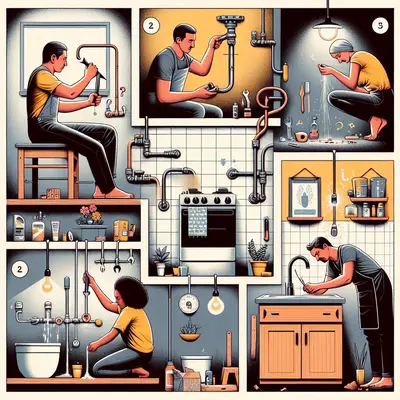
Small problems in your home rarely stay small. A dripping faucet, a loose cabinet door, or a running toilet can quietly waste money, damage surfaces, and drive you crazy. The good news: you don’t always need a pro or a full set of power tools to get things under control.
This guide walks you through five practical, step-by-step fixes for common household problems. Each one can be done with basic tools, a little patience, and a clear plan.
Stop a Dripping Faucet (Without Replacing the Whole Thing)
A slow drip wastes water and money, and the sound alone can be nerve‑wracking. In many cases, the problem is just a worn washer or cartridge.
What you’ll need
- Adjustable wrench or set of wrenches
- Flathead and Phillips screwdriver
- Replacement washer or cartridge (matched to your faucet brand/model)
- Towel and small container (to catch small parts)
Step-by-step
Shut off the water supply
Look under the sink for the shutoff valves. Turn clockwise until they stop. Open the faucet to release any pressure and confirm the water is off.
Plug the drain
Use a sink stopper or a rag. Small screws and parts love to disappear down drains.
Remove the handle
Most handles have a small cap or cover hiding a screw. Pry off the cap with a flathead screwdriver, then remove the screw and lift the handle.
Disassemble the faucet body
Use the wrench to loosen the retaining nut or collar. Lift out the stem or cartridge. Note how it’s oriented; take a photo so you can reassemble correctly.
Inspect and replace the worn parts
- For compression faucets (separate hot and cold, turn style): replace the rubber washer and O‑ring at the end of the stem. - For cartridge faucets (often single handle): replace the entire cartridge with a matching one.
Reassemble in reverse order
Put the new parts in, tighten the nut snugly but don’t over‑torque, reinstall the handle and cap.
Turn on the water and test
Slowly open the shutoff valves. Turn the faucet on and off several times. Check for leaks around the base and underneath the sink.
If the faucet still drips after replacing internal parts, you may be dealing with a deeply pitted valve seat or body, which can justify replacing the entire faucet.
Fix a Running Toilet That Won’t Stop Filling
A constantly running toilet is often caused by a bad flapper, misadjusted float, or worn fill valve. Most fixes are simple and don’t require removing the toilet.
What you’ll need
- New flapper or fill valve kit (universal kits work on many toilets)
- Adjustable wrench
- Towel or sponge
Step-by-step
Remove the tank lid carefully
Set it aside on a towel to avoid cracks or chips.
Identify where the water is moving
- If water is trickling into the bowl constantly, suspect the flapper. - If water rises too high then drains into the overflow tube, suspect the float/fill valve.
Check and replace the flapper (most common fix)
- Turn off the water valve (behind or below the toilet). - Flush once to empty most of the tank. - Disconnect the chain from the flush lever and unhook the flapper from the pegs at the base of the overflow tube. - Clean the seat where the flapper rests. - Install the new flapper, connect the chain with slight slack (not too tight, not too loose). - Turn the water back on and test.
Adjust the float if the water level is too high
- For a float cup (modern vertical design): adjust the screw on top or move the clip to lower the float. - For an old-style float ball: gently bend the float arm down so the valve shuts off sooner. The water should stop about 1 inch below the top of the overflow tube.
Replace the fill valve if adjustment doesn’t help
- Turn off water, flush, and sponge out remaining water in the tank. - Disconnect the fill tube and supply line from the bottom of the tank. - Unscrew the mounting nut under the tank and lift out the old valve. - Install the new fill valve per its instructions, adjust height, reconnect supply line and tube. - Turn water back on and check for leaks.
Within a few minutes, the toilet should fill, stop, and stay quiet. No continuous hiss, no constant trickle into the bowl.
Quiet a Squeaky Door (And Fix a Door That Won’t Latch)
A squeaky or misaligned door is more than an annoyance—it’s usually a sign that hinges are dry or slightly out of position. You can usually solve both with basic tools and a bit of adjustment.
What you’ll need
- WD‑40 or silicone spray, or petroleum jelly
- Hammer and nail set (or thin screwdriver)
- Phillips screwdriver
- Wood toothpicks and wood glue (for stripped screws)
Step-by-step
Locate the squeaky hinge
Open and close the door slowly and listen. Often more than one hinge is involved.
Lubricate the hinges the simple way first
- Spray a small amount of lubricant directly on the hinge pin area. - Open and close the door several times to work it in. Wipe off excess to avoid drips on the flooring.
If squeak persists, remove and treat the hinge pins
- Place a nail set or thin screwdriver under the lip of the hinge pin and tap upward gently with a hammer. - Pull the pin out, wipe it clean, and apply a thin coat of lubricant. - Reinsert and tap down until fully seated. Repeat for each hinge as needed.
Check door alignment and latch
Close the door slowly: - If it rubs at the top or bottom, the hinges may be loose or the screws stripped. - If the latch doesn’t catch, the strike plate might be misaligned.
Tighten or reset loose hinge screws
- Tighten all hinge screws in both the door and the frame. - If a screw just spins, remove it, dip wood toothpicks in glue, insert them into the hole, snap flush, then reinstall the screw. This gives it new wood to bite into.
Adjust the strike plate if the latch doesn’t engage cleanly
- If the latch hits too high or low, you can slightly enlarge the hole in the strike plate with a metal file. - For bigger misalignments, unscrew the strike plate and reposition it slightly, filling old screw holes with glued toothpicks before reinstalling.
Once done, your door should swing smoothly, latch correctly, and stop announcing every entrance and exit.
Restore Power to a Dead Outlet Safely
When an outlet stops working, it doesn’t always mean bad wiring. Often, a tripped breaker or GFCI is behind the issue. You can troubleshoot safely with a methodical approach.
What you’ll need
- Small lamp or plug-in device for testing
- Flashlight (if the room is dark)
- Access to your electrical panel
- Non-contact voltage tester (optional but helpful)
Step-by-step
Test the outlet with a device you know works
Plug in a lamp or charger that’s definitely functional. This confirms the outlet is the issue, not the device.
Check nearby GFCI outlets
Kitchens, bathrooms, garages, and outdoor areas often have GFCI (test/reset) outlets that protect other outlets on the same circuit. - Look for any GFCI outlet with a “Reset” button popped out or partially depressed. - Press “Reset” firmly until it clicks. - Re-test your dead outlet.
Inspect your main breaker panel
- Open the panel door and look for any breakers in a “tripped” position (often in between On and Off). - To reset: push the breaker fully to Off, then back to On. - If it trips again immediately when you plug something in, stop and disconnect that device. There may be a short or overload that requires an electrician.
Check other outlets on the same wall or room
- If multiple outlets are dead, it’s more likely a circuit or GFCI issue. - If only one outlet is dead and others are fine, the outlet itself may be worn or failed.
Use a non-contact voltage tester (if available)
- Turn off the breaker for that circuit. - Remove the outlet cover. - Gently pull the outlet forward without touching bare wires. - Use the tester to confirm power is truly off before any further work. If you’re not comfortable beyond this point, this is the time to call a licensed electrician.
If the outlet still has no power after GFCI and breaker checks—and especially if you see burnt marks, melted plastic, or loose wires—do not continue using it until it’s inspected and replaced by a professional.
Reattach a Loose Cabinet Door That’s Sagging or Crooked
Cabinet doors take daily abuse. Over time, screws loosen, holes strip, and doors start rubbing, sagging, or not closing properly. You can usually restore alignment quickly.
What you’ll need
- Phillips screwdriver
- Small level (optional but helpful)
- Toothpicks or wooden matchsticks
- Wood glue
Step-by-step
Support the door
Place a box or stack of books under the open door to hold its weight while you work on hinges. This prevents extra stress on screws.
Tighten all hinge screws
- Start with the screws on the inside of the cabinet (frame or box). - Then tighten screws on the door side of each hinge. Often, this alone corrects minor sagging.
Fix stripped screw holes
If a screw spins without tightening: - Remove the screw. - Fill the hole with wood glue and insert toothpicks or matchsticks until snug. - Snap them flush with the surface. - Reinsert the screw into the newly filled hole and tighten. This rebuilds a solid anchor point.
Adjust hinges (for European-style concealed hinges)
Most modern cabinet hinges have three small adjustment screws: - One moves the door left/right. - One moves it in/out (closer or farther from the cabinet). - One moves it up/down slightly. Make small turns, checking the door after each adjustment until gaps are even and the door closes smoothly.
Check door gaps with a level or your eye
Look at the spacing between doors and along the cabinet frame. You want: - Even gap from top to bottom - Door aligned with neighboring doors - No rubbing on the frame or adjacent door
Once the hinges are tightened, holes reinforced, and adjustments set, your cabinet door should open cleanly and close without slamming or scraping.
Conclusion
Most everyday home problems start small—and stay small—if you address them early. A drip, a squeak, a constantly running toilet, a dead outlet, or a sagging cabinet door can all be tackled with basic tools and a methodical approach.
If you ever feel unsure (especially with anything electrical or involving major plumbing changes), stop and call a pro. But for a surprising number of issues, a clear step-by-step process is all you need to repair now instead of replacing later.
Sources
- U.S. Environmental Protection Agency – Fix a Leak - Explains how small plumbing leaks waste water and why timely repairs matter
- Kohler – How to Fix a Running Toilet - Manufacturer guidance on common toilet problems and parts
- Family Handyman – How to Fix a Leaky Faucet - Detailed repair steps and diagrams for different faucet types
- U.S. Consumer Product Safety Commission – Home Electrical Safety Checklist - Safety tips for working around outlets, breakers, and wiring
- This Old House – Adjusting Cabinet Doors - Visual guide to hinge adjustments and door alignment
Key Takeaway
The most important thing to remember from this article is that this information can change how you think about Household Repairs.