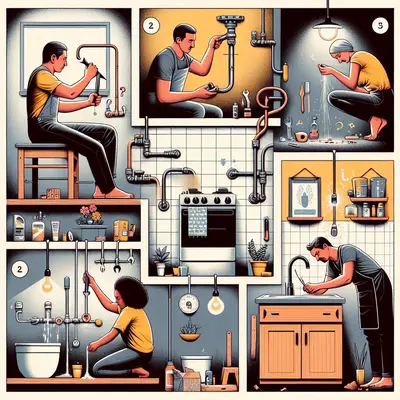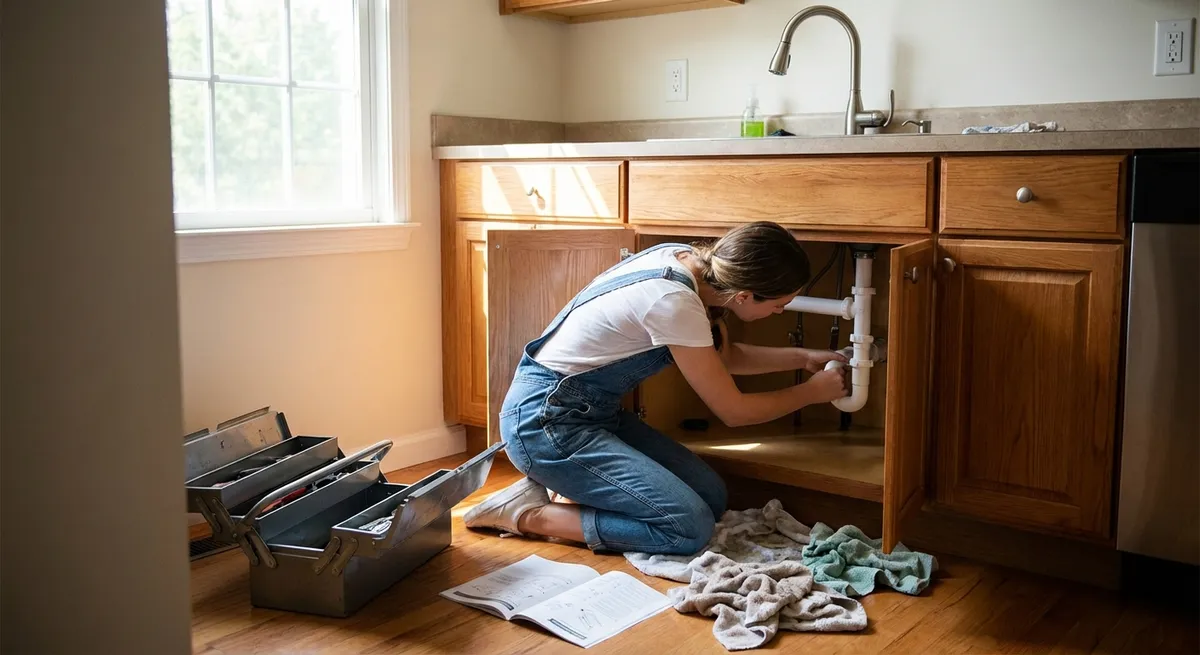
Minor issues around the house have a habit of piling up—and costing you money if you call a pro for each one. With a few basic tools and clear steps, you can safely handle a lot of these yourself. This guide walks you through five common household problems and shows you exactly how to fix them in a practical, no‑nonsense way.
Stop a Dripping Faucet (Without Replacing the Whole Thing)
A dripping faucet wastes water and slowly drives you crazy. In most cases, the fix is replacing a worn‑out cartridge or washer inside the faucet—not the entire fixture.
What you’ll need
- Adjustable wrench or basin wrench
- Screwdrivers (Phillips and flathead)
- Replacement cartridge or washer (match your faucet brand/model)
- Plumber’s grease (optional but helpful)
- Towel or rag
Step‑by‑step
Shut off the water supply
Look under the sink for two small valves (hot and cold). Turn both clockwise until they stop. Open the faucet to release any pressure and confirm the water is off.
Plug the sink drain
Use the drain stopper or a rag. Small screws and parts can easily disappear down the drain.
Remove the handle
- Pry off the decorative cap (if present) with a flathead screwdriver. - Unscrew the handle mounting screw. - Lift the handle off gently.
Identify and remove the cartridge/valve
You’ll typically see a retaining nut or clip holding the cartridge or stem. - Loosen the nut with your wrench. - Gently pull the cartridge or stem straight up to remove it.
Take the part to the store (if needed)
If you’re not sure what to buy, bring the old cartridge/washer to a hardware store and match it. Sticking with the same brand and model prevents leaks.
Install the new part
- Lightly coat rubber O‑rings with plumber’s grease if available. - Insert the new cartridge or stem in the same orientation as the old one. - Reinstall the retaining nut/clip snugly (do not overtighten).
Reassemble and test
- Reattach the handle and decorative cap. - Open the shut‑off valves slowly. - Turn the faucet on and off several times, checking for drips at the spout and around the base.
If it still drips, double‑check that the cartridge is fully seated and the retaining nut is snug. Most persistent drips are due to a misaligned or loosely installed part.
Quiet a Running Toilet and Slash Your Water Waste
A toilet that won’t stop running can waste hundreds of gallons of water per month. The fix is usually in the tank: a worn flapper, a misadjusted float, or a faulty fill valve.
What you’ll need
- Replacement flapper (and possibly fill valve kit)
- Adjustable wrench or channel‑lock pliers
- Towel or sponge
Step‑by‑step
Remove the tank lid and observe
Flush once with the lid off. Watch what happens: - Does water keep trickling into the bowl? - Is water draining into the overflow tube? - Is the flapper not sealing?
Check the flapper first
The flapper is the rubber piece at the bottom of the tank. - If it’s warped, cracked, or slimy, it might not seal. - Turn off the shut‑off valve behind/under the toilet (clockwise) and drain the tank by holding the handle down.
Replace the flapper
- Unhook the old flapper from the pegs on the overflow tube. - Detach the chain from the handle arm. - Attach the new flapper to the same pegs and hook the chain so there’s a little slack but not so much that it tangles.
Adjust the water level
After turning the water back on and letting the tank fill, check the water level mark inside the tank. - If water is overflowing into the tube, lower the float. - For float‑cup valves, squeeze the metal clip and slide the float down. - For float balls, turn the adjustment screw or gently bend the arm downward.
Replace the fill valve (if needed)
If the toilet still runs or makes hissing noises: - Shut off the water and flush to empty the tank. - Disconnect the water supply line under the tank. - Unscrew the large plastic nut holding the fill valve in place. - Insert a new fill valve kit according to package instructions, tighten the nut, reconnect the water line, and adjust the float.
A properly adjusted toilet should fill, stop, and stay quiet—no trickling, no constant refilling.
Fix a Door That Won’t Latch or Keeps Swinging Open
Doors that don’t close right are annoying, but the cause is usually simple: loose hinges, a misaligned latch, or frame settling.
What you’ll need
- Screwdriver or drill/driver
- Wood glue and wooden toothpicks or small dowels (for stripped screw holes)
- Chisel or utility knife
- Pencil
Step‑by‑step
Tighten hinge screws first
Open the door and check all hinge screws on both the door and the frame. - Tighten any loose screws. - If a screw just spins and won’t tighten, the hole is stripped.
Repair stripped screw holes
- Remove the loose screw. - Insert wooden toothpicks dipped in wood glue into the hole. Break off flush. - Let the glue set for at least 30–60 minutes. - Reinsert the screw—you’ll feel it bite into solid wood again.
Check latch alignment
Close the door slowly. Does the latch hit above or below the strike plate opening? - If the latch is just slightly off, tightening hinges may already fix it. - If it still doesn’t catch, mark where the latch hits.
Adjust the strike plate
- For small misalignments, you can file the strike plate opening slightly larger. - For a bigger adjustment: - Remove the strike plate screws. - Shift the plate up/down a few millimeters so the latch lines up. - Mark and drill small pilot holes if new screw positions are needed. - Reinstall the strike plate.
Stop a door from swinging open by itself
This usually means the frame is a bit out of square. - Pull out the top hinge pin. - Lay it on a hard surface and tap the middle of the pin with a hammer to create a very slight bend. - Reinsert the pin—the added friction often keeps the door in place.
Once finished, the door should close smoothly, latch securely, and stay where you put it.
Restore Power to a Dead Outlet Safely
A “dead” outlet doesn’t always mean faulty wiring. Often the cause is a tripped breaker, a GFCI safety outlet upstream, or a loose connection at the outlet itself.
Safety first: If you’re unsure or see signs of burning or melted plastic, stop and call a licensed electrician.
What you’ll need
- Non‑contact voltage tester or plug‑in outlet tester
- Screwdriver
- Flashlight
Step‑by‑step
Check other outlets and lights
Test nearby outlets and switches: - If multiple outlets are dead, you may have a tripped breaker. - If only one outlet is dead, it may be GFCI‑protected or have a loose connection.
Inspect your electrical panel
- Open the breaker panel door. - Look for any breaker that’s in the middle position—not fully ON or OFF. - Firmly switch it OFF, then back ON. - Recheck the outlet.
Look for a tripped GFCI outlet
Kitchens, bathrooms, garages, basements, and outdoor circuits often share a GFCI. - Look for outlets with TEST and RESET buttons. - Press RESET firmly. - Test the dead outlet again.
Test for power at the outlet
If it’s still dead: - Turn OFF the breaker for that circuit. - Verify power is off with a non‑contact tester. - Remove the outlet cover and gently pull the outlet forward. - Check all wires: look for loose screws, back‑stabbed wires that have popped out, or clearly damaged insulation.
Tighten or re‑terminate connections
- If a wire has come loose, turn the breaker OFF if it’s not already, and confirm no power. - Loosen the terminal screw, wrap the bare copper or stripped wire around it clockwise, then tighten snugly. - Avoid back‑stab connections—use the screw terminals for a more secure connection.
Reassemble and test
- Carefully push the outlet back into the box without pinching wires. - Reinstall the cover plate. - Turn the breaker ON. - Use an outlet tester or plug in a lamp to confirm it’s working.
Any burning smell, scorch marks, or repeated breaker trips mean it’s time to call a licensed electrician. Don’t ignore those warning signs.
Seal Drafty Windows to Cut Energy Bills
Drafty windows make your home uncomfortable and raise heating and cooling costs. You don’t need to replace the windows to see a big improvement—basic sealing often helps a lot.
What you’ll need
- Caulk (exterior‑grade for outside, paintable latex for inside)
- Caulk gun
- Weatherstripping (foam, V‑strip, or rubber)
- Utility knife and scissors
- Mild cleaner and rag
Step‑by‑step
Find the drafts
On a windy day or with your HVAC running: - Hold your hand around the window frame and feel for cold (or hot) air. - For a more precise test, move a lit incense stick around the frame—moving smoke indicates air leaks.
Clean the surfaces
- Wipe down the window frame where you’ll apply caulk or weatherstripping. - Remove dirt, dust, and loose paint. Let surfaces dry fully.
Seal gaps around the frame (interior)
- Use paintable latex caulk along gaps where the trim meets the wall or frame. - Cut the caulk tube tip at a 45° angle. - Apply a steady, small bead and smooth it with a damp finger or caulk tool. - Wipe away excess before it skins over.
Seal exterior gaps (if accessible and safe)
- For outside gaps between the frame and siding, use exterior‑grade caulk. - Only work from a stable surface—never stretch from an unsafe ladder position.
Install weatherstripping on moving parts
- For double‑hung windows: apply V‑strip along the side channels where the sash slides. - For casement windows: place adhesive foam weatherstripping on the frame where the sash meets when closed. - Cut pieces to length with scissors or a utility knife, press firmly in place.
Check operation and adjust
- Close and lock the window. Make sure it still operates smoothly. - If the window is hard to close, trim or reposition the weatherstripping slightly.
You’ll usually feel the difference immediately: fewer drafts, more consistent room temperatures, and a more efficient home without major renovation.
Conclusion
Most day‑to‑day home issues don’t require a full toolbox or a professional visit—just a clear plan and a little time. By stopping a dripping faucet, quieting a running toilet, straightening out door problems, restoring a dead outlet (safely), and sealing drafty windows, you’re not just fixing annoyances; you’re protecting your home and cutting ongoing costs.
Start with one problem that’s been bugging you the most, gather the right tools, and walk through the steps methodically. The more you do, the more confident you’ll become tackling the next repair on your list.
Sources
- [U.S. Environmental Protection Agency – Fixing Leaks at Home](https://www.epa.gov/watersense/fix-leak-week) - Explains how common household leaks (like faucets and toilets) waste water and basic ways to address them
- [Family Handyman – How to Fix a Leaking Single-Handle Faucet](https://www.familyhandyman.com/project/how-to-fix-a-leaking-single-handle-faucet/) - Step‑by‑step illustrations and guidance on faucet cartridge replacement
- [U.S. Department of Energy – Air Sealing Your Home](https://www.energy.gov/energysaver/air-sealing-your-home) - Practical information on locating and sealing drafts to improve efficiency
- [Canadian Centre for Occupational Health and Safety – Electrical Safety](https://www.ccohs.ca/oshanswers/safety_haz/electrical.html) - Safety principles for working around household electrical systems
- [This Old House – How to Fix a Running Toilet](https://www.thisoldhouse.com/plumbing/21016428/how-to-fix-a-running-toilet) - Detailed visuals and explanations of flapper and fill‑valve repairs
Key Takeaway
The most important thing to remember from this article is that this information can change how you think about Household Repairs.