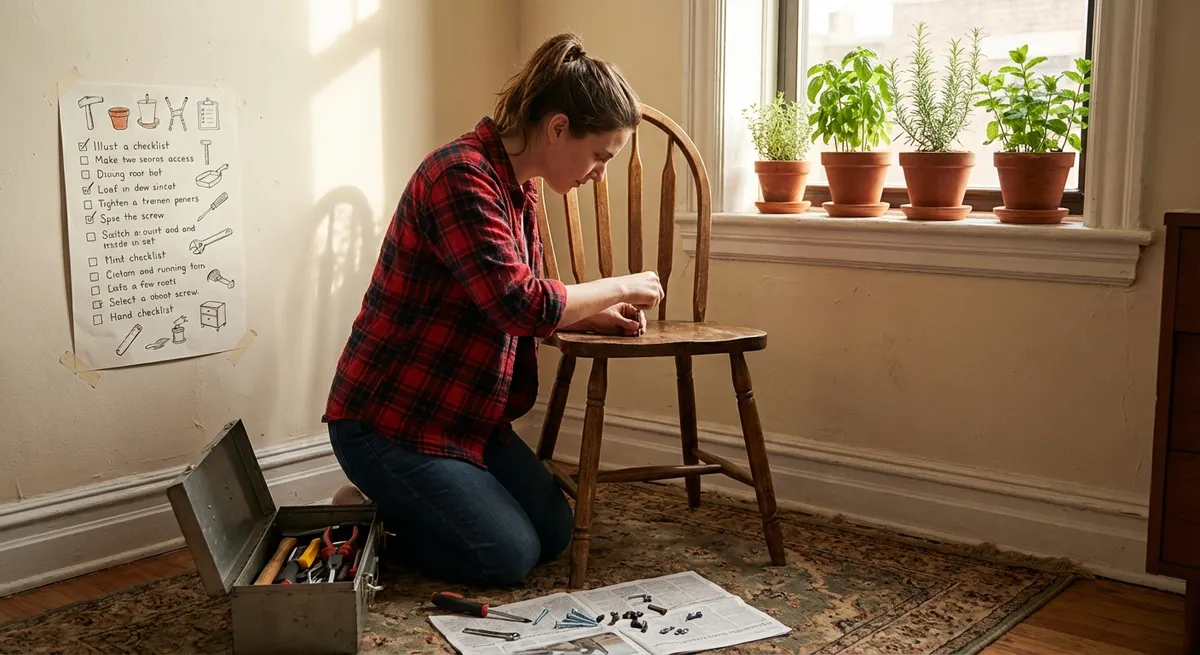
When something breaks or stops working at home, it usually happens at the worst possible moment. Instead of waiting days for a pro or spending money on a quick callout, there are many issues you can safely and confidently tackle yourself. This guide walks you through five common problems with clear, step-by-step instructions so you can get things working again—without guesswork or drama.
1. Dripping Faucet: Stop the Constant Drip
A dripping faucet wastes water, adds to your bill, and is just plain annoying. Most of the time, the fix is a worn-out washer or cartridge—not a full faucet replacement.
What You’ll Need
- Adjustable wrench or basin wrench
- Screwdriver (Phillips or flat-head, depending on handle)
- Replacement washer or cartridge (match your faucet model)
- Plumber’s tape (Teflon tape)
- Small towel or rag
Step-by-Step Fix
Shut off the water supply
Look under the sink for shutoff valves (small handles on the pipes). Turn them clockwise until they stop. Open the faucet to release any remaining water.
Plug the drain
Use the sink stopper or a rag to plug the drain so you don’t lose screws or small parts.
Remove the faucet handle
- Find the screw: it’s often hidden under a decorative cap or on the side/back of the handle. - Pry off the cap gently with a flat-head screwdriver if needed. - Unscrew the handle and lift it off.
Access the valve or cartridge
Under the handle you’ll see a nut, bonnet, or retaining clip holding the stem/cartridge in place. - Use your wrench to loosen and remove it. - Pull out the cartridge or stem assembly straight up.
Inspect and replace worn parts
- For compression faucets (you turn the handle several times to open): replace the rubber washer and O-ring on the end of the stem. - For cartridge faucets (single-handle or quarter-turn): replace the entire cartridge with an identical model.
Reassemble with plumber’s tape
- Wrap plumber’s tape clockwise around any threaded connections. - Reinsert the cartridge or stem, tighten the retaining nut, and reinstall the handle.
Turn water back on and test
Open the shutoff valves slowly, then turn on the faucet. Check for leaks at the base and around the handle. If dripping stops but there’s a small seep at a joint, gently tighten that connection a bit more.
2. Weak or Noisy Toilet Flush: Restore Full Power
A toilet that doesn’t flush properly, runs too long, or makes gurgling noises often has a simple cause: an issue with the tank components. You can usually fix it without replacing the whole toilet.
What You’ll Need
- Adjustable wrench or pliers
- Replacement flapper or fill valve kit (universal kits fit most toilets)
- Old towel or sponge
Step-by-Step Fix
Remove tank lid and observe a flush
Flush the toilet and watch the inside of the tank: - Does the flapper fully lift and then seal? - Does water stop at the correct level? - Is the fill valve spraying or making odd noises?
Check and clean the flapper
- Turn off water at the shutoff valve behind/below the toilet. - Flush once to empty most of the tank. - Inspect the rubber flapper at the bottom: if it’s warped, cracked, or slimy with buildup, it won’t seal. - Wipe it clean; if it still doesn’t look flat and flexible, replace it.
Replace the flapper if needed
- Unhook it from the side tabs on the overflow tube. - Attach the new flapper in the same spots. - Connect the chain to the flush handle arm with a little slack (but not so much that it can’t lift fully).
Adjust the water level
- Look for the water line mark inside the tank or on the overflow tube. - For float-cup fill valves: squeeze the clip on the float rod and slide it up to raise the water level, down to lower it. - For float-ball types: turn the screw on top of the fill valve (or bend the arm slightly) so the ball sits at the correct level when the tank fills.
Replace a noisy or faulty fill valve
If the valve hisses continuously, won’t shut off, or fills extremely slowly: - Turn off water, flush to empty, and sponge out remaining water. - Disconnect the supply line under the tank with a wrench. - Remove the old fill valve nut and lift the valve out. - Install the new one per the manufacturer’s instructions, tightening carefully to avoid cracking the tank.
Turn water back on and test multiple flushes
Check for: - Strong, clean flush - Water stopping at the correct level - No constant running sound
3. Dead Outlet: Restore Power Safely
When an outlet suddenly stops working, you don’t automatically need an electrician. Often the issue is a tripped circuit, a GFCI reset, or a loose plug.
What You’ll Need
- Plug-in device (lamp or phone charger) for testing
- Flashlight
- Access to your electrical panel
- Non-contact voltage tester (optional but safer)
Step-by-Step Fix
Check the device and cord first
Plug the same device into a different outlet that you know works. If it doesn’t power on there, your device or cord is the issue—not the outlet.
Look for a tripped GFCI outlet
- Kitchens, bathrooms, garages, basements, and outdoor areas often use GFCI outlets. - Find the GFCI (with “Test” and “Reset” buttons) on that circuit. It might be upstream from the dead outlet. - Press the Reset button firmly. Then test the dead outlet again.
Check your breaker panel
- Open the panel door and look for a breaker that’s in the middle or “off” position. - Fully switch it to Off, then back to On. - Test the outlet again with your device.
Test for power at the outlet (optional but useful)
With a non-contact voltage tester: - Hold the tester near the outlet slots. - If it doesn’t detect voltage while other outlets on the same circuit work, the outlet may be faulty or wiring may be loose.
Tighten a loose plug issue
If the plug falls out easily or only works at certain angles: - Unplug everything. - This often means worn internal contacts; the safest solution is replacing the outlet. If you’re not comfortable doing electrical work, this is a good time to call a pro.
Know when NOT to DIY
Stop and bring in an electrician if you notice: - Burn marks, melted plastic, or a burning smell - Warm or hot outlet cover - Repeatedly tripping breaker when using normal loads
4. Slow Wi‑Fi and Lag: Make Your Home Internet Work Again
You don’t need to be a network engineer to fix most home Wi‑Fi problems. A few targeted adjustments can remove the bottlenecks that make streaming and video calls painful.
What You’ll Need
- Access to your modem and router
- Your router login info (usually on a label)
- Smartphone or laptop
Step-by-Step Fix
Power-cycle modem and router properly
- Unplug the modem and router from power. - Wait at least 30 seconds. - Plug the modem back in first and wait until all indicator lights stabilize. - Then plug in the router and wait 1–2 minutes. A clean reboot often clears temporary glitches.
Check physical placement
- Place the router in a central, elevated, open area—avoid closets, cabinets, and behind TVs. - Keep it away from large metal objects, thick brick walls, and microwaves. - If Wi‑Fi is weak at the opposite end of your home, you may need a mesh system or additional access point.
Connect critical devices via Ethernet
For desktop PCs, game consoles, or TVs near the router: - Use an Ethernet cable directly to the router. - This reduces Wi‑Fi congestion and gives you a more stable connection for streaming and gaming.
Update router firmware
- Log into your router’s admin page (check the sticker for IP address and default login). - Look for Firmware Update or Software Update. - Apply available updates; they often improve performance and security.
Change congested Wi‑Fi channels
- In crowded neighborhoods, many routers compete on the same channels. - In the router’s wireless settings, try changing the 2.4 GHz channel to 1, 6, or 11 and test performance. - For 5 GHz, you can experiment with different channels your router offers.
Reduce unnecessary connections and background use
- Disconnect devices you’re not using. - On computers and consoles, pause large downloads or cloud backups when you need smooth video calls or streaming. - Set automatic updates to off-peak hours where possible.
5. Squeaky Door: Quiet the Noise for Good
That squeak every time you open a door is a tiny problem that adds up in daily annoyance. The fix is simple and often takes just a few minutes.
What You’ll Need
- Lubricant (silicone spray, lithium grease, or even petroleum jelly in a pinch)
- Rag or paper towels
- Flat-head screwdriver or small pry tool (if removing pins)
- Hammer or mallet (optional)
Step-by-Step Fix
Identify the squeaky hinge
Slowly open and close the door and listen closely. Usually, it’s just one hinge, but sometimes all three benefit from lubrication.
Try lubricating without removing pins first
- Place a rag under the hinge to catch drips. - Spray or apply lubricant directly to the hinge pivot point and moving parts. - Open and close the door several times to work it in. This alone often solves mild squeaks.
Remove hinge pin for a deeper fix (if needed)
If squeak persists: - Close the door. - Use a flat-head screwdriver under the bottom of the hinge pin and gently tap upward with your hand or a hammer until the pin loosens. - Pull the pin out completely.
Clean and coat the pin
- Wipe off old dirt and rust with a rag. - Apply a thin, even coat of lubricant or a light grease along the length of the pin.
Reinstall the pin and test
- Insert the pin back into the hinge from the top. - Tap gently to fully seat it. - Open and close the door multiple times. If there’s still a slight squeak, repeat the process with other hinges.
Wipe away excess
Excess lubricant can attract dust. Wipe up any drips around the hinge and on the floor.
Conclusion
You don’t need a full workshop or advanced skills to solve many of the everyday problems that slow your home down. With a few basic tools and a clear process, you can stop leaks, restore power, improve your Wi‑Fi, and quiet those squeaks on your own. The key is working methodically: shut things off safely, observe what’s happening, replace worn parts, and test carefully. Every successful fix builds your confidence—and keeps your home running on your terms, not your repair bills.
Sources
- [U.S. Environmental Protection Agency – Fix a Leak](https://www.epa.gov/watersense/fix-leak-week) - Covers the impact of household leaks (like dripping faucets) and basic steps to address them
- [Kohler – How to Repair a Toilet](https://support.kohler.com/hc/en-us/articles/360001812074-Toilet-Repair-Guide) - Manufacturer guidance on common toilet tank component issues and replacements
- [U.S. Consumer Product Safety Commission – Electrical Receptacle Safety](https://www.cpsc.gov/safety-education/safety-guides/electrical-outlet-receptacle-safety) - Safety information for working around outlets and recognizing hazards
- [Federal Communications Commission – Broadband Consumer Guide](https://www.fcc.gov/consumers/guides/broadband-speed-guide) - Explains internet performance basics and factors that affect home broadband quality
- [Family Handyman – How to Fix a Squeaky Door](https://www.familyhandyman.com/project/how-to-fix-a-squeaky-door/) - Step-by-step reference for lubricating and adjusting door hinges
Key Takeaway
The most important thing to remember from this article is that this information can change how you think about DIY Solutions.