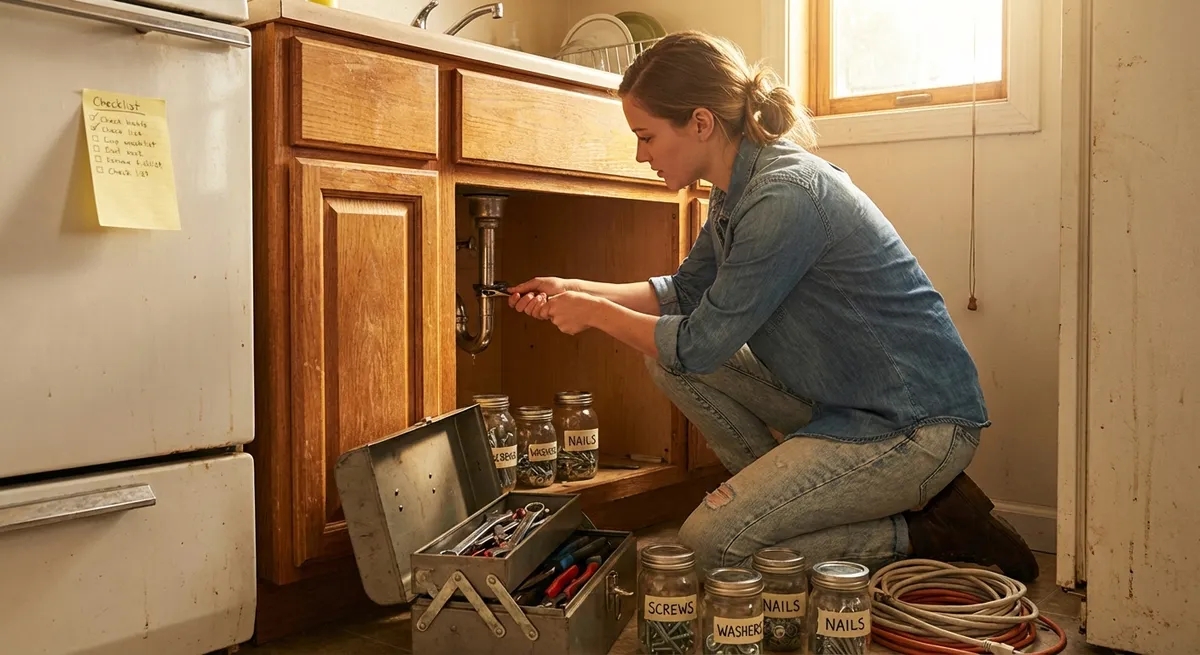
Most “little” problems around the house don’t need a service call, a new gadget, or a weekend lost to YouTube rabbit holes. With a few basic tools and a clear plan, you can solve a lot of everyday issues yourself—safely and quickly. This guide walks you through five common problems and gives you direct, step‑by‑step solutions you can confidently tackle today.
Stop a Dripping Faucet (Without Replacing the Whole Thing)
A dripping faucet wastes water, drives up your bill, and is surprisingly easy to fix in most cases.
What you’ll need:
Adjustable wrench, flathead and Phillips screwdrivers, replacement O‑ring or cartridge (depending on faucet type), towel, small bowl.
Step‑by‑step:
Shut off the water supply
Look under the sink for the hot and cold shutoff valves. Turn both clockwise until they stop. Open the faucet to release any remaining pressure.
Plug the drain
Use the sink stopper or a rag so you don’t lose screws or small parts down the drain.
Remove the handle
Pry off the decorative cap (if present) with a flathead screwdriver, then remove the screw inside. Gently pull the handle off.
Identify your faucet type
Most modern faucets are cartridge, ball, ceramic disk, or compression. A quick photo and Google search of the exposed parts can help you identify the type.
Take out the cartridge or stem
Use your wrench to loosen the retaining nut. Carefully pull the cartridge/stem straight up. Place all parts in your bowl in order.
Inspect and replace seals/O‑rings
Look for worn, cracked, or flattened rubber parts. Take the old parts to a hardware store to match size and type, or use the faucet brand/model if you have it.
Clean mineral buildup
Use white vinegar on a cloth or an old toothbrush to remove scale from the faucet body and parts. Rinse and dry thoroughly.
Reassemble and test
Install the new O‑rings or cartridge, tighten the retaining nut (snug, not over‑tight), reinstall the handle, and turn the water back on slowly. Test for leaks with both hot and cold.
If it still drips after a new cartridge or seals, the faucet body may be damaged—at that point, replacement might be more cost‑effective.
Restore a Slow or Smelly Sink Drain (Without Harsh Chemicals)
Slow drains and mild odors often come from hair, soap scum, and food buildup—not a serious blockage. You can usually clear this without chemical drain cleaners.
What you’ll need:
Bucket, old toothbrush, rubber gloves, small drain snake or plastic hair clog remover, adjustable pliers (for P‑trap), baking soda, white vinegar, hot water.
Step‑by‑step:
Remove visible debris at the drain
Pull out any hair catchers or stoppers. Use a plastic drain tool or gloved fingers to remove visible gunk.
Clean the sink stopper
Many bathroom sinks use a pop‑up stopper held by a rod underneath the sink. Unscrew the nut on the back of the drainpipe, slide out the rod, then lift the stopper from the sink. Clean thoroughly with an old toothbrush.
Try a simple baking soda + vinegar flush
- Pour about ½ cup baking soda into the drain. - Follow with 1 cup white vinegar. - Let it fizz for 10–15 minutes. - Flush with a full kettle of hot (not boiling on PVC) water.
If still slow, clean the P‑trap
- Place a bucket under the curved pipe (P‑trap). - Loosen the slip nuts by hand or with pliers. - Remove the trap and dump contents into the bucket. - Clean inside with a brush or bottle brush. - Reassemble, making sure the washers sit correctly.
Final flush and leak check
Run hot water for 1–2 minutes. Check under the sink for drips around the trap and fittings. Tighten gently if needed.
Use harsh chemical drain cleaners sparingly—they can damage some pipes and are hazardous to store and handle. Mechanical cleaning plus hot water usually solves most household slow drains.
Silence a Squeaky Interior Door (No Re‑Hanging Required)
That high‑pitched squeak every time someone opens a door is usually just friction on dirty or dry hinges.
What you’ll need:
Paper towel, small flathead screwdriver, hammer, lubricant (silicone spray, white lithium grease, or petroleum jelly), optional: drop cloth.
Step‑by‑step:
Protect the floor
Lay down a small towel or drop cloth under the hinge area to catch drips.
Test each hinge
Open and close the door slowly to locate which hinge (or hinges) squeak.
Remove one hinge pin at a time
- Start with the middle hinge if there are three. - Place the flathead screwdriver under the bottom of the hinge pin and gently tap upward with a hammer. - Once the pin rises, pull it out by hand.
Clean the hinge pin
Wipe off old dirt, dust, and rust with a paper towel. If it’s badly rusted, lightly sand it with fine sandpaper.
Lubricate the pin
- Apply a thin coat of lubricant along the length of the pin. - Spread evenly with a paper towel; avoid clumps that can drip.
Reinstall the pin
- Line up the hinge leaves and slide the pin back in from the top. - Tap gently with the hammer so it’s fully seated.
Repeat for other squeaky hinges
Do the same process for the top and bottom hinges if needed—but always one hinge at a time so the door stays secure.
Wipe excess and test
Open and close the door several times. Wipe any extra lubricant from the hinge and surrounding trim.
Avoid cooking oils as lubricants—they can gum up and attract dust, making the squeak return faster.
Fix a Wobbly Chair or Table (So It Stops Rocking)
A wobbly chair or table usually comes from loose joints or uneven legs. You can fix most issues with basic hand tools and wood glue.
What you’ll need:
Wood glue, clamps or heavy straps (ratchet straps or rope), screwdriver or hex key, sandpaper, playing card or felt pads (for minor leveling).
Step‑by‑step:
Identify the cause of wobble
Place the furniture on a hard, flat surface. Press on each corner. Note whether the wobble comes from loose joints or one short leg.
Tighten all fasteners first
Use a screwdriver or hex key to snug screws and bolts at all joints, not just the ones that feel loose. Sometimes that’s all you need.
For loose, glued joints
- Gently pull or wiggle the loose part free if possible. - Scrape old dried glue from both surfaces with a putty knife or sandpaper. - Apply fresh wood glue to both mating surfaces. - Press together and clamp firmly. Wipe excess glue with a damp cloth.
Clamp and cure properly
Leave clamps in place as long as the glue manufacturer recommends (often 30–60 minutes for initial set, 24 hours for full cure). Don’t stress the joint until cured.
Level uneven legs
- If one leg is slightly short, slide a playing card or folded paper under it to confirm. - For a quick fix, attach self‑adhesive felt pads to the shorter leg (or legs) until the wobble stops. - For a permanent solution, carefully sand or trim the longer legs to match the shortest one—work slowly.
Final stability check
After glue has fully cured, place the piece back on a flat surface and test all corners. Tighten any remaining loose fasteners.
Properly glued and tightened joints can add years of life to inexpensive chairs and tables that would otherwise end up on the curb.
Reset a Tripped Breaker Safely (And Know When to Call an Electrician)
When outlets or lights suddenly stop working in one area of your home, a tripped breaker or GFCI outlet is often the culprit—not a major wiring failure.
What you’ll need:
Flashlight, dry hands, optionally a small plug‑in lamp or outlet tester.
Step‑by‑step:
Unplug or switch off devices in the dead area
Reduce load on the circuit to avoid retripping the breaker immediately.
Locate your electrical panel
Typically in a basement, garage, utility room, or closet. Make sure the area is dry and well‑lit.
Look for the tripped breaker
- Open the panel door. - Most breakers will be firmly in the ON position. - A tripped breaker usually sits between ON and OFF, or shows a red/orange indicator.
Reset the breaker correctly
- Use one hand; keep the other at your side. - Push the tripped breaker fully to the OFF position. - Then firmly push it back to ON until it clicks.
Check GFCI outlets too
In kitchens, bathrooms, garages, and outdoor areas, you may have GFCI outlets with TEST and RESET buttons. - Press RESET firmly until it clicks. - If it immediately trips again, unplug all loads and test once more.
Test the circuit
Plug in a small lamp or outlet tester to confirm power is restored. Add devices back slowly so you don’t overload the circuit again.
Know when to stop and call a pro
Contact a licensed electrician if: - A breaker won’t reset or trips instantly with nothing plugged in. - You see or smell burning, or feel heat from the panel. - You hear buzzing or crackling from the breaker.
Never replace a breaker with a higher‑amp one to “solve” frequent trips. That hides a serious load or wiring problem and can create a fire risk.
Conclusion
You don’t need a workshop full of tools or a contractor on speed dial to handle most everyday annoyances at home. With a clear process and a small set of basics—wrench, screwdriver, pliers, wood glue, and lubricant—you can stop drips, clear drains, silence squeaks, stabilize furniture, and safely reset tripped breakers.
The payoff: fewer urgent calls, less wasted money, and a home that feels under control instead of constantly “almost broken.” Start with one of these fixes today, build your confidence, and make DIY part of how you keep your place running smoothly.
Sources
- [U.S. Environmental Protection Agency – WaterSense: Fix a Leak](https://www.epa.gov/watersense/fix-leak-week) – Explains how household leaks (like dripping faucets) waste water and why fixing them matters
- [The Family Handyman – How to Fix a Leaky Faucet](https://www.familyhandyman.com/project/how-to-repair-a-compression-faucet/) – Step‑by‑step visuals and additional detail on faucet repair methods
- [University of Nebraska–Lincoln Extension – Household Drain Care](https://extensionpublications.unl.edu/assets/pdf/g1875.pdf) – Guidance on maintaining and clearing household drains safely
- [U.S. Consumer Product Safety Commission – Electrical Safety in the Home](https://www.cpsc.gov/safety-education/safety-guides/home/electrical-safety-in-the-home) – Official recommendations on safe practices around breakers and home wiring
- [This Old House – How to Fix a Squeaky Door](https://www.thisoldhouse.com/doors/21015172/how-to-fix-a-squeaky-door) – Additional techniques and product suggestions for silencing squeaky hinges
Key Takeaway
The most important thing to remember from this article is that this information can change how you think about DIY Solutions.