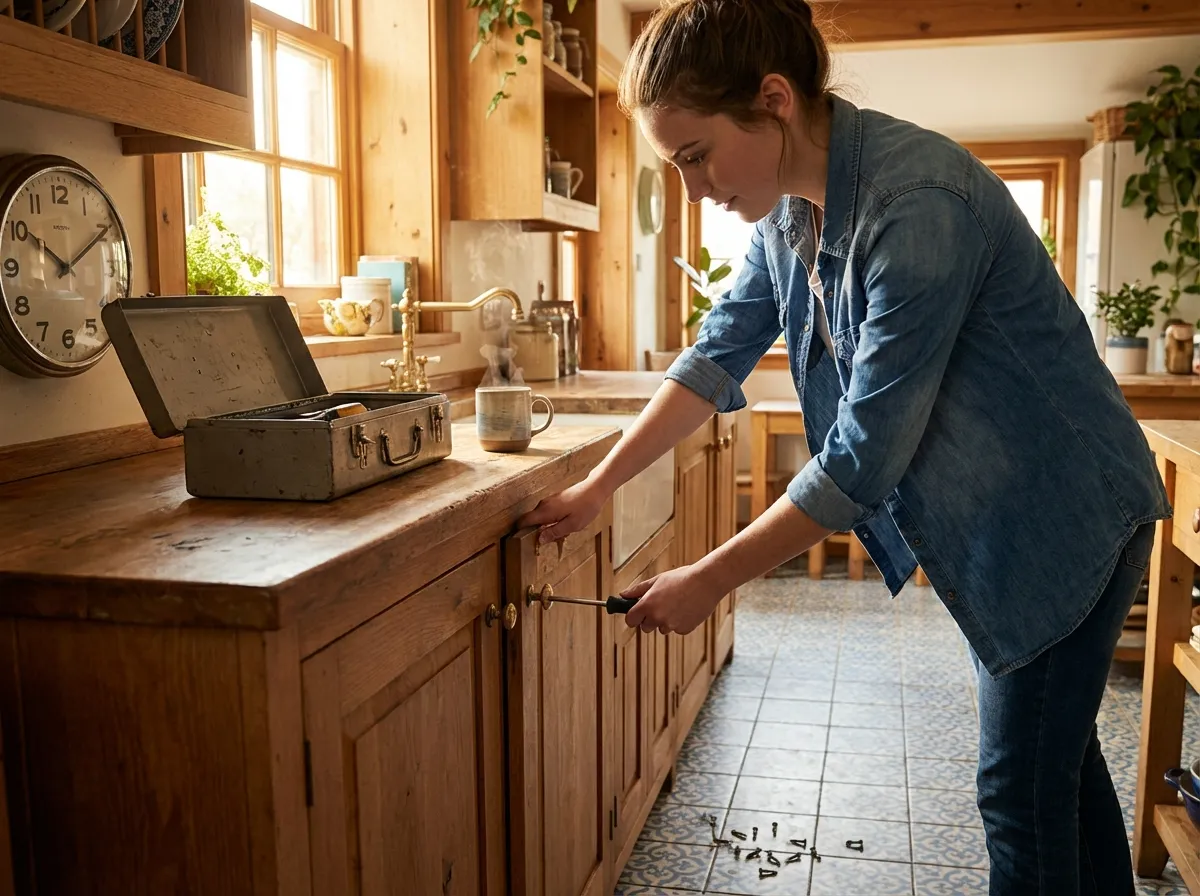
Most problems around the house or with gadgets aren’t full-on disasters—they’re small annoyances that slow you down and cost money if you call in a pro too soon. With a few simple steps, you can solve a lot of them yourself, fast, safely, and without special tools.
Below are five practical quick fixes you can handle in minutes, plus when to stop and call a professional.
1. Quiet a Squeaky Door Hinge
A squeaky hinge is annoying but easy to fix, and you probably already have what you need at home.
What you’ll need:
- Paper towel or rag
- Lubricant: silicone spray, WD‑40, or petroleum jelly
- Optional: flathead screwdriver or butter knife
Step-by-step:
- Open and close the door a few times to confirm where the squeak is coming from (usually the middle hinge).
- Protect the floor under the hinge with a paper towel or rag to catch drips.
Apply lubricant to the hinge pin area:
- If using spray, use short bursts right on the pin and pivot points. - If using jelly, spread a thin layer directly where the hinge moves. 4. Work the door back and forth 10–15 times to pull the lubricant into the hinge. 5. Wipe off any extra lubricant so it doesn’t drip or attract dust.
Still squeaking?
- Carefully lift the hinge pin partway with a flathead screwdriver and add a bit more lubricant directly to the pin. - Tap it gently back down and open/close the door again.
When to call a pro:
- The door is sagging, scraping the floor, or won’t latch properly. That usually means the frame or hinges need more serious adjustment.
2. Revive a Phone That Won’t Charge Reliably
If your phone only charges at a weird angle or keeps disconnecting, lint and dust are often the real problem—not the charger.
What you’ll need:
- Wooden or plastic toothpick (no metal)
- Soft brush (small paintbrush, clean dry toothbrush, or makeup brush)
- Flashlight
Step-by-step:
- Power off your phone completely. This reduces the risk of short circuits.
- Shine a flashlight into the charging port to check for dust, lint, or small debris.
Use a wooden or plastic toothpick to gently loosen and lift out debris:
- Work slowly along the bottom and sides of the port. - Do not force anything—if you meet hard resistance, stop. 4. Brush out the port using a soft, dry brush to remove remaining particles.
Check your cable and charger:
- Inspect the connector tip for bending, burns, or heavy wear. - Try a known-good charger and cable if you have one. 6. Turn the phone back on and plug it in.
Gently test the cable by wiggling the connector slightly:
- If it stays charging steadily, you’ve fixed it. - If it disconnects easily or feels very loose, there may be internal port damage.
When to call a pro:
- Port feels very loose, or charging only works if you hold the cable at a specific angle.
- You see bent pins, burn marks, or corrosion in the port.
3. Stop a Running Toilet Without Replacing Parts
A toilet that runs nonstop wastes water and money, but in many cases you can stop it with a few quick adjustments inside the tank.
What you’ll need:
- Towel (for drips)
- Optional: Rubber gloves
Step-by-step:
- Remove the tank lid and place it safely on a flat surface (it’s heavy and breakable).
Flush once while watching inside the tank to see what happens:
- Does the flapper (rubber piece at the bottom) not seal properly? - Is the float (ball or cup that rises with water) set too high?
Check the flapper:
- If it looks warped, dirty, or doesn’t sit flat, turn off water at the shutoff valve (behind or beside the toilet). - Gently clean the flapper and the seat it rests on with your fingers or a cloth. - Turn the water back on, let the tank fill, and see if it now seals.
Adjust the float level:
- If water rises up to or into the overflow tube, the float is set too high. - For a float arm (older style), gently bend the metal arm downward so the float sits a bit lower. - For a fill valve with a sliding float, use the adjustment screw or clip to lower the float.
Test by flushing again:
- The water should stop 1–2 cm (about ½ inch) below the top of the overflow tube. - The sound of running water should stop within a minute.
Listen for 5–10 minutes:
- If the toilet stays quiet and the water level is stable, you’re done.
When to call a pro or replace parts:
- The flapper is cracked, crumbling, or no longer flexible.
- The fill valve keeps running even after adjustments.
- You see water leaking outside the tank or at the base of the toilet.
4. Fix a Power Strip That Keeps Tripping (Safely)
If a power strip or surge protector keeps switching off, it’s trying to protect you. Don’t override it—redistribute the load.
What you’ll need:
- Access to another outlet on a different wall or circuit
- Basic awareness of what’s plugged in where
Step-by-step:
- Unplug everything from the strip and turn the strip’s switch off.
Inspect the power strip:
- Look for scorch marks, warping, broken casing, or a burnt smell. - If you see damage, do not use it. Replace it immediately.
Identify high‑draw devices and avoid grouping them:
- Space heaters, hair dryers, kettles, microwaves, and irons use a lot of power. - Desktop computers, monitors, gaming consoles, and printers together can also overload a strip. 4. Plug high‑draw items directly into the wall, not into the strip. 5. Reconnect only low‑power devices to the strip (phone charger, lamp, router, small speakers).
Turn on the strip and then each device one by one:
- If it trips again when you add a certain device, that device may be faulty or too powerful for the strip.
Check the wall outlet if problems persist:
- Try a different outlet in another room if possible. - If the house breaker is tripping at the panel, the circuit is likely overloaded.
When to call an electrician:
- Breakers trip frequently across multiple outlets.
- Outlets feel hot, are discolored, or smell burnt.
- Lights dim when certain devices turn on.
5. Clear a Slow‑Draining Sink Without Harsh Chemicals
A sluggish sink often comes from buildup in the drain trap, not a deep pipe problem. You can often clear it in a few minutes.
What you’ll need:
- Bucket or large bowl
- Rubber gloves
- Old toothbrush or small brush
- Paper towels or rag
- Optional: baking soda and vinegar for a final clean
Step-by-step (bathroom or kitchen sink with visible U‑shaped pipe):
- Clear the space under the sink and place a bucket directly under the U‑shaped pipe (the P‑trap).
- Turn off the faucet and avoid running any water.
- Loosen the slip nuts at both ends of the trap by hand (or gently with pliers if they’re stuck).
- Carefully remove the trap and let the water and gunk drain into the bucket.
Clean the trap thoroughly:
- Use a brush to scrub out hair, grease, and debris. - Run water through the trap in another sink or with a jug if available.
Check the pipe stubs coming from the wall and sink:
- Remove any reachable buildup with the brush or your fingers (with gloves). 7. Reattach the trap and hand‑tighten the slip nuts. Do not overtighten, as plastic fittings can crack.
Run water slowly and check for leaks at the connections:
- If you see dripping, tighten the nuts a bit more by hand. 9. Optional: Pour ½ cup baking soda followed by 1 cup vinegar down the drain, wait 10–15 minutes, then flush with hot water to help break up remaining film.
When to call a plumber:
- Water backs up in multiple fixtures at once (sink + tub + toilet).
- There’s a strong sewer smell or gurgling from drains.
- The clog returns quickly even after cleaning the trap.
Conclusion
Most everyday problems don’t need an emergency call or a full toolbox. With a bit of basic know‑how, you can silence squeaks, stabilize charging, tame a running toilet, prevent overloaded power strips, and clear slow drains in minutes.
The key is knowing the line: handle straightforward, visible fixes yourself, and call a professional when you see damage, smell burning, or run into repeated failures. That balance keeps your space functional, your costs under control, and your time focused on what matters—not on waiting for a repair visit you didn’t actually need.
Sources
- [U.S. Department of Energy – Appliances & Electronics Safety Tips](https://www.energy.gov/energysaver/appliances-and-electronics) – Guidance on safe use of household electrical devices and power strips
- [Consumer Product Safety Commission – Electrical Safety Checklist](https://www.cpsc.gov/safety-education/safety-guides/electrical-safety/electrical-safety-checklist) – Official recommendations on avoiding overloaded circuits and damaged cords
- [Mayo Clinic – Cell Phone Safety and Usage](https://www.mayoclinic.org/healthy-lifestyle/adult-health/in-depth/cell-phones/art-20046401) – General considerations for safe phone use that support careful handling of ports and chargers
- [U.S. Environmental Protection Agency – WaterSense: Fix a Leak](https://www.epa.gov/watersense/fix-leak-week) – Explains how small plumbing leaks and running toilets waste water and why timely fixes matter
- [University of Nebraska–Lincoln Extension – Household Plumbing Basics](https://extensionpublications.unl.edu/assets/pdf/g1914.pdf) – Educational overview of home plumbing components including traps and toilets
Key Takeaway
The most important thing to remember from this article is that this information can change how you think about Quick Fixes.