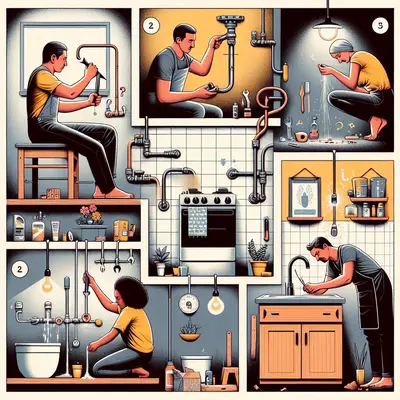
Small problems at home have a habit of turning into big, expensive headaches when we ignore them. A dripping tap, a door that won’t close right, or a toilet that runs all night aren’t just annoying—they waste money and wear out your home faster. The good news: you can fix many of these issues safely with basic tools and a clear process, even if you’re not “handy.”
This guide walks you through five practical household repairs with simple, step‑by‑step instructions. Each one is beginner‑friendly, low‑risk, and designed to actually solve a problem—not just patch it.
1. Stop a Dripping Faucet (Compression or Cartridge Types)
A faucet that drips nonstop wastes water and spikes your bill. Most leaks come from worn internal parts you can replace in under an hour.
What you’ll need
- Adjustable wrench
- Screwdriver (Phillips or flat–head, depending on handle)
- Replacement washer/O‑ring or cartridge (match to your faucet brand/model)
- Towel and small container (for parts)
Steps
Shut off the water supply
- Look under the sink for two small shutoff valves (hot and cold). - Turn both clockwise until they stop. - Open the faucet to make sure water is off and to relieve pressure.
Plug the drain
- Use the sink stopper or a rag so small screws and parts don’t fall in.
Remove the handle
- Pry off decorative caps with a small flat screwdriver if present. - Unscrew the handle screw, then pull the handle off the stem.
Identify your faucet type
- Compression: has separate hot/cold handles that tighten down; inside you’ll see a stem with a rubber washer at the end. - Cartridge: usually single‑handle or modern dual; you’ll see a cartridge assembly instead of a long threaded stem.
For compression faucets: replace the washer and O‑ring
- Use the wrench to remove the packing nut and pull out the stem. - At the end of the stem, remove the rubber washer and screw. - Match the washer size at a hardware store (bring the old one). - Replace the washer and any O‑rings on the stem with new ones. - Reinsert stem, tighten packing nut snugly (don’t overtighten).
For cartridge faucets: replace the cartridge
- Remove any retaining clip or nut holding the cartridge. - Gently pull the cartridge straight up (use pliers if needed). - Match it by brand/model and orientation at the store. - Install the new cartridge in the same orientation; reinstall clip/nut.
Reassemble and test
- Put the handle back on and tighten the screw. - Remove drain plug, then slowly turn on the shutoff valves. - Turn faucet on/off and check for leaks at the handle and spout.
When to call a pro: If shutoff valves won’t close, pipes are corroded, or you see leaking under the sink you can’t quickly trace.
2. Fix a Toilet That Keeps Running
A constantly running toilet wastes a surprising amount of water. In most cases, the issue is inside the tank and can be fixed without touching any drain lines.
What you’ll need
- Replacement flapper or complete fill valve kit (if needed)
- Adjustable wrench or channel‑lock pliers
- Towel or small bucket
Steps
Take off the tank lid and observe
- Flush the toilet and watch what happens inside. - Typical causes: - Flapper not sealing properly - Water level too high and running into overflow tube - Fill valve not shutting off
Check and adjust the flapper chain
- The chain should have a little slack (about 1/4–1/2 inch) when the flapper is closed. - If too tight, the flapper can’t fully seal; move the chain to a different link to add slack. - If tangled or too long, shorten or untangle.
Test the flapper seal
- Press down gently on the flapper after the tank refills. - If the running noise stops, the flapper isn’t sealing and should be replaced.
Replace the flapper (common and easy)
- Turn off the water valve behind the toilet (clockwise). - Flush to empty most of the tank; hold handle down to drain more. - Unhook the old flapper from the overflow tube and disconnect the chain. - Attach the new flapper to the same points, connect to the chain. - Turn water back on and let the tank refill. - Check that the flapper drops straight and seals when the tank is full.
Adjust the water level
- Most toilets have a “water line” mark inside the tank. - For float‑cup fill valves: - Find the adjustment screw or clip on the float arm. - Turn screw clockwise or slide clip down to lower the water level. - For older float‑ball types: - Gently bend the float arm downward to reduce water level. - Aim for water about 1 inch below the top of the overflow tube.
Replace the fill valve if it never shuts off
- If water keeps flowing even when level is low enough, the fill valve may be worn out. - Shut off water, drain the tank, disconnect the water line under the tank. - Unscrew the retaining nut under the tank holding the valve. - Remove old valve and install the new one following the package diagram. - Reconnect water line, turn supply on, and check for leaks.
When to call a pro: If the toilet base is loose, you see water around the floor seal, or the shutoff valve is frozen or leaking.
3. Quiet a Squeaky Door Hinge for Good
Squeaky doors are more than irritating—they suggest friction and wear that can shorten hardware life. Fixing it is fast and usually requires only one product you may already have.
What you’ll need
- Silicone‑based spray lubricant or white lithium grease
- Rag or paper towels
- Small flat screwdriver or nail (optional)
Steps
Identify the noisy hinge
- Slowly open and close the door to see which hinge squeaks. - Sometimes all will benefit from lubrication even if only one is noisy.
Try a quick external lubrication
- Place a rag under the hinge to catch drips. - Spray a small amount of silicone lubricant directly at the hinge pin and moving joints. - Open and close the door 10–15 times to work it in. - Wipe off excess; test again.
Remove and treat the hinge pin (for stubborn squeaks)
- Support the door slightly with a wedge or book if it’s heavy. - Use a small flat screwdriver or nail under the hinge pin head and gently tap upward with a hammer to lift it out. - Wipe the pin clean. - Apply a thin coat of white lithium grease or a few drops of oil along the pin. - Reinsert the pin from the top and tap down until fully seated.
Check door alignment
- If the door rubs the frame or doesn’t latch, the hinge screws may be loose. - Tighten screws in the jamb and on the door leaf. - If screws spin and won’t tighten, insert a wooden toothpick (or small dowel) dipped in wood glue into the hole, snap it off flush, and reinsert the screw.
Avoid common mistakes
- Don’t use vegetable oils (they get sticky and attract dust). - WD‑40 can be a short‑term fix but isn’t ideal as a long‑term lubricant compared to silicone or lithium grease.
When to call a pro: If the door frame is cracked, sagging heavily, or the door sticks due to foundation shifts.
4. Restore Power to a Dead Outlet (Safely)
An outlet that suddenly stops working is often due to a tripped GFCI or breaker, not a serious wiring failure. You can safely diagnose and fix the obvious causes without opening walls.
What you’ll need
- Small lamp or phone charger and device (for testing)
- Access to your electrical panel
- Non‑contact voltage tester (recommended, inexpensive)
Safety first: If you see burn marks, smell burning, or the outlet is hot to the touch, do not use it. Turn off the circuit at the panel and call an electrician.
Steps
Confirm the outlet is really dead
- Plug in a device you know works (like a lamp or phone charger). - Try another device just to rule out a bad cord or bulb.
Check nearby GFCI outlets
- Kitchens, bathrooms, garages, basements, and exterior areas often have GFCI outlets with “TEST” and “RESET” buttons. - Press “RESET” firmly on any nearby GFCI, even if it doesn’t look tripped. - Retest your dead outlet afterward; sometimes multiple outlets are protected by a single GFCI upstream.
Inspect the breaker panel
- Open your main electrical panel. - Look for any breaker in the middle position or slightly off from the others—this usually indicates “tripped.” - To reset: - Push it firmly all the way OFF. - Then push it back ON until it clicks.
Retest the outlet
- Plug in your test device again. - If it now works, monitor for a while; frequent trips may indicate overload (too many devices on one circuit) or a deeper issue.
Use a non‑contact tester for extra safety
- Even if an outlet seems dead, verify there’s no live power before removing its cover (if you ever need to inspect). - Hold the tester near the outlet slots; if it beeps or lights, power is still present.
Know when to stop
- If the breaker trips again immediately, or outlets in multiple rooms fail without a clear GFCI or breaker cause, stop troubleshooting. - Repeated breaker trips or partial power loss can signal wiring problems that need a licensed electrician.
When to call a pro: Burned outlets, frequent trips, buzzing sounds, flickering lights on the same circuit, or any shock sensation.
5. Seal a Drafty Window to Cut Energy Waste
Drafty windows make your home less comfortable and cost you money on heating and cooling. You can noticeably improve comfort and efficiency with basic sealing and weatherproofing.
What you’ll need
- Weatherstripping (self‑adhesive foam or rubber)
- Exterior‑grade caulk (silicone or paintable latex, depending on surface)
- Caulk gun
- Utility knife and scissors
- Damp rag or paper towels
Steps
Find the draft points
- On a windy day, slowly run your hand around the window frame and sash. - Use a lit incense stick or a thin strip of tissue; watch for smoke or paper movement to reveal air leaks. - Note whether leaks are around the movable sash, frame edges, or between trim and wall.
Seal movable parts with weatherstripping
- Clean the surfaces where weatherstripping will go (dust and dirt reduce adhesion). - Measure the length of each area needing a seal (sides and top of the sash, typically). - Cut weatherstripping to length with scissors. - Peel backing and press firmly along the stops where the window closes against the frame. - Close the window to test: it should close snugly but not require excessive force.
Caulk gaps around the frame and trim
- For gaps between the window frame and the wall/trim, use exterior‑grade or paintable latex caulk for interior use (check tube label). - Cut the tip of the caulk tube at a 45° angle for a narrow bead. - Apply a steady bead along visible cracks. - Smooth quickly with a damp finger or caulk tool to press it into the gap and create a neat finish. - Wipe away excess with a damp rag.
Check the window lock and alignment
- A misaligned sash can cause drafts even if sealed. - Ensure the window closes fully and the lock engages smoothly. - Tighten loose lock screws. - If the sash is badly out of square or won’t close fully, that may require professional adjustment or window replacement.
Temporary solution for very leaky or old windows
- Use a clear plastic window insulation kit in cold seasons: - Clean and dry the frame. - Apply the double‑sided tape as directed. - Attach the plastic sheet, then use a hair dryer to shrink and tighten it. - This creates an insulating air gap and can make a big comfort difference, especially in older homes.
When to call a pro: Rotting frames, visible water damage, fogging between double‑pane glass, or if windows are difficult or unsafe to operate.
Conclusion
You don’t need a full workshop or advanced skills to solve many of the most common household problems. By safely tackling issues like dripping faucets, running toilets, squeaky doors, dead outlets, and drafty windows, you protect your home, lower your utility bills, and cut down on emergency repair calls.
The key is knowing your limits: handle simple, low‑risk fixes yourself, and bring in a professional when there’s structural damage, complex electrical work, or anything that feels unsafe. Start with one of the repairs above today, build your confidence, and your home will thank you—quietly, without drips, squeaks, or drafts.
Sources
- U.S. Environmental Protection Agency – Fix a Leak - Explains how household leaks waste water and offers guidance on finding and fixing common leaks like faucets and toilets.
- Energy.gov – Air Sealing Your Home - U.S. Department of Energy guide on reducing drafts and improving home efficiency with caulking and weatherstripping.
- Consumer Product Safety Commission – Home Electrical Safety Checklist - Federal checklist covering safe practices when dealing with household electrical systems and outlets.
- Family Handyman – How to Fix a Leaking Toilet - Step‑by‑step overview of diagnosing and repairing running or leaking toilets.
- This Old House – How to Fix a Leaky Faucet - Detailed explanation of different faucet types and how to repair them.
Key Takeaway
The most important thing to remember from this article is that this information can change how you think about Household Repairs.