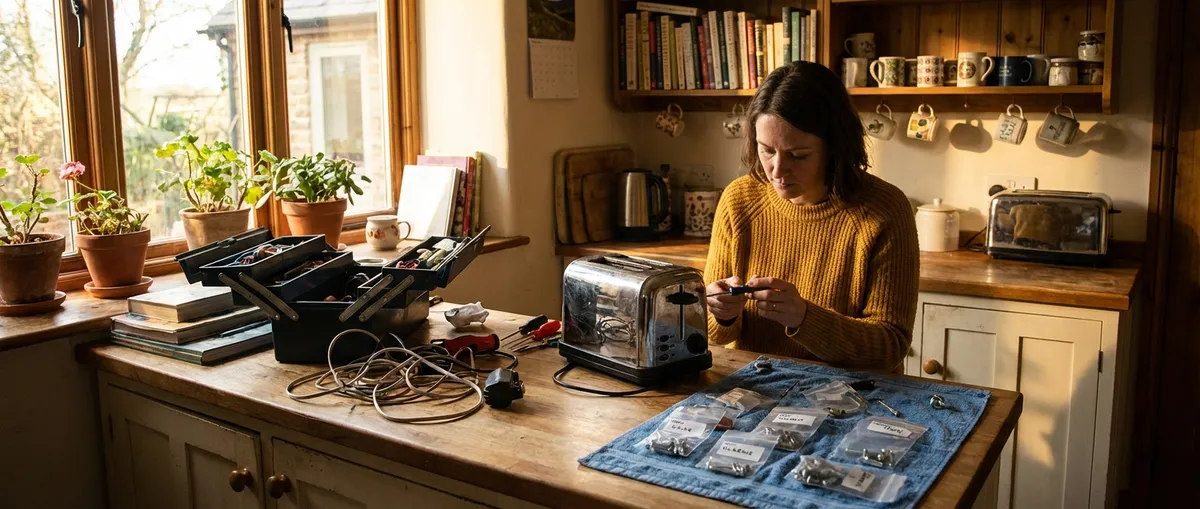
When something breaks at home, you usually have two choices: wait (and be annoyed) or act (and feel in control). This guide is all about the second option. Here are five practical, step‑by‑step quick fixes for common problems you can safely tackle with basic tools and a bit of patience.
Fix 1: Quiet a Squeaky Door Hinge
A squeaky door is annoying, but the fix is straightforward and fast.
What you’ll need: Paper towel or rag, mild cleaner or soapy water, lubricant (WD‑40, silicone spray, or even cooking oil as a last resort), optional small flat screwdriver.
Step‑by‑step:
- Open and close the door to find the squeak.
Listen carefully to confirm it’s the hinge, not the latch or frame.
- Wipe the hinge area.
Use a damp cloth or mild cleaner to remove dust and grime around the hinge pins and plates. Let it dry.
- Apply lubricant to the hinge.
Spray or drip a small amount directly on the hinge pin and pivot points. If the hinge has a visible pin head, you can carefully wiggle it up with a flat screwdriver for deeper penetration, but don’t remove it completely if you’re unsure.
- Work the door back and forth.
Open and close the door 10–15 times to work the lubricant into the hinge. Wipe any drips or excess so it doesn’t stain the door or floor.
- Re‑check and re‑apply if needed.
If the noise is reduced but not gone, add a little more lubricant and repeat. If the squeak persists after several tries, the hinge might be bent or loose and may need tightening or replacement.
Fix 2: Revive a Slow or Non‑Flushing Toilet
Many “broken” toilets just need a quick adjustment inside the tank.
What you’ll need: Rubber gloves (optional but recommended), towel, maybe a small adjustable wrench.
Step‑by‑step:
- Remove the tank lid gently.
Set it on a flat, safe surface—it’s heavy and breakable.
- Check the water level.
The water should be about an inch below the top of the overflow tube (the vertical pipe in the middle).
- If it’s too low, the flush will be weak.
- If it’s too high, you may have constant running.
- Adjust the float.
- For a float cup (sliding on a vertical rod): Turn the adjustment screw on top of the fill valve (usually clockwise to raise water, counterclockwise to lower).
- For a float ball (on an arm): Gently bend the metal rod down to lower the level or up to raise it.
- Inspect the flapper.
- If it’s warped, brittle, or doesn’t close fully, it won’t hold water and the toilet may run or flush poorly.
- Jiggle the flush handle—if the chain is too tight, the flapper can’t seal; if it’s too loose, the flapper won’t lift properly.
- Adjust or replace the chain/flapper.
The rubber flapper at the bottom of the tank should sit flat on its seat.
Shorten or lengthen the chain so there’s a tiny bit of slack when the flapper is closed. If the flapper looks worn or deteriorated, turn off the water valve behind the toilet, drain the tank with a flush, unclip the old flapper, and clip on a new one following the package instructions.
- Test multiple flushes.
Turn the water back on (if you turned it off), let the tank refill, then flush a few times. If the problem persists, the fill valve or other internal parts may need replacement, which is still DIY‑friendly but takes a bit more time.
Fix 3: Reset a Dead Outlet (Without Calling an Electrician Yet)
If an outlet suddenly stops working, it’s often a simple reset—especially in kitchens, bathrooms, garages, or outdoors.
What you’ll need: Small lamp or phone charger for testing, maybe a flashlight.
Important safety note: If you see burn marks, smell burning, or feel warmth around the outlet, do not use it. Turn off power at the breaker and call a licensed electrician.
Step‑by‑step:
- Test the outlet with a known‑working device.
Plug in a phone charger or lamp you know works. If it doesn’t power on, move the same device to another outlet to confirm the issue is with the outlet, not the device.
- Look for a GFCI outlet on the same circuit.
GFCI (ground‑fault circuit interrupter) outlets have “TEST” and “RESET” buttons. They often control other outlets in the same area. Check nearby walls, under cabinets, in adjacent rooms, and in bathrooms or garages.
- Press the RESET button firmly.
On the suspect GFCI, press RESET until it clicks. Some models require pressing TEST first, then RESET. After resetting, test your original outlet again.
- Check the circuit breaker panel.
Find your home’s breaker box. Look for any breakers in the “tripped” position—usually slightly between ON and OFF. Flip the breaker fully to OFF, then back to ON.
- Test the outlet again.
Plug in your device. If it’s working now, you’re done. If not, check other outlets on the same wall or room to see if multiple are affected.
- When to stop and call a pro.
If the breaker keeps tripping, the outlet is still dead, or you notice buzzing, heat, or burning smells, stop troubleshooting and contact a licensed electrician. Repeated tripping can signal a serious wiring or appliance issue.
Fix 4: Unclog a Slow Sink Drain Without Harsh Chemicals
Before reaching for a chemical drain cleaner, try a mechanical and safe approach that often works better and protects your pipes.
What you’ll need: Bucket, rubber gloves, old toothbrush or small brush, paper towels or rags, pliers (if needed), cup or small container.
Step‑by‑step:
- Clear the area and place a bucket.
Empty the cabinet under the sink and put a bucket under the P‑trap (the curved pipe).
- Remove the stopper (bathroom sink).
- Under the sink, find the horizontal rod connected to the drain pipe.
- Loosen the nut holding the rod and gently pull the rod out.
- Lift the stopper straight up from the sink.
- Clean the stopper and drain opening.
Hair and soap scum often collect here. Use an old toothbrush and paper towels to remove gunk from the stopper and the upper drain area.
- Empty and clean the P‑trap if needed.
- Loosen the slip nuts on either side of the P‑trap by hand or gently with pliers.
- Lower the trap into the bucket and empty water and debris.
- Rinse the trap in another sink or with a hose if possible, and clear out any blockage.
- Reassemble carefully.
- Reattach the P‑trap, hand‑tighten the slip nuts, and reinsert the horizontal rod into the opening on the drain pipe.
- Reinstall the stopper by aligning the hole at its base with the rod and tightening the rod nut again.
- Run water and check for leaks.
Turn on the faucet and let water run for 30–60 seconds. Check under the sink for drips. If you see any, gently tighten the slip nuts a bit more (don’t over‑tighten).
- When to consider other options.
If the drain is still slow, try a plunger specifically for sinks, or a manual drain snake. Avoid mixing chemical cleaners with mechanical methods—they can splash and cause burns.
Fix 5: Stop a Wobbly Chair or Table From Rocking
A wobbly chair or table is annoying—and sometimes unsafe—but usually easy to stabilize.
What you’ll need: Screwdriver (Phillips or flathead), wood glue (optional), small wood shims or cardboard, clean cloth.
Step‑by‑step:
- Flip the furniture carefully.
Place it on its side or upside down on a soft surface (carpet, blanket, or towel) to avoid scratches.
- Tighten all visible screws and bolts.
- Check legs, stretchers (horizontal bars between legs), and corner braces.
- Tighten screws and bolts snugly, but avoid stripping them by over‑tightening.
- Check for gaps at joints.
If you see movement where a leg meets the seat or tabletop, you may need to reinforce it. Clean dust or old loose glue with a dry cloth.
- Reinforce loose joints (for wooden furniture).
- If possible, slightly separate the loose joint.
- Apply a small amount of wood glue into the joint.
- Press the pieces firmly together and wipe off excess glue.
- If you have clamps, use them to hold the joint steady while drying according to the glue instructions; otherwise, lay the piece so gravity helps keep the joint tight.
- Level uneven legs.
Flip the furniture upright on a truly flat surface. Gently rock it to identify which leg is short.
- Test for stability.
Sit on the chair or press down on the table in different spots. If it no longer rocks and all hardware is secure, you’re done. If the wobble persists and the frame is cracked or badly warped, replacement may be safer than further DIY repair.
Conclusion
Most everyday problems at home don’t need to turn into emergencies or expensive service calls. With a bit of methodical troubleshooting and simple tools, you can silence squeaks, restore flushing power, revive dead outlets, clear slow drains, and stabilize wobbly furniture. Start with the safest, simplest step, work through the process, and stop if something looks unsafe or beyond your comfort zone. The more you practice these quick fixes, the more confident you’ll feel handling the next “it’s broken” moment.
Sources
- [U.S. Consumer Product Safety Commission – Electrical Receptacles and Switches](https://www.cpsc.gov/safety-education/safety-guides/home/electrical-outlets-and-switches) - Safety guidance for dealing with outlets and when to call a professional
- [U.S. Department of Energy – Reducing Hot Water Use](https://www.energy.gov/energysaver/reducing-hot-water-use) - Background on household water systems and efficiency, helpful for understanding plumbing basics
- [The Family Handyman – How to Fix a Running Toilet](https://www.familyhandyman.com/project/how-to-fix-a-running-toilet/) - Detailed visuals and instructions for toilet tank components and adjustments
- [Lowe’s – How to Clean and Unclog a Bathroom Sink Drain](https://www.lowes.com/n/how-to/unclog-bathroom-sink) - Step‑by‑step drain cleaning methods and tools with photos
- [Bob Vila – How to Fix a Squeaky Door](https://www.bobvila.com/articles/how-to-fix-a-squeaky-door/) - Additional techniques and lubricant options for dealing with noisy hinges
Key Takeaway
The most important thing to remember from this article is that this information can change how you think about Quick Fixes.