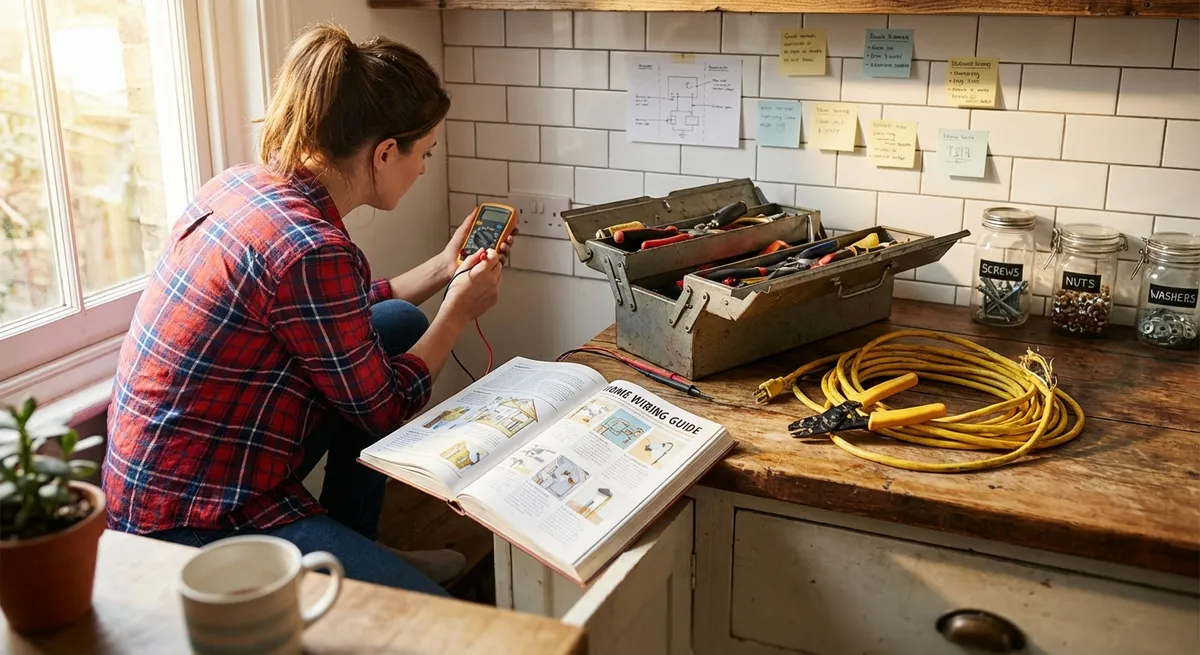
Minor problems around the house don’t always need a pro or a big budget—just a clear plan and a few basic tools. This guide walks you through five common issues people run into all the time, with step‑by‑step solutions you can handle yourself. No guesswork, no fluff—just practical, safe instructions you can put to work today.
1. Quiet a Squeaky Door Hinge
A squeaky hinge is annoying but usually simple to fix. You don’t need to replace the door—just treat the friction points correctly.
What you’ll need:
Penetrating oil (like WD‑40) or silicone lubricant, old rag or paper towel, small flathead screwdriver (optional).
Steps
Identify the noisy hinge
Open and close the door slowly to pinpoint which hinge is squeaking. Often it’s the top hinge, but check all of them.
Protect nearby surfaces
Place a rag or paper towel under the hinge to catch drips and protect the floor or trim.
Apply lubricant to the hinge pin area
Spray or drip a small amount of lubricant at the top of the hinge where the pin sits, and along the seam where the two hinge plates meet.
Work the door back and forth
Open and close the door 10–15 times to help the lubricant spread inside the hinge. Listen—if the squeak fades, you’re on the right track.
Wipe away excess
Use your rag to remove any drips, especially on painted surfaces or floors, to avoid slick spots or staining.
For stubborn squeaks: remove the hinge pin
If the noise persists, carefully use a small flathead screwdriver and a hammer to tap the hinge pin up and out (support the door if needed). Clean the pin with a rag, lightly coat it with lubricant, and slide it back in.
Recheck and repeat if needed
Open and close the door again. Add a bit more lubricant if there’s still noise, but avoid overdoing it—too much can attract dust.
2. Unclog a Slow Sink Drain (Without Harsh Chemicals)
A slow or partially clogged sink is usually caused by trapped hair, soap scum, or grease. You can often clear it yourself safely and cheaply.
What you’ll need:
Rubber gloves, bucket or bowl, old toothbrush or small brush, baking soda, white vinegar, kettle or pot for hot water, optional plastic drain snake.
Steps
Clear the area and protect your workspace
Remove items from under the sink and around the basin. Put on gloves and place a bucket under the P‑trap (the U‑shaped pipe).
Check and clean the stopper (bathroom sink)
If you have a pop‑up stopper, remove it: - Look under the sink for the horizontal rod connected to the drain. - Loosen the retaining nut, pull the rod out gently, and then lift out the stopper from the sink. - Clean off hair and sludge using an old toothbrush.
Use a plastic drain snake (if you have one)
Insert the snake into the drain, twist and pull it back out to grab hair clogs. Repeat until the snake comes back relatively clean.
Disassemble and clean the P‑trap (if still slow)
- Loosen the slip nuts on both ends of the P‑trap by hand (or with pliers if needed). - Remove the trap and dump the contents into your bucket. - Scrub the inside of the trap with a brush and rinse with hot water. - Reinstall the trap, making sure the washers are seated correctly before tightening the nuts snugly—not overly tight.
Use a baking soda and vinegar flush
- Pour about ½ cup of baking soda down the drain. - Follow with 1 cup of white vinegar. You’ll see fizzing—this helps break down residue. - Let it sit for 10–15 minutes.
Flush with hot water
Boil a kettle or pot of water and carefully pour it down the drain in two or three stages. This helps clear loosened debris and grease.
Test the drain
Run water for 1–2 minutes. If it drains smoothly without backing up, you’re done. If not, repeat the baking soda/vinegar once or consider using a plunger or calling a pro if the problem persists.
3. Stop a Running Toilet That Won’t Shut Off
A constantly running toilet wastes water and money, but the fix is usually inside the tank—not the pipes in the wall.
What you’ll need:
Adjustable wrench (maybe), scissors (if chain is too long), towel.
Steps
Remove the tank lid carefully
Place it on a towel or soft surface to avoid cracking. Look inside to understand the layout: fill valve (usually on the left), float, and flapper at the bottom.
Check the flapper seal
- Flush the toilet and watch: the flapper should lift, then drop back down to seal the opening. - If it doesn’t sit flat, is warped, or feels brittle, it likely needs replacing (flappers are inexpensive and standardized).
Inspect and adjust the chain
If the chain connecting the handle lever to the flapper is too tight, the flapper can’t seal; too loose, it may tangle. - Adjust the chain so there’s a slight slack—about ½ inch when the flapper is closed. - If it’s excessively long, trim the extra links and reconnect.
Adjust the water level
If water is constantly trickling into the overflow tube: - For a float cup: Pinch or release the metal spring clip on the float rod and slide the float up or down to set the water level about 1 inch below the top of the overflow tube. - For a float ball: Gently bend the float arm downward to lower the water level.
Clean around the flapper seat
Sediment or grime around the opening can prevent a tight seal. With the water off (turn the shutoff valve clockwise), flush to empty the tank and wipe the flapper seat area with a cloth.
Turn water back on and test
Turn the valve counterclockwise to restore flow. Let the tank fill, listen for running water, and watch for movement in the bowl. If it stops after filling and stays quiet, your fix worked.
Replace parts if needed
If the fill valve hisses constantly or the flapper is clearly damaged, pick up a universal fill valve kit or flapper from a hardware store and follow the included instructions—they’re designed for DIY replacement.
4. Reset a Tripped Breaker and Restore Power Safely
When part of your home suddenly loses power, it’s often a tripped circuit breaker. Resetting it is straightforward if you do it carefully and understand what likely caused the trip.
What you’ll need:
Flashlight (if it’s dark), basic awareness of what was running when it tripped.
Steps
Unplug or switch off devices in the dead area
Before heading to the breaker panel, unplug space heaters, hair dryers, or other high‑draw devices on the affected circuit. This prevents an immediate re‑trip.
Locate your breaker panel
Common locations: basement, garage, hallway, utility closet. Open the panel door and stand on a dry surface.
Identify the tripped breaker
Look for a breaker that’s neither fully in the ON nor fully in the OFF position—it may be slightly out of line or show an indicator. Many panels label circuits (e.g., “Kitchen outlets,” “Bedrooms”).
Fully switch the breaker to OFF
Push the suspect breaker firmly to the OFF position. Most breakers require this full reset motion before they can be turned back on.
Reset to ON
Push the breaker firmly back to the ON position. If it stays, you’ve restored power to that circuit.
Test outlets or lights
Go back to the affected area and turn on a light or plug in a low‑draw device (like a phone charger) to confirm the circuit is working.
Avoid overloading the circuit
Plug devices back in one at a time. If the breaker trips again when a specific appliance is used (e.g., space heater + microwave on the same circuit), you’re overloading that line. - Move high‑wattage devices to a different circuit if possible. - If a breaker trips immediately with almost nothing plugged in, stop and contact a licensed electrician—there may be a wiring or breaker fault.
Safety note
Never open the panel cover beyond the hinged door or touch bare wiring. If you see burnt marks, smell burning, or hear buzzing, call a professional immediately.
5. Fix a Wobbly Chair or Table
A wobbly piece of furniture is more than annoying—it can be unsafe. In most cases, tightening joints and adding simple support is enough to stabilize it.
What you’ll need:
Screwdriver set, Allen (hex) keys, wood glue (for wood joints), small clamps or heavy books, felt pads or shims.
Steps
Flip the furniture over safely
Place the chair or table upside down on a soft surface (carpet, blanket) to protect the finish. Make sure it’s stable before you start.
Identify the movement
Gently wiggle each leg and joint. Note which areas move the most—loose screws, bolts, or joints will usually be obvious.
Tighten all visible fasteners
- Use the correct screwdriver (Phillips, flathead) or Allen key to firmly tighten each screw and bolt. - Don’t overtighten to the point of stripping the screw head or crushing wood fibers—snug and secure is the goal.
Reinforce loose wood joints with glue
If you see a joint that has play but no metal fastener: - Carefully pull the joint slightly apart if possible. - Apply a small amount of wood glue inside the joint. - Press back together and wipe away squeeze‑out with a damp cloth. - Clamp the joint or place a heavy book to keep pressure on it while it dries (check the glue label for drying time—typically several hours).
Level uneven legs with pads or shims
If the furniture is tight but still wobbles on a flat floor, one leg is likely shorter. - Stick felt pads under the leg(s) as needed. - For a bigger difference, use a thin wooden or plastic shim, then trim it flush once you confirm the wobble is gone.
Inspect for damage beyond DIY repair
If the wood is badly cracked, a leg is split, or hardware is stripped and won’t hold, you may need replacement parts or professional repair. Don’t rely on furniture that still feels structurally weak.
Test on a hard, flat surface
Flip the furniture back upright and test by gently pressing on each side and corner. If it stands firm without rocking, your repair is successful.
Conclusion
Most everyday household problems don’t require specialized training—just a methodical approach and a willingness to follow clear steps. By tackling squeaky hinges, slow drains, running toilets, tripped breakers, and wobbly furniture yourself, you keep small issues from becoming expensive headaches. Start with simple, low‑risk fixes, work safely, and know when a problem is bigger than DIY. Over time, you’ll build skills, confidence, and a home that simply works better day to day.
Sources
- [U.S. Department of Energy – Home Drain Maintenance Tips](https://www.energy.gov/energysaver/bathrooms) - Covers practical guidance on bathroom fixtures, water use, and basic maintenance ideas.
- [The Family Handyman – How to Fix a Running Toilet](https://www.familyhandyman.com/project/how-to-fix-a-running-toilet) - Step‑by‑step visual guide to diagnosing and repairing common toilet tank issues.
- [Consumer Product Safety Commission – Electrical Safety in the Home](https://www.cpsc.gov/safety-education/safety-guides/home/electrical) - Explains safe practices around circuit breakers, outlets, and home wiring.
- [WD‑40 Company – Uses and Safety Information](https://wd40.com/uses-tips) - Official guidance on how and where to use penetrating lubricants like WD‑40.
- [This Old House – Fixing Wobbly Furniture](https://www.thisoldhouse.com/furniture/21015186/how-to-fix-a-wobbly-chair) - Demonstrates techniques for tightening and reinforcing loose furniture joints.
Key Takeaway
The most important thing to remember from this article is that this information can change how you think about DIY Solutions.