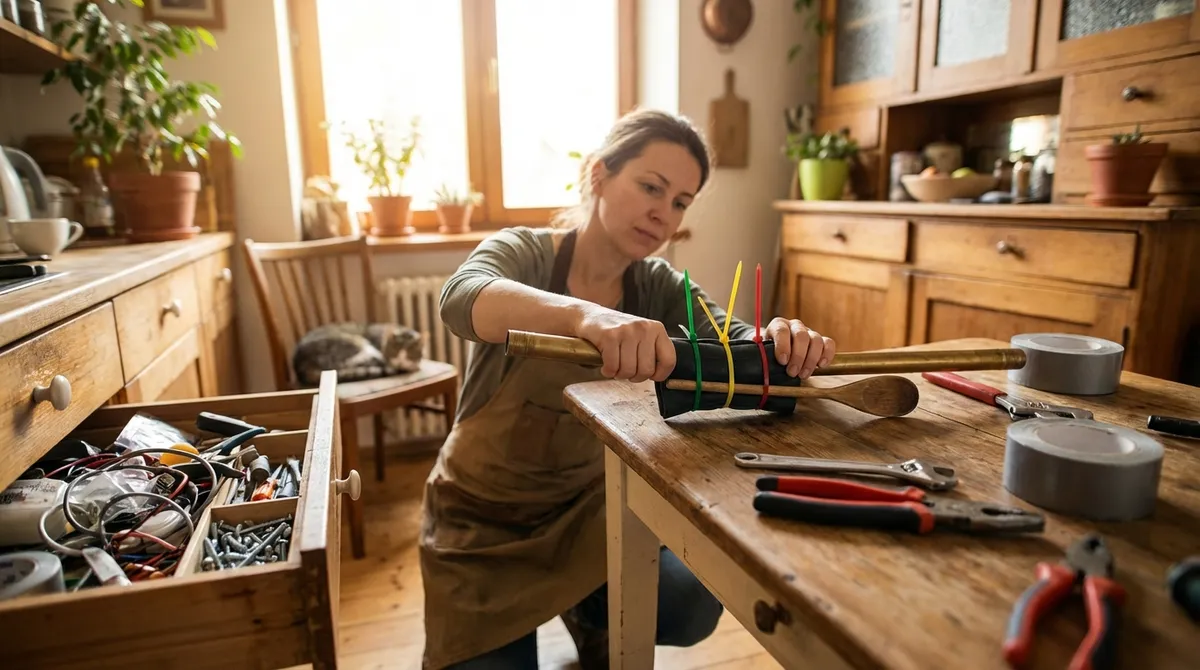
Small problems pile up fast—wobbly chairs, dripping faucets, stuck zippers, squeaky doors, or a phone that won’t charge right. You don’t always need a pro, a new gadget, or a big budget to handle them. With a few basic tools and a clear plan, you can solve a lot of these on your own and extend the life of what you already own.
This guide walks you through five practical, step‑by‑step DIY solutions that are simple, safe, and designed for real homes—not perfect workshops.
Stop a Wobbly Chair or Table From Rocking
A wobbly chair or table is usually caused by uneven legs, loose joints, or both. Instead of tossing it or living with the annoyance, you can tighten and level it using basic tools.
What you’ll need:
- Screwdriver (Phillips or flathead, depending on screws)
- Wood glue (for wooden furniture)
- Small wood shims or cardboard pieces
- Sandpaper (medium and fine grit)
- Damp cloth
- Optional: wood clamps or heavy books
Step-by-step:
Flip and test the frame
Turn the chair or table upside down on a flat, hard surface. Gently rock the legs with your hands to find which joints feel loose.
Tighten all visible screws and bolts
Use the screwdriver to tighten each screw or bolt that connects legs to the frame. Don’t overtighten—stop when they’re snug and firm.
Reinforce loose wooden joints with glue
If you see gaps where legs meet the seat or frame: - Gently pull the joint apart if you can (don’t force it). - Wipe out dust with a damp cloth and let it dry. - Apply wood glue to the joint, press it back together, and wipe off any squeeze-out. - Use clamps or stack heavy books to hold the joint in place while it dries (follow the glue’s curing time, usually 30 minutes to 24 hours).
Check for uneven legs
Set the furniture upright on a flat floor. If it still wobbles, identify which leg is short by sliding a folded piece of paper under each leg until the wobble stops.
Add a shim (removable fix)
Cut a small piece of cardboard or wood shim to match the gap under the short leg. Tape or glue it in place if you want a semi-permanent fix, or use stick‑on furniture pads for a cleaner look.
Trim and sand (permanent fix for wood)
If one leg is clearly longer: - Mark the excess length with a pencil. - Carefully sand down the long leg using medium‑grit sandpaper, checking frequently so you don’t remove too much. - Finish with fine‑grit sandpaper to smooth the surface.
Final stability check
Test the chair or table by applying pressure in different directions. If it feels solid and doesn’t rock, you’re done.
Quiet a Squeaky Door Without Replacing the Hinge
Squeaky hinges are usually caused by friction and a lack of lubrication. Fixing this is cheap, fast, and doesn’t require new hardware.
What you’ll need:
- Lubricant: silicone spray, lithium grease, or petroleum jelly
- Rag or paper towels
- Flathead screwdriver (optional)
- Small container (optional if removing hinge pin)
Step-by-step:
Identify the source of the squeak
Slowly open and close the door and listen. The sound almost always comes from one or more hinges.
Clean the hinge area
Use a dry cloth or paper towel to wipe dust and debris from the hinge. Dirt mixed with lubricant can create more wear over time, so start with a clean surface.
Apply lubricant without removing the hinge pin (easiest method)
- If using spray lubricant, insert the straw attachment. - Spray or apply a small amount directly where the hinge pin meets the hinge plates. - Open and close the door several times to work the lubricant in. - Wipe away any drips to avoid stains on walls or floors.
For stubborn squeaks: remove and lubricate the hinge pin
- Carefully tap the bottom of the hinge pin upward with a flathead screwdriver and your hand until you can pull it out. - Place the pin in a small container. - Wipe off dirt and old grease. - Coat the pin lightly with lubricant or petroleum jelly. - Reinsert the pin from the top and tap it gently until fully seated.
Check alignment if squeak persists
If the door rubs against the frame: - Tighten all hinge screws. - If a screw won’t tighten, insert a wooden toothpick coated with wood glue into the screw hole, break it flush, and reinsert the screw. This gives it new material to grip.
Final test
Open and close the door multiple times. You should hear little to no noise. Reapply a tiny amount of lubricant if needed, then wipe away excess.
Clear a Slow‑Draining Sink Without Harsh Chemicals
A sink that drains slowly is usually caused by clogs from hair, soap scum, or grease. You can often clear it without using strong chemical drain cleaners that can be hard on pipes and the environment.
What you’ll need:
- Rubber gloves
- Bucket or large bowl
- Old toothbrush or small cleaning brush
- Baking soda and white vinegar
- Hot (not boiling) water
- Plunger (cup-style) or plastic drain snake
Step-by-step:
Remove visible debris
Take out the sink stopper or strainer. Clean off any hair, soap scum, or gunk with the brush and rinse it thoroughly.
Try hot water first
Run hot tap water for 1–2 minutes. Sometimes that alone can soften and move minor buildup.
Use a plunger (for bathroom or kitchen sinks)
- Fill the sink with enough water to cover the plunger cup. - Place the plunger over the drain, creating a seal. - Push down and pull up firmly for about 20–30 seconds. - Lift the plunger and see if the water drains faster.
Use a plastic drain snake for hair clogs
- Insert the drain snake into the drain slowly, twisting gently. - Pull it out to remove hair and debris. - Repeat until it comes out relatively clean.
Baking soda and vinegar flush
- Pour about 1/2 cup of baking soda into the drain. - Follow with 1/2 cup of white vinegar. - Let it fizz for 10–15 minutes. - Flush with hot water for several minutes.
Clean the P‑trap (for persistent clogs)
- Place a bucket under the curved pipe (P‑trap) beneath the sink. - Unscrew the slip nuts holding the P‑trap in place (hand‑tighten or use pliers gently if needed). - Remove the trap and empty debris into the bucket. - Rinse the trap with warm water and reassemble carefully, ensuring the washers are seated properly.
Test the drain
Run water for a few minutes. If it drains quickly and consistently, you’ve solved the clog. If not, the blockage may be deeper in the plumbing and you may need a professional.
Get a Stuck Zipper Moving Again
A stuck zipper on a jacket, bag, or cushion can make an otherwise useful item feel ruined. In many cases, the issue is friction, misaligned teeth, or small fabric snags—all fixable at home.
What you’ll need:
- Mild soap and water
- Cotton swabs or soft cloth
- Lubricant: graphite pencil, bar soap, or lip balm
- Tweezers (for removing fabric or threads)
- Needle and thread (optional, for frayed fabric near zipper)
Step-by-step:
Stop forcing the zipper
Don’t pull hard on a stuck zipper—this can break the slider or teeth. Gently return it to the last point where it moved freely, if possible.
Inspect for fabric jams
Look closely around the slider (the part that moves). If fabric or threads are caught: - Gently pull the fabric away with your fingers. - Use tweezers to remove loose threads. - Try moving the zipper slowly back and forth in small motions.
Clean dirt and residue
- Mix a few drops of mild soap with water. - Dip a cotton swab or soft cloth in the solution, then clean along the teeth and slider. - Wipe dry with a clean cloth to prevent rust on metal zippers.
Apply a dry lubricant (graphite pencil)
- Rub the tip of a soft graphite pencil along both sides of the zipper teeth near the stuck area. - Move the slider gently up and down over the lubricated area. - Repeat until it starts moving more freely.
Alternative lubricants: soap or lip balm
If graphite isn’t enough: - Lightly rub a bar of soap or a small amount of lip balm along the zipper teeth. - Avoid getting it on nearby fabric if possible. - Work the zipper back and forth slowly until it slides smoothly.
Check the alignment of the teeth
- If teeth are bent or misaligned, gently straighten them with your fingers or small pliers. - If several teeth are missing or badly bent, the zipper may need full replacement.
Reinforce frayed fabric near the zipper
- If fabric near the base of the zipper is fraying and causing jams, stitch it down with needle and thread so it stays clear of the slider.
Prevent repeat problems
- Avoid yanking zippers; support the fabric with one hand while pulling with the other. - Keep zippers clean and dry, especially on outdoor gear.
Revive a Phone That Won’t Charge Reliably
If your phone only charges at certain angles or stops charging altogether, the charging port or cable is often the culprit. You can safely troubleshoot and fix basic issues at home.
Important: If your phone is swollen, very hot, or has visible damage, stop and seek professional repair. Battery issues can be hazardous.
What you’ll need:
- A known‑good charging cable and charger
- Toothpick or plastic dental pick
- Soft, dry brush (small paintbrush or clean, soft toothbrush)
- Compressed air (optional)
- Isopropyl alcohol (at least 70%) and cotton swab (optional for metal contacts—not for inside the port on most phones)
Step-by-step:
Rule out the cable and charger first
- Try a different cable and wall adapter that you know works with another device. - Plug into a different outlet or USB port. - If the phone charges normally with a different cable/charger, replace the faulty one.
Turn the phone off before cleaning
Power down your phone completely and unplug any cables before working on the charging port.
Inspect the charging port for debris
- Use a light to look inside the port. - Lint, dust, and pocket debris can build up and block the connector.
Gently remove lint and dust
- Use a wooden or plastic toothpick; avoid metal tools that can damage contacts. - Carefully scrape and lift out debris—don’t shove it deeper. - Use short, gentle motions and stop if you feel resistance. - Optionally, blow short bursts of compressed air at an angle (not directly straight in) to loosen debris.
Brush around the port opening
- Use a soft, dry brush to clean around the outer edges of the port. - Make sure the area is fully dry when you’re done.
Test charging again
- Power the phone back on. - Plug in the charger and gently wiggle the connector once. - If it now holds a solid connection and charges normally, you’ve solved the issue.
Check for loose or damaged ports
If the connector feels very loose or you only get power at a very specific angle: - The internal port may be damaged or desoldered from the board. - This usually requires professional repair; continued use can worsen the damage.
Protect the port going forward
- Avoid using the phone while it’s charging—this stresses the port. - Don’t yank the cable out; grasp the plug, not the cord. - Store your phone away from lint-heavy environments (e.g., loose in the bottom of pockets or bags).
Conclusion
Most everyday problems don’t need to become long‑term frustrations—or expensive replacements. With a few basic tools, common‑sense safety, and a methodical approach, you can:
- Stabilize shaky furniture
- Silence noisy doors
- Restore proper drainage
- Unstick stubborn zippers
- Get phones charging reliably again
The key is to slow down, diagnose the cause, and work step‑by‑step instead of guessing. Over time, these small DIY wins build your confidence and save money, while keeping more of your stuff in working order.
Sources
- [U.S. Consumer Product Safety Commission – Household Product Safety](https://www.cpsc.gov/Safety-Education/Safety-Guides/General-Home-Safety) - General guidance on staying safe when working on home projects and using tools
- [Family Handyman – How to Fix a Wobbly Chair](https://www.familyhandyman.com/project/how-to-fix-a-wobbly-chair/) - Detailed examples of reinforcing loose furniture joints and legs
- [U.S. Environmental Protection Agency – Safer Choice: Drain Maintenance](https://www.epa.gov/saferchoice/solutions-drain-maintenance) - Background on safer approaches to drain maintenance and chemical use
- [Mayo Clinic – Cell Phone Safety](https://www.mayoclinic.org/healthy-lifestyle/adult-health/in-depth/cell-phones/art-20047297) - General safety information relevant when handling and maintaining phones
- [REI Co-op – How to Fix a Stuck Zipper](https://www.rei.com/learn/expert-advice/how-to-fix-a-stuck-zipper.html) - Practical tips on freeing and maintaining zippers on clothing and gear
Key Takeaway
The most important thing to remember from this article is that this information can change how you think about DIY Solutions.