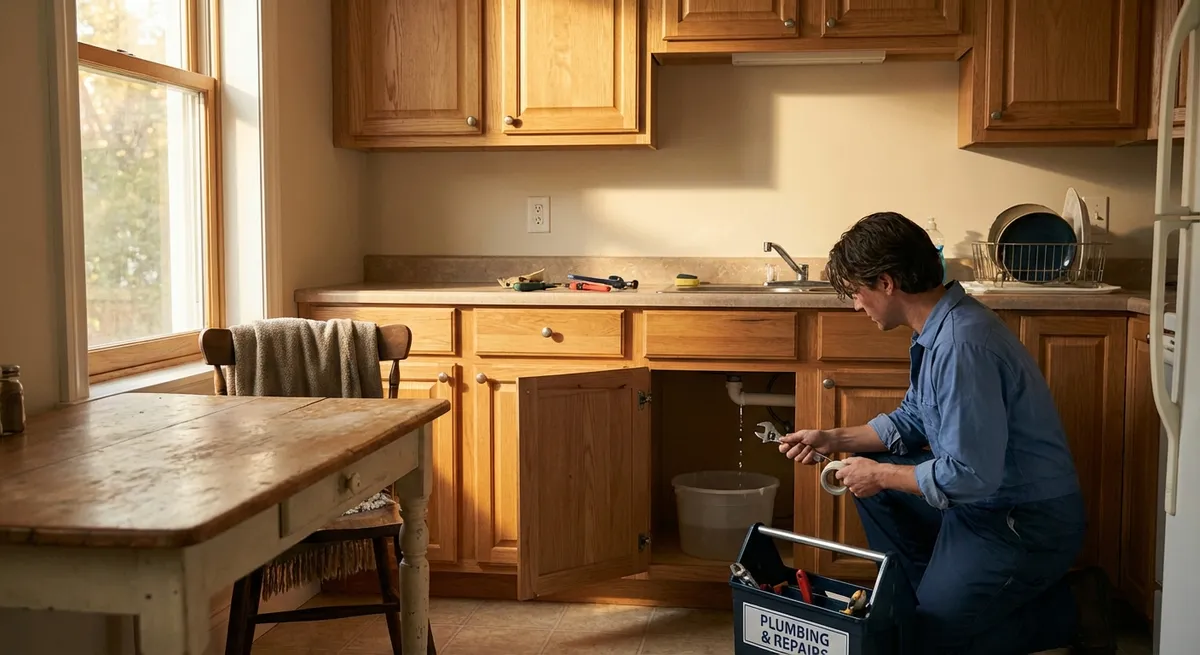
Small problems at home have a talent for showing up at the worst possible time—right before guests arrive, late at night, or five minutes before a video call. Instead of waiting days for help, there are several issues you can safely stabilize or fully fix yourself with basic tools and a calm, step‑by‑step approach.
This guide walks you through five practical DIY solutions you can do today, even if you’re not “handy.” The focus: clear steps, low-cost tools, and fixes you can repeat with confidence.
1. Quiet a Squeaky Door Without Special Tools
A squeaky door is annoying, but it’s also one of the easiest fixes in the house.
What you’ll need
- Old towel or rag
- Flathead screwdriver or butter knife
- Lubricant: cooking oil, petroleum jelly, or WD‑40 / silicone spray
Step-by-step
Protect the floor
Place a towel under the door hinges to catch any drips or dust.
Check the source of the squeak
Slowly open and close the door. - If the sound is clearly from the hinge area, you’re on the right track. - If it sounds like wood rubbing, the door may be misaligned (you may need to tighten hinge screws too).
Try the fast fix first
- Spray a tiny amount of lubricant directly onto the hinge pins (the middle part of the hinge). - If you don’t have spray, dab a bit of oil or petroleum jelly on a cotton swab and rub it onto the hinge. Open and close the door 10–15 times to work the lubricant in.
Deep clean if squeak persists
- Use a flathead screwdriver (or butter knife) under the hinge pin head and gently tap upward with your hand to loosen the pin. - Remove the pin, wipe it clean with a rag (it will likely be dirty or slightly rusty). - Apply a thin coat of lubricant along the pin, then slide it back in and tap gently to seat it.
Tighten loose screws
If the door still squeaks or sags: - Use a screwdriver to snug up any loose hinge screws. - If a screw just spins freely, remove it and insert a wooden toothpick or matchstick (no head) with a dab of wood glue, then reinsert the screw.
2. Stop a Running Toilet and Save Water
A constantly running toilet wastes water and money, but most issues come from inside the tank and are surprisingly simple to correct.
What you’ll need
- Old towel
- Rubber gloves (optional)
- Replacement flapper (if needed)
- Small adjustable wrench (maybe)
Step-by-step
Remove the tank lid and observe
Lift the lid carefully and set it on a towel. Flush once and watch what happens. You’re looking at three main parts: - Flapper: rubber piece covering the tank opening at the bottom - Chain: connects the flush handle to the flapper - Fill valve and float: controls how much water refills the tank
Check the flapper first (most common problem)
- If water trickles into the bowl after the tank refills, the flapper may not be sealing. - Gently press the flapper down with a stick or gloved finger. - If the sound of running water stops, you’ve found the problem.
Adjust the chain
- If the chain is too tight, the flapper can’t close fully. - Unhook the chain and reattach a link or two closer to the flapper so there’s a little slack (but not enough to tangle). Flush again and see if the problem is gone.
Replace a worn flapper (simple swap)
- Turn off the water valve behind or beside the toilet (turn clockwise). - Flush to empty most of the tank. Mop up remaining water with a towel if needed. - Unhook the old flapper from the overflow tube and chain. - Install the new flapper (match the style; universal models fit most toilets). - Reattach the chain with slight slack, turn the water back on, and test.
Adjust the water level
If water keeps flowing into the overflow tube, the water level is set too high. - Turn the adjustment screw on the fill valve or slide the float down its rod (depending on your toilet model). - Aim for the water line marked in the tank or about 1 inch below the top of the overflow tube.
3. Revive a Slow, “Dead” Power Outlet Safely
If an outlet stops working, it’s not always an emergency call situation. Sometimes it’s a tripped GFCI or breaker you can safely reset.
Important safety note
If you see scorch marks, smell burning, or the outlet feels hot, skip DIY and call a professional immediately.
What you’ll need
- Phone charger or small lamp to test power
- Access to your electrical panel
- Optional: non-contact voltage tester for extra safety
Step-by-step
Test the outlet with a known working device
Plug in a phone charger or lamp you know works. If no power, move to the next steps.
Check nearby GFCI outlets
Kitchens, bathrooms, garages, and basements often use GFCI outlets with “TEST” and “RESET” buttons. - Press the “RESET” button firmly. - Test your dead outlet again. Sometimes one GFCI controls multiple outlets.
Inspect your breaker panel
- Open your electrical panel and look for any breakers slightly off-center or not fully aligned. - A tripped breaker often sits between ON and OFF. - Push it fully to OFF, then firmly back to ON. Go back and test the outlet again.
Look for patterns
- If multiple outlets in the same area are dead, you may have a circuit issue beyond basic DIY. - If resetting the breaker fixes it but it trips again quickly, unplug everything on that circuit and try again. If it still trips, stop and call an electrician—there may be a deeper fault.
Upgrade your checklist going forward
Add “check GFCI and breakers” to your mental checklist anytime something electrical mysteriously stops working. It’s a fast, low-risk first step that often solves the issue without tools.
4. Clear a Slow Drain Without Harsh Chemicals
Slow sink or shower drains are usually caused by hair, soap scum, and other buildup. You can often clear them mechanically without pouring strong chemicals down the pipe.
What you’ll need
- Rubber gloves
- Old cup or small container
- Wire coat hanger or plastic drain snake
- Baking soda and white vinegar (optional)
- Kettle or pot for hot water
Step-by-step
Remove visible debris at the surface
- For bathroom sinks: unscrew or lift out the drain stopper if possible. - For showers/tubs: remove the drain cover (usually held by one or two screws). - Scoop out any visible hair and gunk with a gloved hand or small container.
Use a simple mechanical tool
- Straighten a wire coat hanger, leaving a small hook at the end, or use a cheap plastic drain snake. - Insert gently into the drain and twist, then pull back slowly. - Remove hair and buildup from the tool, then repeat several times.
Flush with hot water
- Carefully pour a kettle of hot (not boiling for plastic pipes) water down the drain to wash away loosened residue.
Optional: baking soda + vinegar method
- Pour about 1/2 cup baking soda into the drain. - Follow with 1/2 cup white vinegar. - Let it fizz for 15–20 minutes, then flush with more hot water. This helps with minor buildup and odor but won’t fix serious clogs.
Know when to stop
- If water is backing up completely and not draining at all, or if multiple drains are slow at once, you may have a deeper blockage in the main line. At that point, avoid repeated chemical treatments and contact a plumber to prevent pipe damage.
5. Seal a Drafty Window to Cut Energy Waste
Drafty windows make your home uncomfortable and increase heating or cooling costs. A temporary DIY seal can make a big difference with minimal tools.
What you’ll need
- Candle or tissue (to detect drafts)
- Painter’s tape or masking tape
- Weatherstripping foam tape or rope caulk
- Scissors or utility knife
- Optional: shrink-film window insulation kit + hair dryer
Step-by-step
Find the exact draft location
- On a windy day (or with a fan pointed at the window), slowly move a lit candle or a strip of tissue around the window frame. - Watch for movement in the flame or tissue—this marks air leaks along: - The sash (where window slides) - The perimeter of the frame - Cracks between trim and wall
Clean the surfaces
- Wipe down the areas where you’ll apply tape or weatherstripping. - Let everything dry completely to help adhesives stick.
Add temporary weatherstripping
- Use foam weatherstripping tape where the window closes against the frame. - Cut strips to length and press firmly along the surfaces that touch when closed. - For very small gaps, rope caulk can be pressed directly into the crack.
Seal gaps around the frame
- For a fast, reversible fix, apply painter’s tape along the seams where cold air is entering. - Press the tape firmly to create a continuous barrier. This is especially useful for renters who can’t caulk permanently.
Optional: install shrink-film insulation
- Apply double-sided tape around the window interior, as directed on the kit. - Attach the clear plastic film, starting at the top. - Use a hair dryer on low–medium heat to shrink the film until it’s tight and clear. This creates an insulating air pocket that reduces drafts dramatically.
Test and adjust
- Re-test with the candle or tissue. - If you still detect air flow, add tape or weatherstripping where needed until the movement stops.
Conclusion
Most everyday home problems don’t need to derail your day—or your budget. With a few basic tools and a methodical approach, you can quiet squeaky doors, stop running toilets, bring outlets back to life safely, clear slow drains, and seal drafty windows.
The key is to work step by step, respect safety limits (especially with electricity and plumbing), and recognize when the problem crosses from “DIY manageable” to “call a pro.” Over time, each small success builds your confidence—and turns your home into a place you maintain on your terms, not just react to when something goes wrong.
Sources
- U.S. Department of Energy – Air Sealing Your Home - Guidance on identifying and sealing air leaks, including around windows and doors
- EPA WaterSense – Fix a Leak Week - Explains how common household leaks (including toilets) waste water and how to spot them
- Consumer Product Safety Commission – GFCI Fact Sheet - Official overview of how ground-fault circuit interrupter outlets work and why they trip
- Mayo Clinic – Household Chemical Safety - Safety considerations for using and storing household chemicals, relevant to drain cleaners and lubricants
- Energy Star – Window Insulation and Efficiency - Information on how windows impact home comfort and energy use
Key Takeaway
The most important thing to remember from this article is that this information can change how you think about DIY Solutions.