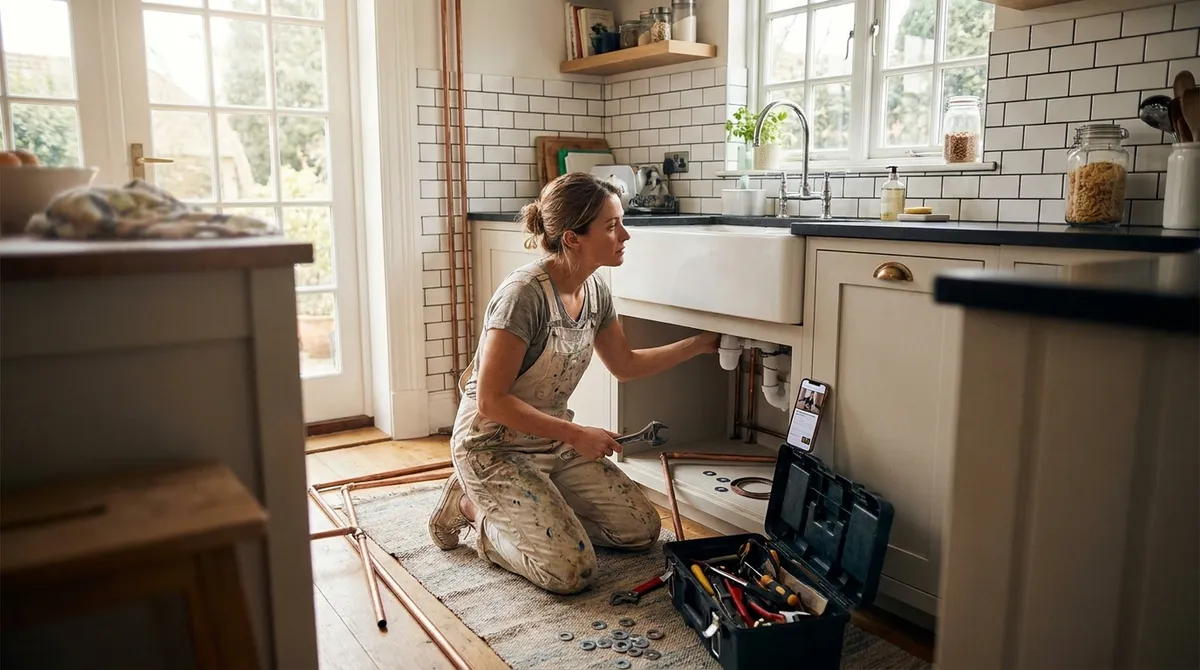
Small problems at home can turn into expensive calls if you don’t know what to do in the first 10 minutes. This guide walks you through five practical, step-by-step DIY solutions you can handle with basic tools and a calm approach. No fluff—just clear actions you can take today to keep your home working and your repair bills down.
1. Quiet a Running Toilet That Won’t Stop Refilling
A constantly running toilet wastes water and money, but it’s usually the easiest “plumbing” fix you’ll do.
Step-by-step:
Remove the tank lid and observe
Gently lift the lid and set it on a towel. Flush once and watch what happens inside. You’re looking at three main parts: the fill valve, the float, and the flapper.
Check the flapper seal
If water is trickling into the bowl after the tank is full, press down gently on the rubber flapper at the bottom. - If the sound stops, the flapper is likely worn, warped, or dirty. - Wipe the flapper and the seat with a rag. If it’s cracked or stiff, it needs replacement.
Adjust or replace the flapper
Turn off the water at the shutoff valve near the floor. Flush to empty most of the tank. - Unhook the chain from the handle lever and detach the flapper from the overflow tube. - Take the old flapper to a hardware store to match the size. - Install the new one, reconnect the chain (leave a slight slack so it closes fully), turn the water back on, and test.
Adjust the water level
Water should stop about 1 inch below the top of the overflow tube. - For float-cup valves: turn the small screw or slide the clip on the rod to raise or lower the float. - For float-ball valves: gently bend the metal rod downward to lower the water level or upward to raise it.
Check the fill tube
A small flexible tube should direct water into the overflow tube. - Make sure it’s clipped above (not shoved deep inside) the overflow tube. - If it’s dislodged, reattach the clip.
Final test
Flush a few times. If the sound stops once the tank refills and stays quiet, you’ve fixed it.
2. Restore a Slow or Clogged Bathroom Sink Drain
Bathroom sinks collect hair, soap scum, and toothpaste—perfect for a slow drain. Skip harsh chemicals; mechanical cleaning is safer and more effective.
Step-by-step:
Clear surface blockage
Remove the drain stopper. - For lift-and-turn stoppers: unscrew the top (if possible) or turn counterclockwise to remove. - For pop-up stoppers: look under the sink, loosen the nut on the pivot rod, and slide the rod out to free the stopper.
Remove hair and debris
Use a plastic drain cleaning strip or an old zip tie with notches cut into it. - Push it down the drain, wiggle, and pull up any gunk. - Repeat until you’re pulling up very little debris.
Clean the stopper thoroughly
Scrub the stopper with an old toothbrush and dish soap. Hair wraps around the bottom and sides—remove all of it.
Flush with hot water and baking soda/vinegar (optional but useful)
- Pour a kettle of hot (not boiling for porcelain) water down the drain. - Add 1/2 cup baking soda, then 1/2–1 cup white vinegar. - Let it fizz for 10–15 minutes, then flush again with hot water.
Reassemble the stopper mechanism
- Reinsert the stopper into the drain. - Under the sink, slide the pivot rod back into the hole at the bottom of the stopper and tighten the nut hand-tight, then snug with pliers. - Test the up/down action and adjust if needed.
Check for leaks
Run water for 1–2 minutes while feeling around the trap and connections. Tighten slip nuts gently if you feel any dampness.
3. Fix a Door That Won’t Latch or Keeps Swinging Open
A door that won’t stay closed or rubs against the frame is usually a hinge alignment issue, not a complex carpentry problem.
Step-by-step:
Identify the symptom
- Door doesn’t latch unless you lift/push it. - Door rubs at the top or side. - Door swings open or closed by itself.
Tighten hinge screws first
With the door open, use a screwdriver to tighten all hinge screws on the door and frame. - Replace any stripped screws with longer ones (2–3 inches) to bite into the framing behind the jamb.
Shim or adjust the hinges (for rubbing or misalignment)
- If the door rubs at the top latch side, the top hinge on the frame might be loose or pulled out. - Remove one screw at a time from the top hinge, insert a toothpick or wood match with wood glue into the hole, then reinstall a longer screw.
Use hinge shims for fine alignment
- For a door rubbing at the latch side: slightly shim the hinge on the latch side (usually the bottom hinge). - For a door rubbing on the hinge side: slightly shim the opposite side hinge. You can use thin cardboard or purpose-made plastic shims behind the hinge leaf, then retighten.
Adjust the strike plate (if latch misses the hole)
- Close the door slowly to see if the latch hits high or low. - If it’s a small misalignment: loosen the strike plate screws and shift the plate slightly up/down, then retighten. - For slightly larger adjustments, file the opening of the strike plate in the needed direction.
Balance a door that swings open or closed by itself
- Carefully remove the hinge pin from the top hinge. - Place the pin on a hard surface and tap it gently in the middle with a hammer to create a very slight bend. - Reinsert the pin—the friction helps the door stay where you leave it.
4. Stop a Wobbly Chair or Table Without Rebuilding It
Loose joints and uneven legs turn furniture into a safety hazard. You don’t need a workshop—just patience and basic supplies.
Step-by-step:
Find the actual problem
Place the chair or table on a truly flat surface (like tile). - Press on each corner or leg to see which one lifts or feels loose. - Note the specific joints that move or creak.
Tighten existing hardware
- Use the appropriate screwdriver or hex key to snug all visible screws and bolts. - If a screw spins freely, the hole is likely stripped and needs reinforcement.
Reinforce loose wooden joints
For wood joints without metal fasteners (like chair legs in the seat): - Gently work the joint apart if possible. - Apply wood glue into the joint (use a small brush or toothpick to work it in). - Reassemble and clamp tightly with a bar clamp or belts/straps if you don’t have clamps. Wipe away excess glue. - Let it cure per the glue instructions (usually 24 hours) before using.
Fix stripped screw holes
- Remove the screw. - Fill the hole with wood glue and insert wooden toothpicks or small wood shims until tight. Break off flush with the surface. - Let it dry, then reinstall the screw. It will now bite into solid material.
Level uneven legs
- Use a folded piece of paper under the short leg to find the exact thickness needed. - Once you know the difference, you can: - Add self-adhesive furniture pads of the right thickness, or - Carefully sand the longer legs down a little at a time, checking frequently.
Final stability check
Sit, lean, and gently rock the furniture in all directions. If nothing moves, creaks, or wobbles, you’re done.
5. Revive a Wall Outlet That Keeps Letting Plugs Slip Out
If plugs fall out of a wall outlet with a slight tug, the internal contacts are worn. That’s both annoying and unsafe—but replacing an outlet is a doable DIY if you follow basic electrical safety.
Safety note:
If you’re not comfortable working with electricity, stop here and call a licensed electrician. Never work on live circuits.
Step-by-step:
Turn off power at the breaker
- Find your electrical panel and switch off the breaker labeled for that room. - If it’s not labeled, turn off the most likely breaker and confirm power is off at the outlet.
Verify the power is off
- Plug in a lamp or use a non-contact voltage tester at the outlet. - No light, no beep = safe to proceed. If you still have power, find the correct breaker before continuing.
Remove the outlet cover and outlet
- Unscrew the faceplate and set it aside. - Remove the two mounting screws holding the outlet to the box. - Gently pull the outlet out while keeping wires intact and visible.
Take a photo for reference
Before disconnecting anything, take a clear photo of how the wires are attached. This is your reassembly guide.
Disconnect wires from the old outlet
- Loosen the side terminal screws and remove the wires (or release push-in connections if present). - Straighten wire ends with pliers if they’re bent or damaged.
Prepare and connect the new outlet
- Match the new outlet type and amperage (usually 15A for standard circuits). - Black (hot) wire goes to the brass-colored screw, white (neutral) to the silver-colored screw, and green or bare (ground) to the green screw. - Loop wires clockwise around the screws so tightening pulls them in.
Reinstall the outlet and cover
- Carefully fold wires back into the box and secure the outlet with its mounting screws. - Reattach the faceplate.
Restore power and test
- Turn the breaker back on. - Plug in a lamp or device and gently tug the cord—if it stays firm and works normally, the repair is successful.
Conclusion
Most everyday home annoyances have simple mechanical causes: loose screws, worn seals, misaligned parts, or basic buildup. When you know what to look for and follow a clear sequence—observe, diagnose, adjust, test—you can solve a surprising number of problems without waiting for a pro. Start with one issue, use the steps above, and build your confidence repair by repair. Your home will work better, and you’ll save real money every time you choose a smart DIY fix over a service call.
Sources
- U.S. Environmental Protection Agency – Fix a Leak - Guidance on common household leaks, including toilets, and their impact on water use
- Energy.gov – Electricity Safety - Official safety tips for working around electrical systems in the home
- Family Handyman – How to Fix a Running Toilet - Practical walkthrough with photos for diagnosing and repairing toilet tank components
- This Old House – How to Replace an Electrical Outlet - Step-by-step instructions and safety notes for DIY outlet replacement
- Home Depot – How to Repair a Bathroom Sink Drain - Visual guide for clearing and reassembling sink drain components
Key Takeaway
The most important thing to remember from this article is that this information can change how you think about DIY Solutions.