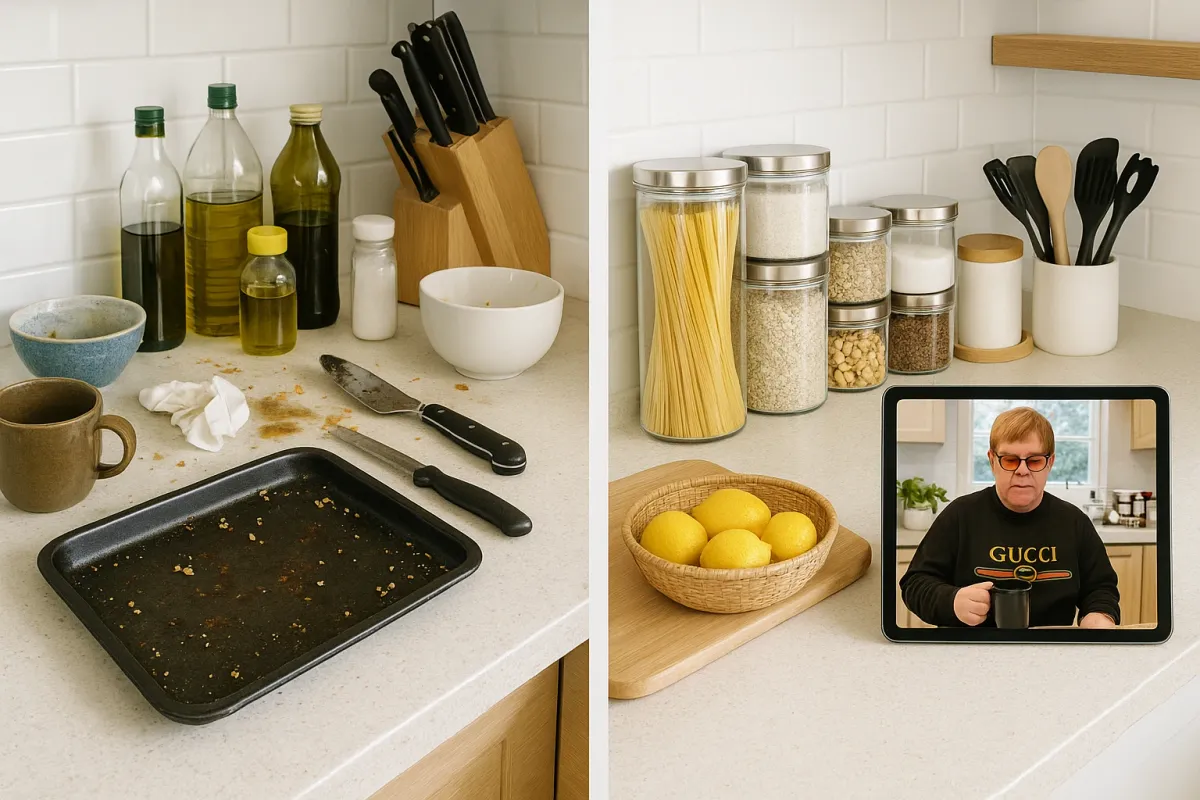
When Elton John clapped back at trolls mocking a “filthy” item in his kitchen, it hit a nerve online: everyone has that one corner, appliance, or tool that looks worse than it works—and sometimes, it actually stops working because we don’t maintain it. The internet may obsess over celebrity kitchens, but the smarter move is using that moment as a reminder to fix our own.
If you’d rather upgrade your space than argue in the comments, this guide is for you. Here are practical, step‑by‑step DIY solutions to rescue the most‑judged spots in your kitchen—before they become the star of someone’s viral rant.
---
1. Rescue “Gross” Countertops With A Deep-Clean & Quick Reseal
Counters are the first thing people judge in photos and in real life. Stains, dull patches, and mystery stickiness scream “filthy,” even if you wipe daily. Here’s how to reset them at home.
What you’ll need
- Mild dish soap
- Warm water
- Microfiber cloths or soft sponge
- Baking soda
- Hydrogen peroxide (for light stone or laminate, spot‑test first)
- Stone sealer (for granite/marble) or food‑safe oil (for butcher block)
Steps
- **Clear everything off.** Take appliances, spice racks, and decor off the surface so you can see all stains and damage.
- **Do a soap-and-water reset.** Mix a few drops of dish soap in warm water. Wipe the entire surface with a damp cloth, then dry with a clean towel. This removes grease so you can tell what’s actually stained vs. just dirty.
- **Lift tough stains with baking soda.**
- For stone/laminate: Sprinkle baking soda on stains, spritz lightly with water or hydrogen peroxide, let sit 5–10 minutes.
- Gently rub with a soft cloth, then wipe clean. Avoid scrubbing pads that can scratch.
- **Check your seams and edges.** Look for crumbling caulk or black spots where the counter meets the wall or sink. If you see moldy or cracked caulk, scrape it out, wipe with a mild bleach solution, let dry, and re‑caulk with kitchen/bath silicone.
- **Reseal stone (if needed).** If water soaks in instead of beading up, it’s time to seal.
- Clean and dry thoroughly.
- Apply stone sealer according to the bottle (usually wipe on, wait, then buff off).
- **Refresh butcher block.**
- Sand lightly with a fine‑grit sanding block in the direction of the grain.
- Wipe dust away and apply food‑safe mineral oil or butcher‑block conditioner. Let it soak in, then wipe off excess.
A 30–60 minute deep reset can make a “filthy” counter look intentionally lived‑in instead of neglected—and it’s way cheaper than replacing it.
---
2. Make Stainless Steel Actually Look Stainless Again
Celebrity kitchen photos often get shredded over one thing: streaky, spotted stainless steel. The good news: you can fix this in under an hour with items you probably own.
What you’ll need
- Dish soap
- Warm water
- Microfiber cloths
- White vinegar (in a spray bottle)
- Olive oil, baby oil, or dedicated stainless steel polish
Steps
- **Degrease first.** Mix a few drops of dish soap with warm water. Wipe your fridge, oven, or dishwasher with a damp microfiber cloth to remove fingerprints and grease. Rinse and wring the cloth often.
- **Follow the grain.** Look closely at your stainless—there’s a “grain” direction, like wood. Always wipe and polish in that direction to avoid streaks.
- **Vinegar spray for shine.** Lightly mist the surface with white vinegar, then wipe dry with a clean microfiber cloth. This clears soap residue and water spots.
- **Polish with a drop of oil.** Put a *tiny* amount of olive or baby oil on a dry microfiber cloth.
- Buff in the direction of the grain.
- Keep moving to a clean part of the cloth so you don’t smear oil around.
- **Spot-fix rust specks.** For small orange specks (often from other metals touching the surface):
- Dip a cotton swab in a paste of baking soda + water.
- Gently rub the spot, then wipe clean and dry.
Do this once, then a quick monthly wipe‑and‑polish keeps your appliances looking “photo ready,” no clapbacks required.
---
3. Fix A Nasty Kitchen Sink: From Slow Drain To Sparkling Basin
A grimy sink is the fastest way to make a kitchen look unsanitary, no matter how expensive the decor. If internet trolls would drag your sink, here’s how to bring it back.
What you’ll need
- Baking soda
- White vinegar
- Boiling water
- Old toothbrush
- Dish soap
- Sponge or non‑scratch scrub pad
- Optional: plumber’s snake or drain cleaning brush
Steps
- **Start with the drain.**
- Pour a kettle of boiling water down the drain to melt grease.
- Add ½ cup baking soda, then 1 cup vinegar. Let foam for 10–15 minutes.
- Flush with another kettle of boiling water.
- If it’s still slow, run a snake or drain brush down the pipe to pull out gunk.
- **Attack the rim and drain flange.**
- Dip an old toothbrush in dish‑soapy water.
- Scrub the metal ring, rubber gasket, and any seams where grime collects.
**Clean the basin by material:**
- **Stainless steel:** Sprinkle baking soda, scrub with a damp sponge in circles, then rinse. Wipe dry to avoid water spots. - **Porcelain:** Use a paste of baking soda + a little water. For stubborn stains, let it sit 10–15 minutes before scrubbing. Avoid harsh abrasives. 4. **Scrub the faucet and handles.** - Wrap a vinegar‑soaked paper towel around mineral‑crusted areas, leave 10 minutes, then scrub with a toothbrush. 5. **De-gunk the aerator.** - Unscrew the faucet tip (aerator) by hand or with pliers wrapped in a cloth. - Soak it in vinegar for 20–30 minutes, rinse, and screw back on.
After this, your sink will look (and drain) like it belongs in a chef’s kitchen, not a complaint thread.
---
4. Refresh “Disgusting” Cutting Boards Instead Of Hiding Them
In every kitchen photo, people scan for dirty or warped cutting boards. If yours are stained or smell weird, you don’t need new ones—you need a reset.
What you’ll need
- Kosher or coarse salt
- Lemon (cut in half)
- Baking soda
- White vinegar
- Food‑safe mineral oil (for wood)
Steps
For wood or bamboo boards:
- **Surface clean first.** Wash with hot, soapy water, rinse, and dry thoroughly.
- **Deodorize and scrub.**
- Sprinkle coarse salt over the board.
- Use the cut side of a lemon as a scrub brush, squeezing as you go.
- Let sit 5 minutes, then scrape off the slurry and wipe clean.
- **Lift deep stains.** For dark spots or onion/garlic smell, sprinkle baking soda, spray lightly with vinegar, let foam, then scrub and rinse.
- **Dry completely.** Stand the board upright so all sides can air‑dry. Never store wood boards flat when wet.
- **Re‑oil to prevent future stains.**
- Apply food‑safe mineral oil in a thin layer with a clean cloth.
- Let it soak for at least 30 minutes, wipe off excess, then dry overnight.
For plastic boards:
- **Soak to sanitize.** Mix 1 tablespoon of bleach in 1 gallon of water. Soak the board 2–5 minutes, then rinse very well.
- **Remove stains.** Make a paste of baking soda + water, spread on stains, let sit 10–15 minutes, then scrub and rinse.
- **Retire when deeply cut.** If grooves are so deep they can’t be cleaned properly, it’s time to recycle or repurpose (e.g., as a plant tray) and buy a new one.
A properly cleaned and conditioned board not only looks better but also lasts longer and stays safer.
---
5. Tame The “Messy Corner” Behind Small Appliances
Elton John’s viral kitchen moment proved one thing: people zoom in on the weirdest background details—like cluttered or dusty appliance zones. That area behind your toaster, coffee maker, or mixer? It’s probably worse than you think.
What you’ll need
- Extension cord with surge protection (if needed)
- Cable clips or Velcro cable ties
- Microfiber cloths
- All‑purpose cleaner
- Small bin or tray
Steps
- **Unplug and clear the zone.** Safety first: unplug appliances and move them off the counter.
- **Vacuum or wipe crumbs and dust.** Use a handheld vacuum or damp cloth behind and under where the appliances normally sit. Crumbs attract pests and can be a fire risk around toasters.
- **Clean appliance bases and cords.**
- Wipe cords and the underside of appliances with a damp, soapy cloth.
- Dry completely before plugging anything back in.
- **Simplify the power situation.**
- If you’re using multiple cheap extension cords or overloaded strips, swap for a quality surge‑protected power strip rated for kitchen use.
- Only plug in what you actually use regularly. Store rarely used gadgets in a cabinet.
- **Manage the cable chaos.**
- Coil excess cord and secure with Velcro ties or clip it to the back of the appliance.
- Use adhesive cable clips along the backsplash to keep cords from dangling.
- **Create a “small appliance lane.”**
- Place a narrow tray or bin under a coffee station or toaster area. This catches crumbs and drips and makes cleanup as simple as lifting the tray to wipe.
Now, even if someone zooms in on the background of your kitchen photo, they’ll see a clean, intentional setup—not a clutter bomb.
---
Conclusion
Online, people obsess over tiny “filthy” details in celebrity kitchens, like Elton John’s now‑famous countertop moment. Offline, those same details—stained counters, dull stainless steel, grimy sinks, tired cutting boards, cable chaos—are exactly what make our own spaces feel frustrating.
You don’t need a remodel or a designer. With a few basic supplies and an hour or two, you can reset the spots people (and cameras) notice most. Pick one zone from this list, fix it today, and your kitchen will feel less like a potential comment section target—and more like a space that actually works for you.
Key Takeaway
The most important thing to remember from this article is that this information can change how you think about DIY Solutions.