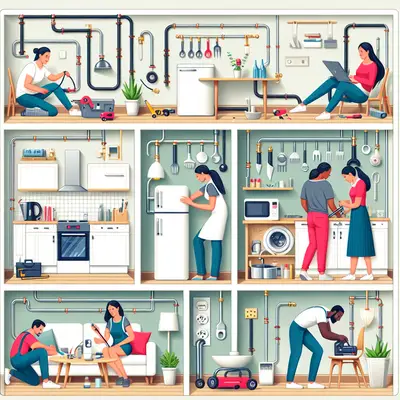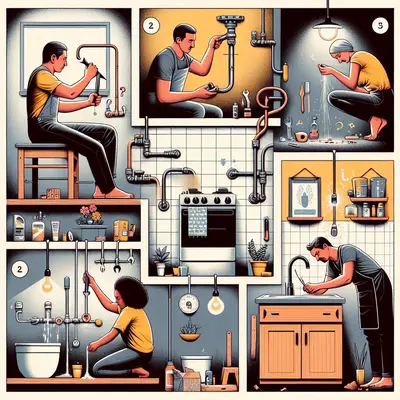
If you’ve ever stared at a leaking faucet or a flickering light and thought, “I can’t afford to deal with this right now,” you’re not alone. A viral Reddit thread recently went mainstream after people shared the everyday things they once thought were “luxuries” because they grew up poor—everything from fresh towels to a working dishwasher. That conversation hit a nerve because, in 2025, the cost-of-living squeeze means even basic home maintenance can feel out of reach.
But here’s the part you won’t see in most headlines: a lot of “expensive” home problems are fixable with a few basic tools, a bit of time, and a clear set of steps. Waiting until something fails completely is what becomes truly expensive. Inspired by that ongoing discussion about what counts as a “luxury,” this guide focuses on turning reliable, safe, working home systems into something you can maintain yourself—without a big budget.
Below are five common “I’ll fix it when I’m richer” problems you can actually tackle today.
---
1. That Constantly Running Toilet That’s Quietly Raising Your Water Bill
A toilet that runs for minutes after every flush—or randomly kicks on in the middle of the night—is wasting water and money. Many people live with it for months because calling a plumber feels like a luxury. In reality, the usual culprit is a worn flapper or a misadjusted fill valve inside the tank—parts that typically cost under $20.
- Turn off the water supply valve behind or beside the toilet (turn clockwise).
- Remove the tank lid and flush once to see how everything moves.
- Check the rubber flapper at the bottom of the tank. If it’s warped, slimy, cracked, or doesn’t sit flat, it’s likely the problem.
- Disconnect the flapper chain from the flush handle arm and unhook the flapper from the overflow tube. Take it with you to the hardware store to match the size.
- Install the new flapper: hook it to the overflow tube, attach the chain, and ensure there’s a little slack when the flapper is seated (not tight, not dangling).
- If water keeps rising too high, adjust the fill valve: most have a screw or a clip to move the float down so the water line stops about 1 inch below the top of the overflow tube.
- Turn the water back on slowly and test. The toilet should fill, stop, and stay quiet.
This single fix can stop what feels like a “small annoyance” from becoming a significant monthly water cost—exactly the kind of hidden expense that makes basic comfort feel like a luxury.
---
2. Peeling, Moldy Bathroom Caulk That Makes Your Home Feel “Run Down”
Scrolling through social media, it’s easy to feel like a spotless, mold-free bathroom is some kind of upper-middle-class fantasy. But that moldy, peeling line where your tub meets the wall is one of the easiest things to fix yourself—and it has an outsized impact on how “livable” your place feels.
- Use a razor scraper or caulk removal tool to carefully cut and peel away all the old caulk around the tub, shower, or sink. Take your time; the cleaner the removal, the better the new seal.
- Wipe the area with a bathroom cleaner, then scrub any remaining mildew with a mix of 1 part bleach to 3 parts water (or a bathroom mildew remover). Rinse and dry thoroughly.
- Let everything dry for several hours or overnight. Trapped moisture is what causes mold to come back.
- Buy a tube of 100% silicone or “kitchen & bath” caulk labeled mold- or mildew-resistant, in white or clear.
- Cut the caulk tube tip at a 45° angle and load it into a caulk gun. Start with a small opening so you can control the bead.
- Run a steady, continuous bead of caulk along the joint. Don’t worry if it’s not perfect; you’ll smooth it.
- Dip your finger in a bit of soapy water and gently smooth the bead, pressing it into the gap and removing excess.
- Let the caulk cure as directed on the tube (usually 24 hours) before getting the area wet.
For under $15 and a couple of hours of work, you’ve just done the kind of refresh many people assume requires a contractor.
---
3. Drafty Windows And Doors That Make Heating And Cooling Feel Like A Luxury
That viral conversation about “luxury” often mentioned homes that felt warm in winter and cool in summer. If your place never does—no matter how high you crank the thermostat—drafts are probably a big reason. Sealing them is a straightforward repair that can drop your energy use and make your home actually comfortable.
- On a windy day or with fans running, hold a lit incense stick or a thin piece of toilet paper near window and door edges. If the smoke or paper moves, you’ve found a draft.
- For windows with gaps between the frame and wall, use painter’s caulk or acrylic latex caulk to seal the stationary edges (not the moving sashes). Smooth with a damp cloth.
- For movable window sashes that rattle or leak, apply self-adhesive foam weatherstripping along the parts that meet when closed. Don’t block the locking mechanism.
- For doors, install adhesive foam weatherstripping along the sides and top of the frame, where you see light or feel air. Close the door to ensure it still latches easily.
- At the bottom of doors, add a door sweep or draft stopper. Screw-on sweeps are more durable than fabric ones and still inexpensive.
- Recheck drafts with the incense or paper test. Adjust as needed so windows and doors close snugly but not so tight they’re hard to operate.
This is one of the highest “return on effort” repairs you can do, especially if high utility bills have made comfort feel like an unattainable upgrade.
---
4. Flickering Or Dead Light Fixtures That Make You Avoid Certain Rooms
In that viral Reddit thread, several people mentioned growing up in homes where burned-out bulbs just stayed dead because no one had the money—or tools—to deal with them. Today, with LED bulbs and safer fixtures, you can usually fix most “dead” or flickering lights yourself safely, as long as you take it step by step.
- First, turn off the light switch. Then, for any work beyond simply changing a bulb, shut off the breaker to that circuit at your electrical panel.
- Try the simplest fix: replace the bulb with a known-good one. Make sure it’s the correct base type and wattage (or LED equivalent) for the fixture.
- If a bulb burns out quickly or flickers, gently bend the small metal tab at the bottom of the socket up slightly (with power off). Over time it can flatten and lose contact.
- Check for loose wire nuts or connections in accessible fixtures (like ceiling lights you can reach after removing a cover). Tug wires gently; they should be snug under the wire nuts.
- For plug-in lamps that flicker, inspect the cord. If it’s cracked, frayed, or warm to the touch, replace the lamp or have the cord professionally replaced—do not tape over damaged cords.
- If a breaker trips repeatedly when using a certain light, stop and call a licensed electrician. That’s a sign of a bigger issue, not a DIY fix.
Safe lighting isn’t a luxury; it’s a basic. Once you understand the simple checks you can do yourself, you’re less likely to live with dim, half-working rooms for months.
---
5. Loose Cabinet Doors And Handles That Make Your Kitchen Feel “Temporary”
The Reddit thread about “luxuries” featured a lot of people saying a stable, functional kitchen felt like a dream when they were younger. Wobbly cabinet doors, crooked handles, and drawers that barely open all send the message that your space is falling apart—even when most of it is just loose hardware.
- Open each cabinet door and look closely at the hinge screws on both the door and the cabinet frame. Using a manual screwdriver (not a drill), gently tighten each screw until snug.
- If a screw just spins and doesn’t tighten, the hole is stripped. Remove the screw, insert a toothpick or two dipped in wood glue into the hole, snap them off flush, let dry, then reinsert the screw.
- For doors that sag or don’t line up, adjust the hinges. Most modern “Euro” hinges have small adjustment screws that move the door up/down, left/right, and in/out. Turn a quarter-turn at a time and test.
- Tighten all handle and knob screws from inside the door or drawer. If they keep loosening, add a tiny drop of clear nail polish or thread-locking compound to the threads before tightening.
- For drawers that stick, remove them and vacuum debris from the slides. Wipe slides with a dry cloth and add a small amount of dry lubricant (like silicone spray on a cloth or a bar of dry soap rubbed along wood runners).
- Check that nothing inside is blocking doors or drawers from closing fully—overloaded shelves and bent items can push everything out of alignment.
These are quiet, low-cost fixes that dramatically change how finished and stable your kitchen feels—no remodel required.
---
Conclusion
The viral discussion about “luxury” versus “normal” living wasn’t just about money; it was about control. A home where faucets work, toilets don’t run all night, windows don’t leak heat, lights turn on reliably, and cabinets stay put can seem like something only people with bigger budgets get to enjoy.
But many of those upgrades aren’t about income—they’re about information. With a small set of tools and clear, realistic steps, you can turn “someday when I have money” repairs into “I did that this weekend.” Pick one issue from this list that’s been bothering you the most, block out an hour, and fix it. The goal isn’t a magazine-perfect home; it’s a place that works for you, right now.
Key Takeaway
The most important thing to remember from this article is that this information can change how you think about Household Repairs.