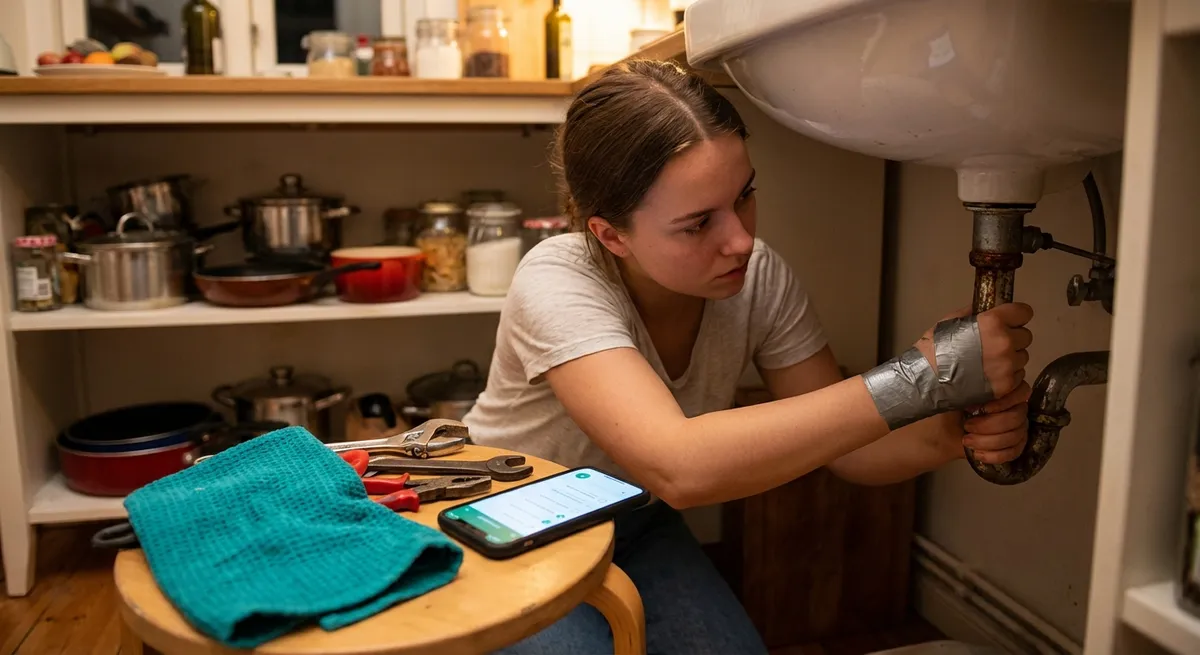
When something breaks or stops working, most people jump straight to “replace it” or “call someone.” In reality, a lot of daily problems have fast, practical fixes you can handle yourself with basic tools and a calm approach. This guide walks you step-by-step through five common issues—from a dead phone that “won’t charge” to a garbage disposal that suddenly goes silent—so you can get things working again without wasting time or money.
---
1. Phone Not Charging: Simple Checks Before You Panic
When your phone refuses to charge, it’s usually a minor issue, not a dead device.
Step-by-step fix
**Check the outlet first**
- Plug in a lamp or another device to confirm the outlet works. - If you’re using a power strip, try the charger directly in the wall.
**Inspect and test the charging cable**
- Look for kinks, frayed sections, or bent ends. - Try a **different cable** with the same charger block. - Then try your cable with a **different device** (if possible). If it fails in both tests, the cable is likely bad.
**Clean the charging port carefully**
- Power off your phone. - Use a **wooden or plastic toothpick** (never metal) and gently scrape out lint and dust. - Follow with a short burst of **compressed air**, if available, keeping the can upright. - Reconnect the cable and test again.
**Check the charger block and USB port**
- Look for scorch marks, cracked casing, or loose USB ports. - Try another charger block (from a reputable brand) that matches your phone’s power requirements.
**Give it time if the battery was fully drained**
- If the battery hit 0% and sat for a while, leave it plugged in for **15–30 minutes** before expecting it to power on. - Try a **forced restart** (exact buttons depend on your phone model).
If the phone only charges at certain angles or heats up quickly, the internal charging port or battery may need professional service. But in many cases, a simple cleaning and cable swap solves the problem.
---
2. Wobbly Chair or Table: Stabilize It in Minutes
A shaky chair or table is annoying—and unsafe. The cause is usually loose hardware or uneven legs, not “old furniture.”
Step-by-step fix
**Flip the furniture safely**
- Place a blanket or towel on the floor to avoid scratches. - Turn the chair or table upside down so all legs are visible.
**Tighten all screws and bolts**
- Use the correct screwdriver (Phillips or flathead) or hex key. - Tighten each fastener snugly, but don’t overtighten and strip the threads. - If a screw just spins and never tightens, the **hole may be stripped**.
**Fix a stripped screw hole (wood furniture)**
- Remove the screw. - Insert wooden toothpicks or a small wood matchstick dipped in wood glue. - Break them off flush with the surface and reinsert the screw. - Tighten it again—this gives the screw new material to grip.
**Level uneven legs**
- Set the furniture back upright on a hard, flat surface (not carpet). - Rock it gently to see which leg is short. - Use **self-adhesive felt pads** or furniture levelers under the short leg until it feels stable.
**Check joints and glue if needed**
- For wood joints that move even after tightening screws, apply **wood glue** to the joint, press together, and clamp or use heavy books to hold it in place while drying (follow label drying time).
A few minutes with a screwdriver and some felt pads often turns a wobbly, “ready for the curb” piece into solid, safe furniture.
---
3. Slow or Clogged Sink Drain: Clear It Without Harsh Chemicals
A sluggish drain doesn’t always require a plumber or strong chemicals. Hair, soap scum, and food debris are usually to blame.
Step-by-step fix
**Start with the simplest option: hot water**
- Boil a kettle or pot of water. - Slowly pour it down the drain in two or three stages, allowing it to work through between pours. - This can dissolve grease and soap buildup.
**Use a drain snake or plastic clog remover**
- Remove the drain stopper if possible (for bathroom sinks, loosen the pivot rod under the sink to release the stopper). - Insert a **plastic drain cleaning tool** or small drain snake. - Push down, twist, then pull up to remove hair and gunk. - Repeat until you pull up minimal debris.
**Try a baking soda and vinegar flush (for light clogs)**
- Pour about **1/2 cup baking soda** into the drain. - Follow with **1/2 to 1 cup white vinegar**. - Let it fizz for **10–15 minutes**. - Flush with hot water.
**Check the P-trap (under-sink U-shaped pipe)**
- Place a bucket under the trap. - Unscrew the slip nuts by hand or with adjustable pliers. - Remove the trap and clear out any buildup. - Reassemble, ensuring gaskets are seated properly, and test for leaks by running water.
**Skip harsh chemicals when possible**
- Chemical drain cleaners can damage older pipes and some finishes. - Use them only as a last resort and never after you’ve tried to disassemble plumbing (risk of splashes and fumes).
If multiple drains in your home are slow or backing up, the problem may be in the main line—time to call a professional. But for one sink or tub, these steps usually restore normal flow.
---
4. Door That Won’t Latch or Sticks: Align It Without Replacing the Lock
Doors that won’t stay closed or drag on the frame are often misaligned due to humidity, settling, or loose hinges—not “bad locks.”
Step-by-step fix
**Identify the problem area**
- Close the door slowly and watch where it rubs or fails to latch. - Look at the **latch and strike plate** (metal plate on the frame) to see if they are misaligned.
**Tighten hinge screws first**
- Open the door fully. - Tighten all screws on the door hinges (both on the door side and frame). - If screws don’t bite into the wood, use the **toothpick + wood glue** trick described earlier to repair the hole.
**Adjust the door height slightly**
- If the door sags and rubs at the top opposite the hinges, - Loosen the **bottom hinge screws** slightly, - Tighten the **top hinge screws** firmly, - This can pull the door back into alignment.
**Lubricate sticking points**
- Use **dry lubricant** (like graphite or a dry PTFE spray) on the latch and hinges to reduce friction. - Avoid heavy oil that can attract dust.
**Reposition the strike plate (if still misaligned)**
- If the latch hits above or below the strike plate opening, mark where the latch actually hits. - Remove the strike plate screws. - Chisel a small amount of wood out of the frame to shift the plate slightly up or down. - Reattach the plate firmly and test.
**Lightly sand swollen areas (for sticking due to humidity)**
- Close the door until it touches the frame where it sticks. - Mark the contact area with a pencil. - Remove the door from its hinges, lightly sand those marked areas, and rehang.
Most sticky or non-latching doors can be fixed with a screwdriver and sandpaper instead of a full lock replacement.
---
5. Garbage Disposal Won’t Turn On: Reset It Safely
A silent garbage disposal usually means it has tripped its internal safety or jammed—not burned out entirely.
Step-by-step fix
**Cut the power mentally first**
- **Do not** put your hand into the disposal. - Check that the disposal switch is OFF.
**Press the reset button**
- Look under the sink at the bottom of the disposal unit. - Find the small **red (or sometimes black) reset button**. - Press it firmly—if it had tripped, you’ll feel a soft “click.” - Try turning the disposal on again.
**Free a jam with the hex key**
- Many disposals have a hex (Allen) socket in the center underneath. - Insert the correct size hex key and gently turn it back and forth to manually rotate the grinding plate and clear jams. - If you feel a hard stop, work it back and forth until it moves more freely.
**Check for visible obstructions from above**
- With the **switch OFF** and power disconnected at the breaker if possible, - Use a flashlight to look into the disposal from the sink. - Use **tongs or pliers** (never fingers) to remove foreign objects like utensils or large bones.
**Test again**
- Restore power and run cold water. - Turn the disposal on—listen for normal operation. - If it hums but doesn’t spin, turn it off immediately; it’s still jammed or the motor may be failing.
If the disposal still does nothing after a reset and manual freeing, check the circuit breaker panel. A tripped breaker can be flipped fully off, then back on. Persistent silence may indicate a worn-out motor, which usually requires replacement by a pro.
---
Conclusion
Most everyday problems don’t need to derail your day—or your budget. With a few basic tools and a clear process, you can often revive a “dead” phone, stabilize wobbly furniture, clear a slow drain, realign a stubborn door, or restart a silent garbage disposal in under an hour. The key is to stay methodical: start with the simplest checks, work safely, and only escalate to more involved steps—or a professional—when you actually need to. Save this playbook, share it, and the next time something around you stops working, you’ll have a practical plan instead of a headache.
---
Sources
- [Apple Support – If your iPhone or iPad won't charge](https://support.apple.com/en-us/HT201569) – Official troubleshooting steps for charging issues on Apple devices
- [Samsung Support – What to do if your phone is not charging](https://www.samsung.com/us/support/troubleshooting/TSG01001445/) – Guidance on diagnosing common phone charging problems
- [epa.gov – Safer Choice: Drain Maintenance](https://www.epa.gov/saferchoice/learn-about-safer-cleaning-products) – Information on safer approaches to cleaning and drain maintenance
- [Family Handyman – How to Fix a Door That Won’t Latch](https://www.familyhandyman.com/project/how-to-fix-a-door-that-wont-latch/) – Practical instructions on troubleshooting misaligned doors and latches
- [InSinkErator – Garbage Disposal Reset & Jam Fix](https://insinkerator.emerson.com/en-us/support/faqs/garbage-disposals/why-did-my-garbage-disposal-stop-working) – Manufacturer’s steps for resetting and clearing jammed disposals
Key Takeaway
The most important thing to remember from this article is that this information can change how you think about Quick Fixes.