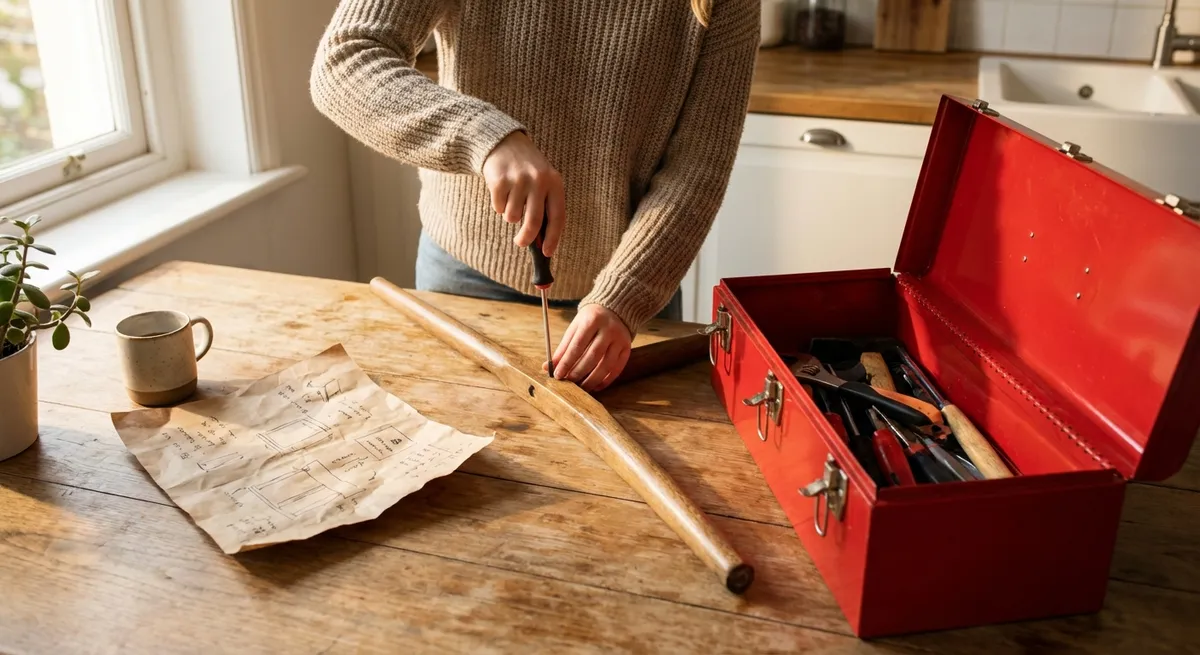
Minor problems around the house or with your gadgets can snowball into full-blown headaches if you ignore them. The good news: many of these issues have quick, practical fixes you can handle in minutes with basic tools. This guide walks you through five clear, step‑by‑step solutions to common everyday problems so you can get things working again without panic—or a big bill.
---
Quick Fix #1: Silence a Squeaky Door Hinge
A squeaky door isn’t just annoying—it’s a sign of friction that can wear the hinge over time. You can quiet it fast with items you probably already have.
What you’ll need
- Paper towel or rag
- Mild soap and water (optional)
- Lubricant: silicone spray, lithium grease, or a few drops of light oil (like 3‑in‑One)
Step‑by‑step
**Identify the squeaky hinge**
Open and close the door slowly to confirm which hinge is making the noise. Usually it’s the top or middle hinge.
**Protect the surrounding area**
Place a paper towel or rag under the hinge to catch drips. If you’re using spray lubricant, you can also hold a folded paper towel behind the hinge as a shield.
**Clean off visible dust and grime**
Wipe the hinge with a dry rag. If it’s very dirty or sticky, use a damp cloth with a drop of mild soap, then dry thoroughly. Dirt can trap moisture and worsen squeaks.
**Apply lubricant to the hinge pins**
- If using spray: Insert the straw nozzle and give a short, controlled spray where the pin meets the hinge. - If using oil: Add 1–2 drops along the top of the hinge pin so it runs down into the joint.
**Work the door back and forth**
Open and close the door 10–15 times to pull the lubricant deeper into the hinge. If the squeak reduces but doesn’t go away, add a small amount more and repeat.
**Wipe excess and check the floor**
Remove any drips from the hinge and floor to avoid slippery spots. The door should now move quietly and more smoothly.
---
Quick Fix #2: Restore a Slow, Clogged Bathroom Drain
If water is pooling in your sink or tub, you don’t necessarily need harsh chemicals or a plumber. Most slow drains are caused by hair and soap buildup right near the top of the drain.
What you’ll need
- Rubber gloves
- Old toothbrush or small brush
- Plastic drain snake or zip‑it tool (cheap and reusable)
- Baking soda and white vinegar (optional)
- Jug or kettle for hot (not boiling) water
Step‑by‑step
**Remove the drain stopper or cover**
- For a sink “pop‑up” stopper: Lift it up, twist, and gently pull. Some require loosening a small rod under the sink—look for a thumbscrew or nut. - For a tub: Unscrew the cover plate or lift out the stopper if it’s removable.
**Clear visible debris**
Put on gloves. Pull out any hair or gunk you can see by hand. Use a paper towel or tissue to throw it directly in the trash—don’t rinse it back down.
**Use a drain snake for deeper clogs**
Insert the plastic drain snake into the drain as far as it will go. Push gently, then pull it back slowly, catching hair and buildup on the barbs. Repeat several times until you stop bringing up debris.
**Scrub the stopper and opening**
Use an old toothbrush and a bit of dish soap to scrub the stopper and the drain opening. This gets rid of soap scum that narrows the drain over time.
**Flush with hot water (and optional baking soda + vinegar)**
- Pour about ½ cup baking soda into the drain, followed by 1 cup white vinegar. Let it fizz for 5–10 minutes. - Slowly flush the drain with hot (not boiling) water from a kettle or jug to rinse loosened debris.
**Reinstall the stopper and test the drain**
Put everything back in place and run water for 30–60 seconds. It should drain more quickly. If it’s still slow, repeat the snake step once more.
---
Quick Fix #3: Revive a Phone That Won’t Charge Reliably
Phones that charge only at certain cable angles or randomly disconnect often just have dirty or obstructed ports. Cleaning the charging port safely is usually enough to restore a solid connection.
What you’ll need
- Bright flashlight
- Wooden or plastic toothpick (not metal)
- Compressed air (optional; don’t shake the can)
- Soft, dry cloth
Step‑by‑step
**Power off the phone completely**
Shut the phone down instead of just turning off the screen. This reduces any risk of shorting while you clean.
**Inspect the charging port**
Use a flashlight to look inside the port. You’ll often see lint, dust, or tiny fibers packed inside—especially if you pocket your phone a lot.
**Gently loosen debris with a non‑metal tool**
- Use a wooden or plastic toothpick and very gently scrape along the bottom and sides of the port. - Keep the tool parallel to the port, not angled up, so you don’t damage the pins at the back.
**Blow out remaining dust**
- If using compressed air: Hold the can upright and give 1–2 short bursts into the port. - If you don’t have compressed air: Gently tap the phone (port facing down) into your palm to help loosen particles.
**Wipe the cable connector**
Clean the metal part of your charging cable with a dry cloth. A bit of skin oil or grime can interfere with good contact.
**Test with a known‑good charger and outlet**
Plug into a different cable and adapter you know work well, and try a different wall outlet. If the phone charges firmly without wiggling, the quick fix worked.
**When to stop and seek help**
If you see bent pins, corrosion, or the port is physically damaged, don’t keep poking at it—take it to a professional repair shop before it fails completely.
---
Quick Fix #4: Stop a Running Toilet and Save Water
A toilet that runs constantly or cycles on and off wastes hundreds of gallons of water over time. Most of the time, the cause is simple and inside the tank—not the pipes.
What you’ll need
- Towel (in case of splashes)
- Scissors (optional)
- Replacement flapper (inexpensive, if needed)
Step‑by‑step
**Remove the tank lid carefully**
Lift the ceramic lid straight up and set it gently on a towel nearby. Avoid bumping it—it’s surprisingly easy to crack.
**Identify the three key parts**
Inside the tank you’ll see: - The **fill valve** (where water comes in) - The **float** (controls water level) - The **flapper** at the bottom (rubber valve that lifts when you flush)
**Check the flapper seal**
- Flush the toilet and watch the flapper. It should lift, then fall back down and seal within a few seconds. - If it’s warped, coated in buildup, or doesn’t seat properly, it’s probably the cause of the running sound.
**Adjust or shorten the chain if needed**
If the chain from the handle to the flapper is too tight, it may prevent the flapper from closing fully. - There should be a little slack when the flapper is down. - If it’s too tight, move the clip to a different link or trim the extra chain.
**Adjust the water level**
If water flows into the overflow tube (vertical open pipe), the tank is overfilling and constantly draining. - Turn the adjustment screw on top of the fill valve (or slide the float down the rod) to lower the water level to about 1 inch below the overflow tube.
**Replace the flapper if it’s worn**
- Turn off the water supply valve behind the toilet and flush once to empty the tank. - Unhook the old flapper from the overflow tube and chain, then snap the new one in place and reconnect the chain with a little slack. - Turn the water back on and let the tank refill.
**Test for quiet operation**
After a flush, the toilet should refill and then fall silent. No more hissing, trickling, or cycling on and off every few minutes.
---
Quick Fix #5: Bring a Dead Remote Control Back to Life
Before you assume your TV, streaming box, or AC unit is broken, check the remote. Most “dead remote” problems come down to weak batteries, poor contact, or blocked signals.
What you’ll need
- New batteries (check the type: AA, AAA, coin cell, etc.)
- Dry cloth or cotton swab
- Rubbing alcohol (optional)
Step‑by‑step
**Confirm it’s the remote, not the device**
Try using physical buttons on the TV or device itself (if available). If they work, focus on the remote.
**Open the battery compartment**
Slide or pop off the cover on the back. Remove the batteries and inspect for any corrosion (white or greenish buildup).
**Clean the contacts**
- If the contacts look dull or slightly dirty, gently rub them with a dry cloth. - For light corrosion, lightly moisten a cotton swab with rubbing alcohol and clean the metal contacts. Let them dry completely.
**Insert fresh batteries the right way**
Match the + and − symbols exactly as marked in the compartment. One reversed battery can make the remote seem dead.
**Check for obstructions and distance**
- Stand 3–10 feet from the device. - Make sure nothing is blocking the line of sight between the remote and the receiver (like decor, soundbars, or doors).
**Test the remote’s infrared (IR) signal (for IR remotes)**
Many phone cameras can “see” infrared light: - Open your phone’s camera app. - Point the remote at the camera and press a button. - If you see a flashing light on the phone screen, the remote is sending a signal.
**Re‑pair smart/Bluetooth remotes if needed**
For remotes that pair via Bluetooth or RF, you may need to re‑pair them: - Look for a pairing/reset button combination in your device’s manual or on the manufacturer’s support website. - Follow the on‑screen or manual instructions to reconnect.
---
Conclusion
Quick fixes don’t have to be complicated or risky. With a calm, step‑by‑step approach and a few basic tools, you can silence noisy hinges, clear stubborn drains, revive uncooperative phones, stop wasteful toilets, and rescue “dead” remotes—all in less time than it takes to schedule a service visit. The more you practice these small repairs, the more confident you’ll become tackling the next problem that pops up.
---
Sources
- [U.S. Department of Energy – WaterSense: Fixing Leaks](https://www.epa.gov/watersense/fix-leak-week) - Explains how running toilets and leaks waste water and offers basic troubleshooting tips
- [The Family Handyman – How to Fix a Running Toilet](https://www.familyhandyman.com/project/how-to-fix-a-running-toilet/) - Step‑by‑step guidance on diagnosing and fixing common toilet tank issues
- [Apple Support – If your iPhone or iPad won’t charge](https://support.apple.com/en-us/HT201569) - Official Apple instructions for troubleshooting charging issues, including port inspection
- [Consumer Reports – How to Clear a Clogged Drain](https://www.consumerreports.org/plumbing/how-to-clear-a-clogged-drain-a6204805910/) - Practical advice on safe methods to clear slow or clogged household drains
- [Home Depot – How to Fix Squeaky Door Hinges](https://www.homedepot.com/c/ah/how-to-fix-a-squeaky-door/9ba683603be9fa5395fab901e969d3e) - Overview of hinge lubrication techniques and recommended products
Key Takeaway
The most important thing to remember from this article is that this information can change how you think about Quick Fixes.