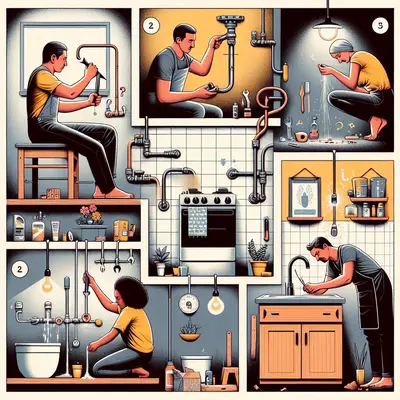
Everyday problems like running toilets, loose cabinet doors, or a dead outlet can make your home feel out of control fast. You don’t need a full tool trailer or a contractor on speed dial to handle the most common issues—just a basic plan, a few tools, and a calm approach. This guide walks you through five practical, step‑by‑step fixes you can actually complete, even if you’re new to DIY.
---
Stop a Running Toilet and Cut the Wasted Water
A constantly running toilet is more than an annoying sound—it wastes a surprising amount of water and money. Most of the time, the problem is inside the tank and can be solved without calling a plumber.
What you’ll need
- Adjustable wrench (optional)
- Replacement flapper (if needed)
- Old towel (to catch drips)
Step‑by‑step
- **Remove the tank lid and observe.**
Gently lift the lid and set it aside safely. Flush once and watch the parts move so you can see what’s supposed to happen.
- **Check the flapper seal.**
The rubber flapper at the bottom of the tank should close snugly after the flush. If it’s warped, cracked, or not sealing, water will keep leaking into the bowl and the toilet will keep refilling.
- **Adjust or reconnect the chain.**
If the chain between the handle and flapper is too tight, the flapper can’t fully close; too loose and it may not open properly. Adjust the clip so there’s just a little slack when the flapper is closed.
- **Clean the flapper and valve seat.**
Turn off the water shutoff valve behind the toilet, flush to empty most of the water, then wipe around the flapper and the rim it seals against. Mineral buildup or debris can prevent a tight seal.
- **Replace the flapper if it’s worn.**
Turn off the water, unhook the old flapper from the overflow tube and chain, and take it with you to the hardware store to match the size and style. Install the new one following the package diagram and reconnect the chain.
- **Adjust the water level.**
If the tank is overfilling and draining into the overflow tube, adjust the float. For a float cup, turn the adjustment screw; for a float ball, gently bend the metal arm down. Aim for a water level about 1 inch below the top of the overflow tube.
- **Turn the water back on and test.**
Let the tank fill, listen for continued running, and drop a few food‑coloring drops into the tank (don’t flush). If color appears in the bowl after 10–15 minutes, you still have a leak and may need to recheck the flapper or valve seat.
---
Quiet a Squeaky Door Without Special Lubricants
That squeaky door that wakes everyone up at night is usually caused by friction on the hinges. You can often silence it with items you already have at home.
What you’ll need
- Old rag or paper towels
- Lubricant: silicone spray, WD‑40, light machine oil, or petroleum jelly
- Flat screwdriver or nail (optional, for stubborn hinge pins)
Step‑by‑step
- **Identify the noisy hinge.**
Slowly open and close the door and listen closely. Sometimes only one hinge is causing the squeak; sometimes it’s all of them.
- **Try quick lubrication first.**
With the door open, place a rag under the hinge to catch drips. Spray or dab a small amount of lubricant directly onto the hinge knuckles (the round parts) and move the door back and forth to work it in.
- **If the squeak remains, remove the hinge pin.**
Starting with the middle hinge (to maintain alignment), partially open the door. Place a flat screwdriver under the bottom of the pin and gently tap the handle of the screwdriver with your hand or a light hammer to lift the pin. If it’s stuck, a small nail set or finishing nail can help push it up.
- **Clean the pin.**
Wipe off old, dirty grease or rust with a rag. If it’s rusty, lightly sand it with fine sandpaper or steel wool.
- **Apply lubricant to the pin.**
Coat the pin with a light layer of lubricant or petroleum jelly. Avoid overdoing it—too much can drip and stain the door or floor.
- **Reinstall and work the hinge.**
Slide the pin back into the hinge and tap gently until fully seated. Open and close the door several times to distribute the lubricant.
- **Repeat for other hinges as needed.**
If you still hear noise, repeat the process on the remaining hinges one at a time so the door stays supported and aligned.
---
Fix a Loose Cabinet Door That Won’t Close Right
Loose, sagging, or misaligned cabinet doors make your kitchen or bathroom look worn and can stress the hinges. Modern hinges are designed to be adjusted with just a screwdriver.
What you’ll need
- Phillips screwdriver
- Small container (for screws if you remove any)
- Wood toothpicks and wood glue (optional, for stripped holes)
Step‑by‑step
- **Check for loose mounting screws.**
Open the cabinet door and look where the hinge attaches to both the cabinet frame and the door. Gently wiggle the door to see where the movement is coming from.
- **Tighten all hinge screws.**
Use a Phillips screwdriver to snug up any loose screws. Do not overtighten; you just want them firm, not stripping the wood.
- **Adjust the side‑to‑side position.**
On many European‑style hidden hinges, one screw on the hinge body adjusts the door left or right. Turn it a quarter‑turn at a time and close the door to see the effect until the gap between doors or between door and frame looks even.
- **Adjust the in‑and‑out depth.**
Another screw often controls how far the door sits in or out from the cabinet. If your door is sticking out or rubbing, adjust this screw slightly to bring it into alignment with neighboring doors.
- **Adjust the up‑and‑down position.**
If the door is sagging lower than the others, you may be able to loosen the mounting plate screws on the cabinet slightly, lift the door, then retighten while holding it in the correct position.
- **Fix stripped screw holes (if screws won’t tighten).**
Remove the loose screw. Push 2–3 wood toothpicks dipped in wood glue into the hole, break them off flush, and let dry. Then reinstall the screw into the reinforced hole.
- **Test the closing action.**
Open and close the door several times. Check that it doesn’t rub, slam, or leave uneven gaps. Make small, incremental adjustments rather than large ones to avoid overcorrecting.
---
Revive a “Dead” Outlet Safely (Without Opening the Wall)
A dead outlet doesn’t always mean bad wiring. Often, it’s a tripped GFCI outlet or a tripped breaker you can reset yourself—if you do it safely.
Safety first
If you ever smell burning, see scorch marks, or the outlet feels hot, do not use it. Turn off power at the breaker and call a licensed electrician.
What you’ll need
- Plug‑in device (lamp or phone charger)
- Flashlight (if the area is dark)
- Access to your electrical panel
Step‑by‑step
- **Confirm the outlet is truly dead.**
Plug in a lamp or another device you know works. Try the top and bottom receptacles in case only one is faulty.
- **Check nearby outlets for GFCI reset buttons.**
Kitchens, bathrooms, garages, and outdoor areas often have at least one GFCI outlet protecting multiple outlets. Look for an outlet with “TEST” and “RESET” buttons near the dead one.
- **Reset the GFCI.**
Press the RESET button firmly until it clicks. Then test your dead outlet again. If it works now, you’ve solved the problem. If it trips again immediately, unplug anything in that circuit and retest; persistent tripping means you should call an electrician.
- **Check the circuit breaker panel.**
If no GFCI reset helps, go to your main electrical panel. Look for a breaker that’s in the middle or “TRIPPED” position—it often won’t be fully OFF or ON.
- **Reset the tripped breaker properly.**
First, push the breaker fully to the OFF position, then firmly back to ON. Just pushing it toward ON without turning it fully off first often won’t reset it.
- **Test the outlet again.**
Plug your device back in. If it now works, monitor for any future trips—frequent tripping may indicate an overloaded circuit or wiring issue that needs an electrician.
- **When to stop DIY and call a pro.**
If the breaker keeps tripping, if the outlet is loose from the wall, if you see sparks, discoloration, or smell burning, do not continue to use it. Turn off the breaker to that circuit and contact a licensed electrician for further diagnosis.
---
Seal a Small Bathroom Caulk Gap to Prevent Water Damage
Cracked or missing caulk around your tub, shower, or sink lets water creep into walls and floors, causing mold and rot. Sealing small gaps early is a quick, high‑impact DIY job.
What you’ll need
- Tub & tile silicone or siliconized acrylic caulk (mold‑resistant)
- Caulk gun (for standard tubes) or squeeze tube
- Utility knife or caulk removal tool
- Painter’s tape (optional, for clean lines)
- Paper towels or rags
- Mild cleaner and sponge
Step‑by‑step
- **Inspect and identify problem areas.**
Look along the edge where tub meets wall, shower corners, and around sink backsplashes. Note any cracks, gaps, or moldy, peeling caulk.
- **Remove loose or failing caulk.**
Use a utility knife or caulk removal tool to carefully scrape out any loose or cracked sections. You don’t need to strip the entire line for a small repair, but overlapping old failing caulk rarely works well.
- **Clean and dry the area.**
Scrub the joint with a mild cleaner to remove soap scum and residue, then dry thoroughly. Caulk will not stick properly to damp or dirty surfaces. Let it air dry for at least an hour if needed.
- **Mask for a neater line (optional but helpful).**
Apply painter’s tape parallel to the joint, leaving the gap you want to fill exposed. This keeps your caulk line straight and prevents smears on tile or tub.
- **Prepare the caulk tube.**
Cut the tip of the caulk nozzle at a 45‑degree angle for a small bead (you can always cut more if needed). Puncture the inner seal if the tube has one.
- **Apply a steady bead of caulk.**
Hold the tube at about a 45‑degree angle and move at a consistent speed along the gap, squeezing gently. Aim to slightly overfill the gap so you can smooth it in one pass.
- **Smooth the joint.**
With a damp finger or caulk‑smoothing tool, gently press and slide along the bead to push caulk into the gap and create a smooth finish. Wipe excess from your finger or tool onto a rag as you go.
- **Remove tape and let it cure.**
If you used painter’s tape, peel it off immediately while the caulk is still wet to avoid tearing. Follow the manufacturer’s dry and cure times—often 24 hours—before using the shower or getting the area wet.
---
Conclusion
Most household problems don’t start as disasters—they begin as small annoyances: a running toilet, a sticky door, a cabinet that doesn’t quite close, an outlet that suddenly quits, a thin crack in bathroom caulk. Tackling these early with simple, step‑by‑step fixes keeps your home comfortable and prevents expensive repairs later. Start with one issue, follow the instructions slowly, and build your confidence. Each successful repair makes the next one easier—and puts you, not the problem, in control of your space.
---
Sources
- [U.S. Environmental Protection Agency – Fixing Leaks at Home](https://www.epa.gov/watersense/fix-leak-week) – Explains how running toilets and other leaks waste water and why timely fixes matter
- [Family Handyman – How to Fix a Running Toilet](https://www.familyhandyman.com/project/how-to-fix-a-running-toilet/) – Detailed visuals and additional troubleshooting tips for toilet repairs
- [U.S. Consumer Product Safety Commission – Electrical Receptacle Safety](https://www.cpsc.gov/s3fs-public/513.pdf) – Guidance on outlet safety, warning signs, and when to call an electrician
- [National Fire Protection Association – Home Electrical Safety](https://www.nfpa.org/Public-Education/Fire-causes-and-risks/Top-fire-causes/Electrical) – Background on electrical hazards and safe practices in the home
- [This Old House – How to Re-Caulk a Tub](https://www.thisoldhouse.com/bathrooms/21015112/how-to-caulk-a-tub) – Step‑by‑step bathroom caulking with photos and product recommendations
Key Takeaway
The most important thing to remember from this article is that this information can change how you think about Household Repairs.