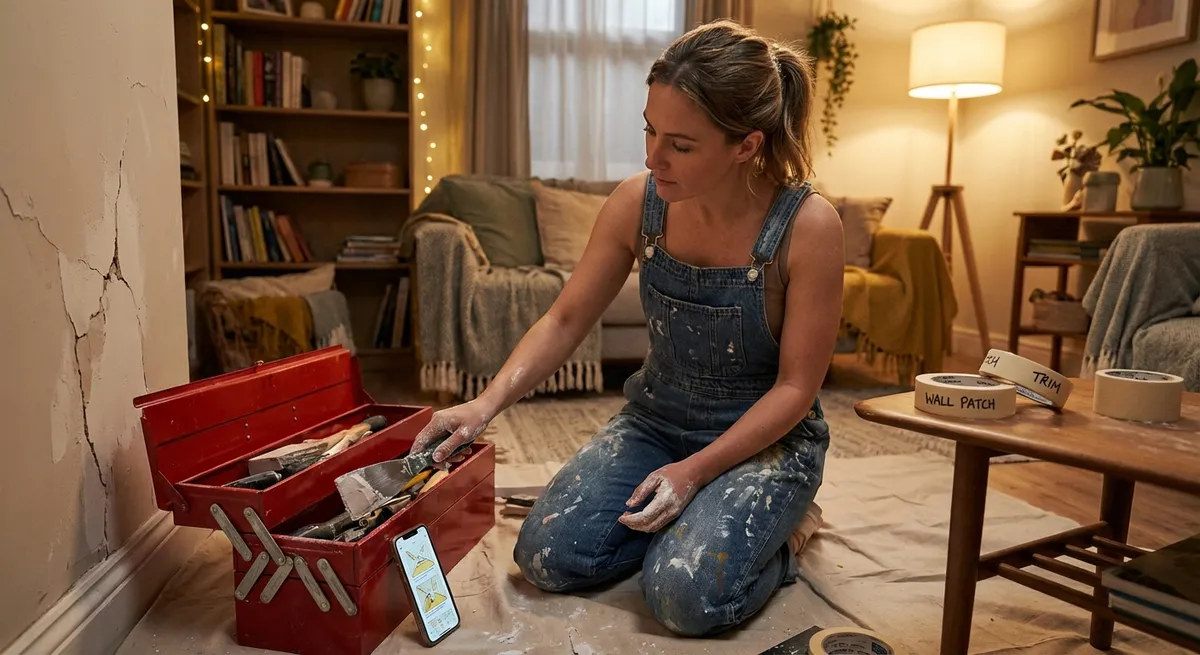
Most home problems don’t need a contractor or a panic call to your friend who “knows tools.” With a few basic supplies and a clear plan, you can solve a surprising number of issues yourself—safely and quickly. This guide walks through five practical, step-by-step fixes that save money, prevent bigger damage, and build your confidence every time something goes wrong.
Each solution is designed so you can start with what you probably already have at home, then level up if needed.
---
Stop a Dripping Faucet Before It Wrecks Your Sink (And Bill)
A slow drip wastes water, stains your sink, and gets louder at 2 a.m. than any other sound on Earth. The good news: most drips come from worn internal parts you can replace in under an hour.
What you’ll need
- Adjustable wrench or pliers (with tape on jaws to avoid scratching)
- Flathead and Phillips screwdrivers
- Replacement cartridge, O-ring, or washer (depends on faucet type)
- Towel and small container (for small parts)
Step-by-step
**Shut off the water**
Find the shutoff valves under the sink and turn them clockwise. If there are no local valves, turn off the main water supply for the house.
**Plug the drain**
Use the sink stopper or a rag so screws and small parts don’t vanish down the drain.
**Remove the handle**
- Pry off any decorative cap with a flat screwdriver. - Remove the screw underneath. - Lift off the handle.
**Identify your faucet type**
- *Cartridge*: usually a single handle that lifts and rotates. - *Compression*: two handles (hot/cold) that screw down firmly to stop water. - *Ceramic disc or ball*: more modern designs in single-handle faucets.
**Disassemble carefully and take photos as you go**
- Loosen retaining nuts with an adjustable wrench. - Gently pull out the cartridge, stem, or ball assembly. - Take clear photos of the order and orientation of parts—that’s your reassembly map.
**Inspect and replace worn parts**
- Look for cracked or flattened rubber washers, brittle O-rings, or corroded seats. - Take the old parts to a hardware store and match them exactly. - Install new washers/O-rings or cartridge, lubricating rubber with plumber’s grease if available.
**Reassemble and test**
- Put everything back following your photos. - Turn the water on slowly and check for leaks. - If the drip persists, tighten gently—don’t overtighten or you’ll damage the new parts.
When to call a pro
- Corroded or stripped valve seats you can’t remove
- Leaks coming from under the sink or inside the cabinet
- Very old plumbing with visible rust or damage
---
Reset a Dead Outlet Safely (Without Guesswork)
An outlet that suddenly stops working can be annoying—or a sign of an electrical issue. Before assuming the worst, there are safe checks you can do yourself.
What you’ll need
- Small lamp or phone charger to test
- Non-contact voltage tester (optional but recommended)
- Flashlight if the area is dark
- Access to your breaker panel
Step-by-step
**Test with a known working device**
- Plug a device (like a lamp) you know works into the suspect outlet. - If it’s dead, test that same device in a different outlet to confirm it’s not the device.
**Check nearby GFCI outlets**
GFCI (ground-fault circuit interrupter) outlets have “TEST” and “RESET” buttons (often in kitchens, bathrooms, garages). - Press the **RESET** button firmly until it clicks. - Re-test your dead outlet; some are chained to a GFCI upstream.
**Inspect the breaker panel**
- Open the panel door and look for a breaker in the “tripped” middle position. - Flip it all the way OFF, then firmly back ON. - Re-test the outlet.
**Use a non-contact tester (if available)**
- Hold it near the outlet slots. - If it detects voltage, the outlet has power but may be damaged. - If no voltage, the issue is upstream (wiring, breaker, or GFCI).
**Check for obvious damage**
- Look for burn marks, melted plastic, or a burning smell. - If you see any of this, **do not** use the outlet.
When to stop and call an electrician
- Breaker immediately trips again after you reset it
- Multiple outlets or an entire room has no power
- Outlet is loose in the wall, scorched, or warm/hot to the touch
- You’re not comfortable removing the outlet cover (never work on live circuits)
---
Quiet a Noisy Door: Fix Creaks, Slams, and Misalignment
A squeaky door or one that won’t close properly is more than an annoyance—it can worsen over time, strain the hinges, and eventually damage the frame. Fortunately, most door issues are fast DIY fixes.
What you’ll need
- Lubricant (silicone spray or petroleum jelly; avoid cooking oils)
- Screwdriver
- Wood toothpicks or wooden matchsticks
- Utility knife (optional)
- Small hammer (optional)
Step-by-step for squeaks
**Locate the noise**
Slowly open and close the door while listening. Most squeaks come from hinges.
**Lubricate the hinge**
- Place a towel under the hinge to catch drips. - Apply a small amount of lubricant to the hinge pin and joints. - Open and close the door several times to work it in. - Wipe off any excess.
**If squeak persists, remove hinge pin (if accessible)**
- With the door mostly closed, tap the bottom of the hinge pin upward with a screwdriver and hammer. - Wipe the pin clean. - Apply a light coat of lubricant to the pin and hole. - Reinsert and tap it back into place.
Step-by-step for a door that won’t latch
**Tighten hinge screws**
Loose hinges can make the door sag. - Tighten all screws on both the door side and frame side. - If a screw just spins, pull it out.
**Fix stripped screw holes**
- Insert a few wooden toothpicks or matchsticks coated in wood glue into the hole. - Snap them off flush with the surface. - Reinsert the screw—it will now bite into the new wood.
**Adjust the strike plate (if needed)**
- Close the door slowly and watch where the latch hits the strike plate. - If it’s too high or low, slightly loosen the strike plate screws and move it. - Retighten and test.
**For minor sticking on the frame**
- Identify where the door rubs (look for scraped paint). - Lightly sand or shave that area with sandpaper or a plane. - Repaint or seal exposed wood to prevent moisture damage.
---
Clear a Slow Drain Without Harsh Chemicals
Slow drains in sinks or tubs usually come from buildup you can remove yourself. Chemical drain cleaners are hard on pipes and dangerous to handle; start with mechanical methods instead.
What you’ll need
- Rubber plunger (cup plunger, not toilet flange plunger)
- Bucket and old towels
- Baking soda and white vinegar (optional)
- Plastic drain snake or hair removal tool
- Rubber gloves
Step-by-step
**Remove visible debris**
- Take off the stopper or drain cover. - Pull out any hair or gunk you can reach with gloved fingers or a plastic tool.
**Try a drain snake**
- Insert the plastic snake into the drain until you feel resistance. - Twist and pull it back out—repeat until it comes out relatively clean. - Run hot water to flush remaining debris.
**Use a plunger (for sinks/tubs)**
- Block overflow openings with a wet rag. - Fill the sink/tub with enough water to cover the plunger cup. - Place the plunger over the drain and press down firmly to seal. - Plunge vigorously 15–20 times. - Lift quickly to see if water drains faster. Repeat if needed.
**Optional: baking soda and vinegar flush**
- Pour about 1/2 cup baking soda into the drain. - Follow with 1/2 to 1 cup white vinegar. - Let it fizz for 10–15 minutes. - Rinse with hot water. (This won’t clear solid clogs but can help with buildup and odor.)
**Prevent future slowdowns**
- Use hair catchers in shower and tub drains. - Avoid pouring grease, coffee grounds, or food scraps down kitchen sinks. - Run hot water after using the sink to move soap and debris along.
When to call a plumber
- Multiple drains in the home are slow or backing up
- You notice sewage smell or water backing into tubs/showers
- The drain is totally blocked and plunging/snaking doesn’t help
---
Patch a Small Wall Hole So It Actually Disappears
From doorknob dents to misplaced TV mounts, drywall damage is almost guaranteed sooner or later. A clean patch job makes your wall look new—and is completely doable with basic tools.
What you’ll need
- Lightweight spackle (for small holes) or joint compound (for larger areas)
- Putty knife (2–4 inch)
- Sanding sponge or fine-grit sandpaper (120–220 grit)
- Damp cloth
- Matching paint and brush/roller
- For holes larger than a coin: self-adhesive wall repair patch
Step-by-step for nail and screw holes
**Prepare the surface**
- Remove any loose paint or drywall crumbs with the corner of your putty knife. - Wipe the area with a damp cloth and let dry.
**Apply spackle**
- Scoop a small amount of spackle on the putty knife. - Press it into the hole, then smooth over, leaving a thin, flat layer slightly wider than the hole. - Scrape off excess—thinner is better.
**Let it dry completely**
- Follow the product instructions (usually 30–60 minutes for lightweight spackle). - Don’t rush; painting over wet compound leads to cracking and flashing.
**Sand gently**
- Lightly sand until the patch is smooth and flush with the wall. - Wipe dust with a damp cloth and let dry.
**Prime (if needed) and paint**
- For small white spackle spots, some people skip primer, but primer improves blending. - Apply matching paint over the patch, feathering the edges into the surrounding wall. - Let dry and add a second coat if needed.
Step-by-step for larger holes (up to a few inches)
**Stick on a wall repair patch**
- Center the patch over the hole on a clean, dry wall surface.
**Cover with joint compound**
- Apply a thin layer over the patch, smoothing edges beyond the patch perimeter. - Let dry, then add a second thinner coat, feathering further out.
**Sand, dust, prime, and paint**
- Sand edges until they disappear into the wall. - Prime the area, then paint to match.
When to get extra help
- Cracks wider than 1/4 inch, especially near ceilings or windows (could be structural)
- Repeated cracking in the same spot
- Moisture stains or soft drywall (fix the leak first; may need replacement, not just patching)
---
Conclusion
Most “small” problems become expensive only when they’re ignored. A dripping faucet, a dead outlet, a sticky door, a slow drain, or a damaged wall can all be handled with calm, basic tools, and a clear process. Start with one fix, follow the steps carefully, and know when to stop and call a professional.
Over time, these DIY wins stack up: you spend less, prevent bigger failures, and gain the confidence to tackle the next problem instead of dreading it. That’s the real repair skill—knowing what you can do yourself, and doing it well.
---
Sources
- [U.S. Environmental Protection Agency – Fix a Leak](https://www.epa.gov/watersense/fix-leak-week) - Details on how much water a leaking faucet can waste and why fixing leaks promptly matters
- [Family Handyman – How to Fix a Leaky Faucet](https://www.familyhandyman.com/project/how-to-repair-a-compression-faucet/) - Step-by-step repair examples for common faucet types
- [U.S. Consumer Product Safety Commission – Electrical Outlet Safety](https://www.cpsc.gov/safety-education/safety-guides/home/electrical-safety-in-the-home) - Guidance on safe handling of outlets and home electrical systems
- [International Association of Certified Home Inspectors – Doors](https://www.nachi.org/inspecting-doors.htm) - Explains door hardware, common issues, and inspection tips
- [University of Kentucky Cooperative Extension – Plumbing Repairs](https://extension.ca.uky.edu/files/making_simple_household_repairs_plumbing.pdf) - Educational guide covering simple household plumbing repairs and maintenance
Key Takeaway
The most important thing to remember from this article is that this information can change how you think about DIY Solutions.