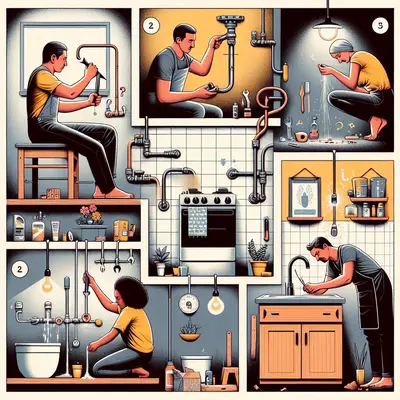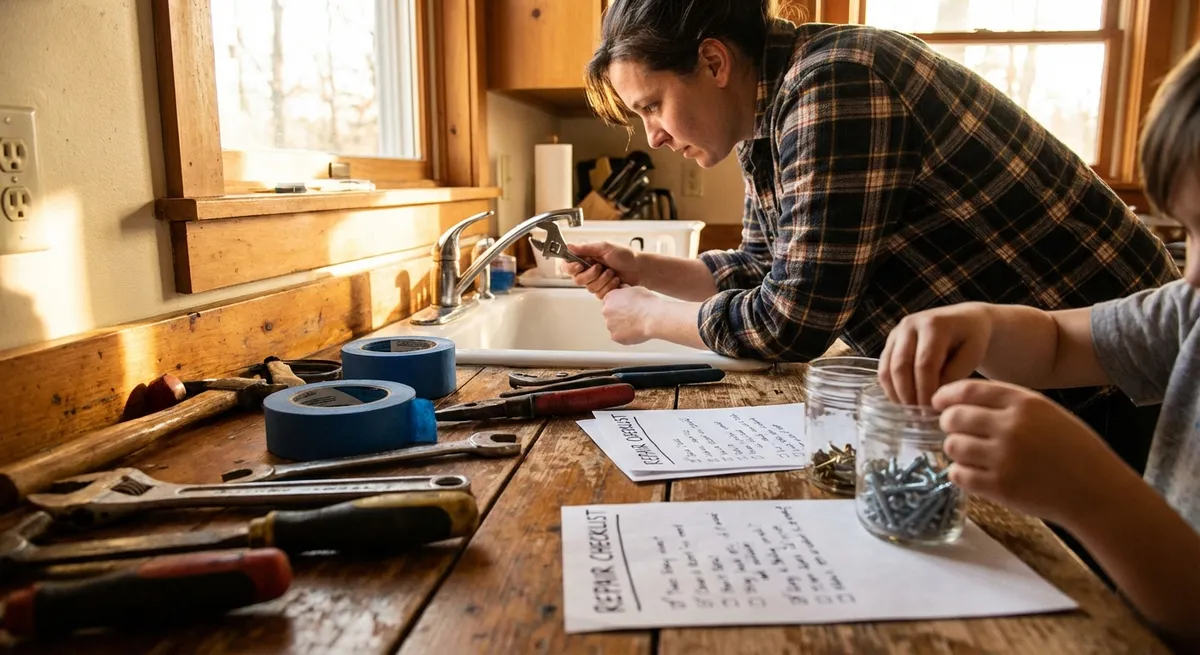
Household issues rarely show up at a “good” time. A dripping faucet at 10 p.m., a door that suddenly won’t latch, or a breaker that keeps tripping can turn a normal day into a hassle fast. This guide walks you through five practical, step-by-step repairs you can actually complete with basic tools—no contractor, no drama. Follow each sequence carefully, and you’ll turn common home problems into manageable DIY wins.
---
1. Stop a Dripping Faucet (Compression or Washer-Type)
A dripping faucet wastes water and can raise your bill. Most older faucets use a rubber or nylon washer that wears out over time. Replacing it is straightforward if you work methodically and shut off the water properly.
Tools & materials: Adjustable wrench, Phillips/flat screwdriver, replacement washers and O-rings (take the old ones to the hardware store), plumber’s tape (optional), towel.
Step-by-step:
- **Cut the water supply.**
Look under the sink for the shutoff valves (usually oval or lever handles). Turn them clockwise all the way. Open the faucet to confirm water is off and to relieve pressure.
- **Plug the drain.**
Use a sink stopper or a rolled-up towel to block the drain so small screws or parts don’t fall in.
- **Remove the handle.**
Pry off the decorative cap with a flat screwdriver (if present). Unscrew the handle screw underneath and pull the handle straight up. If it’s stuck, gently wiggle or use a bit of penetrating oil and wait a few minutes.
- **Access the valve stem.**
You’ll see a packing nut or bonnet nut holding the stem in place. Use an adjustable wrench to turn it counterclockwise. Carefully pull out the entire stem assembly.
- **Replace the washer and O-rings.**
At the bottom of the stem, remove the small screw holding the washer. Take off the old washer and install the new one of the same size and type. Replace any O-rings on the stem as well—they often cause leaks around the handle.
- **Inspect the valve seat.**
Shine a light into the faucet body. If the metal seat looks rough or cracked, you may need a seat wrench or a replacement seat. Minor roughness might be okay; severe damage usually calls for professional help or a new faucet.
- **Reassemble the faucet.**
Optionally wrap the stem threads with plumber’s tape. Insert the stem back into the faucet body in the same orientation. Tighten the packing nut snugly (do not over-tighten). Reattach the handle and screw, then snap the decorative cap back on.
- **Turn water back on slowly.**
Open the shutoff valves under the sink gradually while checking for leaks. Turn the faucet on and off a few times. If the drip is gone and there’s no seepage around the handle, you’re done.
---
2. Fix a Door That Won’t Close or Latch Properly
Doors that rub, won’t latch, or swing open by themselves are usually suffering from hinge sag or slight frame movement. In many cases, you can solve it with a screwdriver and a bit of patience—no planing or replacement required.
Tools & materials: Phillips screwdriver, wood glue, wooden toothpicks or matchsticks, utility knife, sandpaper, pencil.
Step-by-step:
- **Diagnose the issue.**
Close the door slowly and watch what happens:
- Does the latch miss the strike plate?
- Does the top corner rub on the frame?
- Does the door swing open or shut on its own?
This tells you whether hinges are loose or the frame is out of alignment.
- **Tighten hinge screws.**
Open the door. Starting at the top hinge, tighten all screws on the door side and frame side. Loose top hinges are a common cause of sagging.
- **Fix stripped screw holes (if screws spin freely).**
- Remove the loose screw.
- Dip a few wooden toothpicks or matchsticks (with heads cut off) in wood glue.
- Pack them tightly into the screw hole.
- Snap flush with the surface using your fingers or a utility knife.
- Reinsert the screw and tighten. The wood/glue combo gives the screw new “bite.”
- **Adjust the strike plate (if the latch misses).**
Close the door gently and mark where the latch hits with a pencil. Compare this to the opening in the strike plate.
- **Address a door that swings open or shut by itself.**
- Remove the top hinge pin.
- Place it on a hard surface and gently tap it in the middle with a hammer to create a slight bend.
- Reinsert the pin. The added friction helps keep the door in the position you leave it.
- **Check and fine-tune.**
Open and close the door several times. Ensure it latches cleanly without rubbing. Make small adjustments rather than big changes; small hinge and plate moves often solve the issue.
---
3. Clear a Slow or Clogged Sink Without Harsh Chemicals
A slow sink often comes from hair, soap scum, and debris lodged in the trap or just below the drain. Mechanical cleaning is usually safer and more effective than pouring in chemical drain cleaners, which can damage pipes and create safety hazards.
Tools & materials: Bucket, old towel, adjustable wrench or slip-joint pliers, plastic drain snake or zip tool, rubber gloves, old toothbrush, mild dish soap.
Step-by-step:
- **Try a simple flush first.**
Boil a kettle of water (for metal pipes) or use hot tap water (for plastic). Slowly pour the hot water down the drain in stages. This can dissolve minor buildup, but if it’s still slow, move on.
- **Remove the stopper or drain cover.**
In bathroom sinks, the stopper is often attached to a pivot rod under the sink:
- Look under the sink for a horizontal rod attached to the drainpipe.
- Loosen the retaining nut by hand or with pliers, then pull the rod out slightly.
- Lift the stopper out from the sink.
- **Use a plastic drain snake.**
Insert the snake into the drain as far as it will go, then slowly pull it back, rotating slightly. It should grab hair and gunk—wipe it off into a trash bag (not down the drain). Repeat until you’re not pulling up more material.
- **Place a bucket under the P-trap.**
The curved section under the sink holds water and catches debris. Put a bucket and towel beneath to catch spills.
- **Remove and clean the P-trap.**
- Loosen the slip nuts on both ends of the trap with your hands or pliers.
- Carefully remove the trap and dump contents into the bucket.
- Scrub the inside with dish soap and an old toothbrush. Rinse thoroughly.
- **Check the horizontal pipe.**
Look into the pipe going into the wall. If you see visible buildup near the opening, carefully remove it with a flexible brush or snake (don’t push clogs deeper).
- **Reassemble and test.**
Reattach the P-trap, hand-tightening the slip nuts. Reinstall the stopper and pivot rod. Run water and check all joints for leaks. If it drains freely and there’s no dripping, you’re done.
- **Set up a simple prevention habit.**
Use a mesh drain screen where possible and clean it regularly. Once a week, run hot tap water for a minute to help keep buildup down.
---
4. Reset a Tripped Breaker and Track Down the Cause
When part of your home suddenly loses power, a tripped circuit breaker is often to blame. Resetting is easy, but you also need to understand why it tripped so you don’t repeat the problem or ignore a warning sign.
Safety warning: If you smell burning, see scorch marks, or hear buzzing at the panel or outlets, stop and call a licensed electrician immediately.
Tools & materials: Flashlight, dry hands, non-contact voltage tester (helpful but optional).
Step-by-step:
- **Unplug suspect devices.**
If you know what was running when power cut out (space heater, microwave, hair dryer), unplug those items first. This helps prevent an immediate retrip.
- **Find the main service panel.**
Common locations: basement, garage, utility closet, or exterior wall. Use a flashlight if the area is dim. Make sure your hands are dry.
- **Identify the tripped breaker.**
Look for a breaker switch that’s not fully in the ON or OFF position but sitting in between or showing a colored indicator. Some panels label circuits (kitchen, bedrooms, etc.); use this to confirm.
- **Reset properly.**
- Firmly push the tripped breaker to the OFF position.
- Then push it back to ON until it clicks.
This two-step motion ensures a solid reset.
- **Test the affected area.**
Go back to the room; check if lights and outlets are working. Use a simple lamp or phone charger to test. If power is restored, you’ve confirmed the circuit.
- **Reconnect devices one at a time.**
Plug in and turn on devices one by one, especially high-load items (heaters, hair dryers, microwaves). If the breaker trips again when you add a specific device, that device or outlet may be overloading the circuit.
- **Reduce load on that circuit.**
- Avoid running multiple high-wattage appliances on the same circuit simultaneously.
- Move some devices to outlets on different circuits if possible.
- **Know when to call a pro.**
Contact a licensed electrician if:
---
5. Seal a Drafty Window with Temporary Weatherproofing
Drafty windows waste energy and make rooms uncomfortable. You don’t have to replace the entire window to see improvement. Simple weatherstripping and film kits can significantly cut drafts in an afternoon.
Tools & materials: Adhesive foam weatherstripping, window insulation film kit (shrink film), scissors, utility knife, measuring tape, hair dryer, mild cleaner, cloth.
Step-by-step:
- **Identify draft points.**
On a cool or windy day, run your hand slowly around the window frame. Feel for cold air, especially:
- Where the sash meets the frame
- Around the lock area
- At the bottom edge and side tracks
- **Clean the surfaces.**
Use a mild cleaner and cloth to wipe down the frame surfaces where you’ll apply tape or foam. Let everything dry completely—adhesive won’t stick to dust or moisture.
- **Apply foam weatherstripping.**
- Measure the length of each area with a gap (sides, bottom, and top stops).
- Cut foam strips to size.
- Peel off the backing and press firmly along the frame where the sash closes against it, not on sliding surfaces.
Close the window to check that it seals without making it impossible to latch.
- **Install window insulation film (for winter or major drafts).**
- Apply the included double-sided tape around the outer edge of the interior frame (not on the sash).
- Cut the plastic film, leaving a 1–2 inch margin beyond the tape.
- Stick the film to the tape, starting at the top and smoothing downward to reduce wrinkles.
- **Shrink the film for a tight seal.**
Use a hair dryer on a medium setting:
This creates an air barrier that reduces heat loss.
- **Check and adjust the window lock.**
If your window has a latch, ensure it engages fully. Sometimes slightly adjusting strike positions or cleaning debris out of the tracks helps the sash close more tightly against the new weatherstripping.
- **Monitor comfort and energy use.**
After sealing, you should feel a noticeable reduction in drafts. Over a heating or cooling season, you may also see lower energy usage, especially if you seal multiple drafty windows.
---
Conclusion
Most everyday home problems aren’t emergencies—they’re systems giving you early warnings. A faucet drip, a slow drain, a sticky door, a tripped breaker, or a drafty window can often be resolved with basic tools and a clear plan. By following these step-by-step sequences, you’re not just patching issues; you’re learning how your home actually works.
Work slowly, respect safety boundaries (especially around electricity and water), and don’t hesitate to call a professional when a problem is beyond your comfort zone. The more repairs you tackle methodically, the more confident and efficient you’ll become the next time something in your home demands attention.
---
Sources
- [U.S. Environmental Protection Agency – WaterSense: Fix a Leak](https://www.epa.gov/watersense/fix-leak-week) – Guidance on household leaks, water waste, and basic repair approaches
- [Family Handyman – How to Fix Leaky Faucets](https://www.familyhandyman.com/project/how-to-fix-a-leaky-faucet/) – Detailed faucet repair procedures and diagrams
- [U.S. Department of Energy – Weatherstripping](https://www.energy.gov/energysaver/weatherstripping) – Official advice on selecting and installing weatherstripping to reduce drafts
- [Electrical Safety Foundation International (ESFI) – Circuit Breakers and Fuses](https://www.esfi.org/resource/circuit-breakers-and-fuses/) – Safety-focused information on breakers, overloads, and when to call an electrician
- [University of Kentucky Cooperative Extension – Household Drain Maintenance](https://extension.ca.uky.edu/files/maintenance_of_household_drains.pdf) – Practical recommendations for cleaning and maintaining household drains without damaging plumbing
Key Takeaway
The most important thing to remember from this article is that this information can change how you think about Household Repairs.