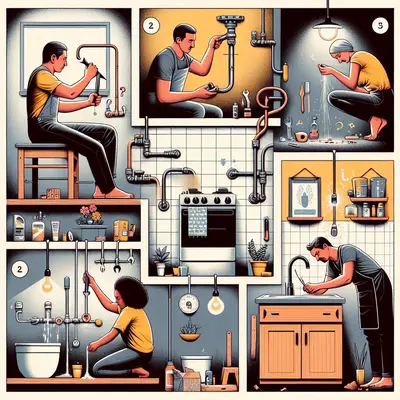
If you own or rent a home, a few basic repair skills can save you money, time, and frustration. You don’t need a full workshop or a contractor on speed dial—just a small toolkit and clear steps. This guide walks you through five foundation-level fixes that solve problems many households deal with every month. Each solution is broken into simple, repeatable steps you can actually do, even if you’re new to DIY.
---
1. Stop a Dripping Faucet (and Lower Your Water Bill)
A dripping faucet is usually caused by a worn-out cartridge, washer, or O-ring. Fixing it is more about patience than strength.
What you’ll need
- Adjustable wrench or basin wrench
- Screwdriver (Phillips and flathead)
- Replacement cartridge or O-rings (match your faucet model)
- Towel and small bowl (to catch small parts)
Step-by-step
**Shut off the water supply**
Look under the sink for the shutoff valves. Turn both hot and cold valves clockwise until fully closed. Open the faucet to release any remaining water.
**Plug the drain**
Use the sink stopper or a rag so screws and small parts don’t fall into the drain.
**Remove the faucet handle**
- Pop off any decorative cap with a flathead screwdriver. - Unscrew the handle screw and pull the handle off. - Keep screws and parts in a small bowl so nothing gets lost.
**Expose and remove the cartridge/valve**
- You may see a retaining nut or clip holding the cartridge in place. - Use your wrench to loosen the nut or gently pull the clip with pliers. - Pull the cartridge straight up; you might need to wiggle it slightly.
**Inspect and match parts**
Check for cracked O-rings, mineral buildup, or a worn rubber seal. Take the cartridge or washers to a hardware store to get an identical replacement.
**Install new parts**
- Insert the new cartridge in the same orientation as the old one. - Replace O-rings or washers, lightly coating rubber parts with plumber’s grease if available. - Reinstall the nut or clip securely, but don’t over-tighten.
**Reassemble and test**
- Reattach the handle and any caps. - Turn the shutoff valves counterclockwise to open the water supply. - Turn the faucet on and off, checking for drips around the base and spout.
If it still drips:
Double-check that the cartridge is seated correctly and the retaining nut is snug. If the faucet body is cracked or badly corroded, replacement may be more cost-effective than further repair.
---
2. Quiet a Running Toilet Without Calling a Plumber
A toilet that won’t stop running wastes water and drives up your bill. The issue usually lives in the tank: the flapper, chain, or fill valve.
What you’ll need
- Adjustable wrench
- Replacement flapper (universal models fit many toilets)
- Towel or sponge
Step-by-step
**Take off the tank lid and look inside**
Flush once and watch what happens. Notice how the flapper, chain, and float move.
**Check the flapper first**
- If the toilet is running constantly, gently press down on the flapper. - If the running stops, your flapper isn’t sealing properly and likely needs replacing.
**Adjust or replace the chain**
- The chain should have a little slack, but not enough to get caught under the flapper. - If it’s too tight, the flapper can’t close; if it’s too loose, it may not lift properly. - Reposition the hook on a different link to get moderate slack.
**Replace the flapper (common fix)**
- Turn off the water supply behind or beside the toilet. - Flush to drain most of the water from the tank. - Unclip the old flapper from the overflow tube and unhook the chain from the flush handle. - Clip the new flapper in place and connect the chain. - Turn the water back on and test flush.
**Adjust the water level**
- If water is spilling into the overflow tube, the fill level is too high. - For float-cup valves, turn the adjustment screw or slide the float down the rod. - For float-ball valves, gently bend the float arm down a bit so the water shuts off earlier.
**Test for silent operation**
Let the tank refill, then listen. A properly adjusted toilet should fill, stop, and stay quiet without hissing or trickling sounds.
If problems persist:
The fill valve itself may be worn. Replacing the fill valve is still a DIY job, but follow the manufacturer’s instructions closely and keep a towel handy for small spills.
---
3. Fix a Door That Won’t Latch or Keeps Swinging Open
Doors that won’t stay shut or keep drifting open are usually about alignment, not “bad hinges.” A few small adjustments often solve it.
What you’ll need
- Screwdriver
- Wooden toothpicks or matchsticks
- Wood glue (optional but helpful)
- Hammer and small nail set (for stubborn strike plates)
Step-by-step
**Check the hinge screws**
- Open the door and inspect each hinge. - Tighten any loose screws on both the door side and the frame side. - If the screw just spins, the hole is probably stripped.
**Repair stripped screw holes**
- Remove the loose screw. - Dip wooden toothpicks or matchsticks in wood glue and push them into the hole. - Snap them off flush with the surface. - Reinsert the screw; it should bite into the wood and tighten firmly.
**Test the door latch**
Close the door slowly and see if the latch lines up with the strike plate opening. You might notice: - The latch hits above or below the opening. - The latch hits the plate edge instead of entering smoothly.
**Adjust the strike plate position**
- If the misalignment is minor, loosen the screws slightly and reposition the plate up/down or in/out. - Retighten and test the door.
**Enlarge the strike plate opening (if needed)**
If moving the plate isn’t enough, use a metal file to gently widen the opening where the latch enters. Go slowly and test frequently.
**Fix doors that swing open by themselves**
If the door self-opens, the frame isn’t perfectly plumb. A quick hack: - Remove the top hinge pin. - Lay it on a hard surface and tap the middle with a hammer to create a slight bend. - Reinsert the pin; the friction created can keep the door in place.
Check your progress:
Open and close the door several times. It should latch with a gentle push and stay shut without extra force.
---
4. Revive a Dead Outlet or Light Switch Safely
If a single outlet or switch suddenly stops working, you can often restore it without replacing wiring—provided you work safely.
Safety first
If you’re not comfortable working around electricity, stop and call a licensed electrician. Never work on live circuits.
What you’ll need
- Non-contact voltage tester (strongly recommended)
- Flathead and Phillips screwdrivers
- Flashlight
- Replacement outlet or switch (if needed)
Step-by-step
**Check other outlets in the area**
Plug in a lamp or phone charger to nearby outlets. If several are dead, you may have a tripped GFCI or a breaker issue.
**Reset GFCI outlets**
- Look in bathrooms, kitchen, laundry, garage, and exterior walls for outlets with “TEST” and “RESET” buttons. - Press RESET firmly. - Recheck the dead outlet; many are wired downstream from a GFCI.
**Check your breaker panel**
- Open the panel and look for any breaker in the “tripped” position (between ON and OFF). - Turn it fully OFF, then firmly back to ON. - Test the outlet or switch again.
**Turn off power before opening anything**
- Switch the appropriate breaker OFF (label should show which room it controls). - Use a non-contact voltage tester at the outlet or switch to confirm there is no power.
**Inspect the outlet or switch**
- Remove the cover plate. - Unscrew and gently pull the outlet or switch out of the box without touching bare wires. - Look for burnt marks, melted plastic, or loose connections.
**Tighten or re-secure connections**
- For outlets: Make sure each wire is firmly under a screw terminal, not loosely backstabbed into the rear holes. Screw connections are more reliable. - For switches: Ensure the hot and switched-hot wires are tightly secured under the terminals.
**Replace damaged devices**
- If you see charring, cracking, or broken parts, replace the outlet or switch with a new one of the same type and rating (15A vs 20A). - Carefully transfer wires one by one from old to new, maintaining the same configuration.
**Restore power and test**
- Push the device back into the box, screw it in, and reinstall the cover. - Turn the breaker ON. - Test with a lamp, phone charger, or the light fixture.
If it still doesn’t work or breakers keep tripping:
Stop and call a professional; you may have a more serious wiring fault that shouldn’t be diagnosed casually.
---
5. Seal Air Leaks Around Windows to Cut Drafts
Drafty windows make your home uncomfortable and your energy bills higher. Sealing them is a high-impact, low-skill repair.
What you’ll need
- Caulk (for exterior: exterior-grade silicone or polyurethane; for interior: paintable latex caulk)
- Caulk gun
- Utility knife
- Putty knife or scraper
- Damp rag or paper towels
Step-by-step
**Find the leaks**
On a windy day, slowly run your hand around window frames inside your home. Feel for cold air. You can also: - Hold a lit incense stick or small piece of tissue near the frame and watch for movement.
**Clean the surface**
- Remove dust, loose paint, and old crumbling caulk with a putty knife. - Wipe the area clean and let it dry. Caulk sticks better to clean, dry surfaces.
**Cut the caulk tube tip**
- Cut the nozzle at a 45-degree angle for better control. - Start with a small opening; you can always cut more off if needed.
**Apply a steady bead of caulk**
- Load the tube into the caulk gun. - Starting at one corner, pull the gun toward you while squeezing the trigger gently. - Aim for a smooth, continuous bead without big gaps or blobs.
**Tool the bead (smooth it)**
- Use a damp finger or caulk-smoothing tool to press the caulk into the gap and even out the surface. - Wipe away excess with a damp rag before it skins over.
**Let it cure**
- Follow the product label for drying time—often 24 hours for a full cure. - Avoid opening and closing windows aggressively until the caulk has set.
**Consider weatherstripping for moving parts**
- For drafts between the sash and frame, apply adhesive-backed weatherstripping along the areas where the window closes. - Close the window to compress the strip and form a better seal.
Result:
You should feel noticeably less draft around windows and may see reduced heating or cooling costs over time.
---
Conclusion
Building a basic repair skill set isn’t about becoming a full-time DIY expert—it’s about removing that helpless feeling when something small goes wrong at home. Stopping a drip, quieting a toilet, fixing a door, reviving a simple electrical device, and sealing drafts are five repairs that pay you back over and over.
Start with the issue that bothers you most today, follow the steps slowly, and document what you did (photos and notes on your phone help next time). The more you handle these small jobs yourself, the more confident—and prepared—you’ll be the next time something breaks.
---
Sources
- [U.S. Environmental Protection Agency – Fixing Leaks at Home](https://www.epa.gov/watersense/fix-leak-week) - Explains how common household leaks (including faucets and toilets) waste water and offers basic guidance on finding and fixing them.
- [Energy.gov – Air Sealing Your Home](https://www.energy.gov/energysaver/air-sealing-your-home) - U.S. Department of Energy guide on locating and sealing air leaks around windows, doors, and other openings to improve efficiency.
- [Family Handyman – How to Fix a Leaky Faucet](https://www.familyhandyman.com/project/how-to-fix-a-leaky-faucet/) - Detailed illustrated tutorial on repairing several common faucet types.
- [This Old House – How to Fix a Running Toilet](https://www.thisoldhouse.com/bathrooms/21015162/how-to-fix-a-running-toilet) - Step-by-step instructions for diagnosing and repairing different running toilet problems.
- [Lowe’s – How to Install or Replace an Electrical Outlet](https://www.lowes.com/n/how-to/replace-an-electrical-outlet) - Provides safety guidelines and clear steps for safely replacing a standard electrical receptacle.
Key Takeaway
The most important thing to remember from this article is that this information can change how you think about Household Repairs.