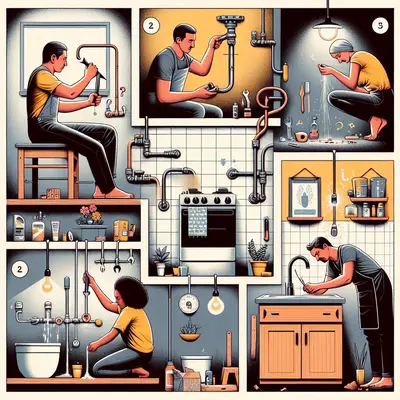
Unexpected problems at home don’t wait for your schedule, your budget, or your handyman. The good news: a lot of “call a pro” issues can be downgraded to “handle it now” with the right steps and a few basic tools. This guide walks you through five common household problems with clear, safe, and practical instructions you can actually follow today.
---
Stop a Dripping Faucet (Without Flooding the Sink)
A dripping faucet wastes water and quietly runs up your bill. Many leaks come from worn internal parts, not from the whole faucet “going bad.”
Tools & materials: Adjustable wrench, flathead and Phillips screwdriver, replacement cartridge or washers (match your faucet brand/model), towel.
Step‑by‑step:
**Shut off the water supply**
Look under the sink for two small shutoff valves (hot and cold). Turn both clockwise until they stop. Open the faucet to confirm water is fully off.
**Plug the drain and clear the area**
Use the sink stopper or a rag so you don’t lose screws or small parts. Move anything breakable away from the work area.
**Remove the handle**
Look for a decorative cap on the handle (often with hot/cold markings). Pry it off gently with a flathead screwdriver. Remove the screw underneath and pull the handle off.
**Identify your faucet type**
Most modern faucets are cartridge, ball, or ceramic disk types. A quick search of your faucet brand and model (often on the faucet body) will show the right internal part.
**Take out the cartridge or stem**
Use an adjustable wrench or pliers to loosen the retaining nut. Pull the cartridge or stem straight up. Note its orientation or take a photo for reassembly.
**Inspect and replace parts**
Look for cracked rubber, mineral buildup, or obvious wear. Either: - Replace the cartridge/stem with an identical new one, or - For older compression faucets, replace the rubber washer and O‑ring at the base.
**Reassemble in reverse order**
Install the new or cleaned part in the same orientation. Tighten the nut snugly (not overly tight), reinstall the handle, and replace the decorative cap.
**Turn water back on slowly**
Open the supply valves under the sink gradually. Turn on the faucet and check for drips or leaks underneath. If it still drips, confirm the part is seated correctly and tightened.
---
Reset a Tripped Breaker and Power Outage in One Room
Lights out in just one room usually means a tripped breaker or a tripped GFCI outlet—not a whole‑house electrical disaster.
Tools & materials: Flashlight, no‑contact voltage tester (recommended), patience.
Safety first: If you smell burning, see scorch marks, or hear buzzing from the panel or outlets, stop and call an electrician.
Step‑by‑step:
**Check other rooms and large appliances**
Confirm if the outage is limited to one area. If the whole house is dark, contact your utility company instead of opening the panel.
**Look for a tripped GFCI outlet**
In kitchens, bathrooms, garages, basements, and outside, find outlets with “TEST” and “RESET” buttons. If the “RESET” button is popped out, press it firmly in. Test your power again.
**Go to your main breaker panel**
Usually located in a basement, garage, hallway, or utility closet. Use a flashlight if needed.
**Find the tripped breaker**
A tripped breaker often sits between ON and OFF, or looks slightly out of alignment with the others. Some panels label tripped breakers with an orange or red marker.
**Turn the breaker fully OFF, then back ON**
Push it all the way to OFF until it clicks, then firmly back to ON. Check if power returns to the room.
**Unplug high‑demand devices**
If the breaker trips again, unplug space heaters, microwaves, hair dryers, or multiple power strips on that circuit. Reset the breaker, then plug items back in one at a time to identify the culprit.
**Know when to stop**
If the same breaker trips repeatedly with minimal load, or you see heat/discoloration at outlets, call a licensed electrician. That points to wiring or device issues, not just overload.
---
Quiet a Running Toilet That Won’t Stop Filling
A constantly running toilet can waste hundreds of gallons of water a day. The problem usually lives in the tank, not the bowl, and is often simple to fix.
Tools & materials: Adjustable wrench (optional), replacement flapper or fill valve if needed, towel.
Step‑by‑step:
**Remove the tank lid gently**
Place it on a flat, safe surface. Porcelain lids crack easily.
**Identify the main components**
Inside the tank you’ll see: - The **flapper** at the bottom (rubber piece that lifts when you flush) - The **chain** connecting the flapper to the handle arm - The **fill valve** on one side (with a float that moves up and down) - An **overflow tube** in the middle
**Check the flapper seal**
Flush once and watch. If the flapper doesn’t seat fully, water will keep leaking into the bowl. Press down on it gently—if the running sound stops, the flapper isn’t sealing.
**Adjust or replace the flapper**
- Remove the old flapper from the side pegs. - Take it to a hardware store to match size and style. - Install the new one on the pegs and connect the chain. The chain should have just a bit of slack (about 1–2 links), not tight and not dragging.
**Set the water level**
The water in the tank should sit about an inch below the top of the overflow tube. - For float‑cup valves: Turn the small screw on top or slide the clip on the rod to raise/lower the float. - For older ball‑cock types: Slightly bend the metal rod down to lower the level, or up to raise it.
**Test the flush a few times**
Flush and wait until the tank stops filling. The running sound should stop within a minute. If it keeps going and water is entering the overflow tube, lower the float more.
**Replace the fill valve if needed**
If water never fully shuts off or the valve hisses constantly, a new fill valve kit is often the simplest fix. Follow the included instructions; you’ll typically: - Turn off the toilet’s shutoff valve. - Empty the tank. - Disconnect the old valve under the tank. - Install the new one, adjust height, and reconnect.
---
Fix a Sticky Interior Door That Won’t Latch Smoothly
Doors that rub, won’t close properly, or stick in the frame are annoying and can signal minor alignment issues you can fix without rehanging the door.
Tools & materials: Phillips screwdriver, pencil, wood shims or playing cards, sandpaper or wood file, optional wood chisel.
Step‑by‑step:
**Find the exact problem spot**
Close the door slowly. Note where it rubs: top, latch side, or bottom. Look for fresh scrape marks on the door edge or frame.
**Tighten hinge screws first**
With the door open, tighten all screws on both the door and frame side of the hinges. Loose hinges can cause sagging and sticking.
**Test again after tightening**
Often, just securing the hinges moves the door enough to fix light rubbing. If it still sticks, continue.
**Shim the hinges if the door sags**
If the door rubs at the top corner opposite the hinges, it’s likely sagging. - Unscrew the bottom hinge slightly and slip a thin shim (cardboard or a trimmed playing card) behind the lower part of the hinge leaf on the frame. - Tighten back down. This nudges the door upwards slightly. - Re‑test, adjust with thicker or thinner shims as needed.
**Adjust the strike plate for latch issues**
If the latch doesn’t catch or you have to lift/push the door to latch: - Close the door until the latch touches the strike plate. Mark where it hits. - If the latch is too high or low, loosen strike plate screws and move it slightly up/down and in/out. Retighten and test.
**Lightly sand where it’s rubbing**
For minor rubbing (especially in humid seasons): - Mark the rub area with a pencil. - Remove the door from hinges if needed. - Sand or file the marked area lightly, test, and repeat until it closes cleanly. Don’t remove more wood than necessary.
**Know when it’s beyond DIY**
If the frame itself is out of square (visible gaps or warping), or you see cracks in framing around the door, you may need professional carpentry, especially in older homes or after foundation shifts.
---
Seal a Drafty Window to Cut Energy Waste
Drafty windows make rooms uncomfortable and force your heater or A/C to work overtime. Tightening the seal around the window is usually affordable and fast.
Tools & materials: Caulk gun, exterior‑grade caulk (for outside gaps), paintable interior caulk or sealant (for inside), weatherstripping tape, utility knife, rag.
Step‑by‑step:
**Find the leaks**
On a breezy day, close all windows and doors. Hold a lit incense stick or a damp hand near window edges and corners. If the smoke or cool air moves sideways, you’ve found a draft.
**Decide: inside, outside, or both**
- Gaps between the window frame and wall: Usually sealed from the inside and/or outside with caulk. - Draft through the movable sash: Typically fixed with weatherstripping along the sides and bottom.
**Clean the surfaces**
Wipe down window frames and surrounding wall areas. Remove loose old caulk with a scraper or utility knife. Clean and dry thoroughly; caulk sticks best to clean surfaces.
**Apply caulk to fixed gaps**
- Cut the caulk tube tip at a 45° angle, creating a small opening. - Run a smooth, continuous bead along gaps where the frame meets the wall (inside) or siding (outside). - Use a dampened finger or caulk tool to smooth the bead and press it into the gap.
**Install weatherstripping for movable parts**
For sliding or double‑hung windows: - Measure the length of the sides and bottom where drafts come in. - Cut foam or rubber weatherstripping tape to length. - Peel backing and press firmly along the inside of the frame where the sash closes.
**Check operation after sealing**
Open and close the window a few times to ensure it still moves freely and locks securely. Adjust any areas where weatherstripping is too thick or catches.
**Watch for condensation or moisture**
If you still notice fogging between glass panes, that’s usually a failed insulated glass seal, not just air leaks. That often requires glass replacement or professional repair, but your draft‑sealing work will still cut air loss around the frame.
---
Conclusion
Most everyday home problems are less about “major repair” and more about knowing what to do in the first 15 minutes. With a few basic tools and these step‑by‑step processes, you can stop wasting water, save on energy, avoid unnecessary service calls, and keep your home running smoothly. Start with the issue bothering you most today, work through the steps calmly, and remember: you can always call a pro—but it pays to know what’s actually going wrong before you do.
---
Sources
- [U.S. Environmental Protection Agency – Fix a Leak](https://www.epa.gov/watersense/fix-leak-week) - Explains how household leaks (like dripping faucets and running toilets) waste water and how to identify them
- [Energy.gov – Air Sealing Your Home](https://www.energy.gov/energysaver/air-sealing-your-home) - Government guidance on finding and sealing air leaks around windows and doors to improve efficiency
- [Family Handyman – How to Fix a Leaking Toilet](https://www.familyhandyman.com/project/how-to-fix-a-leaking-toilet/) - Detailed, illustrated instructions for common toilet tank repairs
- [The Spruce – How to Fix a Door That Sticks](https://www.thespruce.com/fix-a-door-that-sticks-1821468) - Practical troubleshooting steps for adjusting and repairing sticky interior doors
- [Schneider Electric – Resetting Circuit Breakers Safely](https://www.se.com/us/en/faqs/FA164306/) - Manufacturer guidance on how to safely identify and reset tripped breakers in a home panel
Key Takeaway
The most important thing to remember from this article is that this information can change how you think about Household Repairs.