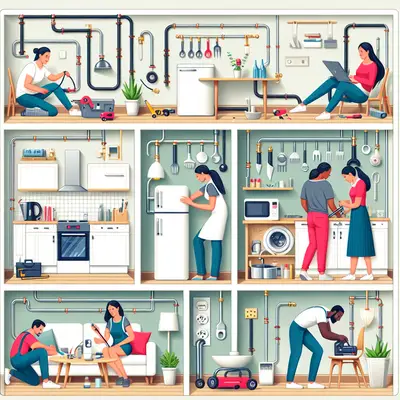
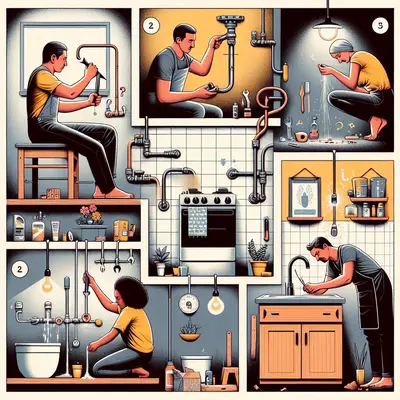
When something goes wrong at home, you usually face two choices: wait for a pro or roll up your sleeves and handle it yourself. The good news: a lot of “call a repair tech” problems are actually “follow a checklist” problems. This guide walks you through five common household issues with clear, step‑by‑step fixes so you can stabilize the situation, stay safe, and decide if you even need outside help.
---
1. When a Wall Outlet Suddenly Stops Working
A dead outlet can be annoying—or a sign of a safety issue. Before assuming the wiring has failed, walk through this simple sequence.
Step‑by‑step fix
**Test the outlet with two devices**
Plug in something simple like a lamp or phone charger, then try another device. This rules out a bad cord or appliance.
**Check the breaker panel**
- Find your electrical panel (basement, hallway, garage, or utility closet). - Look for any breaker that’s slightly out of line or sitting between ON and OFF. - Flip questionable breakers fully OFF, then back to ON. - Retest the outlet.
**Look for a GFCI outlet in the same area**
Kitchens, bathrooms, basements, garages, and outdoor circuits often share a GFCI (Ground‑Fault Circuit Interrupter) outlet. - Find any outlet with TEST and RESET buttons. - Press RESET firmly until you feel a click. - Check the dead outlet again.
**Inspect for signs of damage**
- Look for scorch marks, melted plastic, buzzing sounds, or a burnt smell. - If you see or smell anything unusual, **stop** and turn off the breaker for that circuit. This is now a job for a licensed electrician.
**Try the reset once more after unplugging everything**
- Unplug all devices from the dead outlet and any outlets on the same wall. - Reset the GFCI again (if present) and check the breaker. - Test the outlet with a single low‑power device like a phone charger.
When to call a pro
- Breaker immediately trips again after reset
- Outlet is hot to the touch or visibly damaged
- Lights flicker when you plug something in
In those cases, leave the breaker OFF and call an electrician—your job is to prevent more damage, not push your luck.
---
2. Stopping a Running Toilet Without Replacing Everything
A toilet that won’t stop running wastes water and money, but the internal parts are designed to be user‑serviceable. Most fixes are simple adjustments, not full replacements.
Step‑by‑step fix
**Remove the tank lid and observe**
Flush once and watch: where is the water moving continuously? Over the top of the overflow tube? Dribbling from the flapper? Constantly refilling?
**Check the flapper seal**
- Gently press down on the rubber flapper at the bottom of the tank. - If the running sound stops, the flapper is not sealing. - Wipe the rim it sits on with a sponge to remove mineral buildup. - If it’s brittle, warped, or cracked, note the brand/size and plan to replace it (inexpensive and usually tool‑free).
**Adjust the chain**
- The chain from handle to flapper should have a little slack but not so much that it gets caught under the flapper. - If it’s too tight or too loose, move the hook to another link to fine‑tune.
**Set the water level correctly**
- Locate the fill valve (usually on the left side of the tank). - Identify the adjustment: - **Float cup style**: a screw on top or a clip on a rod. - **Float ball style**: a screw where the arm attaches. - Lower the float so the water stops about 1 inch below the top of the overflow tube. This prevents overfilling and constant draining.
**Clean or replace the fill valve if it hisses constantly**
- Turn off the shutoff valve behind the toilet (clockwise). - Flush to empty most of the tank. - Remove the cap of the fill valve (follow the diagram on the valve or online for your model). - Rinse any debris and reassemble. - If problems persist, a universal fill valve kit is a straightforward swap with basic tools.
When to call a pro
- The shutoff valve won’t turn or is leaking
- Cracks in the tank or water appearing on the floor that isn’t from condensation
Your priority is to stop water waste and leaks quickly; fine‑tuning parts keeps the toilet running efficiently without major work.
---
3. Quieting a Squeaky Interior Door
A squeaky door is more than a minor annoyance—it’s a daily stressor you can fix in minutes. Most squeaks come from friction at the hinge pins.
Step‑by‑step fix
**Confirm the squeak source**
Slowly open and close the door while listening closely. - If the noise lines up with hinge movement, it’s a hinge issue. - If it scrapes at the top or bottom, the door is rubbing the frame or floor.
**Start with the simplest lube method**
- Have a rag or paper towel ready to catch drips. - Apply a small amount of lubricant to the hinge: - Silicone spray - White lithium grease - In a pinch: a drop of cooking oil (short‑term solution; can attract dust) - Open and close the door a dozen times to work the lubricant into the joint.
**Remove and clean the hinge pin (deeper fix)**
- One hinge at a time, tap the bottom of the hinge pin upward with a screwdriver and hammer. - Wipe the pin to remove old grime and rust. - Lightly coat the pin with lubricant or petroleum jelly. - Reinsert the pin and wipe excess.
**Check for door rubbing**
- Look for paint scuff marks at the frame or floor. - Tighten hinge screws with a screwdriver; loose hinges can cause sagging. - If the door still rubs at the top, place a small shim (like a piece of thin cardboard) behind the bottom hinge leaf on the frame side and retighten screws. This can nudge the door slightly.
**Stabilize loose screw holes**
- If screws spin without gripping, remove them. - Insert wooden toothpicks dipped in wood glue into the hole, snap them flush, and reinstall the screws. - This gives the screw fresh material to bite into.
When to call a pro
- The door frame itself is separating from the wall
- You see cracks above the door that suggest structural movement
Otherwise, small hinge adjustments are safe and very DIY‑friendly.
---
4. Clearing a Slow Bathroom Sink Drain (Without Harsh Chemicals)
A sink that takes forever to empty is usually clogged near the top of the drain, not deep in the pipes. You can often fix it with basic tools and a bit of disassembly.
Step‑by‑step fix
**Start with a simple flush test**
Fill the sink halfway and pull the stopper. - If water drains slowly but does move, the blockage is partial. - If almost no water moves, you have a near‑total clog.
**Remove and clean the stopper**
- Look under the sink at the back of the drainpipe for a small horizontal rod connected to the lift rod. - Unscrew the nut that holds the rod to the drain (have a small container ready for drips). - Pull the rod out gently. - Lift the stopper from the sink basin. - Clean hair, soap scum, and debris from the stopper and drain opening using a brush or paper towel.
**Use a drain snake or plastic clog remover**
- Insert a flexible plastic drain tool or small hand snake into the drain opening. - Push in gently, then pull out, removing any clumps of hair and gunk. - Repeat until the tool comes out relatively clean.
**Reassemble the stopper mechanism**
- Reinsert the stopper from the top. - From under the sink, slide the rod back in until it engages the hole in the stopper. - Tighten the retaining nut by hand, then just a bit more with pliers—don’t overtighten.
**Flush with hot water and mild cleaner**
- Run hot tap water for a few minutes. - Optionally, pour a mixture of hot water and a small amount of dish soap down the drain to help break up remaining residue. - Avoid routinely relying on harsh chemical drain cleaners; they can damage pipes and are unsafe to handle frequently.
When to call a pro
- You notice leaks from the P‑trap or drain joints that don’t stop after tightening slip nuts gently
- Repeated clogs return quickly, suggesting a deeper line issue
Your goal is to physically remove buildup near the sink instead of masking it with chemicals.
---
5. Resetting a Tripped Kitchen Appliance Circuit (Safely)
Microwaves, coffee makers, toasters, and air fryers often share a circuit. If everything suddenly shuts off, your first job is to restore power safely and prevent an immediate repeat.
Step‑by‑step fix
**Unplug or turn off all devices on the dead section**
- Don’t reset anything yet. - Unplug every appliance from the affected outlets to reduce load and avoid a spark when power returns.
**Locate the GFCI outlet controlling the area**
- Check backsplash outlets, near the sink, or any outlet with TEST and RESET buttons. - Press RESET once and see if the outlet’s indicator light or connected device powers up. - If nothing happens, move on to the main panel.
**Reset the breaker**
- Go to your electrical panel. - Identify any breaker labeled “kitchen,” “counter,” or that’s partially tripped. - Flip it fully OFF, then back to ON. - Return to the kitchen and test a single outlet with a low‑draw device like a phone charger.
**Reconnect appliances strategically**
- Plug in one major appliance at a time (microwave, then toaster, etc.). - Run each briefly while watching for any flicker or breaker trip. - Avoid running multiple high‑wattage devices on the same outlet or power strip simultaneously.
**Label and redistribute load if possible**
- Once you know which outlets share a circuit (by testing what dies when you trip the breaker), make a quick sketch or label. - Move some appliances to other circuits if possible (e.g., plug the microwave into a dedicated outlet if available). - This proactive step reduces future nuisance trips.
When to call a pro
- Breaker trips instantly with no appliances plugged in
- You smell burning plastic or see scorch marks at outlets
- The breaker feels hot or hums/buzzes
In these cases, leave the breaker OFF and schedule an electrician; you’ve done the right thing by not forcing the circuit back online.
---
Conclusion
Most everyday household failures follow a pattern: something simple fails or gets out of adjustment, the system misbehaves, and frustration climbs. By working through a clear sequence—inspect, test, adjust, then escalate if needed—you can solve a surprising number of problems yourself while staying safe.
Use this blueprint as a starting point: stabilize the situation, try the low‑risk fixes, and don’t hesitate to stop and call a professional when signs of damage, burning, or leaks appear. With a bit of know‑how and a calm, step‑by‑step approach, your home becomes less of a mystery and more of a system you can manage confidently.
---
Sources
- [U.S. Consumer Product Safety Commission – Home Electrical Safety Checklist](https://www.cpsc.gov/s3fs-public/513.pdf) - Guidance on recognizing electrical hazards and using circuits and outlets safely
- [Occupational Safety and Health Administration (OSHA) – GFCI Fact Sheet](https://www.osha.gov/sites/default/files/publications/ground-fault-circuit-interrupters-factsheet.pdf) - Explains how GFCI outlets work and where they’re required
- [U.S. Environmental Protection Agency – WaterSense: Fixing Leaks](https://www.epa.gov/watersense/fix-leak-week) - Information on common household leaks, including toilets, and how to reduce water waste
- [Family Handyman – How to Fix a Squeaky Door](https://www.familyhandyman.com/project/how-to-fix-a-squeaky-door/) - Practical demonstration of hinge lubrication and minor door adjustments
- [University of Illinois Extension – Household Drain Care and Maintenance](https://extension.illinois.edu/blogs/save-energy-save-money/2019-02-22-household-drain-care-and-maintenance) - Best practices for maintaining drains and avoiding clogs
Key Takeaway
The most important thing to remember from this article is that this information can change how you think about Household Repairs.