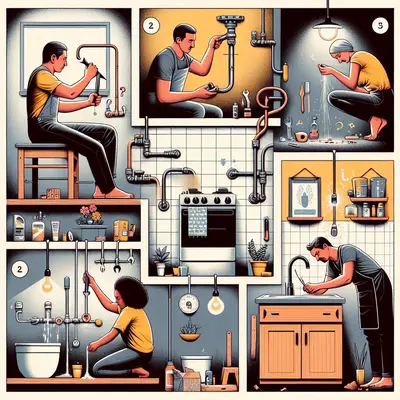
Right now, feeds are full of “get your house in order before Christmas” content—like Bored Panda’s trending piece “27 Ways To Get Your House In Order Now, Because We All Know Christmas Is About To Undo It All.” That panic is real: people are about to host relatives, pack in decorations, and cook way more than usual, and suddenly every little home issue feels bigger.
Instead of doing a full HGTV makeover, focus on fast repairs that actually make your place work better under holiday pressure. These are targeted fixes you can do in a weekend that will pay off when the house is full, the sink is loaded, and someone’s asking where the extra towels are.
Below are five practical, step‑by‑step repairs you can tackle now so your home survives the coming holiday storm.
---
1. Fix A Slow Or Clogged Sink Before Guests Arrive
Holiday cooking + extra handwashing = guaranteed sink trouble. A slow drain that’s “annoying but fine” in October can turn into a full clog by Christmas Eve.
You’ll need:
- Rubber gloves
- Old rag or paper towels
- Baking soda and white vinegar *or* enzyme drain cleaner
- Plunger (cup-style for sink, flange-style for toilet)
- Bucket and adjustable wrench (optional but helpful)
Step‑by‑step:
- **Clear the area.**
Empty under-sink storage so you can reach the trap (the U-shaped pipe) if needed. Remove standing water from the sink with a cup and rag.
- **Try a simple plunge first.**
- If there’s an overflow hole, cover it with a wet rag.
- Fill the sink with a few inches of hot tap water.
- Place the plunger over the drain, press down to seal, then plunge firmly 10–15 times.
- Lift quickly. If water drains fast, you’ve likely cleared it.
- **Use a baking soda + vinegar flush (for greasy buildup).**
- Pour about 1/2 cup baking soda directly into the drain.
- Follow with 1/2–1 cup white vinegar.
- Let it fizz for 15–20 minutes.
- Flush with a full kettle or pot of hot (not boiling on PVC) water.
- **Clean the trap if plunging doesn’t work.**
- Put a bucket under the U-shaped pipe.
- Loosen the slip nuts by hand or with an adjustable wrench.
- Remove the trap and clear gunk with a bottle brush or old toothbrush.
- Reassemble, making sure washers are seated correctly. Hand-tighten, then snug gently with a wrench—don’t overtighten.
- **Prevent repeat clogs during the holidays.**
- Use a drain strainer when peeling veggies or washing dishes.
- Wipe greasy pans with a paper towel before washing.
- Once guests leave, repeat the baking soda + hot water flush.
---
2. Stop That Running Toilet That Wastes Water And Embarrasses Hosts
A toilet that runs forever after flushing is more than annoying—it drives up your water bill and is extra stressful when the house is full of people.
You’ll need:
- Adjustable pliers (optional)
- New flapper (usually $5–$12) if yours is worn
- Towel or sponge
Step‑by‑step:
- **Diagnose the issue in under a minute.**
- Remove the tank lid and set it carefully aside.
- Flush and watch:
- If water keeps spilling into the overflow tube: the water level is set too high or the fill valve is misadjusted.
- If the tank keeps refilling and you see ripples: the flapper likely isn’t sealing.
- **Adjust the water level.**
- Most modern toilets have a fill valve with an adjustment screw on top or a sliding clip.
- Turn the screw or move the clip to lower the float so water stops about 1 inch below the top of the overflow tube.
- **Check and clean the flapper.**
- Turn off the water at the shutoff valve behind the toilet (turn clockwise).
- Flush to empty the tank.
- Inspect the rubber flapper: is it warped, slimy, or cracked?
- Wipe the flapper and the seat it rests on with a rag or sponge to remove slime and mineral buildup.
- Turn water back on and test. If it still seeps, replace it.
- **Replace the flapper (fast upgrade).**
- Turn water off and drain tank again.
- Unhook the chain and side clips connecting the old flapper.
- Take it to the hardware store to match the style/size.
- Install the new one, making sure the chain has a little slack but isn’t dragging.
- Turn the water back on and do a few test flushes.
- **Final holiday check.**
- Flush and listen: the tank should fill, stop, and stay quiet.
- If you still hear periodic filling (“ghost flushing”), the flapper seal is still the culprit—re-seat it or try a different model that better matches your valve.
---
3. Quiet Squeaky Doors Before Guests Start Waking Each Other Up
When your house is full, every midnight bathroom trip turns into a sound show if the doors squeak. This is one of the easiest pre-holiday fixes.
You’ll need:
- Lubricant: silicone spray, white lithium grease, or even petroleum jelly in a pinch
- Rag or paper towels
- Flathead screwdriver or utility knife (optional)
Step‑by‑step:
- **Find the source of the squeak.**
Slowly open and close the door. If the noise lines up with hinge movement, you’re in classic squeaky hinge territory.
- **Protect nearby surfaces.**
Place a towel or rag under the hinge to catch drips. If using spray lubricant, you can shield the nearby wall/trim with a piece of cardboard.
- **Apply lubricant the simple way.**
- Open the door to 90°.
- Spray or rub lubricant directly onto the hinge pins and pivot points.
- Open and close the door 15–20 times to work it in.
- Wipe excess to prevent drips and dust collection.
- **For stubborn squeaks, remove the hinge pin.**
- Use a flathead screwdriver under the bottom of the pin head and gently tap upward with your palm.
- Clean the pin with a rag; if rusty, scrub lightly with fine steel wool.
- Coat the pin with a thin layer of grease or petroleum jelly.
- Reinsert and tap gently down until fully seated.
- **Check alignment.**
If your door still makes noise, it might be rubbing against the frame. Tighten any loose hinge screws. If screws just spin, use a wooden toothpick dipped in wood glue as a filler, then reinstall the screw.
---
4. Seal Drafty Windows So Guests Aren’t Freezing On The Couch
Energy prices are in the news constantly, and winter drafts hit wallets hard. Fixing leaky windows is a quick comfort upgrade before you add guests, blankets, and space heaters into the mix.
You’ll need:
- Candle or lighter *or* a strip of tissue for draft detection
- Weatherstripping (foam tape or adhesive rubber)
- Rope caulk or removable caulk (for temporary winter fixes)
- Scissors and utility knife
Step‑by‑step:
- **Find the leaks quickly.**
- On a windy day or with fans running, close windows and turn off HVAC.
- Move a lit candle, lighter, or tissue slowly around window edges; flickering or movement means air leakage.
- **Weatherstrip movable parts.**
- Clean the window frame with a damp cloth and let dry.
- Apply adhesive foam tape along the sash where the window closes against the frame.
- Close the window to test: you want a snug seal, not a struggle to close.
- **Seal small gaps around trim.**
- For gaps where the trim meets the wall, run a bead of paintable caulk and smooth with a damp finger.
- If you’re renting or want seasonal-only fixes, use removable caulk or rope caulk so you can peel it away in spring.
- **Handle old, rattling windows.**
- Use rope caulk along the edges of the sash to stop rattling and drafts.
- For unused windows in winter, you can add a clear shrink-film window insulation kit: apply tape, stick film, and shrink with a hairdryer.
- **Check again at night.**
- On a cold evening, run your hand around the window perimeter.
- If you still feel strong drafts, focus on the worst offenders—often the top sash on double-hung windows that’s slipped slightly down.
---
5. Stabilize A Wobbly Chair Or Table Before Someone Spills A Drink
Extra guests mean pulling out every spare chair and side table you own. The last thing you need is a wobbly leg turning into a broken piece mid-dinner.
You’ll need:
- Wood glue
- Clamps or strong tape/straps
- Wood filler or toothpicks
- Sandpaper
- Felt pads or shims
Step‑by‑step:
- **Identify the actual problem.**
- Is the surface uneven (one leg shorter)?
- Is a joint loose (you feel movement where leg meets seat or table frame)?
- Does the floor slope or have dips (common in older homes)?
- **Quick floor-fix first.**
- Move the piece to a different spot. If the wobble disappears, the floor is the issue.
- Stick furniture felt pads under the shorter leg. Stack pads until the wobble stops.
- For a less visible fix on tables, use a thin wood or plastic shim.
- **Tighten hardware on modern furniture.**
- Flip the piece carefully.
- Tighten screws, bolts, or brackets with the appropriate screwdriver or hex key.
- If a screw hole is stripped (screw spins freely), remove the screw.
- **Repair stripped screw holes.**
- Pack the hole with wood glue and broken wooden toothpicks or matchsticks.
- Let it sit a few minutes, then break off excess flush with the surface.
- Reinsert the screw—now it will bite into the reinforced wood.
- **Re-glue loose wooden joints.**
- Gently pull apart the loose joint if possible.
- Sand old glue residue lightly.
- Apply wood glue inside the joint, reassemble, and clamp firmly.
- Wipe away squeezed-out glue with a damp cloth.
- Let it cure fully (check glue instructions—usually at least 8–24 hours) before using.
---
Conclusion
Holiday “house in order” lists are trending because the pressure is real—but you don’t need a total home overhaul to feel ready. Focus on the repairs that guests actually notice and that protect your sanity: drains that work, toilets that behave, doors that don’t squeal, rooms that aren’t drafty, and furniture that doesn’t wobble.
Pick one or two of these fixes to do this week, then share your before/after (or your best “it used to sound like THIS” squeak demo) and tag it—people are genuinely looking for practical, real-world upgrades right now. When the holiday chaos hits, your house will be ready to handle it.
Key Takeaway
The most important thing to remember from this article is that this information can change how you think about Household Repairs.