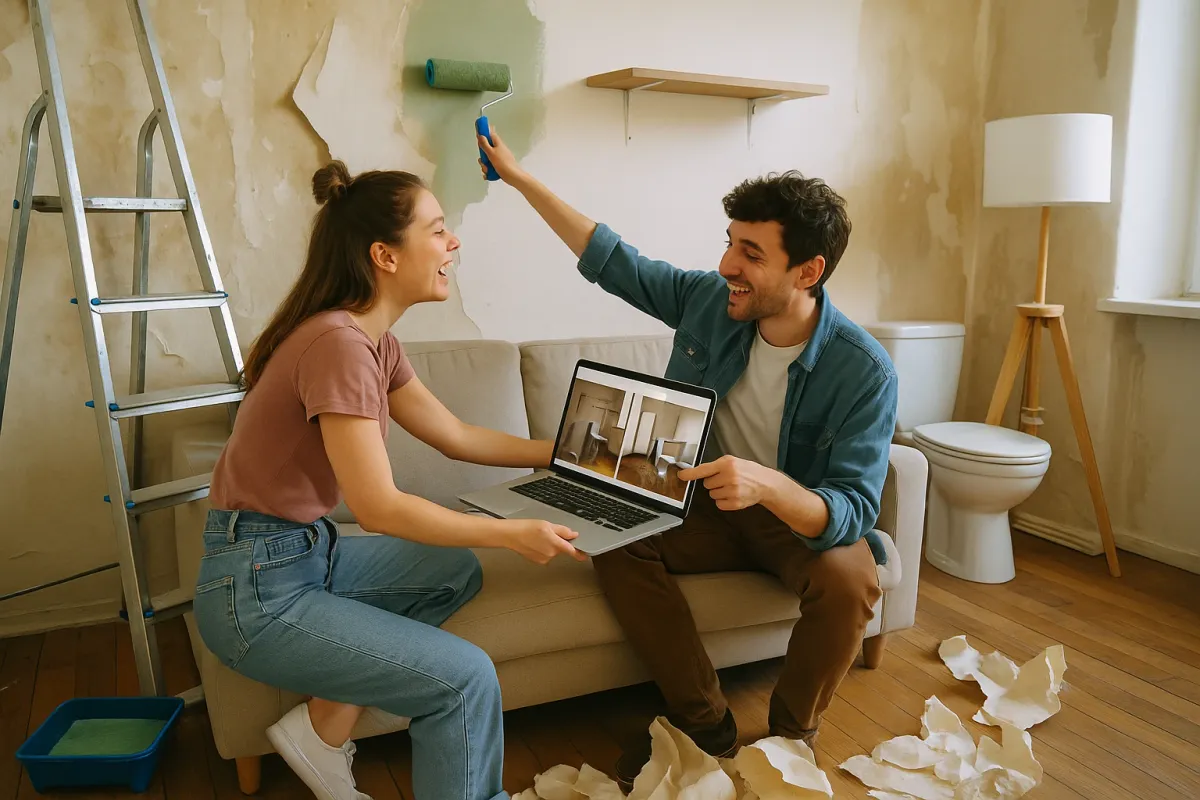
If you’ve scrolled past those viral “real estate listings from hell” on social media lately, you’ve seen the worst of the worst: photos from Zillow, Rightmove and Craigslist showing nightmare bathrooms, cursed kitchens, and living rooms that look like crime scenes. Bored Panda’s recent roundup of these disaster listings is blowing up again because, frankly, a lot of us recognize a milder version of that chaos at home.
The good news: you don’t need a contractor—or a full remodel budget—to keep your place from ending up in the next viral thread. With some targeted DIY fixes, you can turn “oh no” spaces into “this is actually pretty nice” in a weekend.
Below are five practical, step‑by‑step repairs to tackle the same core problems those listings highlight: grime, bad lighting, scary walls, and layouts that make no sense.
---
1. Turn a “Listing From Hell” Bathroom Into Something You Can Show Guests
Those viral photos of moldy grout, peeling caulk, and mystery stains? That’s usually not a knock‑it‑down problem—it’s a neglect problem. Here’s how to rehab a tired bathroom fast.
You’ll need:
- Bleach or mold remover
- Grout brush or old toothbrush
- Utility knife
- Painter’s tape
- Tub/tile caulk (mold‑resistant, silicone or siliconized acrylic)
- Caulk smoothing tool or wet finger
- Microfiber cloths
Steps:
- **Attack the grout and caulk mold.**
Mix 1 part bleach with 3 parts water (or use a commercial mold remover), ventilate the room, and scrub tile grout and caulk lines with a stiff brush. Let it sit per instructions, then rinse.
- **Cut out failed caulk.**
If the caulk is cracked, yellow, or pulling away (exactly what we see in those viral listing photos), score along both sides with a utility knife and peel it out. Clean the gap thoroughly and let it dry at least an hour.
- **Tape for clean lines.**
Run painter’s tape about 1/8" from each side of the gap where new caulk will go. This small step is the difference between “DIY horror” and “did you hire someone?”
- **Apply fresh caulk.**
Cut the nozzle at a 45° angle, small opening. Run a steady bead along the seam (tub to wall, sink to counter, etc.). Don’t worry if it’s not perfect; the next step fixes that.
- **Smooth and remove tape.**
Wet a finger or use a caulk tool to smooth the bead in one continuous pass. Pull tape away immediately, at a 45° angle. Let cure per tube instructions (usually 24 hours) before getting it wet.
- **Finish with a deep clean and one “nice” upgrade.**
Wipe all surfaces, shine fixtures with glass cleaner, and—if budget allows—swap one ugly element that photographs badly: a cracked toilet seat, a corroded shower head, or a yellowed shower curtain.
Result: Instead of “don’t let the health inspector see this,” you get a bright, tight, mold‑free bathroom that won’t scare off buyers, landlords, or guests.
---
2. Fix “Why Is This Room So Dark?” With Simple Layered Lighting
Those infamous listing photos where a room looks like a cave—even at noon—are usually caused by one overhead light and nothing else. You can repair your lighting situation without rewiring the house.
You’ll need:
- 2–3 plug‑in lamps (floor + table)
- LED bulbs (warm white, 2700K–3000K)
- Optional: plug‑in wall sconces or smart bulbs
Steps:
- **Identify the problem corners.**
At night, stand in each main room and note where it feels like a black hole—usually far corners and seating areas.
- **Add three light “layers.”**
- **Ambient:** your existing ceiling light or a bright floor lamp.
- **Task:** lamp for reading, desk work, or kitchen counters.
- **Accent:** softer lights that make the room feel intentional (lamp on a console, plug‑in sconce by art, etc.).
- **Place floor lamps strategically.**
For a typical living room, put a floor lamp behind or beside the main seating area, shining up and out. This “bounces” light off the ceiling and instantly makes photos—and real life—look better.
- **Use the right bulbs.**
Swap mystery mix bulbs for warm white LEDs in similar brightness (800–1100 lumens per major fixture). Avoid mixing harsh “daylight” with warm bulbs in the same room—it photographs terribly.
- **Control glare.**
Use shades or diffusers so you don’t see bare bulbs in photos. A cheap shade can make a $10 lamp look intentional.
- **Group lights on power strips or smart plugs.**
That way, one switch (or voice command) turns the space from “basement dungeon” to “magazine‑ready” in seconds.
Result: Your rooms stop looking like the worst parts of those viral listings and start looking inviting—on camera and in person.
---
3. Repair “Scary Wall” Damage Without Calling a Contractor
In the “real estate listings from hell” gallery, damaged walls are everywhere: random holes, peeling paint, and mystery patches. Most of that is fixable with basic tools and a little patience.
You’ll need:
- Spackle or joint compound
- Putty knife (2–4")
- Sanding sponge (120–220 grit)
- Primer (stain‑blocking if you have water marks)
- Matching paint (or a close neutral)
- Paintbrush or small roller
Steps (for nail holes and small dents):
- **Clean the spot.**
Wipe dust and grease off with a damp cloth. Dry.
- **Fill the hole.**
Press spackle into the hole with your putty knife, then scrape flat so only a thin layer remains on the wall.
- **Let dry and sand.**
Once dry (usually under an hour for small fills), lightly sand until smooth and flush with the wall.
- **Prime and paint.**
Dab on primer if needed, let dry, then touch up with paint using a small brush or roller, feathering out the edges.
Steps (for bigger holes—up to a few inches):
- **Square the damage.**
Cut a neat square or rectangle around the torn area with a utility knife. It’s easier to patch a clean shape than a random rip.
- **Use a patch kit.**
Self‑adhesive mesh patch kits are made exactly for this. Stick the patch over the hole, centering it.
- **Apply joint compound in layers.**
Spread compound over the patch, extending a couple inches past it. Let dry, sand lightly, and repeat with a wider, thinner coat. Usually 2–3 passes does it.
- **Prime and paint.**
Don’t skip primer on compound; it soaks paint differently and will flash in photos. Then paint the full wall or at least corner to corner to hide any subtle color difference.
Result: Instead of walls that look like a before photo from a demolition blog, you get smooth, clean surfaces that don’t scream “what happened here?”
---
4. Make a “Cursed” Kitchen Look Clean and Functional in One Weekend
A lot of the nightmare listing kitchens going viral right now share the same sins: cluttered counters, greasy cabinets, and visual chaos. You don’t have to replace cabinets or appliances to fix the worst of it.
You’ll need:
- Degreaser (like Krud Kutter or a strong dish soap solution)
- Microfiber cloths and scrub pad
- Screwdriver or drill (for hardware)
- Peel‑and‑stick backsplash tiles (optional but powerful)
- Drawer organizers or small bins
Steps:
- **Clear the counters completely.**
Remove everything except the major appliances you use daily (coffee maker, toaster, etc.). This instantly removes about 50% of the “photo horror” factor.
- **Deep‑clean cabinets and hardware.**
Spray degreaser on doors and handles, let it sit, then scrub and wipe. Pay special attention to the zones near the stove and above the range—these are the areas that look worst in photos and in person.
- **Fix or replace the most offensive hardware.**
Tighten loose handles; replace the obviously mismatched or broken ones. In many viral listings, hardware alone makes a kitchen look 30 years worse than it is.
- **Freshen the backsplash zone.**
If you have stained wallboard or dated tile, peel‑and‑stick backsplash panels are a fast repair. Clean the surface well, dry it, and follow the grid lines. Start in the most visible area first (behind the stove or sink).
- **Create “drop zones” inside cabinets.**
Use cheap bins or boxes to group items: one for baking, one for breakfast, one for snacks. Anything that doesn’t belong on the counter gets a home inside a cabinet. If you’d be embarrassed to photograph it on the counter, it should be behind a door.
- **Stage for function, not clutter.**
Put only a few frequently used, visually consistent items back out: knife block, one plant or bowl of fruit, cutting board. This isn’t just for photos—your brain will feel less overloaded.
Result: Instead of a chaotic, greasy “do I dare cook here?” vibe, you get a clean, simple kitchen that feels intentional and is much easier to keep that way.
---
5. Fix Weird Layouts That Make Your Room Look Smaller (No Demo Required)
Many of the worst real‑estate listings going viral right now share one subtle problem: the furniture layout fights the room. Sofas blocking windows, beds crammed into corners, or paths blocked by random chairs. You can “repair” a bad layout with zero construction.
You’ll need:
- Measuring tape
- Painter’s tape (optional)
- Felt pads for furniture feet
- Willingness to move heavy stuff once
Steps:
- **Measure and map.**
Sketch a quick floor plan with rough measurements. Mark doors, windows, and outlets. You don’t need software; just enough to think before you shove.
- **Define the main purpose of the room.**
Is this primarily for sleeping, watching TV, working, or eating? The main function should drive where the main piece of furniture goes (bed, sofa, desk, dining table).
- **Give every room a clear “entry path.”**
When you walk in, you shouldn’t bump into furniture immediately (a common “listing from hell” mistake). Leave at least 30" of clear walkway from the door.
- **Center big pieces on something.**
In living rooms, center the sofa on a focal point: window, TV wall, or fireplace. In bedrooms, center the bed on the main wall visible from the door. Off‑center major items make photos and real life feel awkward.
- **Use painter’s tape to test layouts.**
Tape out the footprint of where you think the sofa or bed should go. Walk around it. Check door swings and window access. Adjust on the floor plan before you move the actual furniture.
- **Float furniture when walls don’t work.**
If your walls are broken up by doors and windows, pull the sofa a bit off the wall and anchor it with a rug, coffee table, and a lamp behind. This can actually make small rooms feel bigger and avoids the “everything shoved to the edges” look seen in so many bad listings.
- **Finish with symmetry where possible.**
Two matching lamps by the bed, two similar chairs flanking a sofa, or balanced art above the couch makes the space feel intentional and calm.
Result: Your rooms photograph—and feel—bigger, more functional, and much less like the cursed layouts everyone’s laughing at online.
---
Conclusion
Those viral “real estate listings from hell” are a warning, but they’re also a cheat sheet: they show you exactly what not to do at home. You don’t need a full renovation to avoid becoming the next meme; you need targeted repairs to the real problems—grime, gaps, bad lighting, damaged walls, and broken layouts.
Pick one area from this list—bathroom, lighting, walls, kitchen, or layout—and fix it this week. Take a before and after photo. You’ll see how a few hours of focused DIY can move your home from “please don’t post this online” to “I’d actually share this.”
Key Takeaway
The most important thing to remember from this article is that this information can change how you think about DIY Solutions.