A lot of “little” problems around the house aren’t serious enough to call a pro, but they’re annoying enough to drive you crazy: the door that won’t stop squeaking, the running toilet, the outlet that doesn’t seem right. This guide walks you through five common issues with clear, no-drama steps so you can solve them safely and quickly—and feel more in control of your space.
---
1. Silencing a Squeaky Door Hinge
A squeaky door usually just means the hinge isn’t lubricated or aligned properly. Fixing it is fast and instantly satisfying.
What you’ll need
- Paper towel or cloth
- Multi-purpose lubricant (like WD‑40) *or* petroleum jelly
- Small flathead screwdriver (optional)
- Step stool (if needed)
Step-by-step
**Check the source of the squeak**
Open and close the door slowly. Listen to which hinge (top, middle, or bottom) squeaks. This helps you target your fix.
**Protect the area**
Place a cloth or paper towel under the hinge to catch drips. If there’s existing dark grime, wipe it off first so you’re not lubricating dirt.
**Apply lubricant directly to the hinge**
- Spray a small amount of lubricant at the top of the hinge pins and along the moving parts. - If using petroleum jelly, rub a thin layer directly onto the hinge joints with your finger or a cotton swab.
**Work the hinge**
Open and close the door 10–15 times to work the lubricant into the hinge. Add a tiny bit more if needed, but don’t overdo it—too much can drip and attract dust.
**Tighten loose screws if it still squeaks**
If the door sags or squeaks again quickly, check and tighten hinge screws with a screwdriver. Loose hinges make noise and can misalign the door over time.
**Wipe excess**
Use a clean cloth to wipe off any dripping or extra lubricant. This keeps the hinge cleaner and safer, especially if kids or pets touch the area.
---
2. Stopping a Toilet That Won’t Stop Running
A running toilet wastes a lot of water and money. Most of the time, the problem is in the tank and can be solved without tools.
What you’ll need
- Rubber gloves (optional but helpful)
- Old towel (to protect the floor)
- Replacement flapper (if needed)
Step-by-step
**Remove the tank lid and look inside**
Gently lift off the tank lid and place it on a towel. Inside you’ll see the flapper (rubber piece at the bottom), the fill valve, and the float.
**Test the flapper seal**
Flush the toilet and watch the flapper. After the tank refills, the flapper should close tightly over the drain outlet. - If water keeps trickling into the bowl, lightly press down on the flapper. - If the running sound stops, the flapper isn’t sealing properly.
**Check the flapper chain**
Make sure the chain between the handle and flapper has a tiny bit of slack. - Too tight: the flapper can’t fully close. - Too loose: you have to hold the handle down to flush. Adjust by hooking the chain to a different link so there’s just enough slack.
**Inspect the flapper for wear**
Turn off the water using the shutoff valve behind the toilet (turn clockwise). Flush to empty the tank. - Feel the flapper—if it’s warped, cracked, or gummy, it needs replacing.
**Replace the flapper (if needed)**
Unhook the old flapper from the overflow tube and detach the chain. Attach the new flapper to the same spots and reconnect the chain. Turn the water back on and let the tank fill.
**Adjust the water level**
Most tanks have a water line mark. If the water level is too high, it can spill into the overflow tube and cause constant running. - Adjust the float using the screw or clip on the fill valve so the water stops at the marked line.
**Test for success**
Flush several times and listen. If the toilet refills and goes quiet within a minute, you’re done.
---
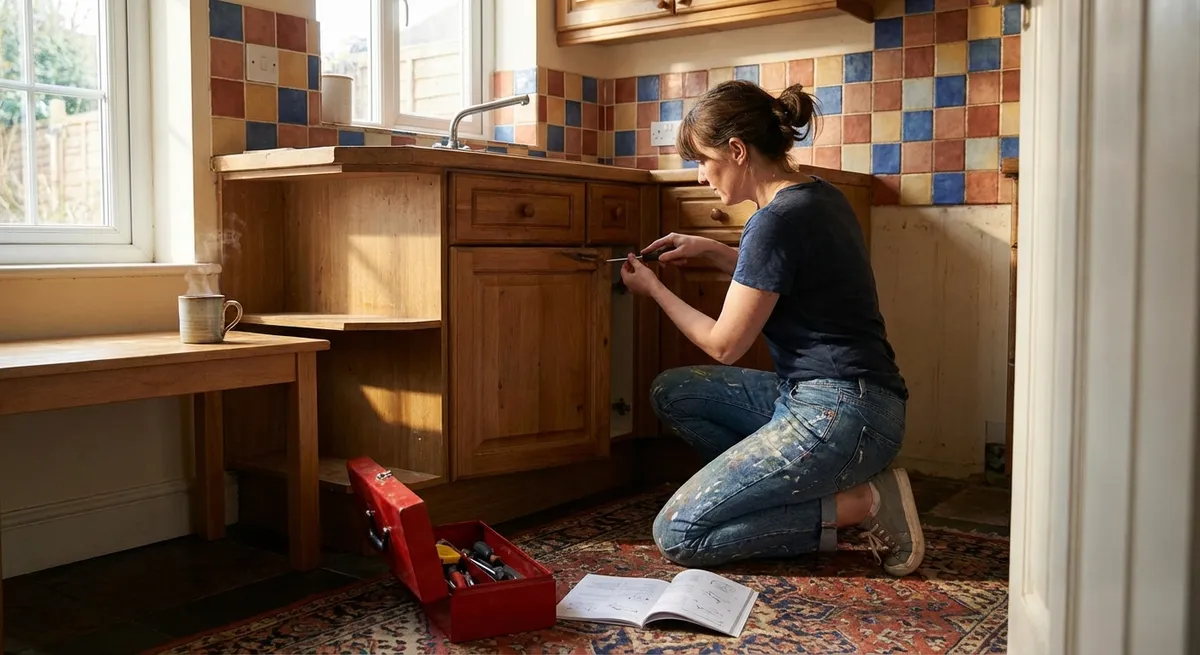
3. Fixing a Loose or Wobbly Cabinet Door
Loose cabinet doors look messy and can eventually damage the hinges. Tightening and adjusting them brings your kitchen or bathroom back in line.
What you’ll need
- Phillips screwdriver
- Flathead screwdriver (optional)
- Small level (optional)
Step-by-step
**Open the door and inspect the hinges**
Look for loose screws, gaps where the hinge meets the cabinet, or a door that rubs against the frame or another door.
**Tighten all visible screws**
Use a Phillips screwdriver to snug up all hinge screws—on both the door side and the cabinet frame side. Don’t overtighten; just turn until firm.
**Check door alignment**
Close the door slowly. - Does it sit higher or lower than the neighboring door? - Does it hit the frame or another door? This tells you which direction you need to adjust.
**Use hinge adjusters (on European-style hinges)**
Many modern cabinet hinges have built-in adjustment screws: - One screw moves the door left/right - Another moves it in/out - Some have a third for up/down Turn each screw a quarter-turn at a time, checking the door after each adjustment.
**Shim older hinges if needed**
If you have simple plate hinges and tightening doesn’t fix the alignment: - Loosen the screws on the cabinet side. - Insert a thin piece of cardboard or folded paper behind the hinge plate as a shim. - Retighten and test the door.
**Confirm final fit**
Close the door several times, checking for quiet, smooth motion and even gaps. Use a small level if you want it perfectly straight.
---
4. Safely Resetting a Tripped Circuit Breaker
If part of your home suddenly loses power—like a set of outlets or lights—but the rest is fine, you may have a tripped breaker. Resetting it safely restores power without guesswork.
Important safety note: If you smell burning, see scorch marks, or hear buzzing from the panel, stop and call an electrician immediately.
What you’ll need
- Flashlight (if the area is dark)
- Dry hands and shoes
- Clear access to your electrical panel
Step-by-step
**Turn off or unplug devices on the dead circuit**
Before touching the panel, switch off lights and unplug major appliances on the affected circuit. This reduces the load when it comes back on.
**Find your electrical panel**
Common locations: basement, garage, hallway, utility room, or exterior wall. Open the panel door carefully.
**Identify the tripped breaker**
Look for a breaker that: - Is in the middle position, or - Has its switch slightly off compared to the others Some have an orange or red marker indicating “tripped.”
**Reset the breaker properly**
Using one hand (keep the other away from the panel): - First push the tripped breaker firmly to the OFF position. - Then push it back to the ON position until it clicks.
**Test the affected area**
Return to the room and turn on one light or plug in one device to confirm you have power again.
**Watch for repeated trips**
If the same breaker trips again soon after you reset it: - Unplug high-wattage devices (space heaters, hair dryers, microwaves) on that circuit and try again. - If it still trips, stop resetting it and call a licensed electrician. Repeated tripping can signal wiring or overload issues that need a professional.
---
5. Sealing a Drafty Window to Cut Energy Loss
Drafty windows make rooms uncomfortable and raise heating and cooling bills. You can usually improve them quickly without replacing the whole unit.
What you’ll need
- Candle or incense stick *or* your hand to feel for drafts
- Weatherstripping tape or foam
- Clear caulk (for gaps around trim)
- Utility knife or scissors
- Damp cloth
Step-by-step
**Find the exact draft locations**
On a windy day or with HVAC running, slowly move your hand around the window edges. You can also use a lit candle or incense (carefully): drafts will make the flame flicker or smoke waver.
**Clean the surfaces**
Wipe the window frame, sash edges, and surrounding trim with a damp cloth to remove dust and grime. Let it dry completely—weatherstripping and caulk adhere better to clean surfaces.
**Install weatherstripping on moving parts**
For drafts where the window closes: - Measure the length needed along the sides and top of the movable sash. - Cut self-adhesive foam or rubber weatherstripping to size. - Peel off the backing and press it firmly into place along the contact edges.
**Seal gaps around the frame with caulk**
For gaps between the window frame and wall trim: - Use paintable or clear caulk. - Cut the tip at a 45° angle for a small, controlled bead. - Run a thin, steady line of caulk along the gap. - Smooth with a damp finger or caulk tool for a clean finish.
**Check the window lock and latches**
Fully locking many windows pulls the sash tighter into the weatherstripping, improving the seal. If the latch doesn’t line up, adjust screws slightly so it engages correctly.
**Re-test for drafts**
Once the caulk has skinned over (usually within an hour, check label), repeat the draft test. Minor remaining leaks can often be handled by adding a second strip of weatherstripping where needed.
---
Conclusion
Small, persistent problems around the house are more than annoyances—they quietly waste money, energy, and your patience. The good news is that many of them can be fixed in under an hour with simple tools and a clear plan. By tackling squeaky hinges, running toilets, loose cabinet doors, tripped breakers, and drafty windows, you make your home more comfortable, safer, and more efficient—without waiting on a professional for every minor issue.
Bookmark or share this guide so it’s on hand the next time something small starts to go wrong. The more you practice these basic repairs, the more confident you’ll be when the next problem shows up.
---
Sources
- [U.S. Department of Energy – Air Sealing Your Home](https://www.energy.gov/energysaver/air-sealing-your-home) - Guidance on finding and sealing air leaks around windows and doors
- [U.S. Environmental Protection Agency – WaterSense: Fixing Leaks at Home](https://www.epa.gov/watersense/fix-leak-week) - Explains how much water running toilets and other leaks can waste and basic repair tips
- [Family Handyman – How to Fix Squeaky Doors](https://www.familyhandyman.com/project/how-to-fix-squeaky-doors/) - Practical hinge lubrication and adjustment advice
- [Consumer Product Safety Commission – Electrical Safety in the Home](https://www.cpsc.gov/safety-education/safety-guides/electrical) - Key safety principles for working around home electrical systems
- [Lowe’s – How to Replace a Toilet Flapper](https://www.lowes.com/n/how-to/replace-a-toilet-flapper) - Step-by-step visual guide to diagnosing and replacing toilet flappers
Key Takeaway
The most important thing to remember from this article is that this information can change how you think about Household Repairs.