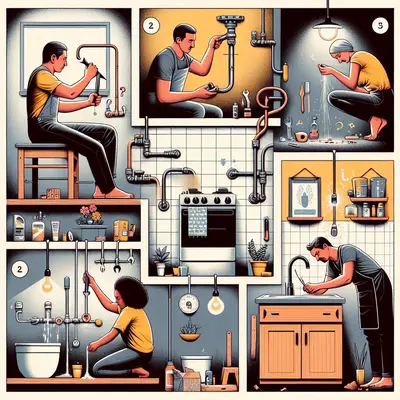
Small problems around the house usually start as annoyances and turn into expensive repairs if you ignore them. The good news: you can solve a lot of these issues yourself with basic tools, a bit of patience, and clear steps. This guide walks you through five common household problems and exactly how to fix them safely and effectively—no contractor required.
---
1. Dripping Faucet: Stop the Constant Drip
A dripping faucet wastes water, raises your bill, and can stain sinks. Most drips come from worn internal parts, not from anything serious or dangerous.
What you’ll need:
Adjustable wrench, screwdriver, replacement cartridge or washers (depending on faucet type), plumber’s grease, towel.
Step-by-step:
**Turn off the water supply**
Look under the sink for the shutoff valves (hot and cold). Turn them clockwise until fully closed. Open the faucet to release any pressure and confirm the water is off.
**Plug the drain**
Use a sink plug or a rag. This prevents tiny screws or parts from falling down the drain while you work.
**Identify your faucet type**
- Single-handle often uses a **cartridge**. - Two-handle often uses **compression stems** or **ceramic discs**. Take a clear photo before taking anything apart—it’s your reassembly reference.
**Remove the handle**
Pry off any decorative cap with a small flat screwdriver, then remove the screw holding the handle. Gently pull the handle off. If it’s stuck, wiggle it side to side—avoid forcing it.
**Take out the cartridge or stem**
Use an adjustable wrench or pliers to loosen the retaining nut. Pull the cartridge or stem straight up. Note its orientation (take another photo).
**Inspect and replace worn parts**
- For cartridges: replace with the *same* model. Bring the old one to the hardware store to match. - For compression faucets: replace rubber washers and O-rings at the base of the stem. Lightly coat O-rings and moving parts with plumber’s grease.
**Reassemble and test**
Reinstall cartridge or stem, tighten the retaining nut (snug, not over-tight), put the handle back on, and restore water at the shutoff valves. Open the faucet slowly and check for drips. If it still drips, tighten slightly more or re-seat the cartridge.
---
2. Running Toilet: Make It Flush Properly Again
A running toilet can waste gallons of water every day. Most issues come from the tank components, which are designed to be user-replaceable.
What you’ll need:
Adjustable wrench, replacement flapper and/or fill valve, towel.
Step-by-step:
**Remove the tank lid and observe**
Flush the toilet with the lid off and watch what happens: - Does the flapper not seal fully? - Does the water keep rising to the overflow tube? - Is the fill valve hissing constantly?
**Check the flapper first**
Turn off the water at the shutoff valve behind the toilet. Flush to empty the tank. Inspect the flapper (rubber piece at the bottom of the tank): - If it’s warped, cracked, or slimy, replace it. - If the chain is too tight or too slack, adjust it so the flapper can fully close without tension.
**Replace the flapper if needed**
Unhook the old flapper from the overflow tube and chain, attach the new one in the same position, and reattach the chain to the flush handle arm. The chain should have just a little slack.
**Adjust the water level**
Turn water back on. If water rises too high and spills into the overflow tube, adjust the fill valve: - For float cup valves: squeeze the clip on the float rod and slide it down slightly. - For older float balls: gently bend the float arm downward to lower the shutoff level.
**Replace the fill valve if it won’t shut off**
If adjustment doesn’t fix constant running: - Turn off water and flush to empty tank. - Disconnect the fill tube and supply line. - Unscrew the old fill valve from under the tank and remove it. - Install the new valve following the included diagram, tighten gasket nut hand-tight plus a small wrench turn, reconnect the supply line, and adjust water level.
**Final test**
Let the tank fill and listen. There should be no continuous hissing and no water flowing into the bowl when it’s not flushing.
---
3. Door That Won’t Latch or Close Smoothly
A door that sticks or won’t catch the latch is annoying and can be a security issue. Usually, it’s a simple alignment or hardware problem.
What you’ll need:
Screwdriver, pencil, sandpaper or wood file, wood shims (optional), drill (optional).
Step-by-step:
**Find the problem area**
Close the door slowly and see where it rubs or misaligns: - Is it dragging on the floor? - Rubbing the top of the frame? - Does the latch not line up with the strike plate hole?
**Tighten all hinge screws**
Loose hinges cause sagging. With the door open, tighten each hinge screw on both the door side and frame side. If a screw just spins, use a longer screw (2–3") to bite into the framing.
**Check latch alignment**
Close the door gently and watch where the latch meets the strike plate: - If it hits above or below the hole, you need slight adjustment. - If it hits the metal edge, you may need to file or move the plate.
**Adjust the strike plate**
- Try loosening the strike plate screws slightly and shifting it up/down or in/out as needed, then retighten. - If it’s just slightly off, use a metal file to enlarge the opening where the latch hits.
**Relieve minor rubbing points**
For light rubbing at the top or side, mark the contact area with a pencil, then use sandpaper or a wood file to remove a small amount of material from the *door edge*, not the frame, if possible. Check frequently so you don’t remove too much.
**Use shims for major sagging**
If the top of the door is hitting the frame hard: - Loosen the top hinge screws slightly. - Insert a thin cardboard or wood shim behind the hinge leaf on the frame side. - Retighten screws. This tips the door slightly and can correct sag.
**Test the door**
Open and close multiple times. The latch should click smoothly into the strike plate without forcing the door.
---
4. GFCI Outlet That Won’t Reset
Ground Fault Circuit Interrupter (GFCI) outlets are safety devices commonly found in kitchens, bathrooms, garages, and outdoors. When they trip and won’t reset, it’s frustrating—but often easy to troubleshoot.
Important safety note:
If you ever see scorch marks, smell burning, or feel heat from an outlet, stop and call a licensed electrician.
What you’ll need:
Small lamp or outlet tester, screwdriver.
Step-by-step:
**Identify the GFCI outlet**
Look for outlets with “TEST” and “RESET” buttons. One GFCI can protect several downstream outlets on the same circuit.
**Unplug everything on the circuit**
In kitchens and bathrooms, unplug appliances like hair dryers, toasters, kettles, etc. A faulty or overloaded device may be causing the trip.
**Try a simple reset**
Press the **RESET** button firmly until it clicks. Then plug in a small lamp or outlet tester to confirm power is restored.
**Check the breaker panel**
If the GFCI won’t reset, go to your electrical panel and look for a tripped breaker (handle in the middle position). - Push it fully to OFF, then to ON. - Return to the GFCI and try resetting again.
**Inspect for moisture or exterior outlets**
If the GFCI protects outdoor or bathroom outlets, moisture may be involved. Check for: - Wet covers outside - Condensation or splashes near sinks Allow things to dry completely before attempting another reset.
- **Test line vs. load connections (advanced DIY only)**
If you’re comfortable and the power is off at the breaker:
- Remove the GFCI outlet from the box.
- Confirm that the feed wires are on the **LINE** terminals, not **LOAD** (incorrect wiring prevents proper reset).
If you’re unsure, this is a good point to involve an electrician rather than guessing.
**Replace a faulty GFCI**
If it still won’t reset and wiring is correct, the device may have failed (they do wear out). - Turn breaker off. - Disconnect wires, install a new GFCI with connections on the same terminals (LINE vs LOAD), and secure it in the box. - Restore power and test using the TEST and RESET buttons.
---
5. Slow or Partially Clogged Sink Drain
A slowly draining sink is often caused by hair, soap scum, and debris—not a serious plumbing issue. You can clear most clogs without harsh chemicals.
What you’ll need:
Bucket, rubber gloves, old toothbrush, adjustable pliers, drain snake or zip strip, baking soda, white vinegar, hot water.
Step-by-step:
**Remove standing water**
If the sink is full, bail water into a bucket so you can access the drain. Wear gloves if it’s dirty.
**Try a mechanical clear first**
- For bathroom sinks: remove the stopper (often attached under the sink to a pivot rod). Pull it out and clean off hair and grime. - Use a plastic zip strip or small drain snake down the drain to hook hair and debris. Pull out rather than pushing deeper.
**Clean the P-trap (under-sink U-shaped pipe)**
Place a bucket under the trap. - Loosen the slip nuts at each end by hand or with pliers. - Remove the trap and dump contents into the bucket. - Clean inside with an old toothbrush or bottle brush. Reinstall the trap and hand-tighten the nuts (snug, not overtightened).
**Use a baking soda and vinegar flush**
Pour about 1/2 cup baking soda into the drain, followed by 1/2–1 cup white vinegar. Let it fizz for 10–15 minutes. This helps break down organic buildup and deodorizes.
**Flush with hot water**
Run very hot tap water (or carefully pour a kettle of hot, not boiling, water) down the drain to clear loosened debris.
**Avoid harsh chemical drain cleaners**
They can damage older pipes, create dangerous fumes, and make future professional cleaning more hazardous. Save them as a last resort, and never mix different chemical products.
**Test for proper flow**
Run the tap for several minutes. The water should drain quickly without bubbling or backing up. Check under the sink for any leaks from the trap connections.
---
Conclusion
Most everyday household problems don’t require a professional or expensive tools—just a methodical approach and clear steps. By tackling drips, runs, sticking doors, stubborn GFCI outlets, and slow drains yourself, you cut down on water and energy waste, avoid bigger damage, and keep your home running smoothly. When something looks unsafe (scorch marks, burning smells, major leaks, or anything involving wiring you don’t understand), pause and call a pro—but for the issues in this guide, you’re well-equipped to repair now, not someday.
---
Sources
- [U.S. Environmental Protection Agency – Fix a Leak](https://www.epa.gov/watersense/fix-leak-week) - Details how small leaks like dripping faucets and running toilets waste water and why fixing them matters
- [Kohler – Faucet Troubleshooting & Repair Guides](https://support.kohler.com/hc/en-us/categories/360000005913-Faucets) - Manufacturer instructions and diagrams for common faucet types and cartridges
- [U.S. Department of Energy – Electrical Safety in the Home](https://www.energy.gov/oe/activities/technology-development/grid-modernization-and-smart-grid/electricity-safety) - General electrical safety guidance relevant to working around outlets and circuits
- [Occupational Safety and Health Administration (OSHA) – Ground-Fault Circuit Interrupters](https://www.osha.gov/etools/electrical-construction/ground-fault-circuit-interrupters) - Explains how GFCI devices work and their role in shock protection
- [University of Illinois Extension – Home Plumbing Systems](https://web.extension.illinois.edu/plumbing/) - Educational overview of home plumbing, including drains, traps, and common maintenance tasks
Key Takeaway
The most important thing to remember from this article is that this information can change how you think about Household Repairs.