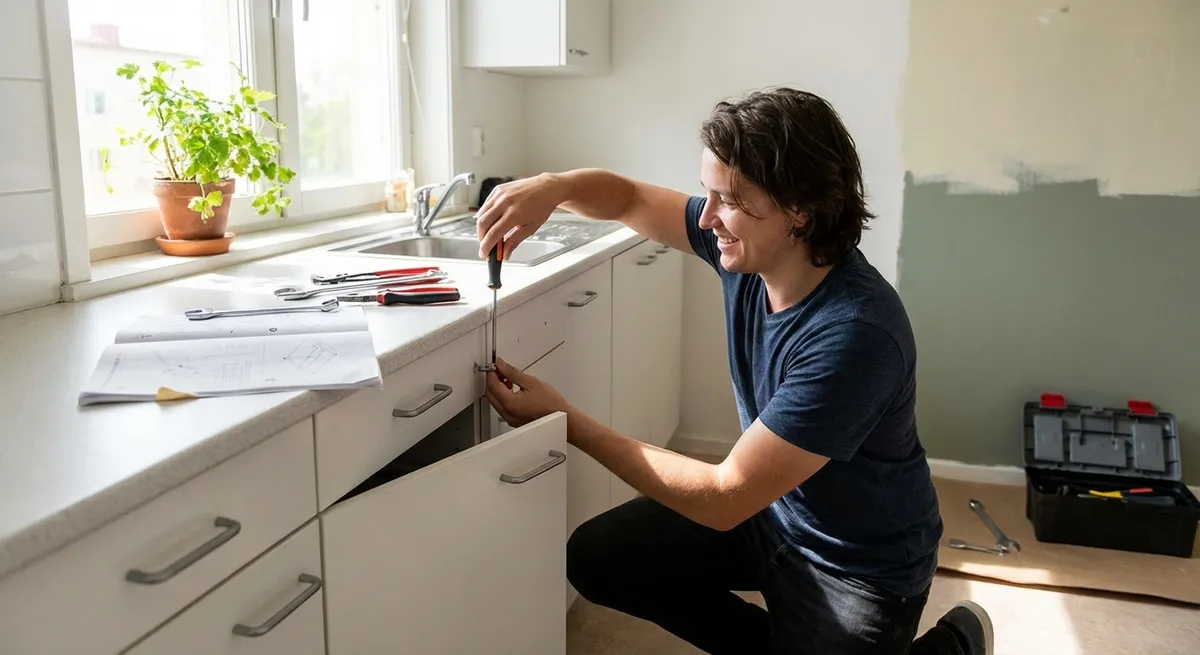
Most “DIY fixes” online assume you already have a workshop, a toolbox, and a weekend to spare. This guide is different. These are straight‑forward repairs you can tackle with basic tools, cheap supplies, and an hour or less. No specialty skills, no drama—just practical steps that save your stuff from the trash.
Each solution focuses on a common headache and walks you through exactly what to do, what to use, and when it’s smarter to stop and call a pro. Use this as a quick reference whenever something in your home starts acting up.
Quiet a Squeaky Door Without Replacing the Hinges
A noisy door is annoying, but it’s also one of the easiest fixes in your home.
**Identify the noise source**
Slowly open and close the door. Listen closely near each hinge. If the squeak happens at the same point in the swing, it’s almost always dry hinge pins, not the door frame or latch.
**Clean the hinge area**
Place a towel under the door to catch drips. Use a dry cloth or paper towel to wipe off dust and old grime from the hinges. If it looks caked with old paint or gunk, use a toothbrush or cotton swab to scrub the visible edges.
**Lubricate with the right product**
Avoid cooking oils—they attract dust and turn sticky. Use one of these instead: silicone spray, white lithium grease, or standard penetrating oil (like WD‑40) as a starter. Spray or drip a small amount directly onto the top of each hinge so it runs down inside.
**Work the lubricant in**
Open and close the door 10–15 times to help the lube spread along the hinge pin. If the squeak improves but doesn’t disappear, add a tiny bit more and repeat the motion.
**Deep clean if the squeak won’t leave**
If it still squeaks, you may need to pull the hinge pin: tap a small nail or screwdriver into the bottom of the pin to push it up and out. Lay the pin on a paper towel, clean it with a cloth and rubbing alcohol, then coat it lightly with grease and reinsert it.
**Check the screws while you’re there**
Use a screwdriver to snug up any loose hinge screws (don’t overtighten). Loose hinges can cause misalignment and fresh squeaks later.
**Stop if you see damage**
If the hinge is cracked, bent, or pulling out of a crumbling door frame, lubrication won’t be enough. In that case, you’ll need hinge replacement or frame repair—time to consider a handyman if you’re not comfortable with that level of work.
Revive a Slow-Draining Sink Without Harsh Chemicals
A slow drain doesn’t always mean a plumber or a bottle of harsh drain cleaner. You can clear many clogs with a few simple steps.
**Remove any visible blockage**
Put on rubber gloves. Pull out hair, food, or debris from the drain opening. If you have a pop‑up stopper, lift it out (often by twisting and pulling upwards) and clean off any gunk.
**Use the hot water flush**
Boil a kettle or large pot of water. Slowly pour half the hot water down the drain, wait 30 seconds, then pour the rest. This can soften and move grease buildup further down the pipe.
**Try the baking soda and vinegar method**
Pour about 1/2 cup baking soda directly into the drain. Follow with 1/2–1 cup white vinegar. It will fizz—this is normal. Immediately place a plug or a wet cloth over the opening to keep the reaction down in the pipe. Let it sit for 15–20 minutes.
**Flush again with hot water**
After the wait, flush with another kettle or pot of hot water. Run the tap for 1–2 minutes to see if the flow has improved.
**Use a plunger correctly**
If it’s still slow, fill the sink just enough to cover the plunger cup. Block any overflow hole with a damp cloth. Position the plunger flat over the drain and push firmly up and down 15–20 times without breaking the seal. Lift it off sharply and see if water drains faster.
**Clear the trap if you’re comfortable**
Place a bucket under the U‑shaped pipe (P‑trap) under the sink. Unscrew the two plastic nuts by hand or with adjustable pliers. Let the water drain into the bucket, then clean out the trap with a bottle brush or cloth. Reassemble and hand‑tighten the nuts.
**Know when to stop**
If water backs up in multiple fixtures (sink, tub, toilet), or you smell sewage, the problem is likely beyond your reach (main line or vent issue). Avoid more DIY and call a plumber—forcing it can make it worse.
Fix a Wobbly Chair or Table So It Feels Solid Again
Unstable furniture is annoying and dangerous, but often the fix is simple and cheap.
**Find the real cause of the wobble**
Place the chair or table on a known flat surface (kitchen tile is good). Rock it gently. Note which leg lifts off the ground or feels loose. Check every joint where legs meet the frame.
**Tighten all fasteners first**
Use the appropriate tool (Allen key, screwdriver, or small wrench) to snug up all screws and bolts—not just on the problem leg. Work your way around the whole piece. Many wobbles disappear at this step alone.
**Test joints for play**
Hold the furniture steady with one hand and wiggle each leg with the other. If you see movement where a leg joins a seat or tabletop, the wood joint may be loose. Mark those problem joints with a piece of painter’s tape so you don’t forget them.
**Use wood glue on loose joints**
For wooden furniture, carefully separate the loose joint as much as it will allow without forcing. Apply wood glue into the joint (a small brush or toothpick helps). Press the pieces back together firmly and wipe away any squeeze‑out with a damp cloth.
**Clamp or brace while drying**
Use clamps if you have them. If not, use straps or heavy objects to hold the joint tightly together. Follow the glue instructions, but plan on at least 30–60 minutes before moving it, and 24 hours before full use.
**Level uneven legs**
If all joints are solid but the wobble remains, you likely have one leg slightly shorter. Start with non‑permanent fixes: stick‑on felt pads or rubber furniture pads under the short leg. For a more permanent solution on raw wood, you can sand down the longer legs slightly—but go slowly and test often.
**Watch for structural damage**
If the wood is cracked, rotted, or splitting deeply near a load‑bearing point, glue alone won’t make it safe. In that case, either reinforce it with hardware (metal brackets, corner braces) or retire the piece from regular use.
Stop a Drafty Window From Draining Your Heating or Cooling
Drafty windows waste energy and make rooms uncomfortable, but you don’t need new windows to see a big improvement.
**Find where the air is coming in**
On a windy day (or with a fan blowing toward the window), move your hand slowly around the frame and sash. You can also use a lit incense stick—watch where the smoke moves sideways to locate leaks. Mark problem spots with painter’s tape.
**Seal gaps with weatherstripping**
For small gaps where the window closes, use adhesive foam weatherstripping or rubber seals. Clean the frame with a dry cloth first, then cut strips to length and press them firmly along the areas where the sash meets the frame.
**Use caulk for fixed frame cracks**
For stationary gaps around the outside or inside frame (where it meets the wall), use paintable latex caulk. Cut the caulk tube tip at a 45° angle, apply a steady bead along the crack, then smooth it with a damp finger or caulk tool. Wipe excess with a damp cloth.
**Add a temporary film for better insulation**
In colder months, apply clear window insulation film. Clean the glass and frame, stick the double‑sided tape around the inside frame, press the plastic film onto the tape, then gently heat it with a hair dryer to shrink it tight. This traps a layer of insulating air.
**Check and adjust the locks**
A window that doesn’t fully latch can’t seal properly. Clean any dirt in the lock mechanism, then close and lock the window. If it still feels loose, some latch hardware can be adjusted with a screwdriver so it pulls the sash tighter against the frame.
**Upgrade with simple accessories**
Use draft‑blocking curtains or cellular shades to add another layer of insulation. At night, fully close them to keep warm or cool air inside.
**Recognize when the window is done**
If the frame is warped, rotted, or visibly separated from the wall, or the glass itself is cracked or fogged between double panes, you’re at the limit of easy DIY. Sealing helps, but full replacement may be the only long‑term fix.
Rescue a Stripped Screw So You Can Finish the Job
A stripped screw head can bring any project to a halt. Instead of giving up, use these tricks to get it turning again.
**Try a better-fitting driver first**
Many screws strip because the bit is the wrong size. Test a slightly larger and slightly smaller screwdriver or bit. The correct one should fit snugly and not wobble inside the head.
**Add extra grip with a rubber band**
Place a wide rubber band flat over the stripped screw head. Push the screwdriver firmly down through the rubber into the screw, then turn slowly. The rubber fills the damaged areas and can provide enough grip to back the screw out.
**Switch to a manual screwdriver**
If you’ve been using a drill, stop. A manual screwdriver gives you more control and reduces the risk of further stripping. Apply strong downward pressure while turning steadily, not in quick jerks.
**Improve traction on the head**
If the screw head is slightly damaged but not destroyed, place a small piece of steel wool or coarse fabric between the bit and the screw. This can add just enough friction to catch.
**Create a new slot (for metal screws)**
If you have a rotary tool or hacksaw and the screw head is accessible, carefully cut a straight groove across the head. Then use a flat‑head screwdriver in the new slot to turn it out.
**Use a screw extractor if needed**
For badly stripped screws you must remove (like on hinges or brackets), a screw extractor set is worth owning. You drill a small pilot hole into the screw, then twist in the extractor, which bites and backs it out. Follow the kit instructions closely and work slowly.
**Avoid stripping next time**
Pre‑drill pilot holes for wood screws, use the correct bit size, and stop driving as soon as the screw seats snugly. Over‑tightening is a common cause of stripped heads and broken screws.
Conclusion
You don’t need a workshop, a full tool chest, or a weekend to start fixing things—just a clear plan and a few basic supplies. Taming squeaky doors, slow drains, wobbly furniture, drafty windows, and stripped screws all follow the same pattern: identify the real problem, try the simplest fix first, and stop before you cause new damage.
Bookmark or share this guide so it’s easy to find the next time something in your space starts acting up. Small, practical repairs like these keep your home comfortable, your gear working, and your budget under control—exactly what Repair Now is all about.
Key Takeaway
The most important thing to remember from this article is that this information can change how you think about DIY Solutions.