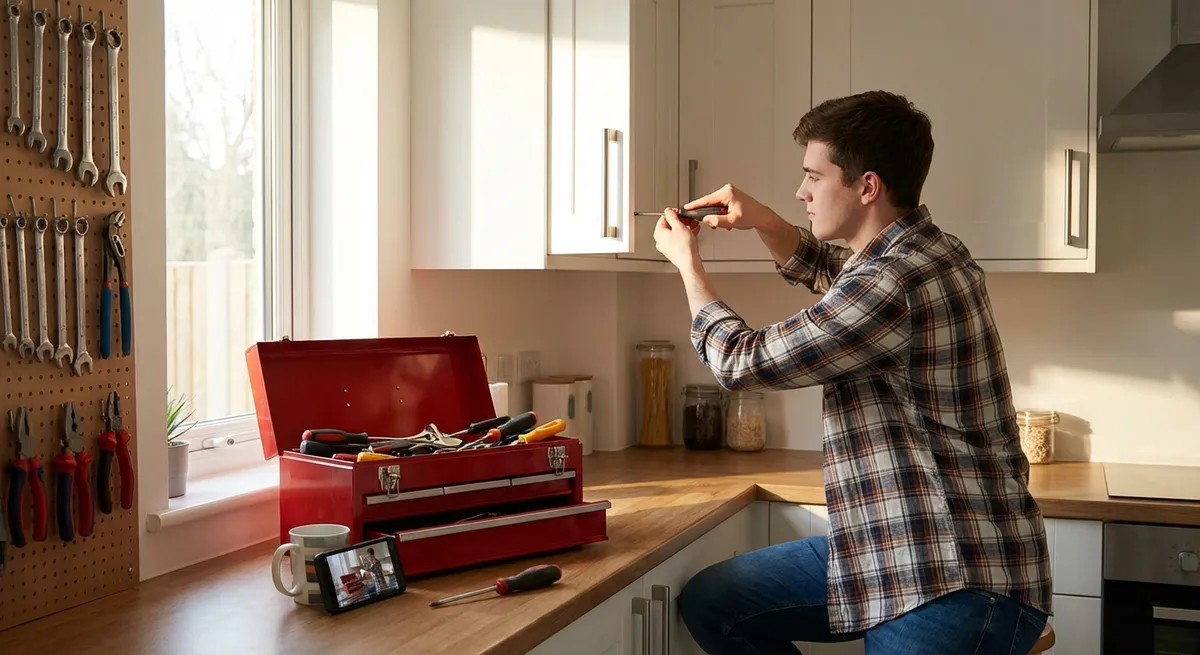
When something breaks at home, it rarely happens at a “good” time. A cabinet door starts sagging when you’re rushing out the door, a phone cable stops charging right before a call, or your bathroom sink suddenly starts draining like it’s on vacation. None of these need a full weekend project—or a panic call to a pro.
This guide focuses on quick, practical fixes you can do with basic tools and common supplies. Each solution is designed to be clear, step-by-step, and realistic for real life, not a perfectly stocked workshop.
Stop a Wobbly Chair or Table
A wobbly chair or table is usually caused by uneven legs or loose joints, not “cheap furniture.” You can usually stabilize it in minutes.
- **Check for loose screws or bolts.** Flip the chair or table over on a flat surface. Look for screws in corners, brackets, or stretchers between legs.
- **Tighten everything.** Use a screwdriver or hex key (Allen wrench) to snug each screw or bolt. Don’t overtighten—stop when it feels firm.
- **Test the wobble.** Flip it upright and wiggle it. If it’s still wobbly, determine which leg is shorter by pressing down on each corner.
- **Shim the short leg.** For a quick fix, cut a small piece of cardboard, felt pad, or folded tape and stick it under the short leg.
- **Make it permanent.** Use adhesive felt pads or a small furniture glide on the short leg. Stick it on, press firmly, and re-test stability.
- **Re-check in a week.** Pads can compress. If the wobble returns, add a second pad or replace the first with a thicker one.
This quick repair can add years of use to furniture and prevent stress on joints that eventually cause cracks or breaks.
Get a Slow Drain Flowing Again (Without Harsh Chemicals)
A slow sink or shower drain is usually hair, soap scum, or grease buildup—not a “mystery plumbing failure.” You can often clear it quickly without calling a plumber.
- **Remove visible debris.** For sinks, pull the stopper up and clean off hair and grime. For showers, lift or unscrew the drain cover if possible and remove hair with a paper towel.
- **Use a simple drain tool.** A cheap plastic drain snake or zip strip works well. Insert it into the drain, jiggle gently, and pull it out. Repeat until you stop pulling up gunk.
- **Flush with hot water.** Boil a kettle or run the hottest tap water you can, then slowly pour it down the drain to soften soap and grease.
- **Try a baking soda and vinegar flush.** Pour about ½ cup baking soda into the drain, followed by ½–1 cup plain white vinegar. Let it fizz for 10–15 minutes, then flush with hot water again.
- **Check for improvement.** Run the water normally. If the drain is faster, you’re done. If it’s still slow, repeat the drain tool step once more.
- **Prevent future clogs.** Use a simple hair catcher in showers and clean sink stoppers weekly before buildup hardens.
This method avoids harsh chemicals that can damage pipes over time and still restores most household drains quickly.
Revive a Phone Charger That Only Works at “The Perfect Angle”
A flaky charging cable or port is usually caused by dirt, lint, or minor cable damage. Before buying a new charger, try these steps.
- **Test with another outlet and device.** Plug the charger into a different outlet and, if possible, a different device. This rules out a bad outlet or phone.
- **Inspect the cable.** Look for kinks, fraying, or crushed sections near the ends. If you see exposed wires or heavy damage, stop using it and replace the cable.
- **Clean the phone’s charging port.** Power off your phone. Use a wooden toothpick or plastic pick (never metal) to gently scrape lint and dust from inside the port. Work slowly and lightly.
- **Blow out debris.** After scraping, use a burst of compressed air (or a firm puff of air, if that’s all you have) to clear remaining dust.
- **Clean the cable connector.** Wipe the metal plug with a slightly damp microfiber cloth or cotton swab (dry, or very lightly moistened with isopropyl alcohol). Let it dry fully.
- **Reconnect and test.** Plug the charger into a stable outlet, then into your phone. Hold the cable straight and see if charging is now consistent without bending it.
- **Add strain relief if needed.** If the cable only works in one position but shows no exposed wires, you can extend its life briefly by wrapping the weak spot with electrical tape or a small piece of heat-shrink tubing. This is a temporary fix—plan to replace it soon.
Cleaning often brings “dead” chargers back to life and helps avoid damaging the phone’s port over time.
Fix a Door That Won’t Latch or Keeps Swinging Open
When a door doesn’t close properly or insists on swinging by itself, the problem is often alignment, not the latch itself. A few quick adjustments usually solve it.
- **Identify the symptom.** Does the door miss the latch plate, scrape the frame, or swing open/closed on its own?
- **Tighten hinge screws.** Open the door and use a screwdriver to snug all hinge screws on both the door and the frame. Loose hinges can cause sagging and misalignment.
- **Lift a sagging door.** If the door still hangs low and misses the latch, remove the top hinge screws from the frame, insert a flat piece of cardboard or thin plastic behind the hinge leaf, then reattach and tighten the screws. This tiny shim can lift the door slightly.
- **Adjust the strike plate (latch plate).** If the latch hits too high or too low, loosen the screws on the strike plate slightly and shift it up, down, or inward so the latch lines up and the door stays closed. Tighten again.
- **Stop a self-swinging door.** If the door swings open or closed by itself, bend one hinge pin slightly. Remove the center hinge pin, lay it on a hard surface, and tap lightly with a hammer in the middle to create a slight bend. Reinsert the pin. The added friction usually stops the swing.
- **Test and fine-tune.** Open and close the door several times. Make small adjustments to the strike plate or hinge shims until the door latches smoothly and stays where you leave it.
This repair improves privacy, safety, and comfort without replacing the whole lockset or door.
Quiet a Squeaky Floorboard Without Tearing Up the Floor
A squeaky floor isn’t usually a structural emergency—it’s wood moving against nails or subfloor. You can reduce or eliminate squeaks quickly with minimal tools.
- **Find the exact squeak spot.** Walk slowly across the area and mark the loudest points with painter’s tape or a sticky note.
- **Check what’s under the floor.** If you have access from below (like a basement or crawlspace), note the joist direction. If not, assume joists run perpendicular to the floorboards.
**For carpeted floors (quick method):**
- Sprinkle a small amount of talcum powder, powdered graphite, or baking soda along the squeaky seam. - Work it into the seam by stepping or pressing with your hand. - Vacuum up the excess. This can reduce friction and noise.
**For hardwood or laminate:**
- Carefully sprinkle a small amount of powdered graphite or talcum powder into the squeaky joints. - Press it in with your fingers or a soft brush, then wipe up any residue to avoid slipping.
**Add discreet screws (more permanent, from below if possible):**
- From an unfinished basement, drive wood screws up through the subfloor into the joist and floorboard above (be careful with screw length to avoid piercing the visible surface). - Space screws a few inches apart around the squeak area. Tightening the floor to the joist often silences the noise. 6. **Test your work.** Walk the area again. If some squeaks remain, repeat the powder method or add a screw on each side of the worst spot.
This approach gives you quieter floors with minimal disruption, especially useful in hallways and bedrooms where noise is most annoying.
Conclusion
Most everyday “annoyances” at home are small problems waiting for small, targeted fixes—not full-blown renovation projects. A wobbly table, slow drain, flaky charger, misbehaving door, or squeaky floor can all be brought under control with basic tools, a few common materials, and a calm step-by-step approach.
Start with one issue that bugs you the most and work through these instructions once. The more small repairs you knock out, the more confident you’ll feel tackling the next one—and the less likely you’ll be to let problems pile up into expensive emergencies.
Key Takeaway
The most important thing to remember from this article is that this information can change how you think about Quick Fixes.