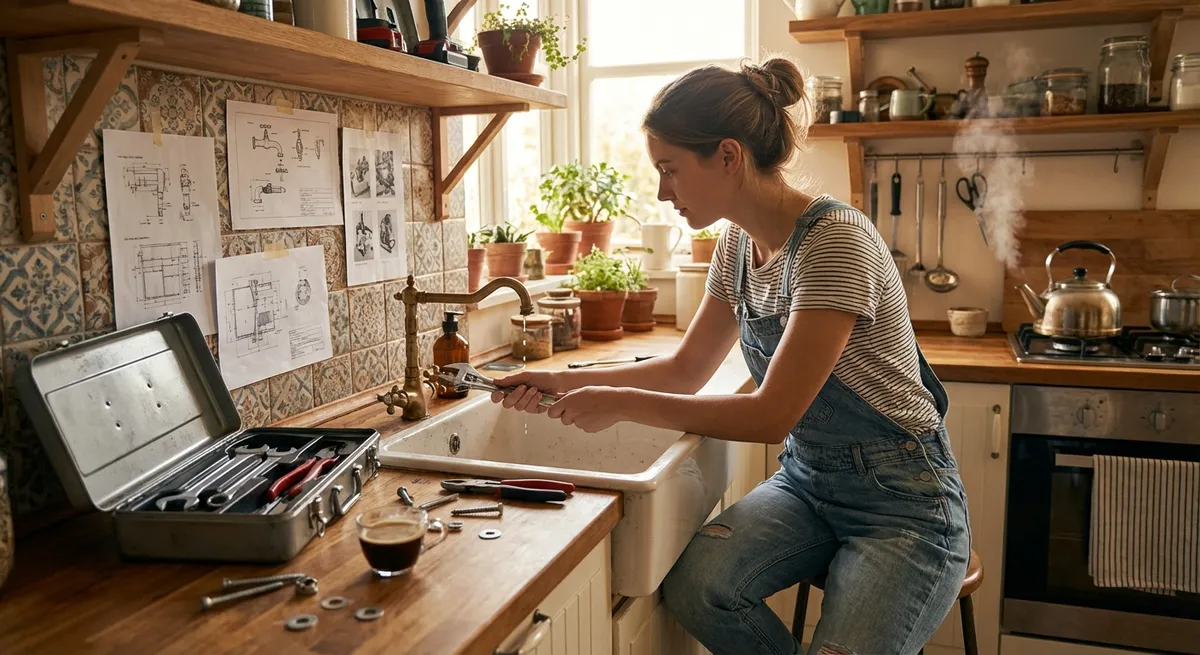
If you’re tired of small problems slowing your day down—and even more tired of waiting for a pro—this guide is for you. These aren’t big renovation projects or risky electrical surgery. They’re clear, doable fixes for issues that show up in almost every home, plus step‑by‑step instructions so you can handle them confidently.
---
Solution 1: Quiet a Squeaky Door (Without Replacing the Hinge)
A squeaky door can make your whole home feel worn out. The good news: it’s usually a friction problem, not a “new door” problem.
What you’ll need:
- Old towel or rag
- Chair or helper (optional, for heavy doors)
- Lubricant: petroleum jelly, silicone spray, or a few drops of household oil
- Paper towel or cloth
Step‑by‑step:
**Open and close the door a few times**
Listen to which hinge squeaks. Sometimes it’s just one; sometimes it’s all of them.
**Protect the floor**
Place a towel under the door to catch drips from lubricant.
**Apply lubricant to the hinge pins**
- If using spray: insert the straw and spray directly where the hinge pin meets the hinge plates. - If using jelly or oil: apply a small amount with your finger or a cotton swab around the pin and moving parts.
**Work the door back and forth**
Open and close the door 10–15 times to draw the lubricant into the hinge. The squeak should noticeably fade.
**Wipe excess**
Use a paper towel or cloth to remove drips so they don’t stain walls or floors.
**Tackle stubborn squeaks**
If the squeak persists, tap the hinge pin upward with a screwdriver and small hammer, pull it out, coat it lightly with lubricant, then slide it back in and repeat step 4.
When to call a pro:
If the hinges are bent, cracked, or the door is badly misaligned (dragging hard on the floor or frame), you may need hinge replacement or frame adjustment.
---
Solution 2: Unclog a Slow Sink Without Harsh Chemicals
A sink that drains slowly is annoying—and if ignored, it eventually stops draining altogether. You can often clear it in minutes using basic tools instead of aggressive chemical drain cleaners.
What you’ll need:
- Rubber gloves
- Bucket or bowl
- Old toothbrush or small brush
- Zip-it style plastic drain cleaner or a straightened wire hanger
- Baking soda and vinegar (optional but useful)
Step‑by‑step (bathroom sink with stopper):
**Remove items from under the sink**
You’ll need clear space to reach the drain pipe.
**Check the stopper first**
- Pull the stopper out (if it lifts out easily). - Clean off hair and gunk with an old toothbrush. - If it doesn’t pull out, you may need to loosen the pivot rod under the sink (a nut on the back of the drain assembly), slide the rod out, then lift the stopper.
**Test the drain**
Reinsert the stopper and run water. If it’s still slow, move to the next step.
**Use a plastic drain cleaner or hanger**
- Remove the stopper again. - Insert the zip-it tool or bent wire into the drain, twist gently, and pull up hair and debris. - Repeat several times until you’re not pulling up more buildup.
**Flush with hot water**
Run hot tap water for 1–2 minutes to push loosened debris through.
**Optional: baking soda + vinegar flush**
- Pour 1/2 cup baking soda into the drain. - Follow with 1/2 cup white vinegar. - Let it fizz for 10–15 minutes, then flush with hot water.
**Reassemble stopper and test**
Put the stopper and pivot rod back if removed, tighten the nut gently (hand‑tight, then a slight turn with pliers), and run water. The drain should be noticeably faster.
When to call a pro:
If multiple drains in your home are slow at once, or if water backs up into sinks and tubs you’re not using, you may have a deeper plumbing blockage requiring professional equipment.
---
Solution 3: Stop a Running Toilet and Save Water
A toilet that constantly runs isn’t just noisy—it wastes a surprising amount of water and money. Most of the time, the issue is inside the tank and can be fixed without tools.
What you’ll need:
- Rubber gloves
- Towel
- Optional: replacement flapper (if old or cracked)
Step‑by‑step:
**Remove the tank lid**
Place it carefully on a towel to avoid chipping or breaking it.
**Identify the main parts**
In most tanks you’ll see: - A **flapper** (rubber piece at the bottom that lifts when you flush) - A **chain** connecting the flapper to the flush handle - A **fill valve** (tall component on one side) - An **overflow tube** in the center
**Do a quick test**
Press down gently on the flapper with your finger. - If the running stops, the flapper is likely leaking and not sealing properly.
**Inspect the flapper**
- Turn off the water supply (valve near the floor behind the toilet). - Flush the toilet once to drain most of the water from the tank. - Check the flapper for warping, cracking, or slimy buildup. - Clean it with a cloth if dirty; if it’s deformed or brittle, replace it.
**Replace the flapper (if needed)**
- Unhook the old flapper from the pegs on the overflow tube. - Attach the new one in the same spots. - Connect the chain so there’s a little slack—too tight and the flapper won’t seal; too loose and it won’t lift fully.
**Check the water level**
Turn water back on. Let the tank refill. - The water line should be below the top of the overflow tube (often there’s a “Fill Line” mark). - If it’s too high, adjust the float height per your valve type (usually by turning a screw or sliding a clip).
**Flush and listen**
After flushing, the water should stop running within 30–60 seconds. No constant trickling sound, no ripples in the tank.
When to call a pro:
If the shutoff valve won’t turn, the tank or bowl is cracked, or you notice water leaking onto the floor, that’s beyond a simple DIY adjustment.
---
Solution 4: Reattach Peeling Wallpaper or Lifting Edges
Peeling wallpaper makes a room look tired long before the pattern goes out of style. You don’t need to redo the whole wall—spot repairs can make it look tight and clean again.
What you’ll need:
- Small syringe or artist’s brush (for glue)
- Wallpaper adhesive or premixed paste (or white PVA glue diluted slightly with water)
- Damp sponge or cloth
- Plastic smoothing tool or old credit card
- Small pin or craft knife
Step‑by‑step:
**Gently lift the loose area**
Lift only as much as is already peeling. Don’t rip further; you just need enough space to get adhesive behind it.
**Clean underneath**
Use a dry brush or cloth to remove dust or loose backing from the wall and the back of the wallpaper. A clean surface helps the glue bond.
**Apply adhesive**
- Fill a small syringe or use a fine brush. - Apply a thin, even coat of adhesive to the wall and the back of the wallpaper in the loose area. - Avoid overloading—too much glue can cause lumps or seep out.
**Press wallpaper back into place**
Start from the center of the lifted section and gently push outward toward the edges to remove air bubbles.
**Smooth the surface**
Use a plastic smoothing tool or old card to flatten the area and push out any remaining bubbles.
**Deal with trapped bubbles**
- If a small bubble remains after smoothing, let the area dry slightly. - Prick the bubble with a fine pin or make a tiny slit with a craft knife. - Gently press to release air and use a bit more adhesive via the pinhole if needed.
**Wipe excess adhesive**
Use a damp (not soaking) sponge to remove any paste from the wallpaper surface before it dries.
**Let it set**
Avoid touching the area while it dries fully (usually a few hours). Once dry, the repair should blend in.
When to call a pro:
If large sections are peeling, the wall behind feels damp or soft, or there are signs of mold, you may have a moisture problem that needs professional assessment.
---
Solution 5: Revive a Loose Cabinet Door or Wobbly Hinge
Kitchen and bathroom cabinets get heavy daily use. Over time, doors sag, won’t close properly, or feel loose. A straightforward hinge tune‑up can extend their life and make your kitchen feel solid again.
What you’ll need:
- Phillips screwdriver (most common)
- Optional: toothpicks and wood glue (for stripped screw holes)
- Pencil
- Small level (optional but helpful)
Step‑by‑step:
**Open the door fully**
Identify which hinge is causing the problem: look for gaps, sagging, or misalignment.
**Tighten the mounting screws**
- On the inside of the cabinet, tighten the screws holding the hinge to the cabinet frame. - Tighten the screws attaching the hinge to the door. - Don’t overtighten; snug and firm is enough.
**Check alignment**
Close the door and see if: - The top and bottom gaps are even - The door edges line up with neighboring doors - The door no longer rubs on the cabinet frame
**Adjust European-style hinges (common in modern cabinets)**
These usually have two or three small screws on each hinge that control: - **In/Out** (depth) - **Left/Right** (side to side) - **Up/Down** (sometimes via the mounting plate)
Turn adjustment screws a quarter‑turn at a time and check the door after each change. Small adjustments go a long way.
**Fix stripped screw holes (if screws spin freely)**
- Remove the loose screw. - Dip 1–3 wooden toothpicks in wood glue, insert into the hole, and break flush with the surface. - Let glue set for at least 30 minutes. - Reinsert the screw—it should now grip firmly.
**Final test**
Open and close the door several times. It should move smoothly, close fully, and sit even with adjacent doors.
When to call a pro:
If the cabinet box itself is cracked, pulling off the wall, or clearly water‑damaged, tightening hinges won’t be enough and the structure may need repair or replacement.
---
Conclusion
Small fixes add up. When you silence a squeaky door, clear a slow drain, stop a running toilet, tidy up peeling wallpaper, or firm up a cabinet door, you’re not just solving annoyances—you’re extending the life of your home and cutting down on future repair costs.
Use these step‑by‑step solutions as your starting point. The more you tackle these manageable projects yourself, the more confident you’ll be when the next everyday problem shows up.
---
Sources
- [U.S. Environmental Protection Agency – Fix a Leak](https://www.epa.gov/watersense/fix-leak-week) - Explains how small leaks (including running toilets) waste water and why quick repairs matter
- [Family Handyman – How to Fix a Leaking or Running Toilet](https://www.familyhandyman.com/project/how-to-fix-a-leaking-or-running-toilet/) - Detailed guidance and diagrams for common toilet tank repairs
- [This Old House – How to Fix a Squeaky Door](https://www.thisoldhouse.com/doors/21015123/how-to-fix-a-squeaky-door) - Demonstrates hinge lubrication techniques and when to go further
- [The Spruce – How to Unclog a Bathroom Sink](https://www.thespruce.com/how-to-unclog-a-bathroom-sink-2718738) - Step‑by‑step methods for clearing slow drains without harsh chemicals
- [Benjamin Moore – How to Repair Wallpaper](https://www.benjaminmoore.com/en-us/interior-exterior-paints-stains/how-to-advice/interior-how-to/how-to-repair-wallpaper) - Covers professional‑grade tips for reattaching loose or damaged wallpaper
Key Takeaway
The most important thing to remember from this article is that this information can change how you think about DIY Solutions.